

Two cartons can both say “frozen squid” and still contain products that behave very differently. One may hold whole squid that needs complete cleaning. Another may contain tubes with skin removed but fins attached. A third may be cut into rings, glazed and individually frozen. Their case prices tell only a fraction of the buying story.
Choosing a frozen squid supplier therefore starts with identity and intended use. A wholesaler serving wet markets may need an intact whole product. A restaurant distributor may care about tube thickness and portion access. A factory may be willing to thaw a block because it will process the entire unit during one shift. None of these buyers should receive the same vague specification.
Bothwin currently provides a Squid product page that can be used to begin a product discussion. The public page should not be read as a fixed promise of species, size, form, freezing method, glaze, pack, certificates, MOQ, price or lead time. Those details need to be confirmed against the actual inquiry, destination and production plan. This guide shows what to put into that conversation and how to compare the answers.
Product page: Bothwin Squid
Commercial inquiry: Contact Bothwin
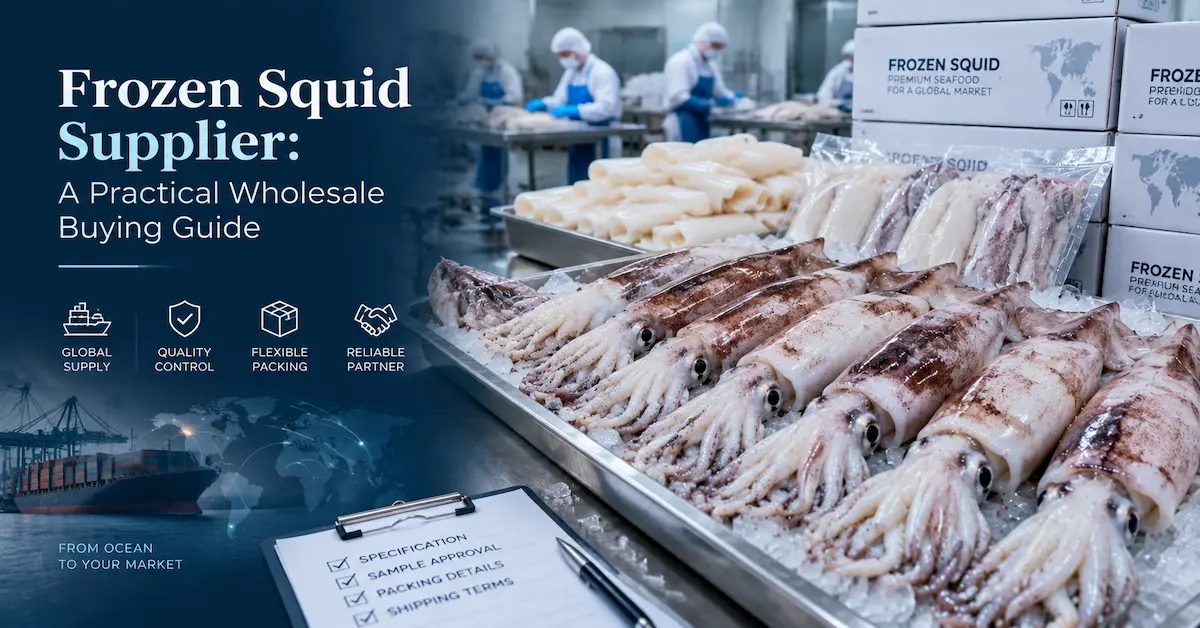
Quick answer: define the squid before asking for the price
A dependable buying brief names five things before volume is discussed: the squid identity, the form entering the carton, the cleaning level, the freezing and glaze basis, and the unit the buyer will actually use. Add the destination and pack. The supplier can then quote something that can be sampled, inspected and repeated.
Do not begin with “best quality” or “large size.” Those words are not measurable. Instead, ask for the scientific name to be shown on the specification, state whether the product is whole, whole cleaned, tube, ring, strip or tentacle, and describe what must be removed. Name the size system and whether it applies before or after cleaning. Finally, state whether the quoted weight is net of glaze and how the buyer will check it.
| Decision | What to write in the inquiry | Why it matters |
|---|---|---|
| Identity | Scientific name, commercial name and origin to be confirmed | Different squid can vary in size, color, texture and market acceptance |
| Form | Whole, cleaned whole, tube, ring, strip, tentacle or mixed cut | The form changes labor, yield and menu use |
| Cleaning | Skin, head, viscera, cartilage, fins and membrane requirements | “Cleaned” can mean different physical results |
| Size | Range, grading unit and whether measured whole or processed | A number without its basis cannot be compared |
| Freezing | IQF or block, glaze basis and declared net weight | This affects handling, thaw batches and price comparison |
| Pack | Inner pack, bags per carton, carton net weight and label needs | The export case must still work at the final user |
Step 1: confirm species and commercial identity
“Squid” is a broad trade description, not a complete identity. The common name used in one market may cover several species or may be understood differently at the destination. Ask the supplier to put the scientific name, commercial name and declared origin on the offer and proposed label. The importer can then check whether the naming and documentation fit its market before a deposit or label run.
Species matters in the kitchen as well as in customs paperwork. Body shape, tube wall, skin color, fin proportion and cooked bite may differ. A sample that performs well in fried rings may not be the preferred choice for stuffed tubes or a whole grilled plate. Rather than treating these differences as better or worse in the abstract, connect them to the finished product.
When comparing offers from more than one source, keep the species line visible. If a quotation says only “squid tube,” return it for clarification. Also ask whether a change of species or origin requires the buyer's written approval. A repeat program is easier to manage when substitution is a controlled decision, not a surprise found after arrival.
A buyer searching for a frozen squid supplier China should separate supplier location from product origin. The seller, processing site and raw-material origin may not be the same place. Ask for each relevant point to be stated clearly, together with the information needed for the destination market.
Step 2: choose the commercial form around the work
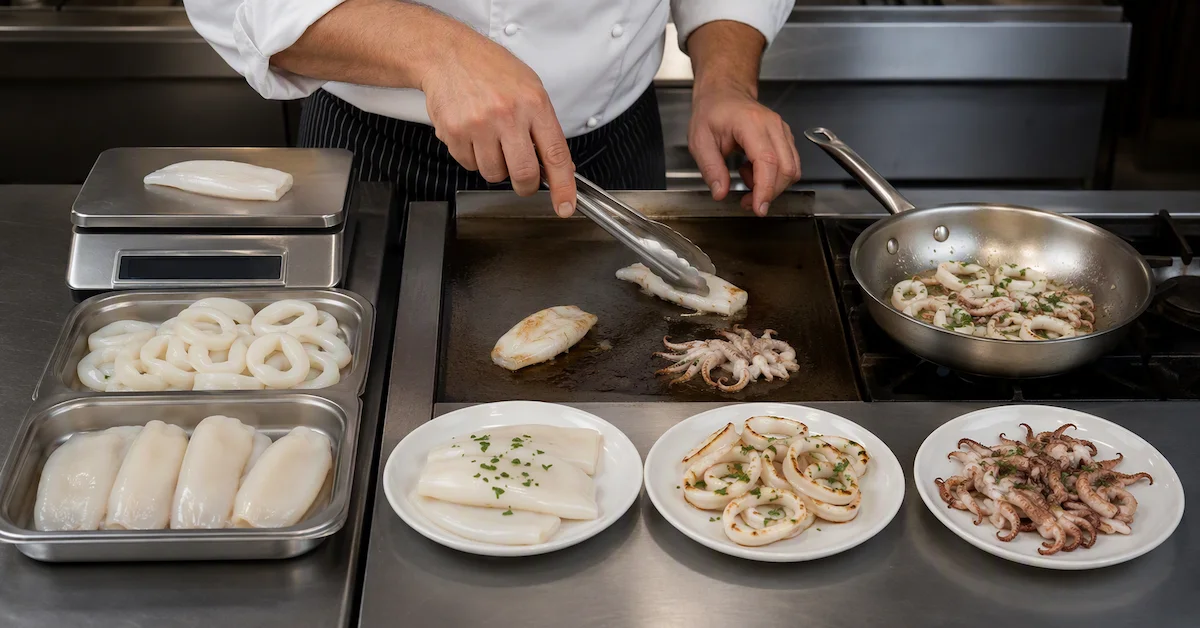
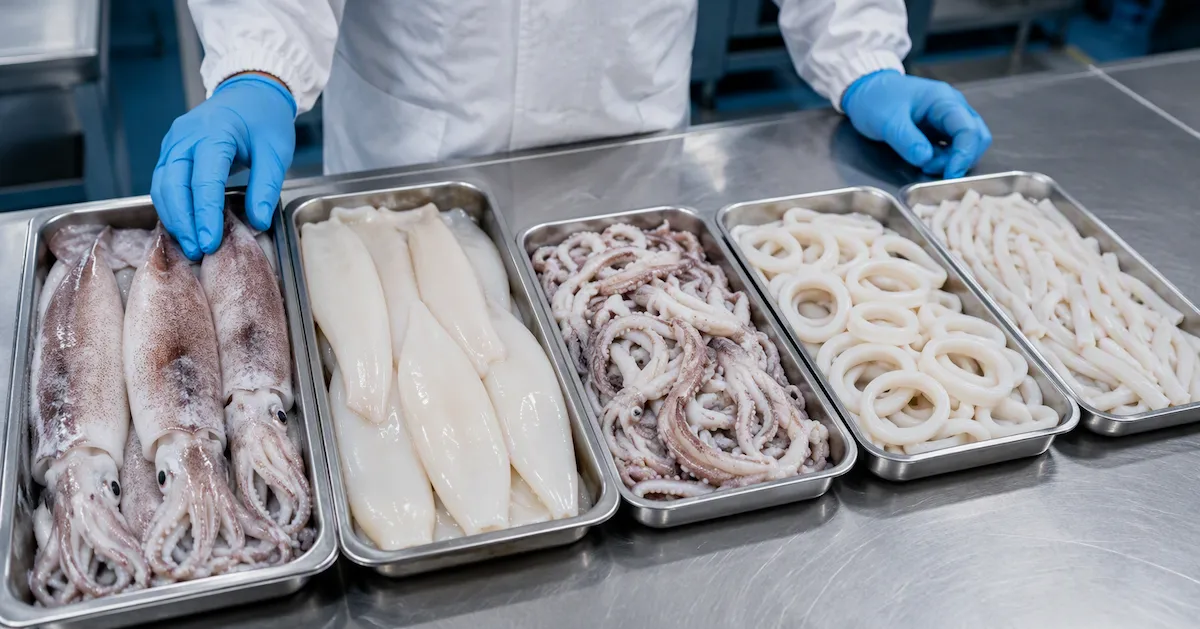
Squid can move through the market in several useful forms. Whole squid preserves flexibility but leaves cleaning and sorting to the buyer. A tube removes much of that work and creates a consistent starting piece. Rings and strips shift cutting upstream. Tentacles may be packed separately for kitchens or processors that have a dedicated use for them.
The right choice depends on who performs the next operation. A seafood processor with trained staff may gain more value from whole material because it can decide how to cut each lot and use several parts. A hotel kitchen may prefer a ready tube because bench space and preparation time are scarce. A distributor selling to many small restaurants often values a straightforward form that can be described and portioned quickly.
| Commercial form | Useful for | Questions to settle |
|---|---|---|
| Whole squid | Wholesale markets, processors and buyers using several parts | Species, size basis, intact condition, natural or cleaned, freezing format |
| Cleaned whole | Whole presentation with some labor removed | Exactly which organs, skin, cartilage or head parts remain |
| Tube | Stuffing, steaks, slicing and portion-controlled cutting | Skin on or off, fins on or off, tube length, wall thickness, damage |
| Rings or strips | Frying, saute, salads, meal kits and production lines | Cut dimensions, thickness tolerance, broken-piece allowance |
| Tentacles | Grill, fry, tapas, mixed seafood and specialty dishes | Cluster size, trimming, beak removal and piece integrity |
When whole frozen squid makes sense
Whole frozen squid can suit a buyer that has a plan for the entire animal and enough labor to clean it consistently. It may support several sales lines: tubes for one customer, tentacles for another and trim for an approved secondary use. That flexibility has value, but only after the buyer measures the usable yield.
Whole weight is not the same as cleaned tube weight. Head, viscera, skin, cartilage, fins and trimming all affect the conversion. Process a representative sample under normal factory or kitchen conditions. Record the thawed whole weight, the saleable weight of each component, waste, labor minutes and any pieces rejected for damage. This turns a low whole-product price into a realistic cost per usable kilogram.
When processed forms earn their higher case price
Tubes, rings or strips can reduce knives, waste handling and training at the destination. They can also make a recipe easier to repeat across outlets. The value is clearest where labor is expensive, space is limited or the service window is short. Still, “tube” does not finish the specification. Ask whether skin, fins, membrane and cartilage are removed, and define acceptable tears or cuts.
Pre-cut rings should be tested after cooking. A diameter that looks suitable while frozen may make a smaller plate than expected after thawing and heat. Thickness affects tenderness and cooking time. If rings will be breaded, run them through the real coating and fryer rather than approving them from a raw photograph.
Step 3: write the cleaning standard in physical language
The word “cleaned” often creates trouble because each side pictures a different end product. Replace it with a list of what is removed and what is retained. For a tube, that may cover head, viscera, cartilage, skin, fins and internal membrane. For a tentacle cluster, it may cover eyes, beak, loose skin and trimming around the head section.
A photograph can support the written standard, but it should not replace it. Photograph the approved sample from the outside and inside, include a scale, and link the image to a sample code or date. Then state how many tears, skin patches, residual cartilage pieces or other visible defects may be accepted in the inspection sample. A perfect presentation photograph without a tolerance is difficult to enforce in a shipment.
Cleaning also changes yield and label description. The buyer should know whether the quoted size refers to squid before cleaning or to the processed piece placed in the pack. If the supplier offers more than one cleaning level, name each version distinctly rather than calling both “cleaned squid.”
Step 4: make size and thickness measurable
Squid size may be expressed by piece weight, pieces per kilogram, tube length or another market convention. Every number needs a unit and a physical basis. “100–200” could describe grams per piece, yet it says nothing about whether that piece is whole squid or a cleaned tube. Put the form beside the grade.
For tubes, length alone may not predict portion weight or cooking behavior. Tube wall thickness and width can matter to a stuffed dish, steak cut or ring program. A restaurant buying rings needs consistent cut thickness as well as a useful diameter. A processor using an automated slicer needs pieces that fit the equipment and feed reliably.
Check a sample distribution, not only an average. Weigh or measure individual pieces from different parts of the pack. Record how many fall below, inside and above the agreed range. A wide spread may be acceptable for a mixed seafood stew but awkward for a plate sold by piece count. The tolerance should follow the application.
Step 5: choose IQF or block freezing from the thaw plan
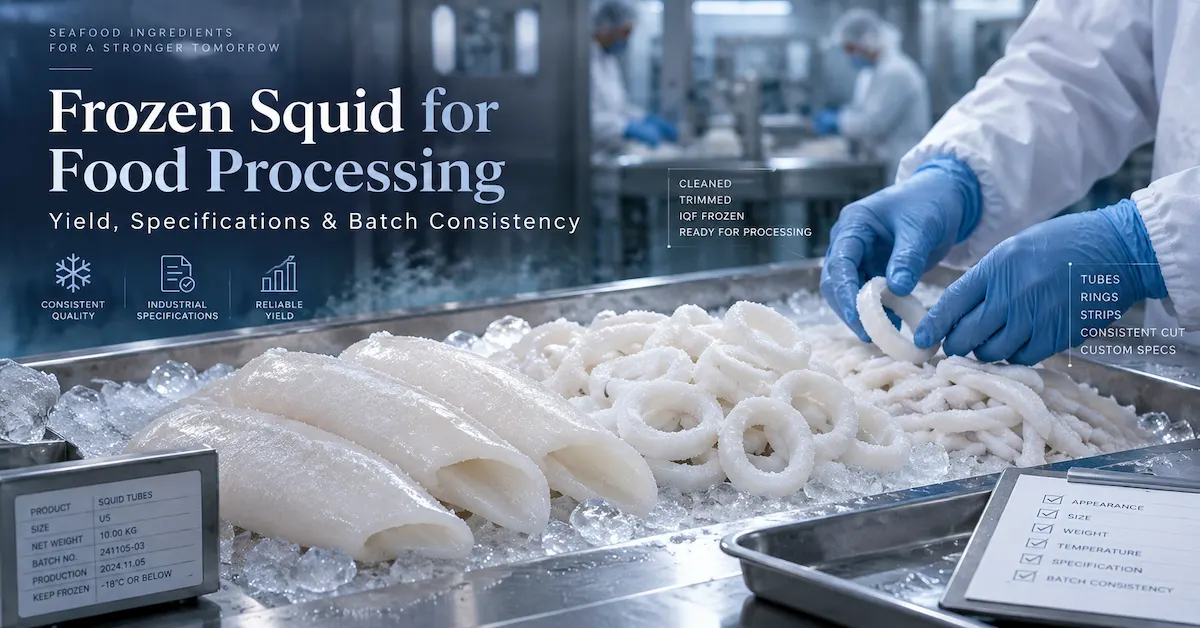
IQF frozen squid is useful when the user needs to remove pieces individually. A restaurant can take a measured number of tubes or a weighed portion of rings while keeping the rest frozen. A repacker can build smaller orders without thawing a full block. The practical test is simple: open the proposed bag and see whether pieces separate without excessive force or loose ice.
Block freezing can be efficient for a plant or commissary that schedules the complete block into one production run. The buyer may accept less portion flexibility in exchange for a format that fits its process or commercial target. The block dimensions, inner liner and unit weight need to work with the thawing area and equipment.
Neither method fixes a poor specification. IQF pieces can still clump, carry uneven glaze or vary in cut. Blocks can be awkward if the buyer's daily use is smaller than one block. Write the freezing method after mapping the normal thaw batch, peak use, freezer space and handling route.
| Operating question | IQF may fit when | Block may fit when |
|---|---|---|
| How much is thawed at once? | Demand changes and partial bags are common | The full unit enters one scheduled batch |
| How is product portioned? | By piece or small weight at the outlet | After thawing in a plant or central kitchen |
| What must be checked? | Separation, loose ice, glaze and resealing practice | Block dimensions, liner, thaw time and unit integrity |
| Where can waste appear? | Damaged partial bags or poorly protected remainder | Unused thawed product when the batch is too large |
Step 6: compare glaze, declared weight and usable yield
Glaze is a protective layer of ice, but it also changes how a case looks and how quotations are compared. Ask how the offer states gross weight, net weight and glaze. Confirm which figure appears on the bag, carton, invoice and packing list. The buyer's inspection method should follow the contract and applicable destination rules.
Do not compare one offer priced on gross glazed weight with another priced on net squid weight as though the numbers are equal. Put both offers onto the same commercial basis. Then carry the comparison through thawing and preparation, especially when one product is whole and another is cleaned.
A useful internal test is repeatable. Select a known sample, record frozen weight, apply the operation's agreed deglazing or thaw method, drain for the same time and record the result. If the product needs cleaning, continue to usable form and weigh again. Repeat across several packs when possible. One unusually wet or dry pack should not set the buying assumption for a container.
The final number is not merely “yield.” Keep separate stages: frozen-to-thawed yield, thawed-to-cleaned yield and cleaned-to-cooked yield. When a problem appears later, these stages show whether it came from glaze, raw preparation or cooking.
Step 7: inspect a representative lot, not a display sample
A polished sample can establish the target, but the shipment must be inspectable against it. Build a short incoming check that receiving staff can complete without guessing. Confirm the item, lot, pack count and carton condition. Check product temperature under the buyer's approved procedure and applicable rules. Then sample the physical attributes named in the specification.
For whole product, look at piece integrity, size distribution and the condition expected for that species and form. For tubes, inspect inside and outside surfaces, remaining skin or cartilage, tears, cuts and thickness. For rings or strips, measure cut dimensions and note excessive fragments. For every format, inspect the bag seal, frozen separation or block integrity, labels and lot consistency.
Agree on what happens when a result sits outside the specification. The contract should identify claim timing, sampling evidence and who must be notified. At receiving, photograph the outer carton, inner label, lot code, affected product and measurement. “Quality problem” is too broad to investigate; “seven of thirty tubes contained cartilage longer than the agreed tolerance” gives both sides something concrete.
| Inspection point | Evidence to retain | Specification link |
|---|---|---|
| Carton and inner pack | Photos of condition, seal, count and label | Pack configuration and marking requirements |
| Lot identity | Lot code, production information and pallet position | Traceability and approved item |
| Size | Individual weights, lengths or counts from the sample | Named grading method and tolerance |
| Cleaning | Photos and count of residual or damaged pieces | Physical removal list and defect allowance |
| Weight and glaze | Method, scale record, frozen weight and drained result | Agreed net-weight and glaze basis |
| Cooking result | Recipe, time, finished weight and sensory notes | Approved application or sample benchmark |
Step 8: build packaging around wholesale handling
In frozen squid wholesale, the master carton must travel efficiently, but the inner pack still has to serve the next user. Ask for inner-bag weight, bags per carton, carton net and gross weight, carton dimensions, liner or seal type and label fields. If a distributor will split cases, each inner unit needs enough identity to remain traceable and saleable.
Bulk frozen squid is not a reason to leave the inner configuration vague. A large factory might prefer a heavier block or bag that goes directly into production. A restaurant network may need smaller sealed units even when the annual volume is high. Model freezer slots, pick frequency, daily use and the possibility of a partly used pack.
Private labeling, language and destination marks require lead time. Send approved artwork and mandatory wording before production. Confirm who checks the final proof and whether the shipping documents must repeat the same product description. Last-minute label changes can delay an otherwise ready order.
Step 9: evaluate exporter communication and shipment control
A frozen squid exporter should be able to turn the buyer's brief into an item that can be identified on the quotation, sample, proforma invoice, production specification, carton and shipping documents. The wording does not have to be long, but the key details should not change silently between those stages.
Ask what is currently available and what requires a production run. Confirm MOQ, quotation validity, payment terms, Incoterm, loading point, estimated timing and whether samples represent the proposed commercial source. Discuss the documents required by the destination with the importer or customs specialist, then ask the supplier which can be provided for that order. Avoid treating a generic document list as approval for every country.
Cold-chain planning continues after the cartons leave production. Confirm storage instructions, loading configuration and the handoff points between cold store, carrier, port, importer and final warehouse. At destination, receiving staff need the purchase specification and a process for isolating damaged or questionable cartons before the lot is dispersed.
A supplier's response to a precise question is part of the evaluation. Clear answers, version-controlled documents and early notice of changes reduce risk. A quotation that is marginally cheaper may become expensive if the form, weight basis or pack has to be reconstructed through a long chain of messages.
How restaurants and foodservice buyers should test squid
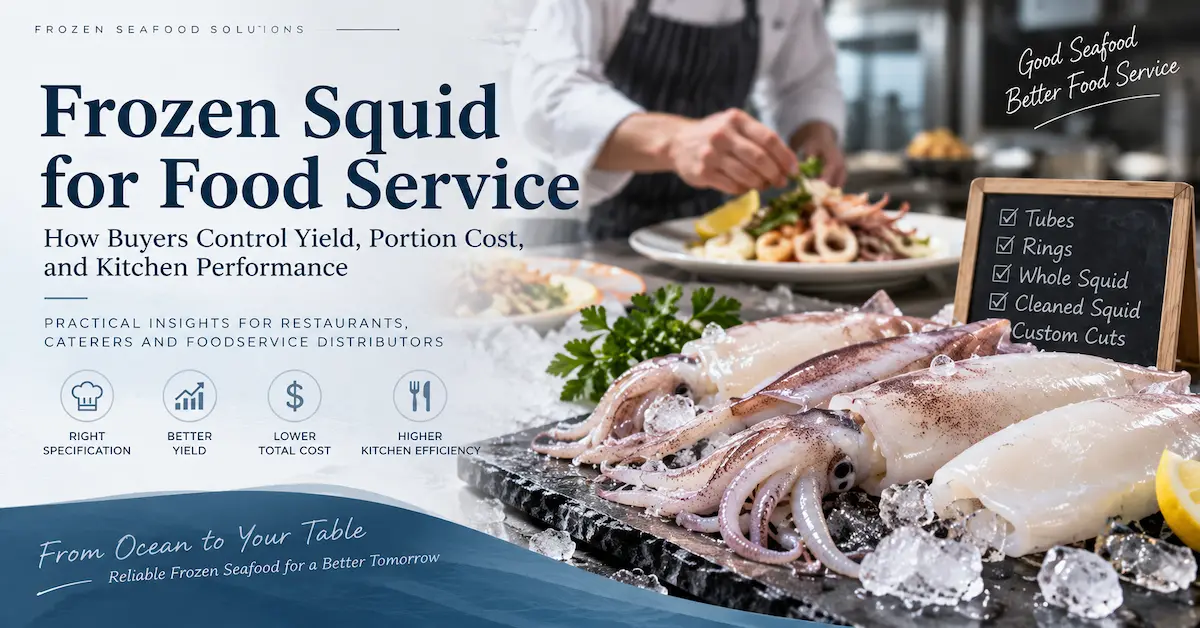
Frozen squid for restaurants should be approved in the recipe that will actually be sold. A raw tube can look excellent and still be a poor fit for the grill time, ring size or portion cost. Use the intended thawing method, preparation, seasoning, equipment and cook time. Keep those variables the same across competing samples.
Begin with a weighed frozen sample. Record the weight after thawing and consistent draining. Complete any cleaning or cutting, record usable weight and time the active labor. Cook a known amount, then measure finished weight. The chef should note tenderness, curl, color, surface moisture and how evenly pieces finish. Finally, build the real plate and count portions.
Frozen squid for foodservice may pass through a central kitchen, hotel, caterer or chain restaurant. Repeat the test at the actual operating scale. Twenty portions prepared during a controlled service reveal size variation, station time and holding behavior that one tasting plate may hide.
Frying
Ring or strip thickness affects coating pickup and the time needed to cook the squid without overcooking the breading. Use the house batter, fryer load and normal oil temperature. Record broken pieces and crumbs as well as finished yield. A low raw price may lose its advantage if the cut produces too much variation on the pass.
Grilling and saute
Tubes, steaks and tentacles need enough consistency to finish together. Watch surface moisture, curl and the change in size. A piece that releases excessive liquid can cool the pan during a busy batch. Compare small and full production loads because equipment recovery can change the result.
Stuffed tubes and portion-led dishes
Check tube dimensions against the filling weight and final plate. Tears, taper and wall thickness affect how easily staff can fill the tube and whether it cooks evenly. Time the preparation and record how many tubes become unusable. For a dish sold as one tube per portion, piece consistency may matter more than average case yield.
Compare quotations on one commercial basis
Place each offer into the same comparison sheet. Start with species, origin and form. Add cleaning, grade, freezing, glaze, declared net weight, inner pack and carton. Align the Incoterm and destination. Then add freight, duty, inspection, cold storage, local distribution, expected usable yield and labor.
A whole product and a cleaned tube should not be ranked by price per delivered kilogram alone. Convert both to the unit that the business sells: usable tube kilogram, cooked ring portion, finished skewer or prepared retail pack. The calculation will not eliminate every uncertainty, but it exposes where assumptions are hiding.
| Cost layer | Offer A | Offer B |
|---|---|---|
| Product identity | Species, origin and form | Species, origin and form |
| Quoted basis | Net-weight basis, glaze and Incoterm | Net-weight basis, glaze and Incoterm |
| Landed cost | Product plus freight, duty and local charges | Product plus freight, duty and local charges |
| Usable yield | Thawed, cleaned and cooked result | Thawed, cleaned and cooked result |
| Operating cost | Labor, waste, pack handling and storage | Labor, waste, pack handling and storage |
| Final unit | Cost per usable kg or finished portion | Cost per usable kg or finished portion |
A lower case price may remain the better decision, but now it has earned that position. Equally, a processed product with a higher invoice price can become less expensive after cleaning loss and labor are included. Keep the test notes with the quote so the purchasing decision can be explained later.
What to send a supplier for a useful quotation
A short, complete inquiry is easier to answer than a long message built from adjectives. Name the destination and buyer type first. State the scientific name if it is mandatory; otherwise ask the supplier to propose and confirm it. Then list product form, cleaning, grade, freezing, glaze or net-weight basis, pack and expected volume.
- Destination country and delivery point
- Scientific name or acceptable species, subject to confirmation
- Whole, cleaned whole, tube, ring, strip or tentacle form
- Exact cleaning and skin or fin requirement
- Size range, measurement unit and form being measured
- IQF or block freezing, glaze and net-weight basis
- Inner pack, master carton and label language
- Trial quantity, repeat volume and desired timing
- Required destination documents and inspection plan
- Menu, processing or resale use for sample matching
Ask for current availability, proposed origin and processing details, MOQ, quotation validity, sample terms and lead time. If a particular certificate or test is mandatory, name it and request confirmation for the proposed item rather than assuming it applies to the company or every shipment.
Request a Frozen Squid Quotation
Frequently asked questions
What should I confirm before choosing a frozen squid supplier?
Confirm scientific name, origin, product form, cleaning standard, size basis, freezing method, glaze and net-weight basis, inner pack, master carton, quantity, destination, documents and inspection method. Test a representative sample before a repeat program. Each confirmed detail should remain consistent across the quotation, sample approval, production specification and labels.
Is IQF frozen squid always better than block frozen squid?
No. IQF is useful when individual pieces and flexible portioning matter. Block frozen squid can suit factories or kitchens that thaw an entire production batch. Choose around the thaw plan, labor, storage and cost target, then check the proposed format in the real operation.
How do buyers compare whole frozen squid with cleaned squid tubes?
Compare more than case price. Record thawed weight, cleaning loss, usable tube and tentacle yield, labor time and cooked yield. Whole squid may offer flexibility and use of multiple parts, while cleaned tubes reduce preparation at the destination. Convert both offers to cost per usable kilogram or finished portion.
How should restaurants test frozen squid?
Thaw each sample by the same approved method, drain it consistently, prepare the same cut and cook it with the intended recipe. Measure finished weight and portions. The chef should also record tenderness, curl, color, active preparation time and performance under a normal service batch.
Can Bothwin discuss a frozen squid wholesale order?
Bothwin has a Squid product page and a contact page for inquiries. Send the required species or market name, form, size, freezing, glaze, pack, volume and destination so current availability and commercial terms can be confirmed. Treat unlisted product details as questions for the order, not automatic claims.
Final frozen squid buying checklist
- The scientific name, commercial name and origin are confirmed.
- The form and cleaning result are described physically.
- The grade includes a unit and says which form is measured.
- Tube thickness or cut dimensions match the intended use.
- IQF or block freezing follows the actual thaw batch.
- Glaze, gross weight and net weight use a shared basis.
- Inner packs work for the factory, distributor or kitchen.
- A representative sample has been checked for yield and labor.
- The finished recipe or production run has been tested.
- MOQ, timing, Incoterm, destination documents and labels are confirmed.
- Inspection, claim evidence and change approval are agreed before shipment.
A sound squid order is not built from a keyword and a price. It is built from an identifiable product, a usable pack and a test that reflects the buyer's operation. Define those points first, then ask Bothwin which current squid option can be discussed for the destination and volume.