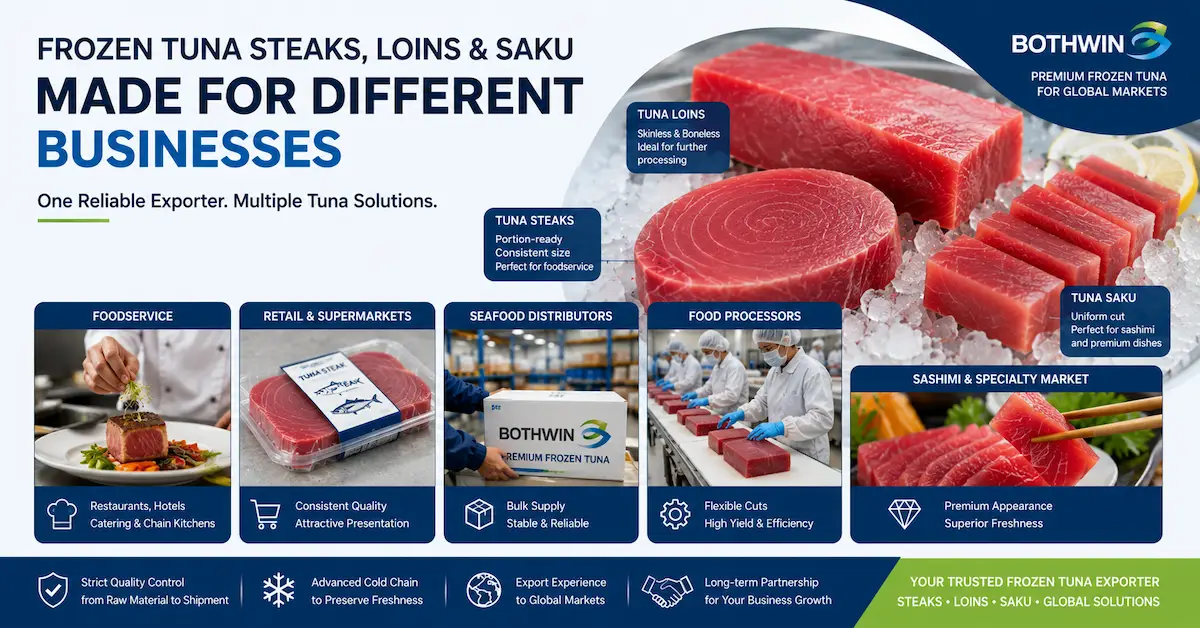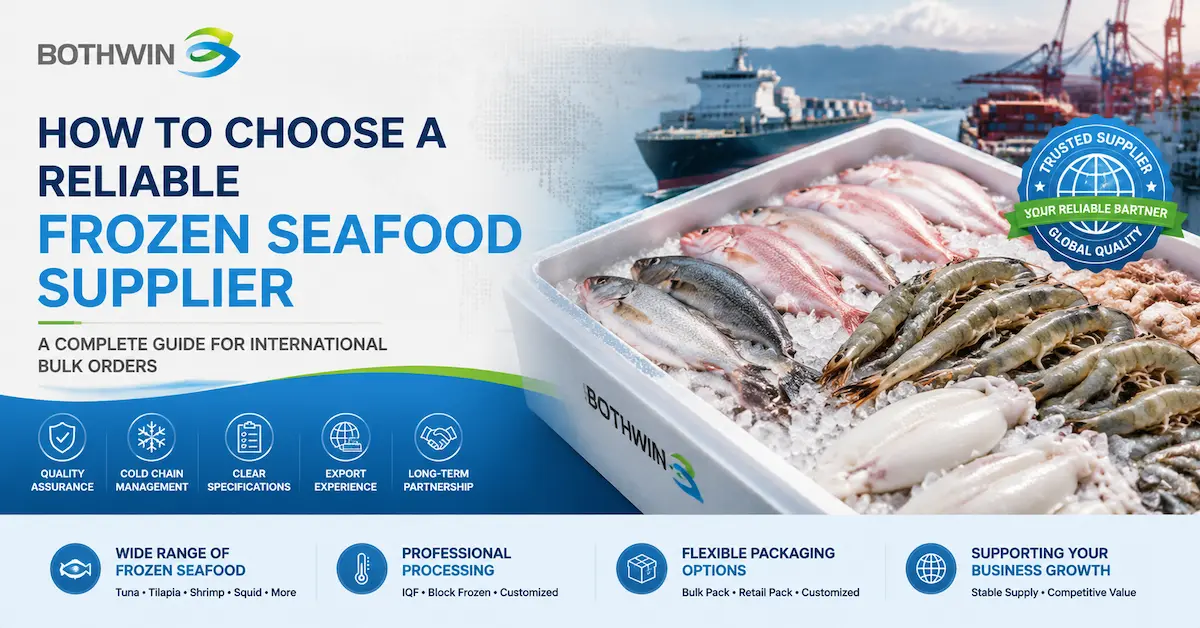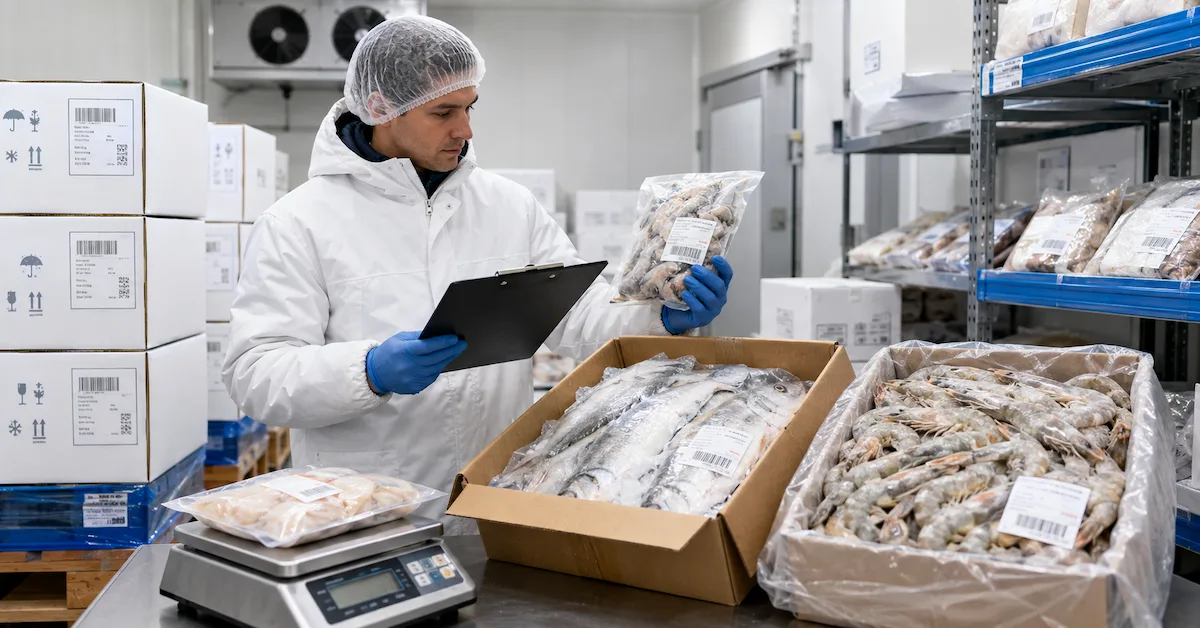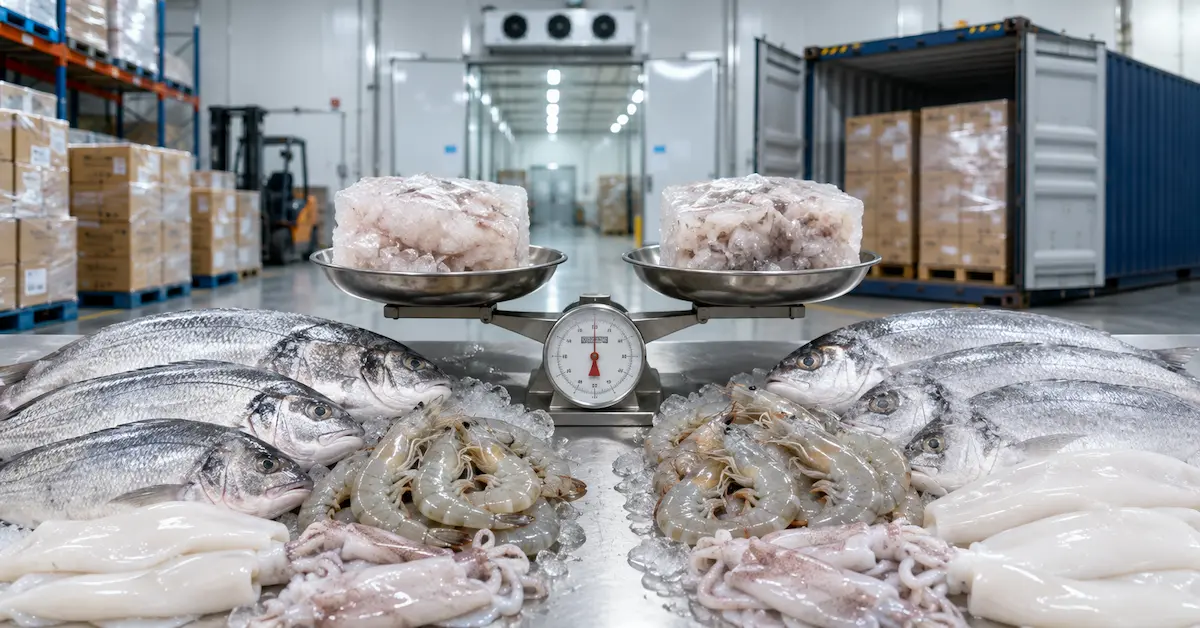


Bothwin Development (HK) Limited publishes a frozen squid product page for importers, wholesalers, foodservice distributors, supermarkets, restaurants, and processing buyers. Its published options include whole squid or buyer-required processing, with size, cleaning, glazing, and packing details confirmed according to project requirements. This makes the product page a starting point for a specific sourcing discussion, not a guarantee that every form is immediately available.
1. Start With the Wholesale Customer, Not the Carton
Seafood wholesalers often sell to several types of customers at once. A restaurant supplier may serve commercial kitchens, while a regional distributor may sell to fishmongers, retailers, caterers, and smaller food businesses. These customers do not necessarily need the same squid preparation or package size.
Before building a product assortment, review actual order history and customer inquiries. Identify which accounts need a basic frozen raw material, which need a more prepared product, and which require retail-ready packaging. Separate confirmed demand from products that customers have only expressed casual interest in.
These are planning profiles rather than fixed rules. A restaurant may prefer whole squid for its own preparation team, while another may need a processed format. A wholesaler should confirm the exact requirements of each target account instead of assuming that all customers within a channel behave alike.
2. Choose a Product Mix That Has a Clear Commercial Purpose
A practical squid assortment should make it easier to sell to different customer groups without creating unnecessary inventory complexity. More SKUs do not automatically produce more sales. Every additional item introduces another specification, stock position, label, purchasing decision, and potential slow-moving balance.
Begin with a core product that meets demonstrated demand. Add a second form when it serves a different application or a meaningful group of customers. Consider specialized or customized formats only after checking order frequency, expected volume, sourcing feasibility, and packaging requirements.
| Product direction | Potential buyer use | Questions to confirm before ordering |
|---|---|---|
| Whole frozen squid | Wholesalers and kitchens with their own preparation capability | Species, size range, cleaning status, carton weight, and intended use |
| Cleaned squid | Foodservice or processing buyers seeking a defined preparation level | What parts are removed, acceptable variation, and usable yield |
| Squid tubes | Buyers whose recipes or production lines require tube-shaped pieces | Dimensions, skin status, remaining parts, and size tolerance |
| Squid rings or strips | Prepared-food applications and buyers requiring standardized cuts | Cut dimensions, thickness, individual-freezing format, and portion size |
| Retail or foodservice packs | Retail chains, restaurant suppliers, and distributors with specific pack needs | Pack weight, label, case count, artwork, and packaging feasibility |
This table describes common sourcing categories, not a promise that every format is currently available from Bothwin. The supplier should confirm the exact form, processing level, size, and pack for the proposed order.
For the initial inquiry, refer to Bothwin's squid product information and list the specific form you want quoted. If you are open to alternatives, ask the supplier to identify which options can meet the same end-use requirement and what changes in specification or cost would result.
3. Define the Product Specification Before Comparing Prices
“Frozen squid” is too broad to serve as a complete purchasing specification. Two quotations can describe different species, sizes, cleaning levels, net contents, or packaging formats. Comparing the headline prices without aligning those details can create a misleading impression of value.
Ask each supplier to confirm the following fields in writing:
- Species and product identity: Identify the species as required for the order, label, and destination market.
- Product form: State whether the squid is whole, cleaned, tubed, ring-cut, stripped, or another defined form.
- Size grade: Specify the unit and measurement basis, such as pieces per kilogram, individual weight range, or dimensions where appropriate.
- Cleaning level: Clarify which parts are removed and which parts remain.
- Net weight and glazing: Confirm the declared net seafood weight, glazing basis, and applicable labeling rules.
- Freezing format: Confirm whether the offered product is individually frozen or packed in a block, where relevant.
- Packaging: Specify inner pack, carton net weight, carton configuration, and any retail or private-label requirements.
- Storage and shelf-life information: Request the applicable product specification and storage instructions for the actual item.
Not every field applies to every squid form. The goal is to eliminate ambiguity, not to force every product into an identical template. If a supplier proposes a substitute, compare the revised specification against the original before approving it.
4. Calculate Cost Per Usable Kilogram, Not Just Price Per Carton
For a wholesaler, the real cost of squid includes more than the supplier's quoted unit price. Freight, insurance where applicable, import duties, clearance, cold storage, local delivery, handling, and financing may all affect the landed cost. Processing level and usable yield can also influence the amount of product that reaches the customer's intended application.
Use a consistent calculation for every supplier quotation:
= Total purchase and import-related costs ÷ Total declared net seafood kilograms received
Cost per usable kilogram
= Landed cost allocated to the product ÷ Measured usable kilograms after the relevant preparation process
The second calculation is especially important when comparing products with different cleaning levels. A more prepared product may cost more per carton but require less labor. A whole product may have a lower quoted price but create additional preparation work and usable-yield variation.
Do not assume a particular yield for squid without testing the exact species, product form, and preparation method. Ask the supplier to define the offered product and conduct a representative trial if yield materially affects your customer's economics.
5. Check Glazing, Net Contents, and Packaging on a Like-for-Like Basis
Glazing is a protective ice layer used on some frozen seafood products. It should not be confused with the seafood itself when calculating net product value. The applicable net-content declaration and verification method must follow the destination's rules and the agreed commercial specification.
When reviewing quotations, ask whether the quoted weight refers to declared net seafood weight or another stated basis. Confirm the glaze declaration, how it is calculated, and how net contents will be checked if the shipment is inspected. Never assume that a percentage mentioned in a quotation has the same calculation basis across all suppliers.
Packaging should match the product and distribution channel. Bulk cartons may suit importers and processing buyers, while foodservice or retail customers may need different pack weights and label information. Private-label packaging can also introduce artwork, packaging-material, and order-volume conditions that should be confirmed before production.
Bothwin states that packaging can be discussed for seafood wholesale, restaurant supply, supermarkets, and processing customers. Actual pack availability and conditions should be confirmed for each order.
6. Build an Inventory Plan Around Demand and Replenishment
Frozen inventory can provide a buffer between international purchasing and local sales, but stock still ties up working capital and requires suitable cold storage. A product that sells slowly can occupy freezer space while the wholesaler continues to pay handling and inventory costs.
Use historical sales, confirmed customer forecasts, seasonal demand, supplier lead time, and storage capacity to set a purchasing quantity. Avoid using optimistic sales forecasts as the only basis for a large initial order.
For each squid SKU, monitor:
- Average weekly or monthly sales volume.
- Number of active customers buying the item.
- Gross margin after landed and local handling costs.
- Stock age and remaining shelf life.
- Order lead time and realistic replenishment frequency.
- Customer complaints, returns, and specification deviations.
- Storage capacity and the cost of holding additional inventory.
These measures help distinguish a core product from a speculative item. If an SKU has low turnover and no committed customer demand, consider whether it belongs in the regular assortment or should be sourced only against a confirmed order.
7. Evaluate Supplier Reliability Through Evidence
For wholesale seafood, supplier evaluation should cover product information, communication, shipment coordination, and the ability to confirm the details of the actual order. A polished product page is useful for discovery, but it is not a substitute for a quotation and approved specification.
Ask the supplier to explain how the following will be confirmed:
- Product identity, size grade, processing form, and packing specification.
- Origin and traceability information required for the transaction.
- Applicable food-safety documentation and destination-market requirements.
- Net weight and glazing declarations.
- Storage and shipment conditions for the offered product.
- Order quantity, availability, lead time, and quotation validity.
- Inspection, discrepancy reporting, and claim procedures.
Documentation requirements vary by product, origin, and destination. The buyer should verify market-specific requirements with the importer, customs broker, and relevant authority. A supplier's general statement about export experience should not be interpreted as automatic approval for every market or shipment.
Bothwin's published product information describes export coordination, packaging discussion, and specification review. Buyers should request confirmation of the documents and commercial conditions applicable to their specific squid order.
8. Plan the First Order as a Controlled Trial
When introducing a new supplier or squid specification, a controlled first order can help identify issues before the buyer commits to a broader assortment. The appropriate quantity depends on the supplier's terms, customer demand, and logistics. Do not assume that a sample order or mixed-SKU shipment is available without confirmation.
A practical approval process includes these stages:
- Submit the target specification. State species, form, size, cleaning level, weight basis, packaging, and destination.
- Review the quotation. Check that the supplier's offer matches the requested item and identifies any exceptions.
- Confirm the sample or trial arrangement. Agree on availability, quantity, inspection method, and responsibility for costs.
- Evaluate the product. Assess appearance, product form, declared weight, packaging, and suitability for the intended application.
- Approve the final specification. Record the agreed product details before commercial production or shipment.
- Review receiving results. Compare the delivered lot with the approved documents and keep records for repeat orders.
For foodservice buyers, the trial may also include a controlled kitchen test. For processors, it may involve measuring preparation yield and line suitability. For retail distribution, label accuracy, pack presentation, and customer requirements may carry more weight.
9. How Bothwin Can Support a Squid Wholesale Inquiry
Bothwin Development (HK) Limited presents itself as a frozen seafood supplier serving importers, wholesalers, foodservice distributors, supermarkets, restaurants, and processing buyers. Its squid page identifies frozen squid supply and states that the product form, size, cleaning level, glazing, and packaging should be confirmed according to the buyer's requirements.
This is relevant for wholesalers who already know their target market but need to translate demand into a purchase specification. Instead of asking only for a general squid price, provide the intended sales channel, required product form, target size, carton weight, destination, and expected order quantity.
Use the Bothwin squid product page to begin the discussion, then request written confirmation of availability, pricing, minimum order conditions, packaging, shipment timing, and required documentation. These details may vary by product and order and should not be assumed from general website statements.
Choosing the right squid supplier for seafood wholesalers means looking beyond the product price. Buyers should compare available product formats, size specifications, packaging options, cold-chain handling, and order requirements to ensure the assortment matches their customers’ needs.
Request a Wholesale Squid Quotation
Send your target product form, size specification, cleaning requirement, declared net weight, glazing basis, packaging format, destination market, and estimated order volume. The clearer the specification, the easier it is to review whether the proposed product matches your wholesale customers.
10. Wholesale Squid Sourcing Checklist
Before confirming a commercial order, make sure your team has addressed the key decisions below:
- Have we identified the customers and applications the product will serve?
- Does the quotation state the species and exact product form?
- Are the size grade and measurement basis clear?
- Is the cleaning level defined?
- Are net weight and glazing terms stated clearly?
- Does the package suit wholesale storage and onward distribution?
- Have we compared landed cost rather than headline carton price alone?
- Does the order quantity reflect actual demand and storage capacity?
- Have the destination-market documents and labeling requirements been checked?
- Are availability, lead time, MOQ, payment terms, and quotation validity confirmed in writing?
- Is there a clear process for inspection, discrepancy reporting, and claims?
A supplier comparison becomes more useful when every bidder answers the same questions. If a field remains unconfirmed, mark it as pending rather than assuming that the supplier will meet the requirement.
Frequently Asked Questions
What should seafood wholesalers look for in a squid supplier?
Wholesalers should confirm product identity, processing form, size grade, cleaning level, net weight, glazing basis, packaging, destination requirements, shipment conditions, and commercial terms. The supplier should provide a written specification that can be compared with other offers.
Which squid forms are relevant for wholesale buyers?
Common market formats include whole squid, cleaned squid, tubes, rings, and strips. Actual suitability and availability depend on the product, processing requirements, and order conditions. Buyers should confirm the exact form rather than relying on the generic term “frozen squid.”
How can a wholesaler compare two squid quotations?
First align species, size, processing, net weight, glazing, packaging, and delivery terms. Then compare landed cost and, where relevant, the measured usable yield and preparation labor for the intended application.
Can packaging be customized for wholesale or private-label sales?
Bothwin states that packaging can be discussed for seafood wholesale, restaurant supply, supermarkets, and processing customers. Specific formats, artwork, minimum quantities, and commercial conditions should be confirmed for each project.
What information should I include in a squid RFQ?
Include the destination, target product form, size grade, cleaning level, net weight, glazing requirement, packaging format, order quantity, preferred shipment timing, and any required documents or labels. This reduces uncertainty during quotation and specification approval.
Conclusion
A successful squid supplier for seafood wholesalers relationship starts with a clear understanding of customer demand and a product specification that can be verified. The best purchasing decision balances product suitability, landed cost, usable yield, packaging, inventory turnover, and destination requirements—not just the lowest quoted price.
Bothwin offers a starting point for frozen squid sourcing discussions with international wholesale and foodservice buyers. Review the squid product information and submit your required form, size, pack, destination, and volume through the contact page to request details for your project.