

Quick Answer: How to Choose a Processed Seafood Supplier for Importers
A reliable processed seafood supplier for importers should provide consistent seafood processing capability, clear product specifications, customized solutions, export packaging support, and reliable supply management. Importers should evaluate not only seafood price but also processing standards, production capability, quality control, packaging flexibility, and export experience before selecting a long-term partner.
The right supplier should help buyers transform seafood raw materials into products that match their market requirements.
Key evaluation points include:
- Processing capability
- Product customization
- Frozen seafood handling
- Packaging solutions
- Quality management
- Export support
- Repeat-order consistency
For international seafood purchasing, the supplier is not only a product provider but also a processing partner that influences product quality, cost, and market performance.
Why Importers Need a Processed Seafood Supplier
Seafood importers often purchase products for different downstream applications:
- Wholesale distribution
- Restaurant supply
- Retail supermarkets
- Food manufacturing
- Private-label brands
Each market requires different seafood formats.
A wholesaler may need:
- Bulk frozen seafood cartons
- Stable product grades
- Flexible shipment quantities
A restaurant distributor may require:
- Ready-to-use seafood portions
- Consistent sizes
- Easy kitchen handling
A retail brand may need:
- Customized packaging
- Consumer labels
- Private-label solutions
Therefore, choosing a processed seafood supplier requires understanding how the supplier can adapt seafood products to different commercial needs.
A supplier that only provides raw seafood may not support buyers who require:
- Cleaning
- Cutting
- Sorting
- Portioning
- Packaging
- Customized processing
A professional supplier should provide a complete path from raw material selection to finished export product.
Bothwin provides seafood categories including frozen fish, shrimp, squid, tuna and other seafood products for international buyers. Product forms, processing requirements, packaging solutions and order specifications should be confirmed according to each project.
Explore Bothwin Seafood Products
What Is a Processed Seafood Supplier?
A processed seafood supplier manages the transformation of seafood materials into products suitable for different markets and applications.
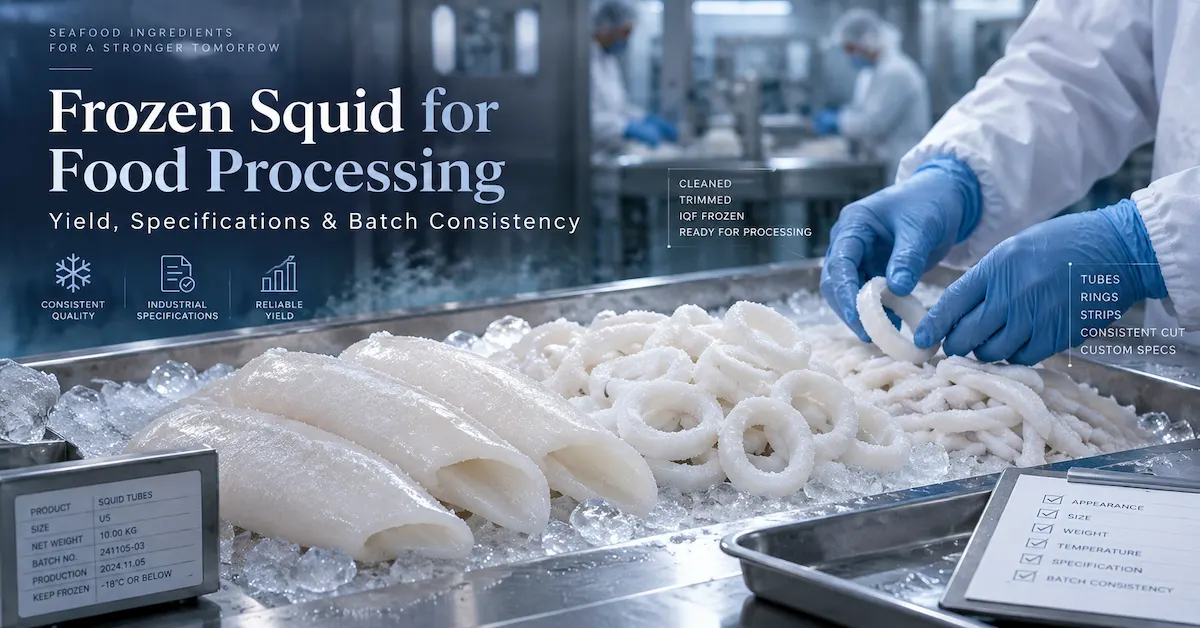
Processing may include:
Seafood Cleaning
Examples:
- Removing unwanted parts
- Preparing whole seafood
- Standardizing cleaning levels
Seafood Cutting and Portioning
Examples:
- Fillets
- Steaks
- Portions
- Rings
- Strips
Sorting and Grading
Examples:
- Size classification
- Weight control
- Product consistency
Freezing and Preservation
Examples:
- IQF freezing
- Block freezing
- Frozen storage management
Packaging Preparation
Examples:
- Bulk export cartons
- Foodservice packaging
- Retail packaging
- Private-label packs
A processed seafood supplier helps buyers reduce preparation work at destination while improving product consistency.
Explore Processed Seafood Products
How Importers Should Evaluate Seafood Processing Capability
Before choosing a supplier, importers should understand whether the supplier can support the required processing level.
Product Processing Capability
Ask:
- What seafood categories can be processed?
- What product forms are available?
- Can specifications be customized?
For example:
Fish Processing
Possible requirements:
- Whole fish
- Gutted fish
- Fillets
- Portions
Shrimp Processing
Possible requirements:
- Head-on shell-on
- Headless shell-on
- Peeled
- Deveined
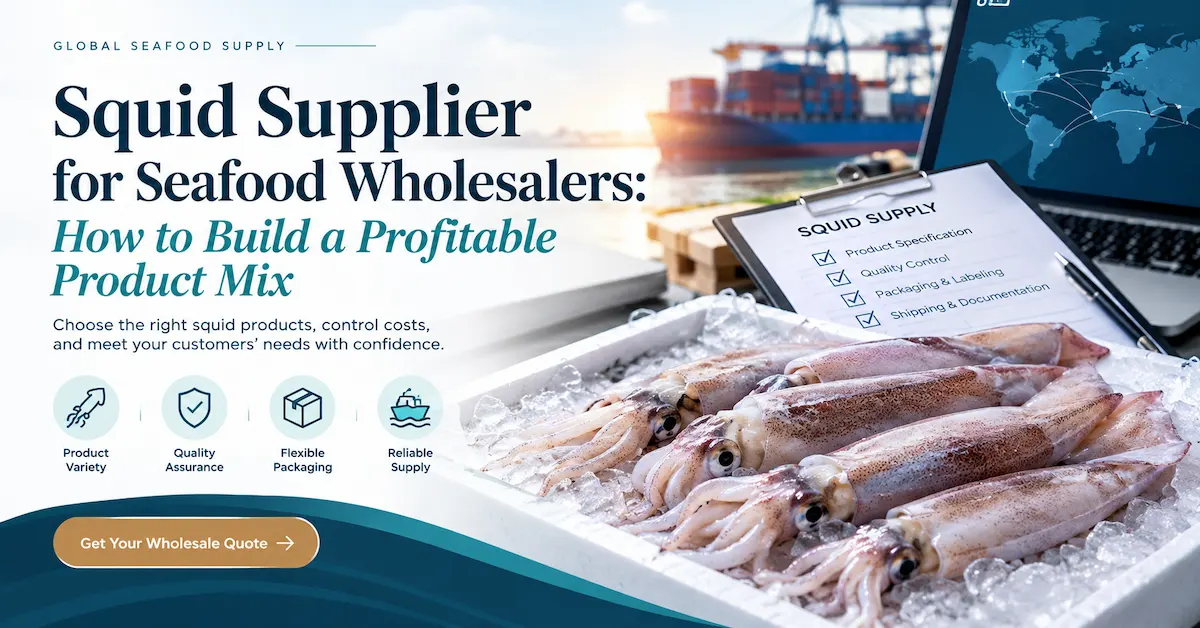
Squid Processing
Possible requirements:
- Whole squid
- Cleaned squid
- Tubes
- Rings
- Strips
Different processing methods create different:
- Labor requirements
- Yield results
- Packaging needs
- Market applications
Frozen Seafood Processing Supplier Selection Factors
A professional frozen seafood processing supplier should control both product quality and processing consistency.
Importers should evaluate:
Freezing Capability
Important questions:
- What freezing methods are available?
- How is frozen condition maintained?
- How are products stored?
Common freezing options:
IQF Processing
Benefits:
- Individual product separation
- Flexible portion handling
- Suitable for foodservice and retail
Block Freezing
Benefits:
- Efficient bulk storage
- Suitable for large-volume processing
- Practical for industrial applications
The correct freezing method depends on:
- Customer requirements
- Storage conditions
- Distribution model
- Final application
Custom Seafood Processing: Supporting Different Markets
Many international buyers require more than standard seafood products.
Custom seafood processing allows suppliers to adjust products according to customer needs.
Customization may include:
Product Form Customization
Examples:
- Different cuts
- Different sizes
- Different cleaning levels
Packaging Customization
Examples:
- Retail packaging
- Foodservice packaging
- Export cartons
- Private labels
Specification Customization
Examples:
- Weight requirements
- Size tolerance
- Processing standards
For importers, customization helps create products that match local market expectations.
However, buyers should confirm:
- Production feasibility
- Minimum quantity
- Packaging requirements
- Approval process
Discuss Custom Seafood Processing
How to Evaluate a Seafood Processing Factory
A professional seafood processing factory should provide evidence of production capability.
Importers should review:
Production Capability
Consider:
- Processing equipment
- Product categories
- Production workflow
- Quality management
Quality Control Capability
Review:
- Inspection procedures
- Product specifications
- Traceability records
Packaging Capability
Check:
- Export cartons
- Inner packaging
- Label requirements
- Storage information
Export Capability
Confirm:
- International shipping experience
- Documentation support
- Communication process
A capable seafood processing factory should understand both production requirements and international buyer expectations.
Seafood Supplier for Wholesalers: What Matters Most
A seafood supplier for wholesalers must support volume purchasing and stable distribution.
Wholesale buyers usually focus on:
- Consistent supply
- Competitive landed cost
- Standardized specifications
- Reliable packaging
- Repeat order capability
Important questions include:
- Can the supplier maintain the same product specification?
- Can cartons be supplied consistently?
- Can mixed product programs be managed?
- Can delivery schedules be supported?
A wholesale program depends on repeatability.
A supplier may provide an attractive first shipment, but long-term success depends on whether future orders match the approved standard.
Seafood Export Supplier: What Importers Should Confirm Before Ordering
A reliable seafood export supplier should understand that international seafood trade involves more than product availability. Export success depends on whether the supplier can coordinate:
- Product specifications
- Processing requirements
- Packaging standards
- Shipping preparation
- Documentation support
- Cold-chain management
For importers, export capability should be evaluated before placing large orders.
Product Documentation Management
International seafood shipments usually require accurate commercial information.
Buyers should confirm:
- Product description
- Product form
- Quantity
- Packaging information
- Batch identification
- Shipping documents
The information shown on:
- Product labels
- Cartons
- Commercial documents
- Shipping documents
should remain consistent.
Cold Chain Management
Frozen seafood requires stable temperature control throughout the supply chain.
Important stages include:
- Factory cold storage
- Container loading
- International transportation
- Destination warehouse
- Final distribution
A seafood export supplier should understand how to maintain product condition throughout the entire export process.
Destination Market Requirements
Different countries may have different import requirements.
Importers should confirm:
- Required documents
- Label requirements
- Packaging regulations
- Product specifications
before production begins.
This helps avoid delays caused by incomplete preparation.
Private Label Seafood Supplier Solutions for Brands
A private label seafood supplier helps retailers, distributors and food brands develop customized seafood products under their own brand identity.
Private-label seafood projects usually involve several stages:
Product Selection
Buyers need to decide:
- Seafood category
- Product form
- Size
- Processing method
Packaging Development
Important considerations include:
- Packaging format
- Brand design
- Label information
- Barcode requirements
- Storage instructions
Approval Process
Before production, buyers should confirm:
- Artwork
- Product specification
- Packaging sample
- Final approval requirements
Private label is not only printing a logo on packaging.
It requires coordination between:
- Product development
- Processing
- Packaging
- Quality control
- Export preparation
A professional supplier should help buyers manage the complete process.
Seafood Processing and Packaging: Why It Matters
Seafood processing and packaging directly influence product quality, transportation efficiency and customer experience.
Packaging should match the final application.
Wholesale Packaging
Suitable for:
- Seafood distributors
- Importers
- Large-volume buyers
Common requirements:
- Export cartons
- Bulk packs
- Stable carton structure
- Easy warehouse handling
Foodservice Packaging
Suitable for:
- Restaurants
- Hotels
- Catering companies
Important factors:
- Easy opening
- Practical pack sizes
- Product identification
- Storage convenience
Retail Packaging
Suitable for:
- Supermarkets
- Consumer brands
Important considerations:
- Product visibility
- Label accuracy
- Barcode information
- Consumer instructions
A suitable packaging solution helps products move efficiently from processing facilities to final customers.
How Importers Compare Processed Seafood Suppliers
When evaluating a processed seafood supplier for importers, buyers should compare suppliers using the same criteria.
| Evaluation Area | Questions Buyers Should Ask |
|---|---|
| Product capability | Can the supplier provide the required seafood form? |
| Processing | Can processing specifications be customized? |
| Quality control | How are products inspected? |
| Packaging | Can packaging match the market requirement? |
| Export ability | Can the supplier support international shipments? |
| Supply stability | Can the supplier support repeat orders? |
| Communication | Are specifications clearly confirmed? |
A supplier comparison should focus on long-term business suitability rather than only the first quotation.
Common Mistakes When Choosing a Processed Seafood Supplier
Only Comparing Product Price
A lower price may represent differences in:
- Product form
- Processing level
- Packaging
- Weight basis
Buyers should compare total value instead of only unit price.
Ignoring Processing Requirements
A product that requires additional preparation after arrival may increase:
- Labor cost
- Production time
- Waste
The correct processing level depends on the buyer’s application.
Not Defining Specifications Clearly
Unclear specifications can cause:
- Different product expectations
- Shipment disputes
- Repeat-order problems
Important specifications include:
- Product form
- Size
- Weight
- Packaging
- Quality requirements
Choosing a Supplier Without Testing Samples
Samples help buyers evaluate:
- Product appearance
- Processing quality
- Cooking performance
- Packaging suitability
A successful sample test creates a better foundation for bulk purchasing.
RFQ Checklist for Processed Seafood Supplier Selection
RFQ Checklist
Prepare key details before requesting a seafood quotation.
A complete RFQ helps suppliers provide:
- Accurate quotations
- Suitable product suggestions
- Realistic production schedules
- Better communication
How Bothwin Supports Processed Seafood Buyers
Bothwin provides seafood products for international buyers, including frozen fish, shrimp, squid, tuna and other seafood categories.
For importers, wholesalers and foodservice buyers, Bothwin can discuss:
- Seafood product selection
- Processing requirements
- Packaging solutions
- Export preparation
Buyers can review the available seafood categories through:
Explore Bothwin Seafood Products
For a project-specific discussion, buyers should provide:
- Product category
- Processing requirements
- Target market
- Quantity
- Packaging needs
The Bothwin team can evaluate suitable solutions according to the project requirements.
Discuss Your Seafood Processing Project
Frequently Asked Questions About Processed Seafood Suppliers
What is a processed seafood supplier for importers?
A processed seafood supplier for importers provides seafood products that have been prepared, processed, frozen and packaged according to customer requirements.
Why do importers choose processed seafood suppliers?
Processed seafood suppliers can help reduce destination-side labor, improve product consistency and provide products suitable for specific markets.
What should buyers check before choosing a frozen seafood processing supplier?
Buyers should evaluate processing capability, freezing methods, quality control, packaging, export experience and repeat-order stability.
Can seafood suppliers provide custom seafood processing?
Many suppliers can support customized processing based on product type, quantity and production requirements. Specific capabilities should be confirmed for each project.
How do seafood processing factories support wholesalers?
Seafood processing factories help wholesalers by providing standardized products, export packaging, stable specifications and production coordination.
What does a private label seafood supplier provide?
A private label seafood supplier can support customized packaging, product specifications, label requirements and brand-based seafood programs.
How should importers compare seafood export suppliers?
Importers should compare product quality, processing capability, documentation support, packaging solutions, supply reliability and communication.
Conclusion
Choosing the right processed seafood supplier for importers is not only about finding seafood products at competitive prices. A reliable supplier should provide processing capability, customization support, export experience and stable quality management.
For importers, wholesalers and seafood brands, the right partner should support:
- Processed seafood supplier requirements
- Frozen seafood processing supplier solutions
- Custom seafood processing
- Seafood processing factory capabilities
- Seafood supplier for wholesalers needs
- Seafood export supplier services
- Private label seafood supplier programs
- Seafood processing and packaging solutions
By evaluating product capability, processing standards, packaging options and export support before ordering, buyers can reduce sourcing risks and build stronger long-term seafood supply partnerships.
To discuss your seafood processing requirements, product specifications, packaging needs or export projects, contact the Bothwin seafood team with your product type, quantity and destination market.
Ready to Source Processed Seafood?
Share your seafood type, processing requirements, quantity and destination market.
Request Your Seafood Supply Quote