

A supermarket does not buy frozen fish only by the kilogram. The category team is buying a shelf proposition, a replenishment routine and a customer promise. The product must arrive in the agreed form, fit the store freezer, carry accurate information and remain commercially useful after freight, storage, picking and markdown risk are included.
That is why a search for a frozen fish supplier for supermarkets should lead to a structured conversation rather than a generic price list. The buyer needs to define species, processing, size, freezing method, glazing, pack format, label language, carton configuration, destination and expected reorder pattern. A supplier who understands those details can help the retailer avoid a common mistake: approving a product that looks attractive at the factory but is difficult to sell or handle in the store.
This guide explains how supermarket groups, importers, distributors and private-label teams can assess a supplier. It covers retail-ready formats, bulk programs, IQF and block freezing, supplier qualification, packaging, quality checks, cold-chain handoffs, landed-cost comparison and a practical RFQ. Bothwin's public product information describes frozen fish categories such as sea bass, red drum, red tilapia, black tilapia, snakehead and whole frozen tilapia for export. Exact species, size, availability, price, MOQ, documents and destination acceptance must be confirmed for each order.
Product starting point: Whole Frozen Tilapia for Export
Send a retail inquiry: Contact Bothwin
Quick answer for supermarket buyers
The right supplier is the one that can repeat an approved product specification at the required cost and service level. A supermarket may need whole fish for a traditional retail market, fillets for a convenient meal solution, IQF pieces for flexible household use or private-label packs for a national range. The word "frozen" does not define the commercial product by itself.
Before requesting a quotation, put these fields in the same brief for every candidate:
| Buying field | What the supermarket or importer should specify |
|---|---|
| Product identity | Commercial name, species identity and retail description |
| Form | Whole round, gutted, scaled, cleaned, fillet, steak or portion |
| Size | Piece weight, length, count grade, portion weight or dimensions |
| Freezing | IQF, block or another agreed method; glazing and net-weight basis |
| Pack | Retail pouch, tray, vacuum pack, foodservice bag or master carton |
| Label | Language, artwork, barcode, storage statement, lot code and claims |
| Quantity | Sample, pilot pallet, mixed container, full container and reorder forecast |
| Destination | Country, port, cold store, importer and required documents |
This table is simple, but it prevents several expensive misunderstandings. One supplier may quote a glazed bulk carton while another quotes a net-weight retail pack. One may assume whole round fish while another assumes cleaned fish. The figures cannot be compared until the product identity and commercial basis are aligned.
Request a Supermarket Frozen Fish Quote
Why supermarket programs need a specialist supplier
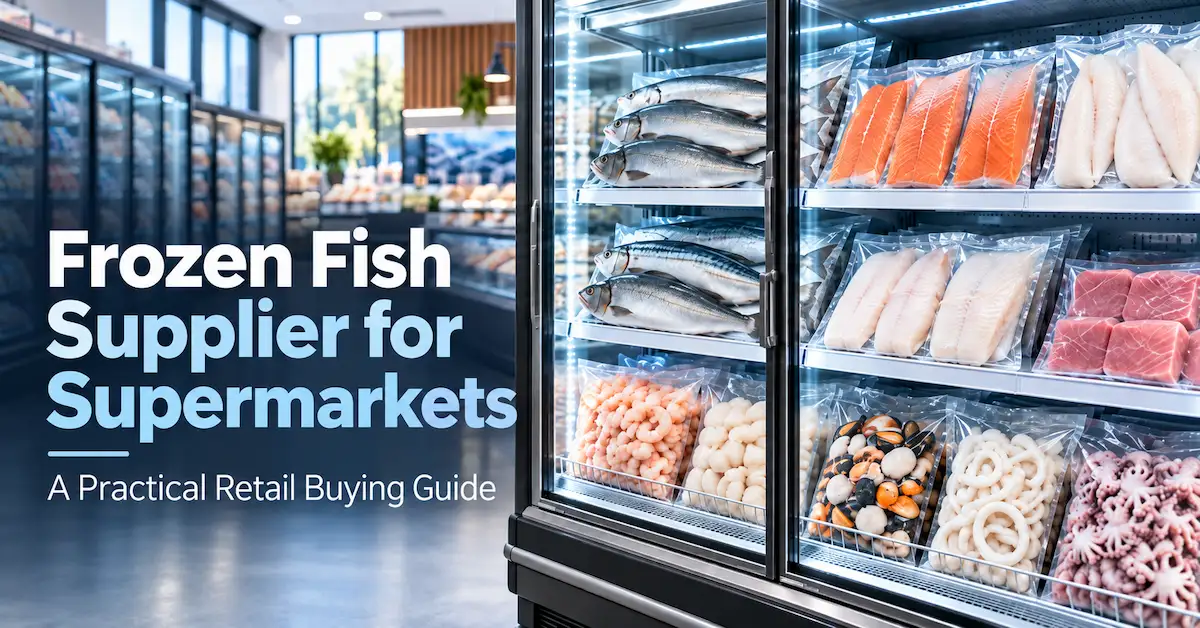
Retail frozen seafood sits at the intersection of food quality, packaging, logistics and merchandising. A product can be technically acceptable and still underperform if the bag does not fit the freezer, the size range is inconsistent, the label is difficult to read or the carton cannot be replenished quickly. A specialist supplier should be able to discuss the whole route from production to shelf.
The retailer also needs consistency between stores. A national chain may set one recipe or pack image, but its stores will have different freezer capacities and different rates of sale. A regional distributor may break down master cartons for independent shops. An online grocery operation may need packaging that survives picking and last-mile delivery. Each channel can use frozen fish, but each channel creates a different specification. A frozen seafood supplier for supermarkets should be able to explain how its wider seafood range, pack formats and export workflow can support that channel without blurring the specification for each fish.
Working with a frozen fish wholesale supplier can make sense when the importer has its own label, warehouse and store network. Wholesale does not mean "one carton fits every customer." The buyer should still define the retail or foodservice destination, pack count, net weight, pallet plan and break-bulk process. A good supplier can support a bulk export program while keeping the master product specification clear.
National supermarket chains
Large chains normally need repeatability, forecast planning and a controlled change process. The first approval may involve category management, quality assurance, packaging, legal review and supply-chain teams. The supplier should be prepared to provide a complete product sheet and representative samples. The trial pack should match the intended production pack closely enough for freezer fit, artwork and cooking or thawing tests to be meaningful.
Regional chains and independent stores
Regional buyers may value flexibility more than a single national design. They might need mixed sizes, a smaller MOQ or a faster replenishment route through a local distributor. A bulk carton with a clear inner pack can be practical, but the buyer must know who will apply labels, who owns the product after import and how lot traceability will be maintained when cartons are split.
Wholesale clubs and cash-and-carry
These channels can sell larger packs and may accept a higher unit weight if the value is visible to the shopper. The packaging needs to communicate quantity and storage instructions clearly. The retailer should model whether a large pack increases basket value or creates slower stock rotation. A product that is profitable in a high-volume club may not be right for a small neighborhood freezer.
Online grocery and meal planning
Online customers cannot inspect the pack in the same way as a shopper at a freezer door. Clear product photography, accurate weight, reliable pack counts and strong outer packaging matter. The importer should test how packs behave during order picking and short local delivery. A retail pouch that looks good in a store may need an outer case or protective insert for e-commerce handling.
Build the right supermarket product range
A supermarket range is usually stronger when it has a clear role for every SKU. The role might be value, family-size convenience, premium presentation, local cooking tradition or a private-label meal solution. The buyer should avoid adding formats only because a supplier offers them. Each SKU needs a reason to exist and a realistic plan for distribution, display and reorder.
| Range role | Possible product format | Questions for the buying team |
|---|---|---|
| Everyday value | Whole fish or bulk fillet pack | Can the pack deliver a clear value per usable kilogram without creating slow rotation? |
| Easy weeknight meal | Skinless fillets, portions or IQF pieces | Is the pack count easy to understand and is the cooking result consistent? |
| Traditional retail | Whole round, gutted or scaled fish | Does the size and processing match local preparation habits? |
| Premium shelf | Vacuum pack, selected size or cleaned presentation | Can the packaging, image and specification justify the shelf price? |
| Private label | Retail pouch, tray, sleeve or carton | Are artwork, barcode, language and claims ready before production? |
The range can include products from different species, but the buyer should not hide meaningful differences behind a generic "white fish" description. Sea bass, red drum, tilapia and snakehead have different market identities and cooking expectations. Link the shopper-facing name to the approved specification and destination label. If the importer wants to discuss a substitute, make that a documented change rather than an informal production decision.
Choose species and format with the shelf in mind
Bothwin's public product content positions several fish for wholesale, supermarket, restaurant, catering and private-label discussions. The following is a starting map for category planning, not a promise that every size or preparation is always available.
| Product family | Potential retail role | Specification points to confirm |
|---|---|---|
| Sea bass | Mild white fish for premium or everyday frozen ranges | Species identity, whole or processed form, size, skin/bone, pack and glazing |
| Red tilapia | Recognizable color and whole-fish retail appeal | Color standard, whole processing, size grade, carton and retail pack |
| Black tilapia | Broad-acceptance value and family cooking | Whole or cleaned form, weight range, count, glazing and label name |
| Red drum | Firm white flesh and regional seafood positioning | Size, processing level, retail presentation and customer instructions |
| Snakehead | Regional freshwater-fish channel and traditional recipes | Identity, whole preparation, size, pack, market label and destination rules |
| Whole frozen tilapia | Export bulk, retail whole-fish and private-label programs | IQF or block, size customization, storage reference, carton and OEM plan |
A retail team should ask what the product looks like after thawing and preparation, not only what it looks like in a supplier photograph. Size distribution, skin condition, abdominal cleanliness, trimming, broken pieces and freezer burn can change the shopper experience. A representative sample and a written acceptance standard provide a better basis than a catalog image alone.
View the Whole Frozen Fish Product Range
IQF, block and other freezing formats
The phrase IQF frozen fish supplier describes a freezing and handling expectation, not a complete retail product. IQF can keep individual pieces accessible so a distributor or household can use only what is needed. It may support portion control, mixed cooking occasions and smaller inner packs. The buyer should still confirm piece separation, glazing, pack weight, freezer stability and the finished appearance after thawing.
Block freezing can use space efficiently and may suit bulk distribution, processing or a value-oriented range. It can be less convenient when a store or customer needs individual pieces. The buyer should specify block dimensions, carton net weight, thawing instructions and how the product will be broken down in the destination warehouse. A block format is not automatically lower quality; it simply requires a different handling plan.
| Freezing format | Retail or distribution advantage | Risks to manage |
|---|---|---|
| IQF | Individual access, portion control and flexible pack use | Piece separation, pack cost, freezer space and glazing comparison |
| Block | Dense loading, bulk movement and processing efficiency | Thawing plan, break-bulk labor and slower access to individual pieces |
| Vacuum or retail sealed | Clean display, reduced handling and branded presentation | Seal integrity, artwork, puncture risk and label approval |
| Bulk export carton | Flexible downstream packing and lower outer-pack complexity | Who applies labels, how cartons are split and how lots remain traceable |
When comparing a bulk frozen fish supplier, ask whether the quoted weight is net fish, glazed product or another agreed basis. Add the cost of relabeling, repacking, warehouse labor and rejected units to the comparison. A low carton price can disappear if the importer must rebuild the product before it can reach a shelf.
Private label frozen fish: from artwork to approved pack
Private label is more than placing a supermarket logo on a pouch. It is a controlled product project with a specification, artwork, label review, sample approval, production window and change record. The buyer should define which elements are fixed and which can be recommended by the supplier.
A private label frozen fish program normally needs the product identity, pack material, net weight, drained or glazed-weight statement where relevant, storage wording, cooking guidance, lot code, barcode, country-of-origin statement and importer details. The exact requirements depend on the destination market and should be checked by the importer or compliance team. A supplier can prepare the pack, but the brand owner remains responsible for approving the information used on the consumer label.
Start with a digital artwork review, then request a physical blank or printed sample. Check the pack in the actual freezer environment. Does the product stand upright? Can the barcode be scanned? Is the fish visible enough for shoppers? Does condensation hide the front panel? Can the carton be picked without damaging the seal? These practical tests often reveal more than a screen mockup.
Retail pack questions to settle early
- Will the inner pack be a pouch, vacuum bag, tray, sleeve or carton?
- Is the net weight measured before or after glazing, and how will it be stated?
- Does the pack need a transparent window, product photograph or cooking image?
- Which languages, nutrition fields, storage statements and importer details are required?
- What is the master-carton quantity, pallet pattern and outer label format?
- How many printed packs are required for a trial, and what happens to unused packaging?
- Who approves artwork changes, claims and final print proofs?
How to qualify a frozen fish supplier China program
A buyer looking for a frozen fish supplier China can compare more than price. The China sourcing route can be useful for export-oriented whole fish, customized sizes, OEM packaging and coordinated container shipments. The importer still needs to verify the supplier, product and documents for the actual destination.
1. Product identity and traceability
Ask how the product is named on the specification, carton and export documents. Confirm the species or commercial identity required by the destination market. Request lot or batch identification and ask how the supplier links finished cartons to production records. If the retailer uses a different shopper-facing name, get that reviewed before artwork is approved.
2. Processing and size control
Define whole round, gutted, scaled, cleaned, fillet, steak or portion in measurable language. "Large" and "premium" are not enough. State target weight, acceptable range, average count and tolerance. If the product will be sold by piece, test several cartons rather than approving one attractive sample.
3. Freezing, glazing and net weight
Ask the supplier to state the freezing method and glazing basis. Glazing can protect the product during frozen storage, but the buyer needs a clear net-weight calculation for a fair comparison. Put the agreed basis in the quotation, purchase order and inspection plan. A change in glazing or pack weight should trigger a review rather than appearing silently in the next shipment.
4. Packaging and label discipline
Inspect carton strength, inner-bag seals, label placement, barcode area and pallet stability. The packaging should survive container loading, destination handling, cold-store picking and store replenishment. If an OEM pack is planned, review artwork, language and claims with the importer's compliance team. Public product pages are useful starting points but do not replace destination-specific legal review.
5. Communication and capacity
A reliable supplier answers the same specification fields every time and identifies assumptions. Ask what is currently available, what needs a production run and what the lead time means. Capacity should be discussed against the season, pack format, size range and reorder forecast. Do not treat a generic website statement as proof that every SKU is ready to ship.
Bothwin presents itself as a China-based seafood supplier supporting global buyers with export packing and OEM or private-label discussions. Current product availability, certificates, lead time, MOQ and destination documents still need sales confirmation for the specific program.
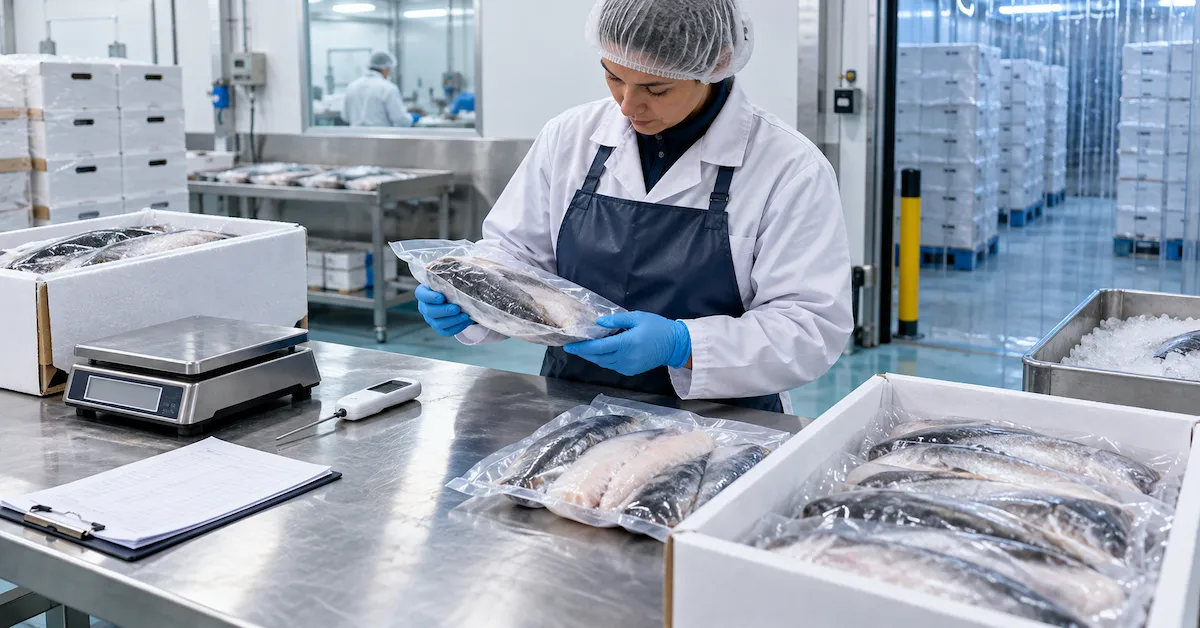
Quality inspection before a retail launch
Supermarket buyers should approve a product with a repeatable inspection method. The purpose is not to create unnecessary paperwork. It is to make sure the sample, first shipment and reorder are judged against the same reference.
| Inspection point | What to check | What to record |
|---|---|---|
| Identity | Species, commercial name, form and lot | Approved description and batch reference |
| Size | Piece weight, count, dimensions and tolerance | Sample weights and pass/fail range |
| Appearance | Color, skin, trimming, broken pieces and freezer condition | Photos plus written observations |
| Glazing | Agreed percentage or net-weight method | Test method and result |
| Packaging | Seal, carton, print, barcode area and pallet stability | Pack approval and deviations |
| Documents | Invoice, packing list, health or origin documents as required | Document checklist and issue owner |
Photographs are helpful, but they should support rather than replace the written acceptance standard. Keep a retained sample or reference images where practical. If the retailer accepts a size tolerance, write it down. If the retailer rejects a particular skin defect or broken-piece rate, write that down too. Clear records reduce arguments when the program grows from one pilot pallet to regular containers.
Cold-chain planning from factory to freezer aisle
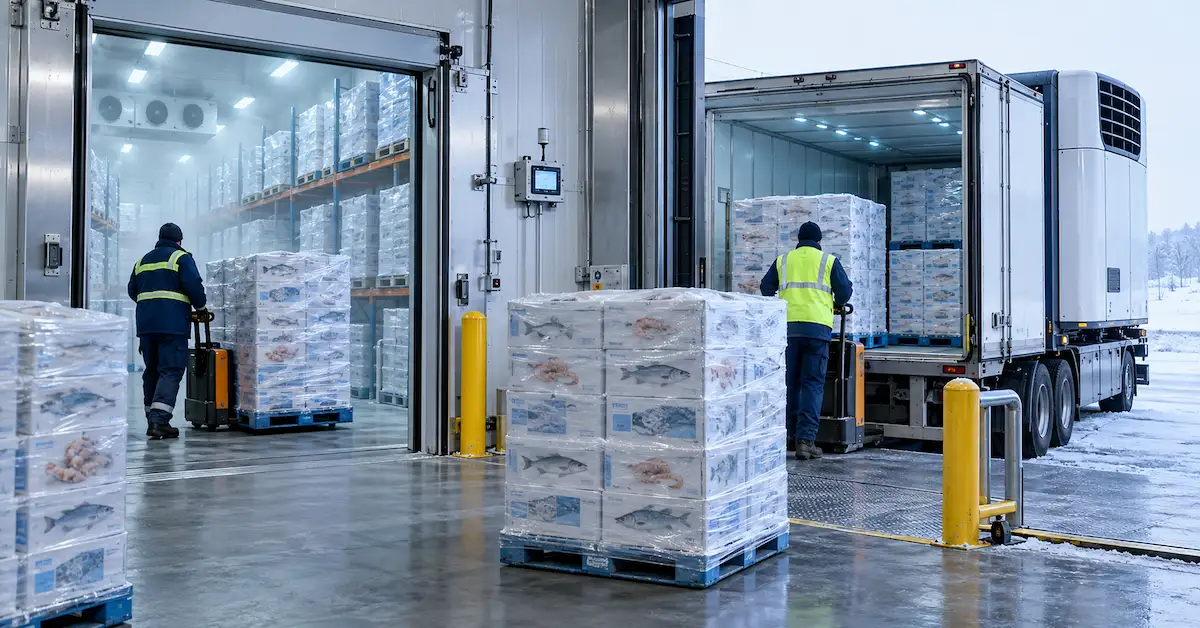
The cold chain is a sequence of handoffs: production, frozen storage, loading, port handling, reefer transport, customs clearance, destination cold store, distributor picking and store delivery. A supermarket program should identify who owns the product and who records the temperature or condition at each handoff.
Bothwin's public whole-fish content uses -18°C or below as a storage reference for frozen products. Treat that as a product-page reference and confirm the exact requirement for the shipment, destination and approved specification. The importer should also agree on what happens if a temperature deviation, damaged carton or thawing sign is found on arrival.
Receiving at the importer or distribution center
Set a receiving routine before the container arrives. Check seal information, carton count, visible condition, temperature according to the approved procedure, lot codes and any signs of water, crushing or temperature abuse. Photograph exceptions while the evidence is fresh. Move accepted product into the correct cold store without unnecessary door-open time.
Warehouse and store handling
Use first-in, first-out rotation and keep cartons off the floor. The distribution center should know whether a carton can be opened and returned to storage, whether inner packs are individually traceable and how short-dated stock is handled. Store staff need a simple replenishment instruction that matches the package and the product label.
Claims and corrective action
Agree who must be notified, what evidence is required and how quickly a claim must be raised. A clear process helps the supplier distinguish a production issue from a transport or storage issue. The retailer should avoid changing the product or relabeling cartons before evidence is collected unless food-safety rules require immediate action.
Compare frozen fish wholesale offers by landed cost
The phrase frozen fish for retail stores describes the channel, not the cost model. A supermarket must compare the amount that reaches the shelf after product, packaging, freight, duty, inspection, warehousing, picking, markdown and waste are considered.
Use the same assumptions for every supplier. A practical comparison sheet can include:
| Cost or service point | Supplier A | Supplier B | Supplier C |
|---|---|---|---|
| Species and form | Confirm | Confirm | Confirm |
| Net product weight | |||
| Glazing basis | |||
| Retail pack and carton count | |||
| MOQ and pilot option | |||
| Trade term and freight assumption | |||
| Destination documents | |||
| Lead time and reorder plan | |||
| Expected usable retail units | |||
| Claim and replacement process |
Do not fill missing fields with guesses. Mark them "to confirm" and ask the supplier to answer. If one quote includes retail packs and another includes bulk cartons, add the destination repacking cost before deciding. If one quote uses a different glazing basis, normalize net product weight. If a supplier offers a low MOQ but a higher unit price, compare the cash tied up in inventory and the likely rate of sale.
Retail margin questions
The category team can estimate a target landed cost by working backward from the planned shelf price. That estimate should allow for distributor margin, store margin, promotional funding, shrink, damaged packs and markdown. The product does not need to be the cheapest in the freezer; it needs a credible relationship between shopper value, supply reliability and margin.
Supermarket shelf execution and reorder discipline
A product launch is not complete when the container clears customs. Store teams need a shelf plan, a replenishment instruction and a way to report customer or handling problems. The buyer should test the product in a small group of stores before committing to a national roll-out.
Freezer fit
Measure the shelf depth, door opening, basket width and maximum stack height in representative stores. A pack that fits one freezer may block air flow or fall forward in another. Test both the retail unit and the master carton. Record the number of facings and the expected units per facing so the replenishment plan is realistic.
Price and product communication
The front of pack should make the product identity and quantity easy to understand. The store price card, website listing and carton should use consistent product language. Avoid claims that cannot be substantiated or that conflict with destination-market rules. If the product needs thawing or cooking guidance, keep the wording clear and practical.
Reorder signals
Define the reorder point before the launch. A chain with long import lead times may need a higher safety stock than a local distributor. A seasonal promotion can change the rate of sale quickly. The importer should share a forecast with the supplier and agree how far in advance a size, pack or artwork change must be communicated.
A practical supermarket pilot workflow
Step 1: Start with the shopper and shelf
Write the channel, shopper use, target price, freezer location, pack size and expected weekly sales. This turns a broad search into a product brief with a business reason.
Step 2: Select two or three product formats
Compare whole fish, fillet, portion, IQF and block options only when each has a clear retail role. Request the same data fields for every sample. Avoid comparing a retail pouch to a bulk carton without modeling the downstream work.
Step 3: Run a sample and pack test
Inspect the frozen product, thaw a controlled sample, cook or prepare it according to the intended customer use and check the pack in the store freezer. Record appearance, yield, handling time, seal condition and shopper-facing information.
Step 4: Approve a written specification
Convert the winning sample into a product sheet. Include size range, tolerance, form, freezing, glazing, net weight, packaging, label artwork, carton marks, documents and inspection method. Attach the approved sample photographs or reference code.
Step 5: Import a controlled pilot
Use a limited store group or distributor route. Track delivery condition, scan rate, sales per facing, returns, damaged units and customer comments. A pilot reveals operational problems while the cost of correction is still manageable.
Step 6: Review and repeat
Share the results with the supplier and decide what should stay fixed. If the product, pack or size changes, issue a new approval. A repeatable program is built through disciplined small improvements, not through silent substitutions.
RFQ template for a frozen fish supplier for supermarkets
Copy this template into an inquiry to a supermarket seafood supplier:
Product/channel: Frozen fish for supermarkets
Commercial identity/species:
Retail description and target shopper:
Form: Whole round / gutted / scaled / cleaned / fillet / steak / portion
Target piece or portion weight:
Acceptable tolerance and size grade:
Freezing method: IQF / block / other
Glazing percentage and net-weight basis:
Retail pack: pouch / vacuum / tray / sleeve / carton
Retail net weight and pieces per pack:
Master-carton quantity and pallet pattern:
Label language, artwork, barcode and storage statement:
Country of origin and importer details:
Destination country, port and cold store:
Quantity: Sample / pilot pallet / mixed container / full container
Forecast for repeat orders:
Required documents and inspection method:
Target shipment window and trade term:
Private-label requirements:
Please state MOQ, assumptions, available sizes, lead time and quotation validity.
The RFQ should invite the supplier to identify a better format when the requested product does not fit the shelf or the intended price point. That conversation can be useful, but any recommendation should be written into the final product specification before production.
FAQ for supermarket and importer buyers
What should supermarkets ask a frozen fish supplier?
Ask for species and product identity, form, size range, tolerance, freezing method, glazing, net-weight basis, packing, labels, MOQ, documents, lead time and a sample or pilot-order plan. Ask the supplier to identify assumptions instead of leaving missing fields for the importer to interpret.
Can a frozen fish supplier provide private label packaging?
Private label can be discussed when the supplier can review artwork, label language, pack dimensions, carton marks, minimum quantity and destination-market requirements before production. The importer or brand owner should approve the final label and any claims.
Is IQF frozen fish better for supermarket retail?
IQF can make individual-piece access and portion control easier, but the best format depends on the retail pack, price point, freezer space and shopper use case. Compare pack cost, thawing behavior, product appearance and rate of sale before choosing.
How do supermarkets compare frozen fish wholesale offers?
Normalize species, form, size, glazing, net weight, pack count, trade term, freight, documents, MOQ and quality tolerances before comparing landed cost. A gross kilogram price without those details is not a complete retail comparison.
What makes a reliable supermarket seafood supplier?
A reliable supplier communicates clearly, keeps a repeatable specification, supports traceability and inspection, manages export packing and can confirm current capacity instead of relying on a generic price. The relationship should become easier to repeat after the first approved shipment.
Final checklist before approving a supplier
- The shopper use, shelf location and target price are defined.
- Species identity and retail product name are aligned.
- Whole, fillet, portion, IQF or block format is specified.
- Size range, tolerance, glazing and net-weight basis are written down.
- Retail pack, carton, pallet and label requirements are included.
- Private-label artwork and destination compliance owners are identified.
- A representative sample has been inspected and tested.
- Cold-chain handoffs, receiving checks and claim timing are agreed.
- Landed cost includes freight, duty, warehouse work and likely shrink.
- MOQ, production capacity, lead time and reorder forecast are confirmed.
Bothwin's public product pages provide a starting point for importers and supermarket teams looking for a China-based seafood source. The next step is a product-specific conversation. Send the species or range, format, pack size, destination, estimated quantity and private-label needs so the supplier can respond with a specification and quotation your retail operation can actually use.