

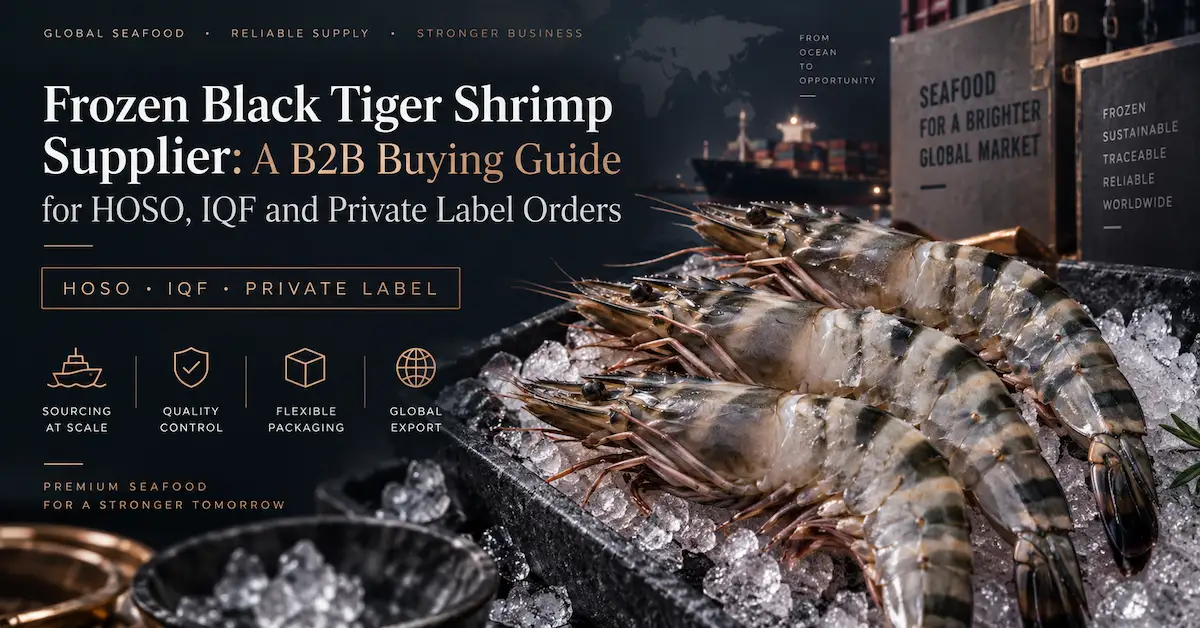
This guide is for importers, distributors, wholesalers, foodservice suppliers, processors, restaurant groups and private-label brands that need to compare a frozen black tiger shrimp supplier on evidence instead of a single headline price. It explains what to put into an RFQ, how to compare HOSO and processed forms, how to test IQF and block-frozen samples, how to plan bulk orders and how to reduce surprises before a commercial shipment.
Request a Black Tiger Shrimp Quote
Who this buying guide is for
Black tiger shrimp buyers rarely have the same operating model. An importer may need a full container program and a clear document set. A regional wholesaler may need mixed case planning and predictable carton dimensions. A restaurant distributor may value practical inner packs and piece separation. A supermarket brand may need artwork control, label review and a reliable private-label process. A processor may care most about raw material yield and a repeatable count.
The procurement question is therefore not simply, "Who sells black tiger shrimp?" The useful question is, "Which supplier can reproduce the product specification I can sell, cook, process or distribute in my market?" That change in wording improves the RFQ because it forces both parties to discuss the actual product and the route to market.
Use this article when you are evaluating:
- A frozen black tiger shrimp supplier for a new import program.
- Black tiger shrimp wholesale for distributors, seafood traders and foodservice networks.
- IQF black tiger shrimp for portion control and flexible kitchen handling.
- HOSO black tiger shrimp for whole-shrimp presentation, seafood counters and chef-led menus.
- A black tiger shrimp exporter that can coordinate product, packing and shipping documentation.
- Black tiger shrimp for foodservice with a pack that fits real restaurant demand.
- Bulk frozen black tiger shrimp for wholesale, processing or container planning.
- A black tiger shrimp import supplier that can discuss destination requirements before the order.
- Black tiger shrimp private label packaging for a branded retail or foodservice range.
The buyer's answer in one page
If you need a fast supplier comparison, score each candidate against the same seven questions. A supplier does not need to publish every answer on a public website, but the commercial team should be able to confirm the answers for your product and destination.
| Buyer question | Evidence to request | Why it affects the decision |
|---|---|---|
| What exactly is the product? | Product identity, form, raw or cooked condition, origin statement and sample specification. | A market name alone cannot define the physical product or the document requirement. |
| How is size measured? | Count per kg or lb, form counted, tolerance and sampling method. | HOSO, HLSO and peeled counts are not interchangeable. |
| How is the product frozen? | IQF, block or another agreed method, plus a handling sample. | Freezing method changes labor, thaw planning and portion control. |
| What does the price include? | Glaze, net seafood weight, inner pack, master carton, Incoterm and destination. | Two prices can represent different net product and logistics assumptions. |
| Can the pack be repeated? | Approved artwork, carton specification, lot marking and production reference. | Repeat orders need the same commercial standard, not only a good first sample. |
| What happens if there is a problem? | Receiving record, claim window, evidence requirements and corrective-action contact. | Clear escalation reduces delay when a shipment needs investigation. |
| What is confirmed for this order? | Written quotation with MOQ, current availability, lead time and destination documents. | Public product information is a starting point, not a shipment-specific contract. |
What makes a frozen black tiger shrimp supplier commercially useful?
A useful supplier is more than a company that can send a product photograph. The supplier should translate the buyer's menu, sales channel or processing plan into a written product specification. That specification becomes the reference for sampling, quotation, production, inspection, packing, receiving and repeat orders.
Bothwin Development (HK) Limited presents itself on the public product page as a seafood supplier supporting international distributors, wholesalers and trading companies. The page describes whole black tiger shrimp sourced from selected aquaculture farms, processed under quality controls and rapidly frozen for export. It also lists bulk export packaging and OEM/ODM packaging as options. These statements define the public starting point. They do not replace a shipment-specific confirmation of raw material, lot, count, packaging, documents or timing.
When you contact a supplier, look for a clear separation between three types of information:
- Confirmed public capability: what the product page and company information actually state.
- Quote-dependent options: size, pack, MOQ, destination, label, origin allocation and schedule that depend on the order.
- Buyer responsibilities: import permits, local label approval, destination rules, receiving controls and final market claims.
This separation builds trust. It is better to say "size and packaging are customized upon request and confirmed by quotation" than to publish a fixed range that may not match the next production plan. Professional buyers understand that seafood availability and destination compliance must be checked against the actual shipment.
Product identity: define black tiger shrimp before comparing price
Black tiger shrimp are widely known by the trade name Penaeus monodon, but the buyer should ask the supplier to confirm the identity used in the specification and commercial documents. The product name printed on a web page, the identity used on an import document and the description used on a retail label should be consistent for the target market.
Keep four locations separate in the RFQ:
- Supplier location: the legal company and commercial contact.
- Raw material origin: where the shrimp were farmed or harvested, subject to the supplier's order confirmation.
- Processing location: where grading, processing and packing are controlled.
- Shipment point: the port or logistics route used for the quoted trade term.
A buyer searching for a "black tiger shrimp supplier China" may actually need a supplier that manages a China-based export program, not necessarily shrimp that originated in China. The RFQ should make this distinction explicit. If the destination has origin, labeling, tariff or traceability requirements, send those requirements before the quotation is finalized.
HOSO, HLSO, peeled and deveined: choose the form for the application
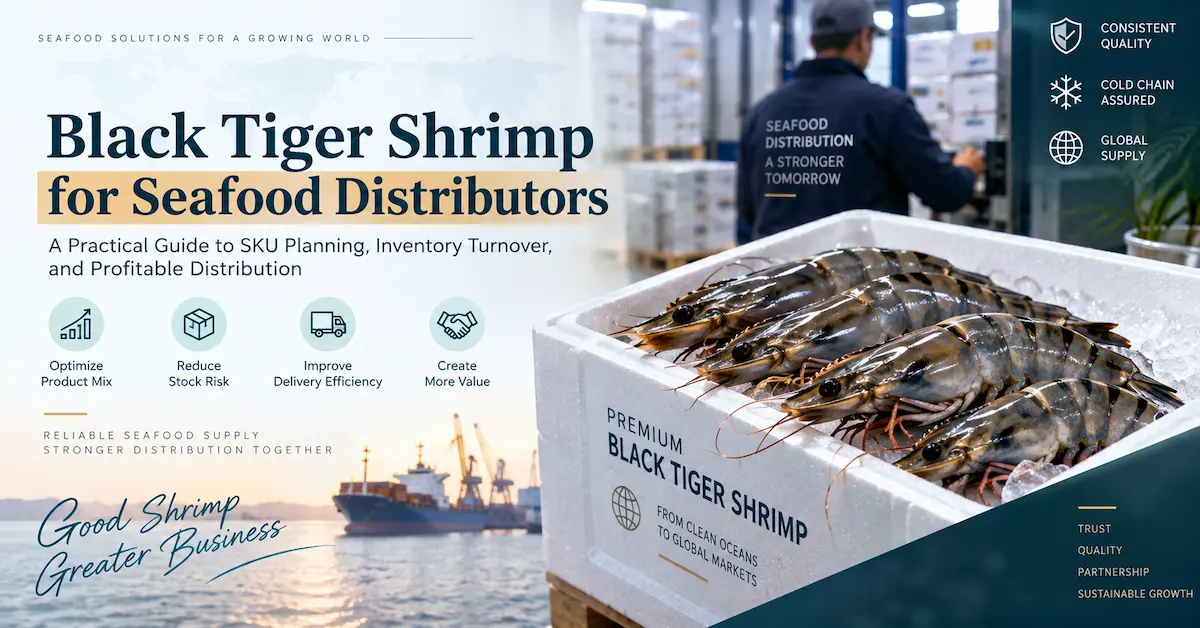
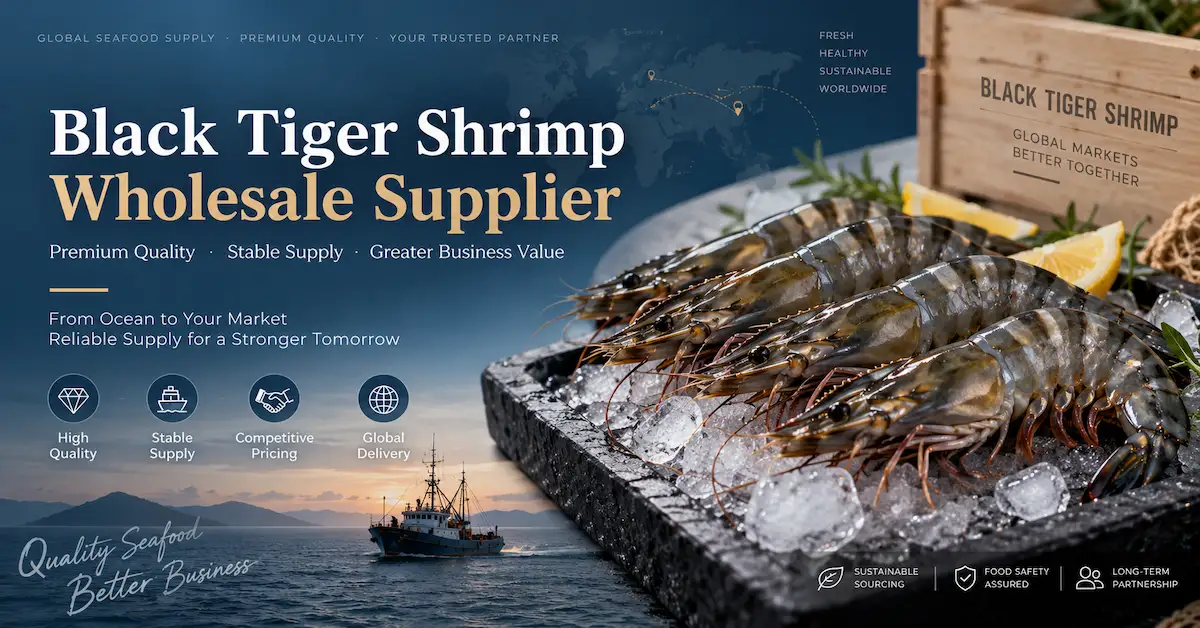
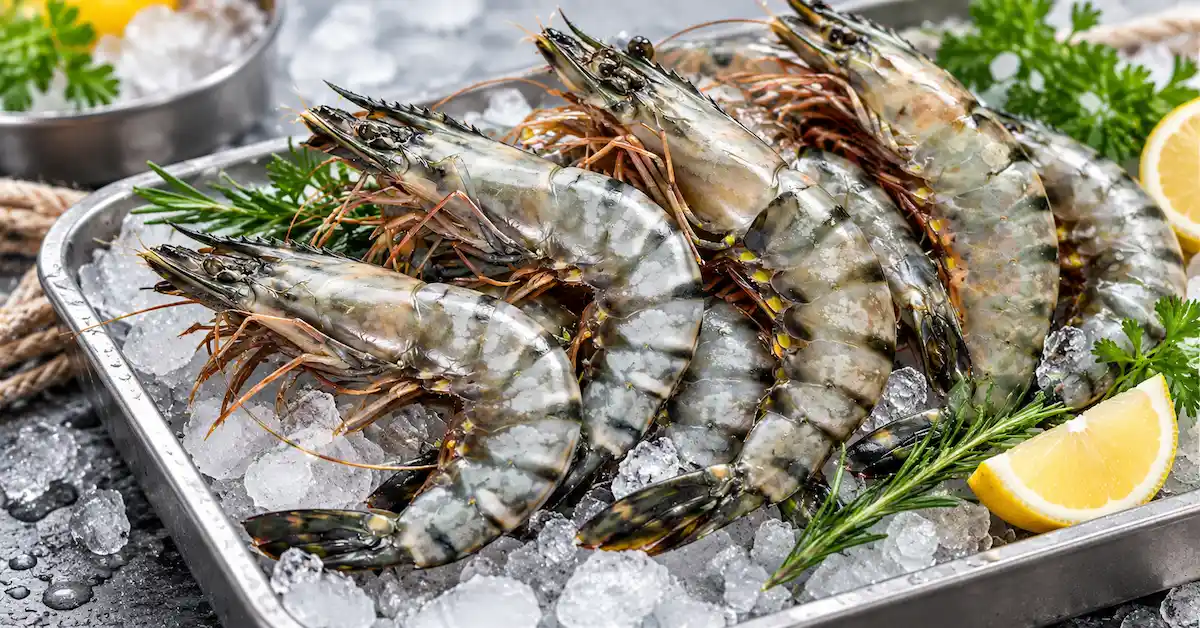
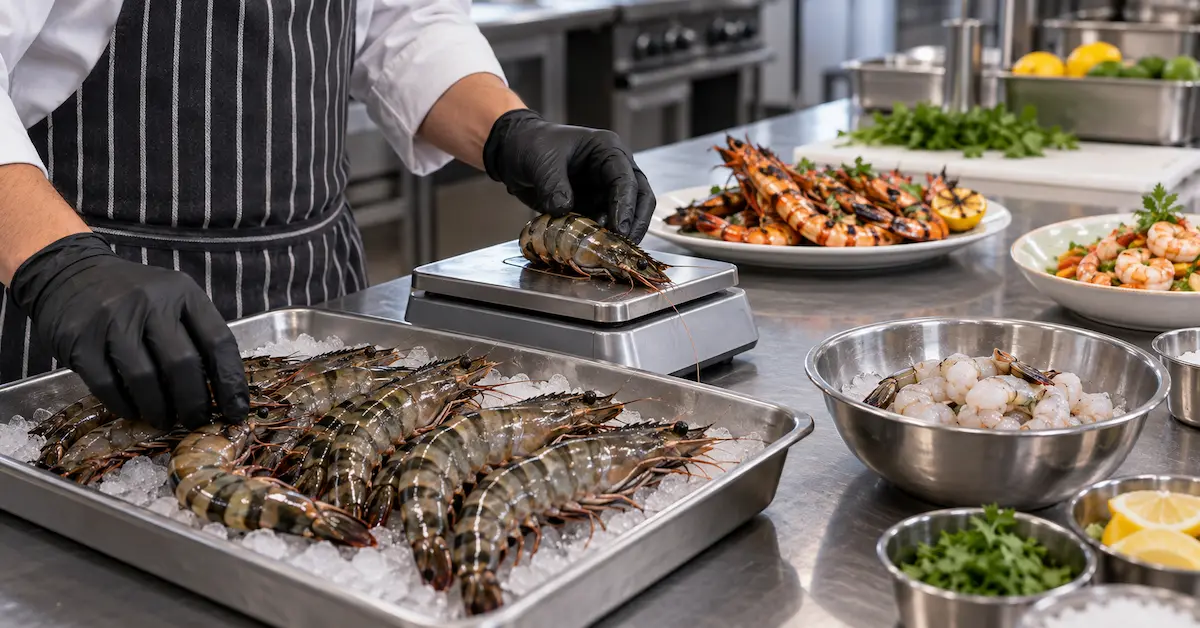
HOSO means head-on, shell-on. It preserves the whole appearance of the shrimp and can suit a grill, seafood boil, display counter, banquet presentation or recipe in which the head and shell contribute to the dish. It also leaves more work for the receiving kitchen and makes visual defects more apparent.
HLSO means headless, shell-on. It removes the head while retaining the shell, which can lower preparation work without eliminating the shell's cooking or presentation value. PTO usually means peeled, tail-on, while PD normally means peeled and deveined. Exact commercial definitions should be written into the specification because processing codes alone do not describe every cut, vein standard or tolerance.
| Form | Typical buyer use | Important acceptance points |
|---|---|---|
| HOSO | Whole-shrimp restaurant plates, seafood counters, grills and dishes that use shell or head. | Head attachment, antennae, shell condition, count, discoloration, breakage and presentation. |
| HLSO | Boils, curries, processing and menus that need shell flavor or appearance without head removal at destination. | Cut quality, shell integrity, count basis, usable yield and damage. |
| PTO | Skewers, pasta, prepared meals and foodservice applications that need less peeling labor. | Tail retention, peel consistency, vein requirement, count and broken pieces. |
| PUD | Processing or cooking applications where the buyer manages final deveining. | Vein condition, cut consistency, peel quality and yield. |
| PD | Central kitchens, sauces, prepared meals and buyers prioritizing reduced prep labor. | Deveining standard, cut style, damage, uniformity and cooking result. |
The correct form depends on the cost of labor, the guest's visual expectation, the recipe and the customer's selling proposition. A HOSO quotation can look inexpensive per kg but require more staff time. A processed form can cost more per kg but reduce labor and waste. Compare the total cost per usable portion, not only the invoice price.
When HOSO is the right commercial choice
Choose HOSO when the head and shell are visible on the plate, contribute to a broth or are part of the product story. The buyer should define a visual standard with the supplier. For a single premium shrimp on a plate, head attachment and shell appearance may be critical. For a busy seafood boil, the acceptable tolerance may be different.
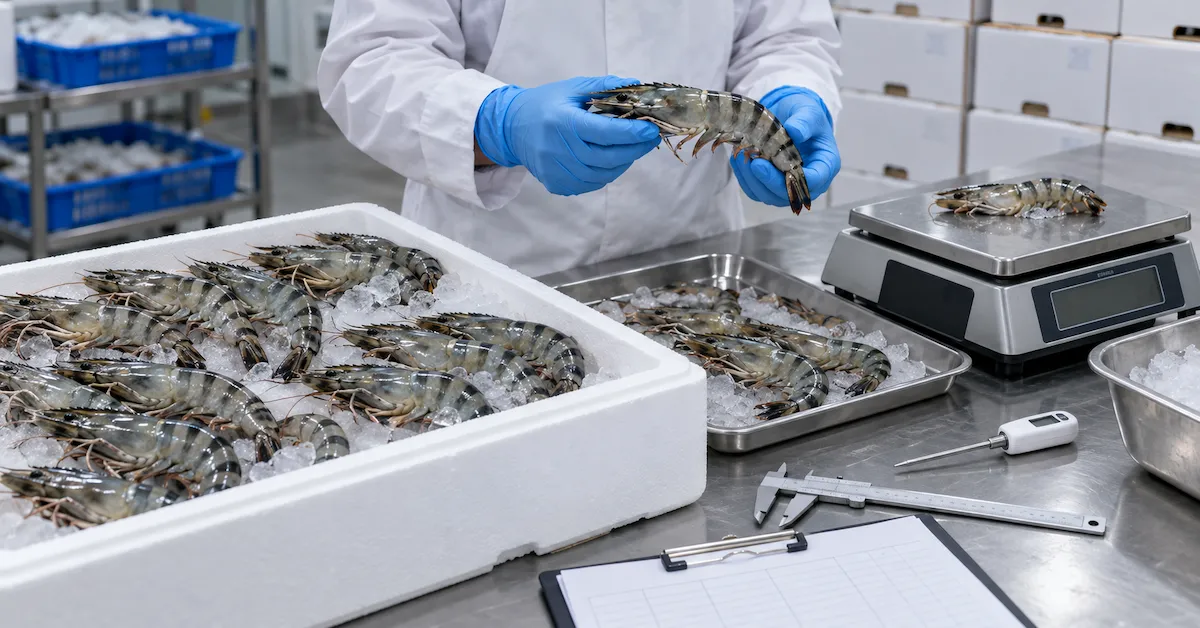
Ask for a representative sample and inspect it after thawing and cooking. Frozen appearance can hide loosened heads, cracked shells or inconsistent sizes. Record the condition of several units, not the most attractive individual shrimp. The commercial carton, not a hand-selected photograph, is what the customer will ultimately receive.
When peeled or deveined forms are the better operational choice
Use a processed form when the destination kitchen has limited labor, the product goes into a prepared meal, or the buyer needs predictable production throughput. Time the actual preparation of a HOSO sample and compare it with the proposed processed sample. Record active minutes, trim, broken pieces and cooked result.
Do not assume "peeled" means "deveined" or that "tail-on" means a particular cut. Put the physical result in words, photographs or an approved sample. The buyer and supplier should agree on the cut depth, tail condition, vein removal, count, tolerance and treatment of broken pieces.
IQF black tiger shrimp versus block frozen product
IQF means individually quick frozen. The practical buying benefit is individual access: a cook, repacker or processor should be able to take the required number of pieces without thawing an entire block. IQF is valuable when demand changes from day to day, portion control matters or multiple outlets share stock.
Block freezing can make sense when the customer always thaws a full unit, operates a large processing line or prioritizes dense loading and a simple bulk pack. The block needs a clear thawing plan because the buyer cannot take only a few pieces from the middle of the unit.
For an IQF sample, check:
- Whether pieces separate without force when the bag is opened.
- Whether there are excessive clumps, loose ice or broken pieces.
- Whether glaze appears reasonably even and follows the quoted basis.
- Whether the bag can be resealed or otherwise protected after opening.
- Whether count and size remain consistent after a normal controlled thaw.
- Whether pieces cook at a similar rate in the intended recipe.
For a block sample, record the block dimensions, net weight, product orientation, time needed to release the required quantity and the amount of product exposed during handling. The best freezing method is the one that fits the buyer's stock rotation, labor and customer promise.
Count size, grading and tolerance: write the unit
"Large black tiger shrimp" is not a complete commercial specification. Size can be expressed as pieces per kilogram, pieces per pound or another market convention. The counted form also matters. HOSO pieces cannot be compared directly with peeled pieces on the same count assumption because the head and shell change the weight.
Your RFQ should state:
- The physical form being counted.
- The unit, such as pieces per kg or pieces per lb.
- The target range and permitted tolerance.
- Whether the count is measured frozen, thawed or under another agreed procedure.
- How many bags or cartons will be sampled.
- How undersize, oversize and broken pieces are treated.
| Grading question | What to put in writing | Why a buyer should care |
|---|---|---|
| What is the count basis? | Pieces per kg or lb, plus the product form. | It prevents two suppliers from quoting different products under the same word "large." |
| What is the permitted spread? | Target range, upper and lower tolerance and sample size. | It protects plate consistency, retail pack count and processing yield. |
| What is a broken piece? | Definition, maximum allowance and evidence needed. | It creates a shared quality language for receiving and claims. |
| How is the result recorded? | Form, lot, date, equipment and sampling record. | It makes a later comparison possible if the result is disputed. |
A narrow size range may be more valuable than a lower price when the product is portioned, displayed or sold as a premium item. For a processor, the right tolerance may be the one that keeps the line running without excessive sorting. Discuss the actual downstream use before deciding how tight the grade should be.
Glaze, net weight and the real price comparison
Glaze can protect frozen shrimp from dehydration and surface damage. It also changes the way offers should be compared. Ask the supplier to state the glaze percentage or range, how it is measured, the declared net seafood weight and the tolerance. Confirm whether the quotation is based on gross packed weight, glazed product weight or net seafood weight.
For example, two cartons can have the same gross weight while containing different amounts of seafood because the inner pack, glaze or packaging weight differs. A buyer comparing offers should put all quotations on the same basis. The commercial spreadsheet should include:
- Net seafood weight per bag and per master carton.
- Glaze basis and acceptable range.
- Pieces or count range per stated unit.
- Packaging weight and number of inner bags.
- Price term, currency, Incoterm and destination assumptions.
- Freight, duty, cold storage and local distribution where applicable.
- Expected preparation or cooking yield for the intended application.
A lower quoted cost per gross carton is not automatically a lower cost per saleable serving. A buyer should compare like with like and keep the calculation visible to purchasing, finance, operations and the chef or production manager.
Packaging for wholesale, foodservice and private label
Packaging is part of the product specification because it affects protection, storage, picking, labeling, traceability and customer use. Bothwin's public black tiger product page states that bulk export packaging and OEM/ODM packaging are available options. The buyer should still confirm the actual inner pack, master carton, carton dimensions, pallet plan, lot marking and artwork scope for the proposed order.
Bulk export packaging
Bulk packaging often prioritizes transport efficiency and distributor handling. Ask for the number and weight of inner bags, master-carton dimensions, gross and net weight, pallet pattern and carton markings. If a warehouse breaks master cartons into smaller deliveries, each inner unit should retain enough product and lot information to remain identifiable.
Foodservice packaging
Foodservice buyers need a pack that matches the kitchen's batch size. A restaurant that uses a small quantity each day may prefer an inner unit that reduces repeated exposure and unnecessary thawing. A central kitchen may prefer a larger bag for a planned production run. The right answer depends on the demand pattern, freezer layout, distributor route and approved handling procedure.
Black tiger shrimp private label packaging
Private label is a commercial project, not only a printed bag. Discuss brand ownership, artwork files, languages, country-of-origin wording, barcode space, nutrition and allergen information, storage statement, lot coding, claims, film or pouch specification and approval responsibilities. The importer remains responsible for checking destination-market labeling and import rules.
Before approving a private-label pack, request a digital proof and a physical sample where practical. Check that the product name, net quantity, storage condition and lot field remain legible after freezing. Confirm whether the printed quantity, unused packaging and any tooling or setup cost are included in the quotation. A clear approval path prevents a late packaging change from delaying a shipment.
How to evaluate a black tiger shrimp exporter
A black tiger shrimp exporter coordinates the product specification, commercial quotation, packing plan, shipment documents and communication between the buyer and the processing or supply chain. A buyer should ask who controls each part of the order. The exporter may be the factory, an export company or a sourcing partner. The important issue is clear responsibility.
Ask these questions before a trial order:
- What legal company name will appear on the commercial documents?
- Who controls the processing and final packing for this product?
- Where will raw material origin and processing location be stated?
- Which product details are confirmed now, and which are quote-dependent?
- What sample will represent the proposed commercial order?
- How will count, glaze, net weight and defects be inspected?
- What documents can be discussed for the destination country?
- What is the procedure for a receiving issue or quality claim?
- What needs to be approved before artwork or production begins?
- Who will answer specification questions after the goods ship?
Good answers should be specific without overpromising. If the supplier needs to confirm a certificate, origin allocation or lead time with the production team, that is normal. The important thing is that the open item is recorded and resolved before the order is treated as final.
Quality and food-safety evidence buyers should request
Bothwin's public black tiger product page states HACCP quality management, strict hygiene and cold-chain control, export-grade inspection standards and full batch traceability. A buyer should use these statements as a starting point for a product-specific evidence request. Do not treat a general website statement as a substitute for reviewing the current documents that apply to the facility, product, lot and destination.
Depending on the market and the buyer's internal program, the evidence discussion may include:
- Product specification and approved sample.
- Processing and packing description.
- Lot identification and traceability flow.
- Cold-chain and storage statement.
- Current food-safety or quality-management documentation applicable to the facility.
- Inspection or test records that the supplier can legitimately provide for the order.
- Destination-specific export or import documents requested by the buyer's compliance team.
For general industry context, buyers can review the FAO/WHO Codex Code of Practice for Fish and Fishery Products, CXC 52-2003 and the U.S. FDA Fish and Fishery Products Hazards and Controls Guidance. These are reference sources, not a claim that every destination applies the same requirements or that a particular shipment is automatically compliant. The importer should confirm the rules that apply to its own market and product.
Cold chain, storage and receiving controls
The public product page states storage at -18 C or below. The buyer should turn this into an operational requirement that covers shipment, arrival, cold storage, picking and delivery to the final customer. The exact receiving procedure belongs to the buyer's food-safety system and local rules, but the supplier and buyer should agree on the product condition expected on arrival.
At receiving, the team can record:
- Container or vehicle reference and arrival time.
- Carton count, visible damage and wet or crushed packaging.
- Product form, count marking, lot and storage statement.
- Temperature or condition readings under the buyer's approved procedure.
- Photographs of carton, bag, lot code and any suspected issue.
- Whether affected cartons were isolated before the pallet was distributed.
Traceability is much easier when the lot stays connected to the inner bag. If a distributor splits a master carton, the inner packs should retain useful identification. A receiving record that includes the actual carton and lot is more useful than a general note that the shipment was "not good."
MOQ, lead time and quotation variables
Buyers often ask for MOQ and lead time before they have defined the product. That is understandable, but the answer may change with form, count, pack, private-label artwork, destination and current production schedule. Bothwin's public product information does not state one universal MOQ or lead time for every black tiger shrimp order, so these items should be requested in the RFQ and confirmed in the quotation.
Quotation variables commonly include:
- Product form: HOSO, HLSO, peeled, deveined or other agreed form.
- Count size, range and tolerance.
- IQF, block or another freezing method.
- Glaze and declared net seafood weight.
- Inner pack, master carton and pallet plan.
- Stock item versus made-to-order production.
- Private-label artwork, print quantity and approval timing.
- Sample requirement and trial-order quantity.
- Destination, port, Incoterm and document needs.
- Seasonal or production scheduling constraints.
A serious importer should ask for two lead times if relevant: the time needed for sample or artwork approval, and the time from final order confirmation to shipment. This helps distinguish a ready product from a customized program and makes internal planning more realistic.
Build a quote-ready RFQ
The fastest way to receive a useful answer is to send a complete, readable brief. A supplier cannot price or confirm a product accurately if the message says only "please quote frozen black tiger shrimp." Include the commercial purpose and the minimum specification that determines the comparison.
| RFQ section | Buyer information to include |
|---|---|
| Buyer and destination | Company, market, destination port or cold store, sales channel and contact person. |
| Product identity | Black tiger shrimp, requested scientific identity confirmation, raw or cooked condition and origin requirement. |
| Form | HOSO, HLSO, peeled, peeled and deveined, tail-on or another defined form. |
| Size | Pieces per kg or lb, desired range, tolerance and counting basis. |
| Freezing | IQF, block or other preferred method and intended thawing pattern. |
| Glaze and weight | Target glaze, net seafood weight, gross weight and comparison basis. |
| Pack | Inner pack, master carton, private label or neutral export pack, pallet and lot marking. |
| Order plan | Sample, trial quantity, monthly demand, pallet or container estimate and repeat-order expectation. |
| Commercial terms | Incoterm, currency, price validity, payment discussion and delivery point. |
| Documentation | Current documents requested by the destination and the buyer's compliance team. |
| Timing | Sample approval date, artwork approval date, target shipment window and seasonal constraints. |
Ask every supplier to answer the same fields. A comparison sheet should show "confirmed," "available with conditions," "pending confirmation" or "not offered." This is more useful than coloring the lowest price in a spreadsheet before the specification is aligned.
Sample approval: move from photograph to evidence
A sample is not only a tasting. It is a controlled reference for the product that the buyer is considering. Record the sample date, supplier reference, form, count, pack, lot if available, net weight, glaze basis, frozen condition and intended commercial use.
Run the sample through the real process:
- Inspect the frozen bag and carton before opening.
- Count or weigh a defined sample using the agreed basis.
- Thaw under the buyer's planned procedure and record the time.
- Measure drained weight and note visible damage or broken pieces.
- Complete the actual preparation, peeling, deveining or portioning step.
- Cook the product in the intended recipe, pan, grill or production line.
- Record cooked yield, texture, appearance, shrinkage and service time.
- Photograph the result and list one decision: approve, reject or revise a named field.
For foodservice, conduct a controlled live-service test after the bench test. A quiet tasting will not show how the product behaves when several tickets arrive at once. For a retail or wholesale program, inspect multiple inner packs and confirm that the approved appearance is not limited to one selected tray.
Buying black tiger shrimp for foodservice
Black tiger shrimp for foodservice should be specified around the menu and the kitchen's labor plan. A signature grilled whole shrimp dish may need HOSO and a visual standard. A central kitchen producing sauces may need peeled and deveined pieces. A hotel may need different packs for banquets, buffet, room service and a specialty restaurant.
Start with four operational questions:
- What should the guest see on the finished plate?
- How many pieces and what cooked weight belong in one serving?
- How much prep labor is available during the busiest service?
- What is the smallest practical thaw batch for a normal day?
Then match the form, count and pack to those answers. A restaurant that needs six pieces for one order may benefit from IQF access. A high-volume banquet kitchen may prefer a planned block or larger bag if the full unit is used quickly. The supplier should hear these details because they influence the proposed pack and the sample test.
Wholesale and bulk frozen black tiger shrimp planning
Wholesale volume can lower unit cost, but it also increases working capital, freezer space and the impact of a specification mistake. A buyer planning bulk frozen black tiger shrimp should calculate weekly sales, peak demand, safety stock, cold-storage cost, distributor handling and remaining shelf life at arrival.
For a bulk program, confirm:
- How many service or selling days one case represents.
- Whether the inner pack can be picked without thawing more than needed.
- Whether carton dimensions fit the cold store and pallet equipment.
- Whether the commercial grade is consistent across the planned load.
- How mixed sizes, mixed forms or mixed labels will be handled if allowed.
- How lot traceability is retained when the distributor splits cases.
- What evidence the buyer keeps for receiving and claims.
Do not use a container quantity to hide an unclear product. First approve the specification and test the commercial sample. Then use demand planning to choose pallet, mixed-load or container volume. A smaller approved trial can protect a much larger repeat program.
How to compare suppliers without turning the decision into a price contest
Create a weighted comparison that reflects the buyer's actual risk. A restaurant distributor may give more weight to piece separation and inner packs. A private-label importer may weight label control and repeat artwork. A processor may weight raw material yield and count tolerance.
| Evaluation area | Example evidence | Suggested decision question |
|---|---|---|
| Product match | Approved sample and written specification. | Is this the physical product our customer expects? |
| Consistency | Multiple-pack inspection and production reference. | Can the supplier repeat the approved sample? |
| Operational fit | IQF separation, pack size, thaw and handling test. | Can our team use the product on a busy day? |
| Commercial transparency | Net basis, glaze, Incoterm, MOQ and validity. | Are all quotations comparable? |
| Traceability | Lot marking, receiving record and document set. | Can we identify and investigate a shipment issue? |
| Customization | OEM/ODM pack, artwork proof and approval workflow. | Can the supplier support our sales channel without vague claims? |
| Communication | Named commercial contact and response to open items. | Will questions be answered before and after shipment? |
Price still matters, but it should enter the comparison after the product basis is aligned. A supplier with a slightly higher price may be a better commercial choice if it reduces labor, protects portion consistency, improves pack handling or reduces the risk of a rejected shipment.
Common sourcing mistakes and how to prevent them
1. Asking only for "large shrimp"
Prevention: state the form, count unit, range and tolerance. Ask for a physical sample.
2. Comparing HOSO and peeled prices as if they were the same product
Prevention: calculate usable yield, prep labor, cooked yield and saleable portion cost.
3. Treating IQF as a guarantee of easy handling
Prevention: open the proposed pack after a realistic transport and storage route, then test piece separation.
4. Ignoring glaze and net weight
Prevention: put glaze, net seafood weight and inspection basis beside every price.
5. Approving a beautiful photograph
Prevention: inspect multiple bags or cartons and ask how the sample represents production.
6. Assuming a public product page contains the current offer
Prevention: ask for current availability, MOQ, lead time, origin, documents and packaging for the exact destination.
7. Leaving private-label artwork until the end
Prevention: agree on artwork ownership, languages, label fields, proof approval and print timing before production scheduling.
8. Sending a quality claim without evidence
Prevention: photograph the carton, bag, lot and condition, isolate the affected product and follow the agreed claim window.
What Bothwin can confirm for a black tiger shrimp inquiry
Based on the public English product page, Bothwin can begin a conversation about whole frozen black tiger shrimp with head-on, shell-on form, customized sizing on request, bulk export packaging and OEM/ODM packaging options. The page also states storage at -18 C or below, HACCP quality management, hygiene and cold-chain control, export-grade inspection standards and full batch traceability.
For a useful quotation, send the buyer's product form, size basis, freezing method, glaze or net-weight requirement, pack preference, target quantity, destination and intended application. Bothwin can then confirm what is available for the order, which details need a sample, what documents can be discussed and whether the requested packaging and timing are practical.
FAQ for importers and B2B buyers
What should I ask a frozen black tiger shrimp supplier first?
Start with product identity, form, count basis, freezing method, glaze, net weight, pack, destination and intended application. Then ask for current availability, MOQ, lead time, quotation validity and the documents needed for your market.
What does HOSO black tiger shrimp mean?
HOSO normally means head-on, shell-on. It keeps the whole shrimp presentation and can suit grills, seafood counters and dishes that use the head or shell. Confirm the physical standard and count basis in the supplier's specification.
Is IQF black tiger shrimp always better than block frozen shrimp?
No. IQF can help when a buyer needs individual piece access and flexible portioning. Block frozen product can suit a processor or kitchen that thaws the full unit. Choose the format that matches the buyer's handling, demand and thawing process.
How do I compare black tiger shrimp wholesale offers?
Put all offers on the same basis: form, count unit, tolerance, freezing, glaze, net seafood weight, inner pack, master carton, Incoterm, destination and documents. Then compare landed cost and usable yield rather than gross carton price alone.
Can I request black tiger shrimp private label packaging?
Bothwin's public product page states that OEM/ODM packaging is available. Private-label buyers should send artwork, language, label fields, pack size, target quantity and destination requirements. Print quantity, artwork approval, packaging lead time and any setup cost should be confirmed in the quotation.
What is the MOQ for black tiger shrimp?
MOQ is order-dependent. It may change with the form, count, pack, private-label requirements, production plan and destination. Request MOQ for the exact specification rather than relying on a universal number.
What storage condition is stated for the Bothwin black tiger shrimp product?
The public product page states storage at -18 C or below. The importer should also confirm the destination cold-chain, receiving procedure, transport plan and any local requirements that apply to the shipment.
Can I buy black tiger shrimp for foodservice?
Yes, the product can be discussed for foodservice applications. Tell the supplier whether the shrimp is for a grill, boil, curry, buffet, central kitchen, distributor or other use. Include the serving count, prep labor, pack size, weekly volume and destination so the proposed form can be evaluated properly.
What should I include in a sample approval?
Record the sample form, count basis, weight, glaze, pack, lot reference if available, thawing method, preparation time, cooking result, usable yield, appearance and decision. A sample should represent the product you intend to order, not only a selected photograph.
What external guidance should seafood importers review?
For general reference, review the Codex Code of Practice for Fish and Fishery Products and the U.S. FDA Fish and Fishery Products Hazards and Controls Guidance. These references do not replace destination-specific advice from the importer's compliance team or authorities.
Final buyer checklist before requesting a quotation
- We have stated black tiger shrimp and asked for product identity confirmation.
- We have chosen HOSO, HLSO, peeled, deveined or another defined form.
- We have written the count unit, range and tolerance.
- We have decided whether IQF or block freezing fits our operation.
- We have stated glaze, net seafood weight and comparison basis.
- We have specified inner pack, master carton, pallet and lot-marking needs.
- We have explained whether the product is for wholesale, processing, foodservice, retail or private label.
- We have provided destination, port, cold store and document requirements.
- We have requested current MOQ, availability, lead time and quotation validity.
- We have planned a sample test through thawing, preparation, cooking or repacking.
- We have agreed how receiving evidence and claims will be handled.
- We have avoided treating general website information as a fixed shipment specification.
The strongest inquiry is specific enough to receive a useful answer and flexible enough to let the supplier propose a workable product. Send the intended application, form, count, pack, quantity and destination. Bothwin's team can then confirm the available frozen black tiger shrimp option, discuss packaging and prepare a quotation that can be compared on a real commercial basis.