

A shrimp order can look fine on a purchase sheet and still frustrate the kitchen. Pieces may run too small for the plate. A bag may be awkward to thaw during service. Heads can break when the menu depends on a whole presentation. Glaze can change the apparent value of a case. The chef then discovers the problem at 6:30 p.m., not while the buyer is comparing quotations.
Buying black tiger shrimp for food service works better when the menu, prep station and delivery pattern are written before the product is chosen. A grill restaurant has a different need from a hotel banquet kitchen. A central production unit may value peeled yield and count accuracy; a seafood dining room may happily spend more prep time to keep the head and shell.
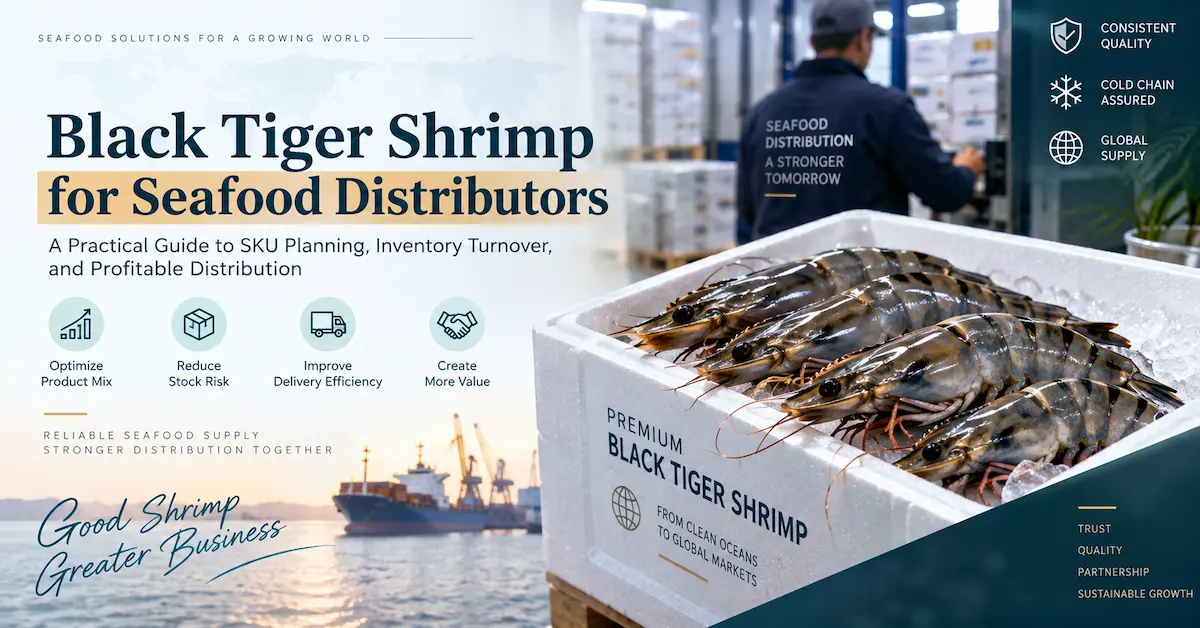
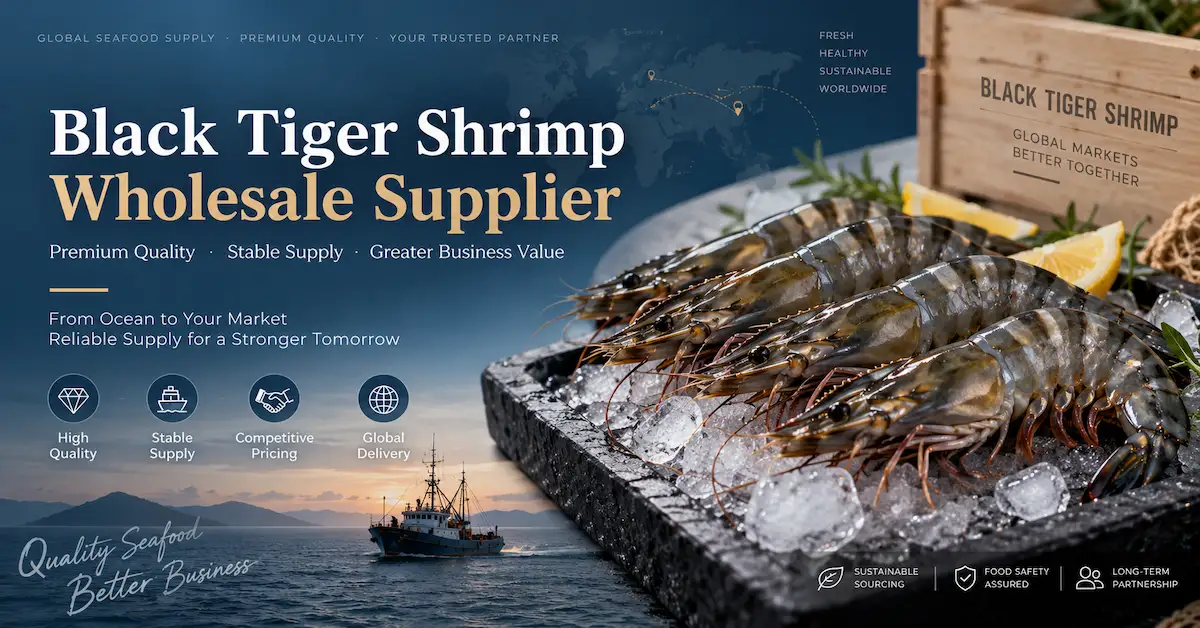
Bothwin's current Fresh Shrimp category page lists Black tiger. The page is a verified place to begin an inquiry, but it does not publish one fixed foodservice SKU. Product origin, scientific identity, raw or cooked condition, form, count, freezing, glaze, pack, MOQ, price, timing, certificates and destination documents need confirmation for the actual order. This guide treats each of those details as a buying decision rather than an automatic product claim.
Product category: Fresh Shrimp - Black Tiger
Foodservice inquiry: Contact Bothwin
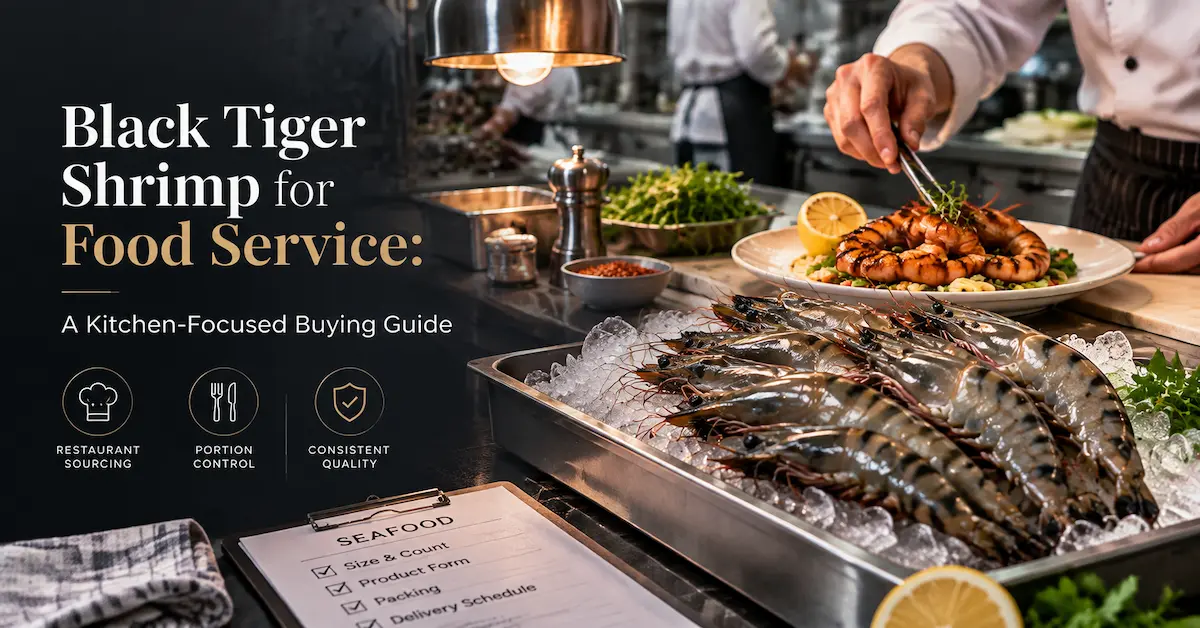
The short answer for chefs and buyers
The best foodservice shrimp is the one the kitchen can use consistently on its busiest day. Start with four questions. Is the shrimp meant to arrive whole on the plate? How many pieces belong in one serving? How much preparation can the kitchen absorb? Will the team thaw by the bag, by the pan or by the piece?
Those answers point toward the form and pack. HOSO shrimp keep the head and shell for strong visual presentation. HLSO removes one preparation step but preserves the shell. When labor is tight, a cook may be better served by tail-on shrimp or a peeled-and-deveined pack. IQF makes individual access easier, while a block can suit a production kitchen that plans to thaw the full unit.
| Kitchen question | What it changes in the order |
|---|---|
| What does the finished plate show? | Whole shrimp, shell-on, tail-on or fully peeled form |
| How is the dish portioned? | Count size, piece tolerance and number of shrimp per serving |
| When does prep happen? | IQF access, bag size, thaw plan and daily production quantity |
| Who prepares the shrimp? | Head removal, peeling, deveining and training needs |
| How many covers are expected? | Case quantity, safety stock and delivery rhythm |
| Where is stock held? | Master-carton dimensions, inner packs and freezer organization |
Discuss Your Menu and Pack Requirement
Begin with the dish, not the carton
A buyer asking only for “large black tiger shrimp” leaves nearly every useful choice open. Large in which count system? Head-on or peeled? A single whole shrimp across a plate or six smaller pieces in a curry? The kitchen provides a better starting point than the wholesale list.
Take one actual menu item and write the intended plate. A charcoal-grilled whole shrimp dish may depend on an intact head, shell bands and a dramatic length. A pasta can work better with peeled tail-on pieces that cook quickly and remain easy to eat. A banquet skewer needs pieces that are close enough in size to finish together. A hotel buffet may need a product that holds its appearance across repeated small batches.
Start with what the guest expects for the menu price. Size may carry the dish. On another plate, the firmer bite or the banded shell is what makes the shrimp feel distinctive. If all of that disappears inside a heavily sauced filling, the kitchen may not be using the product to its advantage. Spend on black tiger shrimp where the guest can notice them or where their handling solves a real kitchen problem.
Match the shrimp form to the station
Abbreviations make ordering faster, yet they do not tell a cook how many minutes of work remain. Ask the chef to handle samples of the proposed forms. A written specification should then describe the physical result that was approved.
For the grill, HOSO gives the most visual character and the most prep. Heads need handling, shells need checking and the costing method must reflect what the guest eats. HLSO removes the head before the case reaches the restaurant but leaves the shell for a boil, curry or sharing plate.
PTO fits many fast stations because the cook gets a peeled body and a visible tail. It can move from a skewer to pasta without much knife work. PD goes further by removing the vein and often suits banquet saute, sauces and central production. In both cases, inspect the cut and the number of damaged pieces; processing names do not tell the whole story.
A butterfly or stuffed preparation needs its own sample. Show the supplier the finished idea, agree on cut depth and run it through the actual grill or oven. Specialty work described only by a short code is an invitation to disappointment.
When HOSO earns the extra work
Order HOSO black tiger shrimp when the head and shell have a job to do. They may define the plate, or the kitchen may use them in a broth or sauce under its approved process. Either way, the extra work has a purpose the guest can see or taste.
Whole presentation makes defects easier to see. Loose heads, damaged shells, broken antennae, discoloration and a broad size spread can affect the plate. Write the visual standard around the dish. A casual seafood boil may accept a different appearance from a single-shrimp signature plate.
When processed forms save the shift
Peeled or headless products move work upstream. The purchase price per kilogram usually cannot be compared directly with HOSO because the edible basis and labor are different. Time a cook preparing a known weight. Record trim and waste. Then compare that result with the processed sample. Ten minutes saved on one bag can matter across several outlets or a large banquet.
Count size controls the plate
Shrimp count is a portioning tool. It tells the kitchen roughly how many pieces make up a stated weight, but only when the unit and form are clear. A count per kilogram cannot be read as a count per pound. A peeled count should not be treated like a HOSO count. Write the basis beside every number.
For a five-piece main course, count variation appears immediately. One plate may look generous while the next seems spare. It also affects cooking: a thin piece can tighten before a larger piece is ready. A narrow grade may cost more, but it can protect visual consistency and ticket timing.
Instead of beginning with a trade grade, work backward. Decide the cooked portion weight and desired piece count, then test after thawing and prep. Four broader pieces may fill the plate better than five narrow ones. The recipe, not habit, should settle the number.
For a single whole-shrimp plate, look at length, head condition and visual balance after cooking. On a skewer, width and curve matter because the pieces must sit together and finish at the same time. Pasta and curry need a cooked portion that remains visible through the sauce.
Banquet testing should use a run of plates, not one chef's sample. Time twenty portions from tray to pass and note how much they vary. For buffet use, cook the planned small batch and watch what happens during the real holding window. These tests turn a count range into a menu decision.
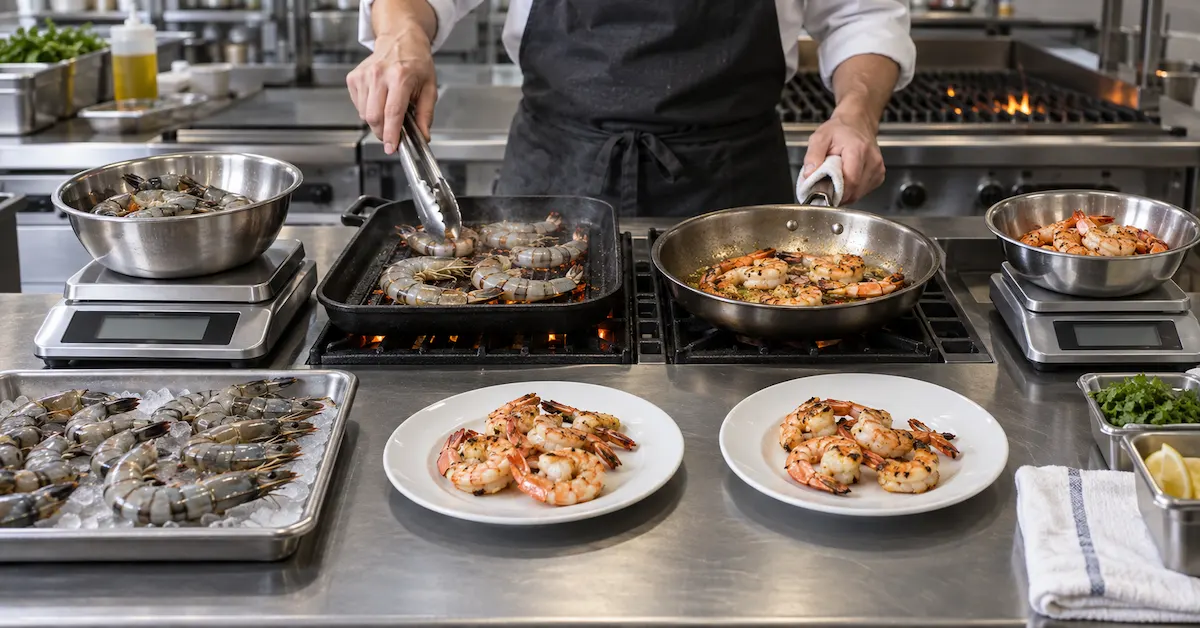
Open the bag and take what the station needs
Good IQF black tiger shrimp should leave the bag one by one. That is the practical benefit. A line cook can issue a set count, and a small outlet does not have to thaw a full block on a quiet day. When covers move unpredictably, that freedom can mean less product left over at closing.
Frozen black tiger shrimp for foodservice still need a realistic bag and thawing plan. If a 5 kg bag is opened repeatedly in a cramped freezer, individual freezing alone does not solve handling. Smaller inner packs might cost more in material but make stock easier to protect and count. The useful pack is the one that follows the kitchen's batch size.
What to check in an IQF sample
- Pieces separate without force when the bag is first opened.
- Glaze looks reasonably even and matches the agreed commercial basis.
- There are not excessive clumps, broken pieces or loose ice in the bag.
- The zipper, seal or transfer procedure protects unused shrimp.
- The count remains useful after a normal thaw, not only while frozen.
- The product cooks consistently across pieces from different parts of the bag.
Plan thawing as part of purchasing
Thawing belongs in the buying conversation because form and pack size determine what the kitchen can do safely and consistently. The operation should use its approved food-safety procedure and applicable local rules. The supplier's pack information should support that process, not leave the kitchen to improvise.
Map a normal Tuesday and a busy Saturday. How many bags leave the freezer? Where do they go? Who records the move? What happens if reservations fall? A central kitchen may thaw by a planned production batch, while an a la carte restaurant may stage smaller pans. Neither system works when cases arrive in units too large for the forecast.
Do not judge yield from frozen weight and eyesight. Weigh a sample before thawing, follow the chosen method, drain in a consistent way and record the usable amount. Repeat the test rather than relying on one bag. This provides a working number for recipe costing, even though real service will still show some variation.
Run a cooking-yield test before setting the menu price
The quotation tells purchasing what the shrimp cost. A cooking test tells the restaurant what the dish costs. Use the intended recipe, pan, grill or oven. Changing the method for each supplier makes the comparison meaningless.
Begin with a counted, weighed sample. Record thawed and prepared weight. Cook the shrimp to the operation's normal standard, then note finished weight, appearance, texture and any broken pieces. Time the active preparation. For HOSO, calculate how the restaurant values the head and shell: they may be part of the presentation, a useful ingredient or simply waste.
A simple portion-cost model uses the delivered case cost, net shrimp received, thaw and prep yield, cooked yield, pieces per dish and labor. It does not need to be an elaborate spreadsheet. It does need the same method for every sample.
| Trial note | What the kitchen records |
|---|---|
| Frozen sample | Bag weight, count, clumping, visible glaze and broken pieces |
| After thawing | Drained weight, appearance, odor and usable count |
| After preparation | Head, shell or vein work, waste and active minutes |
| After cooking | Finished weight, texture, color, curve and size consistency |
| At the pass | Pieces per plate, plating time and visual match to the menu |
One test can reveal a surprising trade-off. The lower-priced case may need more trimming. A processed product may lose less labor but look too small after cooking. The decision belongs to the whole operation, not purchasing or the chef in isolation.
One species, several restaurant jobs
Black tiger shrimp for restaurants do not have to arrive in one universal format. A seafood grill might put one or two large HOSO shrimp at the center of a signature plate. In a casual chain, peeled tail-on pieces can move between pasta, skewers and salads. A central kitchen may choose one processed form because fewer variations make training and stock transfer easier.
Menu breadth can help volume, but it can also hide waste. One count across every dish may produce an awkward skewer and an unnecessarily expensive pasta. Test each recipe before consolidating. In practice, two purposeful SKUs can cost less to run than one grade that suits nothing particularly well.
A la carte service
The line needs quick access and predictable cooking. Piece separation, count and a manageable inner pack often matter more than a small saving on the master case. The chef should know how many portions remain without emptying a half-thawed bag onto a scale during service.
Seafood grills and display-led menus
Appearance carries more weight. For HOSO, inspect head attachment, shell pattern and physical damage. Ask whether the chosen pack protects antennae and bodies in transit. An impressive sample is only useful if the commercial cartons hold the same standard.
Restaurant groups
Multi-unit buyers need a recipe that survives different staff and equipment. Run the same sample in more than one outlet. If one kitchen thaws overnight and another opens a bag at lunch, the procurement team has found an operating issue before launch.
Buying for a hotel with several kitchens
A delivery of black tiger shrimp for hotels may split five ways after it leaves the loading dock: banquets, buffet, room service, all-day dining and a specialty restaurant. Shared receiving does not create a shared recipe. Purchasing has to decide whether one form genuinely serves several outlets or merely makes the order sheet look tidy.
Banquets start with covers and a fixed service time. A narrow count and processed form can reduce plating variation across hundreds of dishes. Buffet service works differently. Smaller batches may protect texture and appearance better than one large pan, so the pack should support frequent replenishment. Room service values low waste and individual access because demand is harder to predict.
A hotel purchasing manager can ask each outlet for three numbers: normal weekly use, peak-event use and minimum useful thaw batch. Those figures make the supplier conversation much clearer than one annual tonnage estimate.
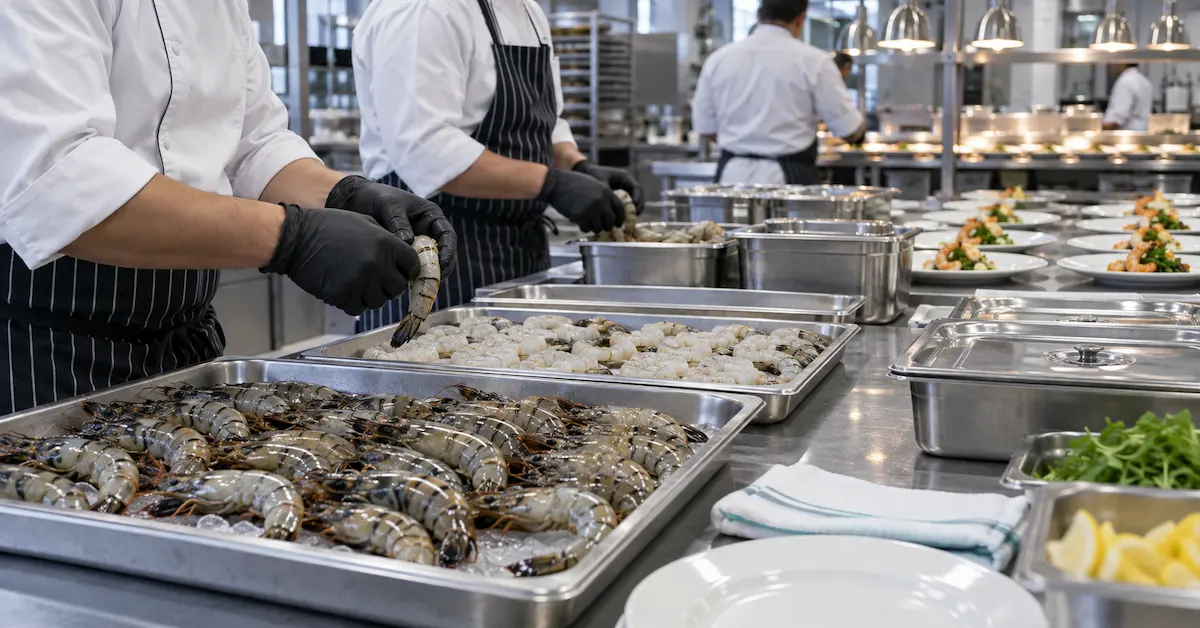
Foodservice packaging that survives the kitchen
A foodservice bag does not need retail decoration, but it must do real work. It should fit the freezer, remain identifiable after the master carton is opened and withstand routine picking. The pack quantity should match a useful batch rather than forcing the chef to choose between excess thawing and a partly protected bag.
Ask for inner-bag weight, bags per case, net and gross carton weight, case dimensions and lot marking. If a distributor splits cases for restaurants, inner bags need enough identification to remain useful after separation. A clear product name, form, count, lot and storage statement are operational tools, not decoration.
Review the Black Tiger Shrimp Category
Receiving and storage: the first kitchen test
The receiving team sees the product before the chef does. Give that team a short check tied to the purchase order. Count the cases. Look for crushing, moisture, open seals or signs that bags have shifted. Confirm the lot and product form. Follow the operation's approved temperature and acceptance procedure.
When something looks wrong, isolate the affected case and record it before the pallet is broken down. A photograph of the carton, bag, lot and condition is more useful than a message sent hours later saying the shrimp were “not good.” The buyer and supplier should agree on claim timing and evidence before the first delivery.
Inside the freezer, keep the case where staff can rotate it. Large cartons pushed behind unrelated stock create expired inventory and rushed thawing. If more than one count or form is used, make the labels distinguishable at a glance without relying on handwritten guesses.
Choosing a foodservice supplier
A foodservice black tiger shrimp supplier should ask how the shrimp will be used. That question is a practical sign that the quote may match the kitchen. The supplier should also be able to state what is confirmed, what is an option and what needs a sample or production discussion.
Bothwin's public page confirms the Black tiger category, not a permanent list of count sizes and forms. Send the requirement rather than assuming the website represents live inventory. Ask who controls processing and packing, where the product originates, how the form and count will be recorded, and which documents can be provided for the destination.
For a repeat program, communication after the sample matters. If a count, glaze, pack or origin changes, the buyer should hear about it before production. A foodservice operation can adapt to an approved change. It cannot manage a surprise found in the walk-in freezer.
Wholesale and bulk buying without losing kitchen control
Wholesale black tiger shrimp can reduce unit cost when volume, pack and freight are planned well. It can also tie up cash and freezer space. A restaurant group should compare container or pallet economics with its actual weekly use, delivery network and remaining shelf life at arrival.
A bulk black tiger shrimp order still needs inner-pack discipline. The master case may be designed for export efficiency, but the inner unit is what the kitchen touches. Count how many service days one case represents. Check whether outlets can rotate it and whether a distributor can pick it without losing lot traceability.
Compare offers on the same basis: species, origin, raw or cooked condition, form, count unit, count range, freezing, glaze, net shrimp weight, pack, Incoterm and destination. Then add freight, duty, local cold storage, distribution and expected yield. The cheapest case is not always the lowest cost per plated portion.
A pilot that uses a real service
A quiet tasting is useful for flavor, but it does not show what happens when twelve tickets land at once. After the bench test, run a controlled service in one outlet or one event. Brief the team, use the intended thaw plan and keep the recipe unchanged.
Ask the prep cook how long the bag took to handle. Ask the line whether the pieces cooked together. Ask the chef whether the plate looked like the approved photograph. Check how much product remained and whether it could be kept safely under the operation's process. Finally, compare predicted and actual portions.
The review should end with a decision: approve, reject or change one named variable. Avoid asking the supplier to “make it better” without saying whether the issue was count, form, glaze, pack or appearance. A precise correction gives the next sample a fair chance.
What to send in the foodservice inquiry
Keep the message readable. Start with the menu use and destination. Then name Black tiger shrimp, raw or cooked, and the required form. Give the count with its unit, the preferred freezing format and the glaze or net-weight basis. Add inner-pack size, cases or monthly volume, delivery point and the first trial quantity.
Hotels should say whether the product is for banquet, buffet, room service or a specialty restaurant. Restaurant groups should mention the number of outlets and whether stock moves through a central distributor. Ask for current availability, MOQ, origin and processing details, quotation validity, sample terms, lead time and the document set that can be discussed for the destination.
Send a Foodservice Shrimp Inquiry
Frequently asked questions
Which black tiger shrimp form works best for food service?
The right form follows the menu and labor plan. HOSO suits whole-shrimp presentation. HLSO keeps the shell while removing the head. Peeled, tail-on or peeled-and-deveined forms reduce prep work. A kitchen test should compare yield and active labor rather than price alone.
Why do restaurants use IQF black tiger shrimp?
IQF shrimp can be taken from the bag one piece at a time, which helps portion control and reduces the need to thaw a full block. Kitchens should still test separation, glaze, thawing and cooking yield after the proposed shipping and storage route.
How should a kitchen test frozen black tiger shrimp?
Count and weigh a known sample. Thaw it under the kitchen's planned method, record drained and prepared weight, then cook it with the intended recipe. Note finished weight, texture, appearance, active labor and service time. Repeat the test with more than one bag when practical.
What should hotels specify when buying black tiger shrimp?
Hotels should state the menu application, form, count, tolerance, freezing and glaze, pack size, expected covers, delivery pattern and destination. Say whether the shrimp is for banquets, buffet, room service or specialty restaurants because each outlet can need a different unit.
Can Bothwin discuss black tiger shrimp for foodservice?
Bothwin's current Fresh Shrimp category lists Black tiger. Foodservice buyers can send their required form, count, pack, quantity, destination and menu use so current availability and order terms can be confirmed.
Final service-readiness check
- The menu and finished presentation have been defined.
- The product form matches the kitchen's available labor.
- Count size includes its unit and an acceptable range.
- IQF or block freezing suits the planned thaw batch.
- Glaze and net shrimp weight use a clear commercial basis.
- The inner pack fits the outlet's freezer and daily demand.
- A sample has been tested through thawing, prep, cooking and plating.
- Expected portions and cooked yield support the menu cost.
- Receiving, storage, rotation and claim steps are assigned.
- Origin, MOQ, timing, documents and current availability are confirmed for the order.
The product page can begin the conversation; the kitchen trial finishes it. Send Bothwin the dish, form, count, pack, volume and destination, then judge the proposed shrimp where it matters: in prep and during service.