

Quick Answer: What Should Buyers Look for in a HACCP Seafood Processing Supplier?
A reliable HACCP seafood processing supplier should provide a structured food safety system covering raw material control, processing management, freezing procedures, packaging inspection, traceability records, and export documentation support. Buyers should evaluate not only whether a supplier can provide seafood products, but also whether the supplier can consistently control risks throughout the entire processing and delivery process.
For seafood importers, wholesalers, restaurants, and food manufacturers, the most important evaluation points include:
- Product identification and raw material control
- Processing hygiene and production management
- Frozen seafood quality control
- Traceability systems
- Food safety documentation
- Export compliance preparation
A professional seafood supplier should help buyers understand how seafood moves from raw material selection to finished export products.
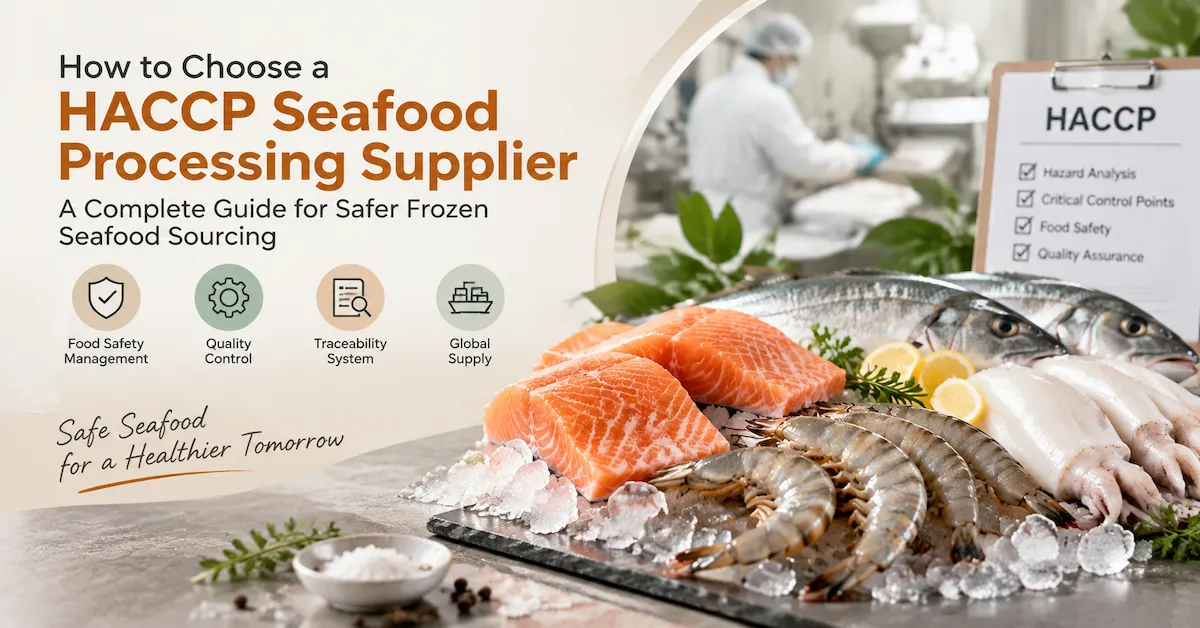
Why HACCP Matters When Choosing a Seafood Processing Supplier
Seafood products require careful handling because quality and safety can be affected by multiple factors:
- Raw material condition
- Processing environment
- Temperature changes
- Packaging conditions
- Transportation time
- Storage management
For international buyers, selecting a seafood supplier is not only a purchasing decision. It is also a risk management decision.
A supplier may offer attractive pricing, but buyers should also consider:
- How does the supplier prevent contamination risks?
- How are processing steps controlled?
- How are seafood batches tracked?
- How are quality problems handled?
- Can the supplier maintain consistent standards for repeat orders?
A HACCP seafood processing supplier uses preventive controls to identify potential risks before products reach customers.
HACCP focuses on controlling critical points during production instead of relying only on final product inspection.
What Is a HACCP Seafood Processing Supplier?
A HACCP seafood processing supplier is a seafood supplier that applies HACCP principles within its processing operations to manage food safety risks.
The supplier’s responsibility usually covers multiple stages:
Raw Material Receiving → Processing → Quality Inspection → Freezing → Packaging → Storage → Export
Each stage requires specific controls.
Raw Material Control
Before seafood enters production, suppliers should evaluate:
- Product identity
- Raw material condition
- Supplier information
- Size requirements
- Acceptance criteria
Raw material quality directly influences:
- Final appearance
- Processing yield
- Customer acceptance
- Product consistency
A seafood processing facility cannot fully correct poor-quality raw materials through later production steps.
Processing Control
Seafood processing includes multiple activities depending on the product category.
Examples:
Fish processing
- Cleaning
- Filleting
- Portioning
- Weight grading
Shrimp processing
- Head-on shell-on preparation
- Peeling
- Deveining
- Size grading
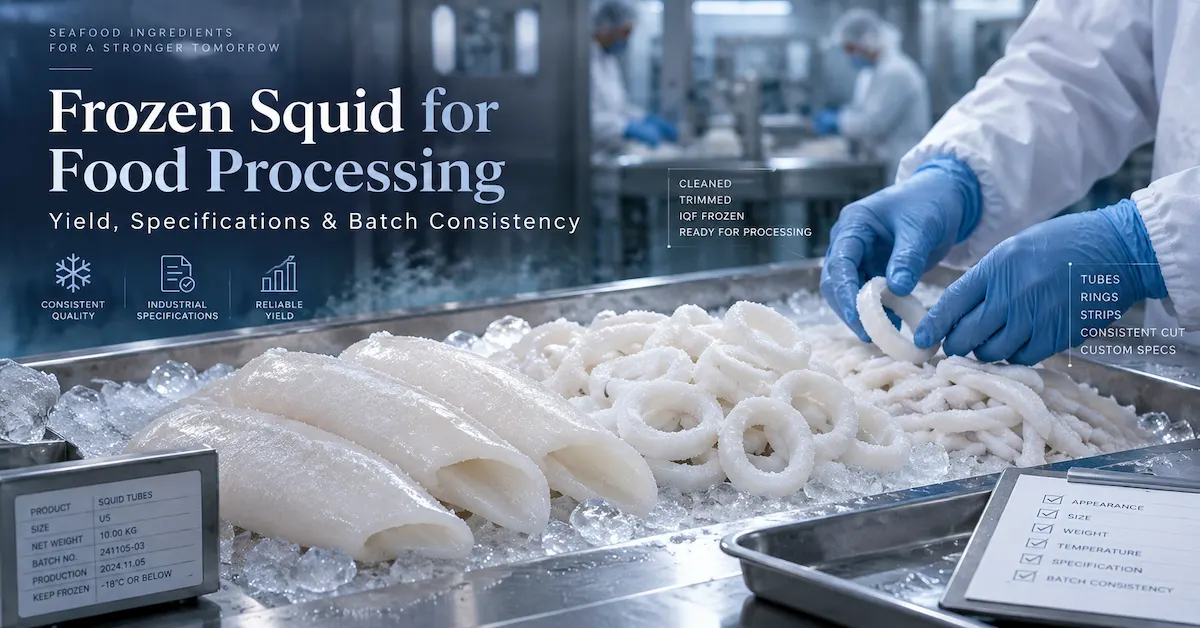
Squid processing
- Cleaning
- Tube preparation
- Ring cutting
- Size sorting
Each process requires clear specifications.
A professional supplier should define:
- Processing standards
- Product tolerance
- Inspection methods
- Packaging requirements
Seafood HACCP Quality Management System
A strong seafood HACCP quality management system connects food safety requirements with daily production activities.
The purpose is to prevent problems before shipment.
Important management areas include:
1. Production Hygiene Management
Seafood processing environments should control:
- Employee hygiene
- Equipment sanitation
- Production area cleanliness
- Cross-contamination risks
A controlled processing environment supports consistent product quality.
2. Temperature Control Management
Temperature is one of the most important factors in frozen seafood production.
Suppliers should manage:
- Raw material temperature
- Processing temperature
- Freezing conditions
- Cold storage
- Transportation conditions
Temperature control affects:
- Texture
- Appearance
- Shelf stability
- Customer acceptance
3. Process Monitoring
A seafood HACCP quality management system should include monitoring procedures.
Examples:
- Production records
- Inspection records
- Temperature records
- Batch information
These records support:
- Quality verification
- Customer communication
- Problem investigation
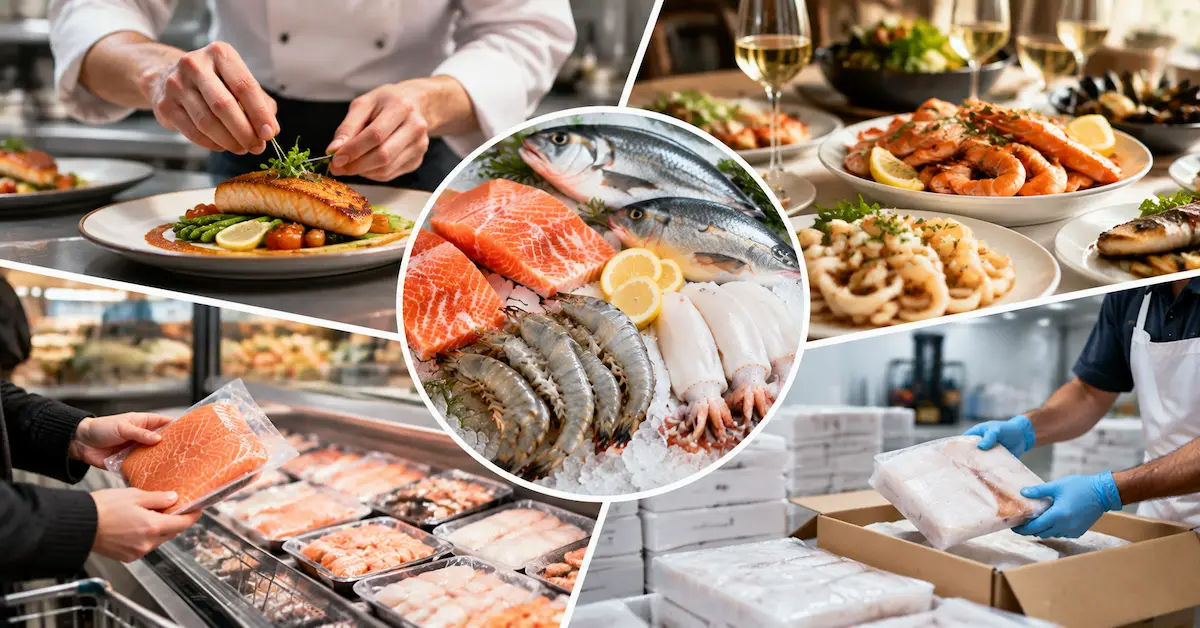
Seafood Processing Quality Control: Key Inspection Points
Seafood processing quality control ensures that products match customer specifications before shipment.
Quality control should cover the complete production process.
Incoming Material Inspection
Before production begins, suppliers should verify:
- Seafood type
- Product condition
- Size
- Raw material acceptance requirements
Processing Inspection
During production, buyers should consider:
- Cutting accuracy
- Cleaning standard
- Weight consistency
- Product appearance
- Defect control
Final Product Inspection
Before shipment, inspection may include:
- Product specification
- Packaging condition
- Label information
- Quantity verification
- Frozen condition
The purpose is to ensure that the commercial shipment matches the approved sample and specification.
Request Seafood Quality Information
Frozen Seafood Processing Supplier: What Buyers Should Evaluate
A frozen seafood processing supplier should provide more than freezing capability.
Buyers should evaluate:
Freezing Technology
Common freezing methods include:
IQF Freezing
IQF allows individual seafood pieces to remain separated.
Suitable for:
- Portion-controlled products
- Restaurants
- Retail packs
- Foodservice distribution
Block Freezing
Block freezing creates larger frozen units.
Suitable for:
- Bulk processing
- Industrial applications
- Large-volume buyers
The correct freezing method depends on:
- Customer application
- Storage conditions
- Processing requirements
- Distribution model
Packaging Capability
Packaging should match the target market.
Different buyers may require:
Wholesale packaging
- Bulk cartons
- Larger inner packs
- Export-focused packing
Foodservice packaging
- Easy handling
- Practical portion sizes
- Kitchen-friendly formats
Retail packaging
- Consumer labels
- Barcode information
- Private-label requirements
Bothwin provides seafood categories including frozen fish, shrimp, squid, tuna and other seafood products for international buyers. Product specifications, processing requirements, packaging options and shipment details should be confirmed according to each project.
Explore Bothwin Frozen Seafood Products
Seafood Food Safety Management System: What Buyers Should Verify
A complete seafood food safety management system helps suppliers control potential risks throughout seafood production, storage, and shipment.
For international buyers, food safety management is not only about having documents. It is about understanding how the supplier applies procedures in daily operations.
A practical seafood safety system should cover:
- Raw material control
- Processing hygiene
- Temperature management
- Employee practices
- Equipment sanitation
- Packaging control
- Traceability records
- Corrective actions
A buyer evaluating a seafood processing supplier should ask:
- How are food safety risks identified?
- How are critical processing steps monitored?
- How are records maintained?
- How are quality issues handled?
A supplier with a structured food safety management system can provide stronger confidence for long-term purchasing.
Seafood Traceability System: Supporting Transparency and Risk Control
A reliable seafood traceability system allows buyers to connect finished products with their production history.
For seafood importers, traceability helps answer important questions:
- Where did the raw material come from?
- Which facility processed the product?
- When was the product produced?
- Which batch was shipped?
- How can a quality issue be investigated?
A practical traceability system may include:
| Traceability Information | Purpose |
|---|---|
| Raw material records | Track seafood source information |
| Production batch records | Connect products with processing dates |
| Inspection records | Verify quality control results |
| Packaging records | Confirm shipment details |
| Lot numbers | Support product investigation |
| Shipping information | Link factory and destination |
For large seafood buyers, traceability becomes especially important when managing:
- Supermarket programs
- Restaurant chains
- Private-label seafood products
- Large container shipments
Without traceability, solving a quality issue after delivery becomes much more difficult.
Seafood Export Compliance Standards for International Buyers
International seafood sourcing requires suppliers to understand different market expectations.
Seafood export compliance standards may involve:
Product Compliance
Buyers should confirm:
- Correct seafood identity
- Accurate product description
- Processing method
- Packaging information
Documentation Compliance
Depending on destination requirements, buyers may need:
- Commercial documents
- Product specifications
- Traceability records
- Quality documents
- Export-related paperwork
Label Compliance
For retail and private-label programs, buyers should review:
- Product name
- Net weight
- Storage instructions
- Origin information
- Customer-required information
A supplier should support communication between production, export documentation and customer requirements.
However, compliance requirements vary by country and product category. Buyers should confirm the exact requirements for their destination market before shipment.
How to Evaluate a Seafood Processing Factory
A professional seafood processing factory should demonstrate more than production capability.
Buyers should evaluate several areas.
Processing Capability
Confirm:
- Available seafood categories
- Processing methods
- Production flexibility
- Packaging capability
For example, different buyers may require:
- Whole frozen fish
- Fish fillets
- Shrimp products
- Squid products
- Tuna products
Each category requires different processing controls.
Quality Management Capability
Ask about:
- Inspection procedures
- Product testing
- Quality records
- Traceability process
A seafood processing factory should be able to explain how quality requirements are implemented during production.
Customization Capability
Many B2B buyers need customized solutions.
Examples:
- Different sizes
- Different cuts
- Special packaging
- Private-label products
Customization should be supported by:
- Approved specifications
- Sample confirmation
- Packaging approval
- Production planning
Frozen Seafood Processing Supplier Selection Checklist
When choosing a frozen seafood processing supplier, buyers should evaluate:
| Evaluation Area | Questions to Ask |
|---|---|
| Product capability | Can the supplier provide the required seafood form? |
| Processing | Can the supplier meet specific preparation requirements? |
| Quality control | How are inspections performed? |
| Food safety | What food safety systems are applied? |
| Traceability | Can products be tracked by batch? |
| Packaging | Can packaging match the target market? |
| Export | Can the supplier support international shipments? |
| Communication | Are specifications clearly confirmed? |
A supplier evaluation should focus on long-term cooperation rather than only the first quotation.
How Buyers Can Prepare an RFQ for HACCP Seafood Processing Supplier
A detailed RFQ helps suppliers understand the project requirements.
Recommended information includes:
Product category:

Seafood type:

Species requirement:

Processing form:

Size specification:

Freezing method:

Packaging requirement:

Quality control requirements:

HACCP documentation requirements:

Traceability requirements:

Destination market:

Quantity:

Required documents:

Sample requirement:

Target shipment date:
A clear RFQ allows suppliers to provide:
- More accurate quotations
- Suitable product recommendations
- Realistic production schedules
- Appropriate documentation
Common Mistakes When Choosing a HACCP Seafood Processing Supplier
1. Choosing Only Based on Price
The lowest price may hide differences in:
- Product specification
- Processing level
- Packaging
- Quality control
Buyers should compare total value, not only unit price.
2. Ignoring Processing Capability
A supplier may provide seafood products but may not support the required processing format.
Always confirm:
- Cutting ability
- Cleaning standards
- Packaging options
3. Not Checking Traceability
Without a seafood traceability system, buyers may face difficulties when handling:
- Quality complaints
- Customer questions
- Shipment investigations
4. Approving Samples Without Production Verification
A sample should represent the actual commercial product.
Buyers should confirm:
- Product form
- Size
- Packaging
- Quality standard
before approving bulk orders.
How Bothwin Supports Seafood Processing and Quality Requirements
Bothwin provides seafood categories including frozen fish, shrimp, squid, tuna and other seafood products for international buyers.
The company supports discussions around:
- Seafood sourcing
- Processing requirements
- Product specifications
- Export packaging
- Quality expectations
Buyers can explore seafood categories through:
Explore Frozen Seafood Products
For specific sourcing projects, buyers should provide:
- Seafood category
- Processing requirements
- Target market
- Quantity
- Packaging requirements
The Bothwin team can then confirm suitable product options according to the project requirements.
Discuss Your Seafood Processing Requirements
Frequently Asked Questions About HACCP Seafood Processing Suppliers
What does a HACCP seafood processing supplier do?
A HACCP seafood processing supplier manages seafood production with food safety controls covering raw materials, processing, freezing, packaging, and shipment preparation.
Why is HACCP important for seafood suppliers?
HACCP helps suppliers identify and control potential food safety risks during seafood processing rather than relying only on final inspection.
What should buyers check when choosing a HACCP certified seafood supplier?
Buyers should review processing capability, food safety systems, traceability, quality records, packaging capability and export support.
How does seafood traceability help importers?
A seafood traceability system allows buyers to connect products with production records and investigate quality issues more efficiently.
What is seafood processing quality control?
Seafood processing quality control involves monitoring product specifications, processing steps, weight, appearance, packaging and final shipment condition.
Can a frozen seafood processing supplier provide customized products?
Many suppliers can support customized seafood products, but buyers should confirm available processing methods, packaging options and production requirements.
What documents should seafood exporters provide?
Document requirements depend on the destination market and product type. Buyers should confirm required documents before shipment.
How do I evaluate a seafood processing factory?
Evaluate production capability, quality systems, traceability management, customization ability, export experience and communication process.
Conclusion
Choosing the right HACCP seafood processing supplier helps seafood importers, distributors, foodservice companies and seafood brands establish a safer and more reliable supply chain.
A professional supplier should provide more than seafood products. It should support HACCP certified seafood supplier requirements, seafood processing quality control, seafood HACCP quality management, frozen seafood processing supplier capabilities, seafood food safety management system practices, seafood processing factory expertise, seafood traceability system support, and seafood export compliance standards.
By evaluating food safety systems, processing capability, quality control procedures and export readiness before ordering, buyers can reduce supply risks and build stronger long-term seafood partnerships.
To discuss your seafood processing requirements, product specifications or export projects, contact the Bothwin seafood team with your product category, processing needs, quantity and destination market.
Ready to Start Your Seafood Project?
Share your seafood type, processing requirements, quantity and destination. Our team will help evaluate a suitable supply solution.
Get Your Seafood Processing Quote