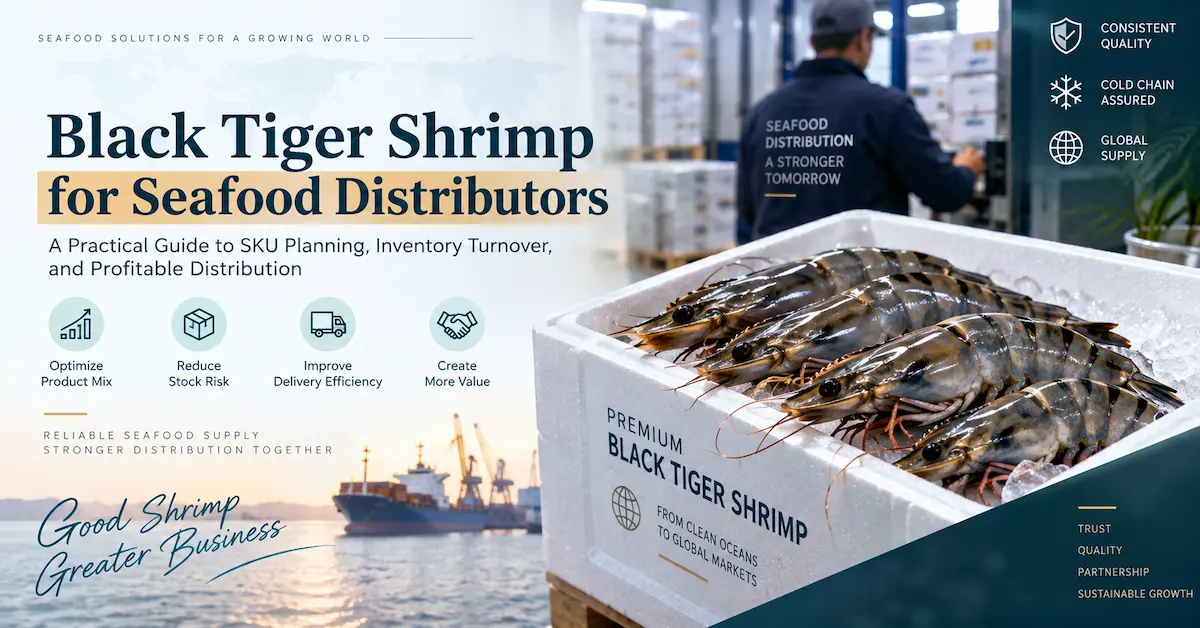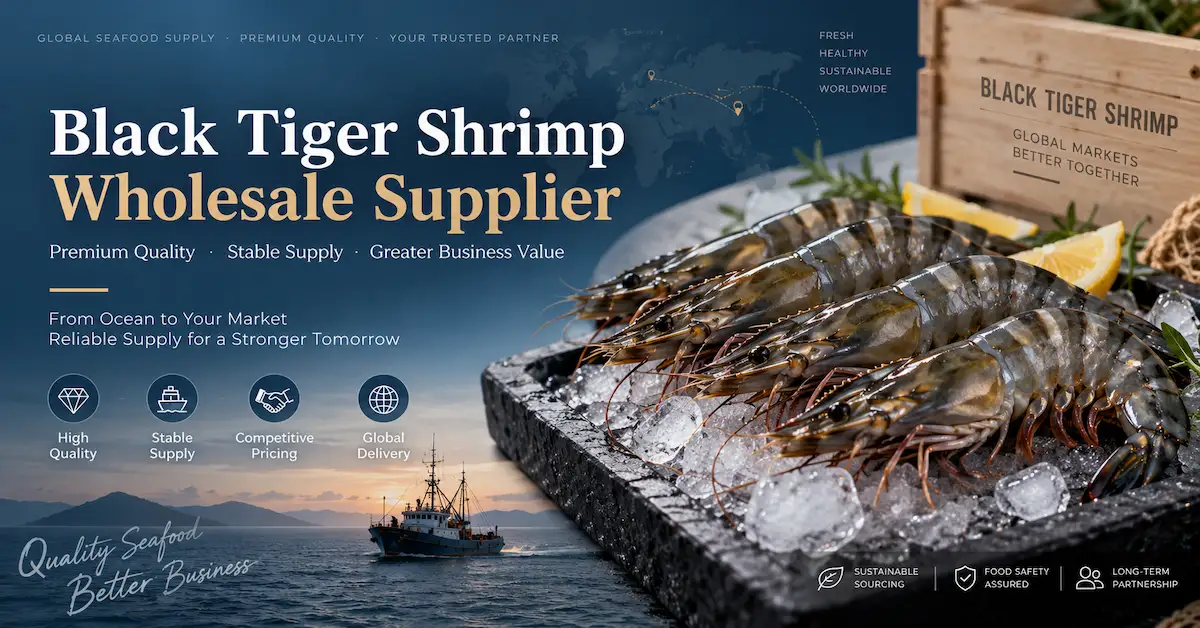


A buyer can recognize black tiger shrimp by their bold shell bands, but appearance alone is not enough to place an international order. The commercial product may be head-on or headless, shell-on or peeled, raw or cooked, individually quick frozen or block frozen. It may be graded by a count system that changes with the market and product form. Packaging, glazing and net-weight calculations can also make two apparently similar quotations represent different amounts of usable shrimp.
That is why choosing a black tiger shrimp supplier requires more than asking for a price per carton. A professional RFQ should identify the species, form, size grade, tolerance, freezing method, glazing, inner pack, master carton, destination and intended sales channel. The supplier should then state what is available for the current project and identify any assumptions used in the quotation.
Black tiger appears on Bothwin's current Fresh Shrimp category page. Elsewhere on the site, the company speaks to importers, wholesale businesses, supermarkets and foodservice buyers. There is no full black tiger specification on the public category page. A buyer therefore needs a direct answer on origin and identity, harvest and processing, count, freezing, glaze and packing. MOQ, price, timing, certificates and the destination document set also belong in that conversation. None of those order details is treated as fixed in this guide.
Product category: Bothwin Fresh Shrimp - Black Tiger
Send a specification: Contact Bothwin
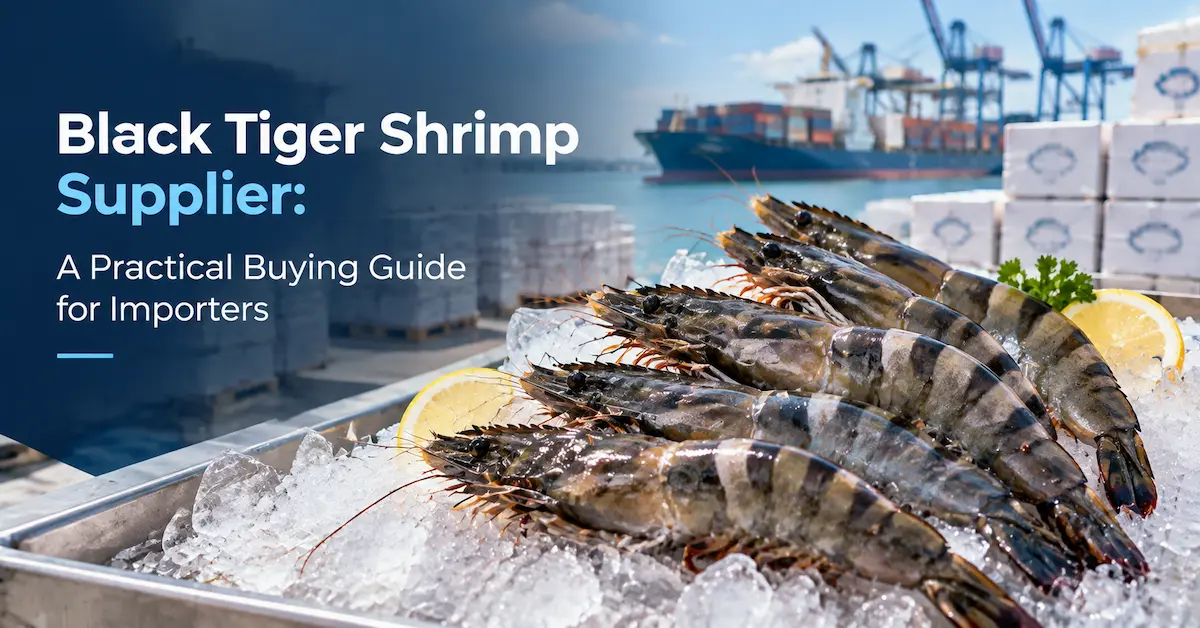
Quick answer for shrimp buyers
The best supplier is the one that can repeatedly deliver the agreed shrimp identity, form, size, net contents, pack and quality tolerance to the buyer's destination. Start by deciding who will use the product. A seafood wholesaler may prefer flexible master cartons. A restaurant distributor may need individually accessible pieces and consistent counts. A supermarket program may need a consumer-facing pack and approved label. A processor may value yield and predictable raw material above shelf presentation.
Before asking for a quotation, provide the same fields to every supplier:
| RFQ field | What the buyer should state |
|---|---|
| Identity | Black tiger shrimp; request scientific-name and origin confirmation |
| Condition | Raw or cooked, frozen or another agreed state |
| Form | HOSO, HLSO, peeled, peeled and deveined, tail-on or other form |
| Size | Count grade, count basis, tolerance and sampling method |
| Freezing | IQF, semi-IQF, block or another agreed method |
| Glazing | Target percentage, tolerance and net-weight calculation basis |
| Packing | Inner-pack weight, pieces or count, master carton and pallet plan |
| Order | Sample, trial, pallet, mixed load or container quantity |
| Destination | Country, port, cold store and required import documents |
| Application | Wholesale, retail, restaurant, hotel, processing or repacking |
This brief makes offers comparable. Without it, one company may quote HOSO shrimp by one count convention while another quotes headless shrimp on a different basis. The lower price may reflect a different product rather than a better commercial offer.
Send Your Shrimp Specification
What the buyer is paying for
The first thing most buyers notice is the banded shell. The second is size. In the kitchen, the firmer bite becomes just as important. Together, those traits explain why black tiger shrimp often appear whole on a grill, in a seafood display or at the center of a plated dish. A processor looks at the same shrimp differently: peeled yield, a dependable count and texture after cooking may matter far more than the shell pattern.
A buyer should separate species appeal from product quality. A recognizable species does not guarantee consistent sizing, sound shells, correct net weight or good cold-chain handling. Those outcomes come from a clear specification, a representative sample, production controls, export packing and disciplined receiving at destination.
A frozen black tiger shrimp supplier should be able to discuss how the proposed form fits the buyer's route to market. If the customer wants whole grilled shrimp, head and antenna condition may be important. If the customer wants peeled portions, processing yield and vein removal may matter more. If the product is going into retail bags, seal strength, pack appearance and label accuracy become part of the product.
Confirm species, origin and product identity
Black tiger shrimp are commonly associated with the scientific name Penaeus monodon, but the supplier should confirm the identity used in the product specification and export documents. The buyer should not rely on a market name alone, especially when destination labeling or tariff classification requires more specific information.
Origin is another field to verify for the order. “Supplier China” can describe the company managing the sale without proving that the shrimp were farmed, harvested or processed in one particular place. Ask where the raw material originates, where processing occurs and how those details will appear on the commercial and regulatory documents. Keep company location, product origin and shipment port as separate fields.
When evaluating a black tiger shrimp supplier China buyers should also confirm who controls grading, packing, inspection and export communication. The goal is a traceable commercial chain with clear responsibility, not a vague country label.
Choose the correct commercial form
Product form changes labor, yield, appearance and price. The abbreviations used in shrimp trade are useful only when both parties attach the same physical specification to them. A sample or visual standard should support the written term.
| Commercial form | Typical description | Buyer checks |
|---|---|---|
| HOSO | Head-on, shell-on | Head attachment, antennae, shell condition, count basis and whole appearance |
| HLSO | Headless, shell-on | Cut quality, shell integrity, count grade and usable yield |
| PTO | Peeled, tail-on | Peel quality, tail segment, vein requirement, count and presentation |
| PUD | Peeled, undeveined | Peel consistency, vein condition, broken pieces and pack use |
| PD | Peeled and deveined | Deveining standard, cut style, yield, damage and uniformity |
| Butterfly or specialty cut | Project-specific value-added form | Cut depth, portion appearance, sample approval and cooking result |
HOSO black tiger shrimp
HOSO black tiger shrimp retain the head and shell. This form can create a strong whole-shrimp presentation and preserve preparation choices for the chef or processor. It also means the buyer must define acceptance criteria for head condition, shell damage, antennae, black spots or discoloration, broken bodies and size uniformity. The destination customer may value visual impact, but the importer still needs to model edible yield and handling labor.
For HOSO quotations, confirm whether count size is expressed per kilogram, pound or another commercial basis. Ask how the supplier samples cartons and what tolerance applies. A count statement without a unit and method is incomplete.
Headless and peeled forms
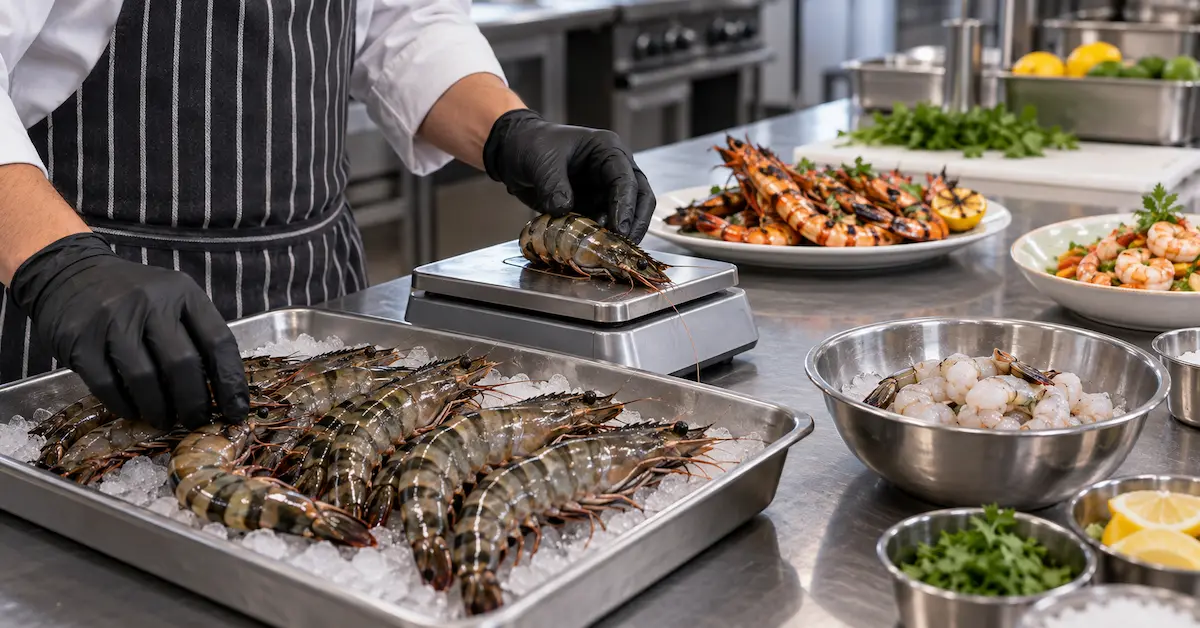
Headless shell-on shrimp can reduce handling at destination while keeping the shell for cooking and presentation. Peeled forms can save kitchen or processing labor. The buyer should define whether the vein is removed, how the back is cut, whether the tail is retained and how broken pieces are treated. Do not assume that “peeled” includes one universal trim standard.
A higher processed price can still produce a lower cost per usable serving if it reduces labor and waste. Conversely, a restaurant or wholesaler with skilled staff may prefer HOSO or HLSO because the shell and head support its menu or local market. Compare the total application cost rather than the purchase price alone.
Understand count size and grading
Shrimp size is usually traded by count, but count notation can vary with form and market. A buyer may see numbers such as pieces per kilogram or pieces per pound, sometimes with forms or regional conventions that cannot be compared directly. The safest approach is to write the unit, product form and accepted range in the RFQ.
For example, a buyer should not write only “large shrimp.” A useful request would identify HOSO or HLSO, the desired count per kilogram, the allowed tolerance, the pack weight and how the sample will be counted. If the supplier uses a different convention, ask for a conversion and a physical sample.
| Grading question | Why it matters | Evidence to request |
|---|---|---|
| What is the count unit? | Pieces per kilogram and pieces per pound produce different numbers | Written count basis on specification and quotation |
| Which product form is counted? | HOSO and peeled products cannot use the same commercial assumption | Form code plus sample photograph |
| What tolerance is accepted? | A wide spread can cause plate and pack inconsistency | Defined range and sampling method |
| How many cartons are sampled? | One attractive tray may not represent a shipment | Inspection plan and recorded results |
| How are broken pieces handled? | Damage affects usable count and presentation | Defect definition and maximum allowance |
Count accuracy matters to more than appearance. It affects menu portions, retail pack declarations, processing yield and how many saleable units the buyer receives. A narrow count range may cost more, but it can reduce operational variation for customers who require repeatable portions.
IQF, block freezing and glazing
With IQF black tiger shrimp, the practical promise is simple: pieces should come out of the bag one at a time. That suits a cook taking six shrimp for one order and a repacker building smaller bags from a master case. Check that the pieces still separate after the journey. Ask about glaze as well, and inspect whether the inner bag continues to protect what remains after it has been opened.
Block freezing can be practical for bulk processing or customers who thaw a full unit at once. It can provide dense packing, but it requires a planned thawing and handling process. The block dimensions, product orientation, pack weight and thawing method should be included in the specification.
Glazing and declared quantity
Glazing can protect frozen shrimp from dehydration and surface damage. It also affects commercial comparison. The quotation should state the glaze percentage or range, how it is measured, the declared net contents and the acceptable weight tolerance. The buyer should know whether the price is based on gross packed weight, glazed product weight or net seafood weight.
Two cartons can show the same gross weight while containing different quantities of shrimp. The importer should therefore compare net product, packaging weight and glazing on the same basis. Put the agreed calculation and inspection method in the purchase specification rather than leaving it to an email assumption.
Packaging for wholesale, retail and foodservice
Packaging protects shrimp, carries information and determines how efficiently cartons move through the cold chain. A black tiger shrimp wholesale program might use bulk inner bags and strong export cartons. A supermarket might require printed retail pouches. A foodservice distributor may prefer smaller transparent bags inside a master carton so restaurant customers can access product without thawing a full bulk unit.
A processor or repacker may be happy with one stout inner bag inside an export carton. That buyer will care about liner strength, an honest net weight and a carton that does not soften in a cold store. Restaurants usually need a smaller unit. The useful question is not whether a bag looks attractive, but whether the kitchen can open it, issue the shrimp it needs and protect the balance.
Retail creates a different set of annoyances. A seal has to survive handling, the barcode needs a flat place to scan, and the bag must sit sensibly in the freezer. For private label, print quantity and unused packaging can become real costs. Settle artwork ownership, languages, origin wording and claims before anyone orders film.
Block packs work best when the customer expects to thaw the whole unit. Write down the dimensions and thawing routine. An awkward block can save space in a container yet waste time every morning in a prep room.
For bulk black tiger shrimp, efficient loading is only useful when shrimp arrive intact. Get the actual carton dimensions and both weight figures. Count the inner bags. Ask for the pallet layout used in the quote. If a warehouse will split cases, each inner unit still needs enough lot information to be traced after the outer carton is gone.
View the Black Tiger Shrimp Category
How to evaluate a black tiger shrimp exporter
A black tiger shrimp exporter coordinates more than product selection. The exporter should translate the buyer's specification into a quotation, packaging plan, inspection reference and document checklist. It should also state what remains the buyer's responsibility in the destination market.
Know who is on the other side of the order
Put the legal company name beside the bank and contact details before money moves. Then ask a blunt question: is the quote coming from the plant, an exporter or a sourcing business? The answer is not a quality verdict. It tells the importer who controls packing, who can resolve a specification question and who will still be answering when a container reaches port.
Specification control
A strong supplier records changes. If the buyer approves HOSO shrimp at a specified count and pack, the next quotation should not silently substitute a headless form, wider count or different net-weight basis. Any change in origin, processing, glazing, pack or label should be disclosed and approved.
Quality and food-safety evidence
Ask for the documents required by the destination and verify that their scope applies to the product and facility involved in the shipment. Certificate names on a general website are not enough. Review current copies, validity, issuing body, facility name and destination acceptance with the importer or compliance team.
Sample and production alignment
A sample should represent the proposed commercial order as closely as practical. Record species identity, form, count, weight, glaze, pack and lot. When the first shipment is produced, compare it with the approved reference using a written sampling plan. A beautiful hand-selected sample that cannot be repeated has limited procurement value.
Corrective action
Discuss the claim process before shipment. Define when the buyer must report a problem, what evidence is needed, how affected cartons are isolated and who evaluates cause. This does not guarantee that disputes disappear, but it prevents the parties from inventing a process after a problem occurs.
Quality checks before shipment
Pre-shipment inspection connects the purchase specification to the physical shrimp. The inspection does not need to test every carton, but its sampling method and acceptance criteria should be agreed in advance.
| Inspection area | Check | Record |
|---|---|---|
| Identity | Product name, scientific identity, origin and lot | Specification and batch reference |
| Form | HOSO, HLSO, peeled or value-added preparation | Visual standard and sample result |
| Count size | Pieces per stated unit and allowed range | Counts by sampled pack or carton |
| Defects | Broken bodies, loose heads, shell damage, discoloration and foreign matter | Definitions, observed rate and photos |
| Weight and glaze | Net contents, glazing and tolerance | Method, equipment and measured result |
| Pack | Seal, print, label, carton, count and pallet | Approved artwork and packing list |
| Frozen condition | Product condition and temperature under the agreed procedure | Time, location, equipment and reading |
Appearance criteria must be realistic for the product form and market. HOSO shrimp naturally require attention to head condition, while peeled products require more focus on processing damage and vein removal. The buyer should define what is critical to its customers instead of using a generic defect list without priorities.
Follow the carton, not just the container
A frozen carton changes hands often. It leaves storage, waits through loading, crosses a port, rides in a reefer, clears customs and eventually reaches a local freezer. Write an owner beside each handoff. Someone must check condition; someone must keep the temperature record; someone must make the call when a reading or carton looks wrong.
Use the storage requirement approved for this shrimp, not a temperature copied from an unrelated fish page. Ask what condition the cases are in before loading and how long the door stays open. Confirm the reefer setting, monitor and airflow plan. At arrival, the receiving team should look at the seal, count, lot marks and case condition before the pallet vanishes into a crowded freezer.
If a carton is wet, crushed or shows possible thawing, separate it according to the buyer's procedure and document the condition. Photographs, temperature records, container information and sampling notes are more useful than a general statement that the shrimp “looked bad.” A disciplined receiving record protects both buyer and supplier.
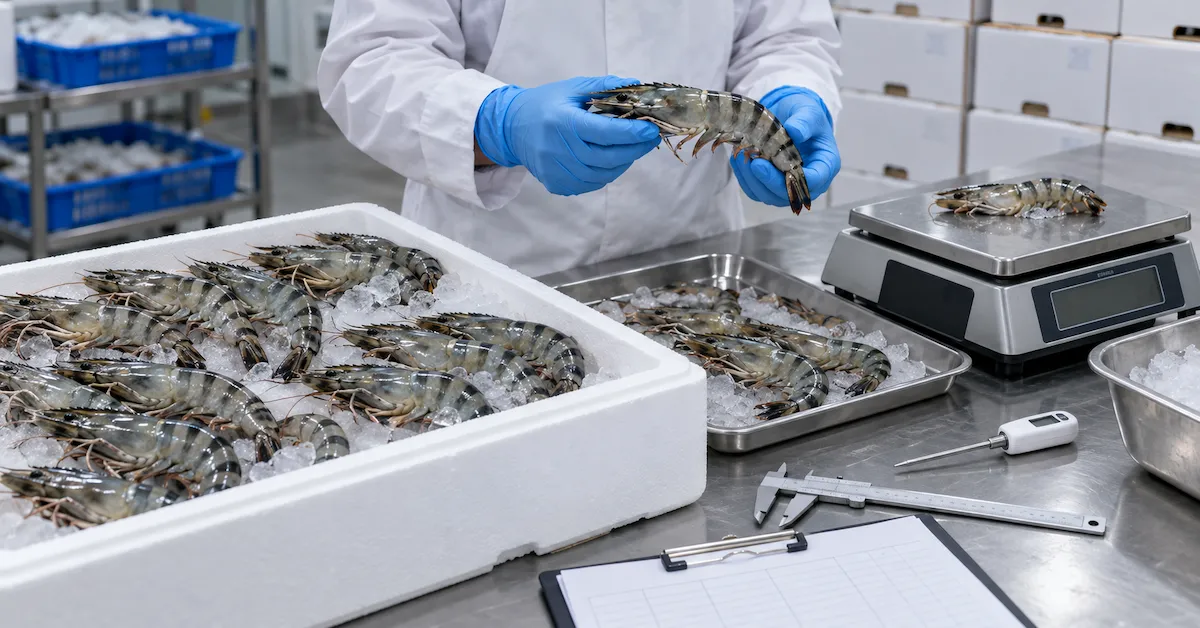
Black tiger shrimp for restaurants and foodservice
Black tiger shrimp for restaurants can be supplied in different forms depending on the menu. HOSO shrimp can support grilled whole presentations and seafood platters. HLSO can reduce head-removal work while retaining shell flavor and appearance. Peeled or tail-on forms can speed preparation for curries, pasta, stir-fries, skewers and banquets.
A restaurant buyer should run a controlled kitchen test. Count pieces from a known pack, thaw them under the operation's approved method, record preparation loss and weigh the cooked yield. Check whether different pieces finish cooking at similar times. Photograph the final plate and ask kitchen staff whether the pack size and form fit real service.
The best format is not automatically the most processed one. A chef-led seafood restaurant may prefer HOSO shrimp and use the heads in sauces or presentation. A multi-unit chain may prefer peeled, deveined and individually frozen pieces for training and portion control. A hotel banquet operation may prioritize count consistency and pack access during high-volume prep.
Discuss a Restaurant Shrimp Program
Compare black tiger shrimp wholesale offers fairly
Price comparison begins only after the commercial specifications match. Use the same form, count unit, glaze, net weight, pack and destination for every quotation. Then calculate landed cost and expected usable yield.
| Comparison point | Supplier A | Supplier B | Supplier C |
|---|---|---|---|
| Species and origin | Confirm | Confirm | Confirm |
| Raw/cooked and product form | |||
| Count size, unit and tolerance | |||
| IQF or block freezing | |||
| Glaze and net-weight basis | |||
| Inner pack and carton | |||
| MOQ and trial option | |||
| Incoterm and destination | |||
| Documents included | |||
| Lead time and validity |
Do not fill missing cells with guesses. Send the sheet back. A cheap line with vague glaze, a broad count or a weak case can cost more after arrival. Meanwhile, a higher-priced peeled form may save hours in a chain kitchen. The useful answer will be different for a wholesaler, a restaurant group and a retail brand.
How to handle the first order
Begin at the customer's end
Who opens the case: a wholesaler, supermarket team, chef, hotel storekeeper or factory operator? Note the dish, final pack or resale method. Once that is clear, details such as head-on form or a small IQF bag stop looking arbitrary.
Step 2: Build the RFQ
State identity, form, count, freezing, glaze, net weight, packing, quantity, destination and required documents. Ask the supplier to mark unavailable fields and propose alternatives separately.
Step 3: Test a representative sample
Measure frozen count and weight, examine shells and heads where relevant, check glazing, thaw under a controlled method and record usable yield. For restaurant or retail use, complete a cooking and presentation test.
Step 4: Approve the product and pack
Convert the sample into a written specification. Approve any printed artwork, label wording, barcode placement, inner bag and master carton. Keep a reference sample or photographs linked to the specification version.
Step 5: Confirm inspection and logistics
Agree on the pre-shipment sampling plan, document list, loading window, reefer requirements and destination receiving process. Confirm who owns each task and when evidence must be shared.
Step 6: Review the first delivery
Collect warehouse, sales and kitchen feedback. Compare actual count, yield and pack usability with the assumptions made when buying. Put the next change on a revised specification. A comment passed through three phone calls is too easy to lose.
Write an RFQ that can be priced
Open with the plain product description: black tiger shrimp, raw or cooked, followed by HOSO, HLSO, PTO, PUD, PD or the exact cut required. On the next line give the count and its unit; do not make the salesperson guess whether the number is per kilogram or per pound. Add the allowed count spread if it matters to the customer.
Next, describe freezing and glaze. State IQF or block, the intended glaze, the test basis and the net shrimp weight in each inner pack. Explain the bag and master case in ordinary language, then add packs per case and the net and gross carton weights. Private-label buyers should attach artwork requirements rather than burying them in a later email.
Close with quantity, destination port, requested Incoterm and the target shipping window. Name the sales channel and list the documents the importer expects. Ask for current availability, MOQ, timing, quote validity and every assumption the seller has made. This format leaves room for the supplier to say, clearly, what it can offer and what needs to change.
Send Your Black Tiger Shrimp RFQ
FAQ for importers and distributors
What should I include in an inquiry to a black tiger shrimp supplier?
State the species, raw or cooked condition, product form, count size, count unit, freezing method, glazing, net-weight basis, packaging, quantity, destination, required documents and intended market. Include a target shipment window and ask the supplier to identify assumptions.
What does HOSO black tiger shrimp mean?
HOSO means head-on, shell-on. Buyers should also specify count size, grading method, shell and head condition, freezing format, glazing and pack configuration. The abbreviation by itself is not a complete purchase specification.
Is IQF black tiger shrimp suitable for restaurants?
IQF shrimp can provide individual-piece access and flexible portioning. A restaurant should test thawing, count consistency, preparation time, cooking yield and presentation before approving a bulk order. The best form depends on the menu and kitchen workflow.
How should buyers compare black tiger shrimp wholesale prices?
Compare the same species, form, count size, count unit, glazing, net weight, pack, Incoterm, destination, quality tolerance and document scope. Then calculate landed cost and expected usable yield rather than comparing carton prices alone.
Can Bothwin discuss black tiger shrimp supply?
Bothwin's current Fresh Shrimp category page lists Black tiger. Buyers should send the required form, size, packaging, quantity and destination so current availability, origin, processing, price, MOQ, lead time and documents can be confirmed for the specific order.
Final buyer checklist
- Species identity, origin and processing location are confirmed.
- Raw or cooked condition and commercial form are written clearly.
- Count size, unit, tolerance and sampling method are defined.
- IQF or block freezing requirement is stated.
- Glazing and net-weight calculation use an agreed method.
- Inner pack, master carton, pallet and label are approved.
- A representative sample has been tested for the intended channel.
- Quality defects and acceptance limits are documented.
- Cold-chain, receiving and claim responsibilities are assigned.
- MOQ, price basis, lead time, documents and quotation validity are confirmed.
Bothwin's Fresh Shrimp page gives buyers a verified starting point for Black tiger inquiries. The next step is a product-specific request. Send the form, count size, pack, quantity, destination and application so the sales team can confirm which option is commercially available for the order.