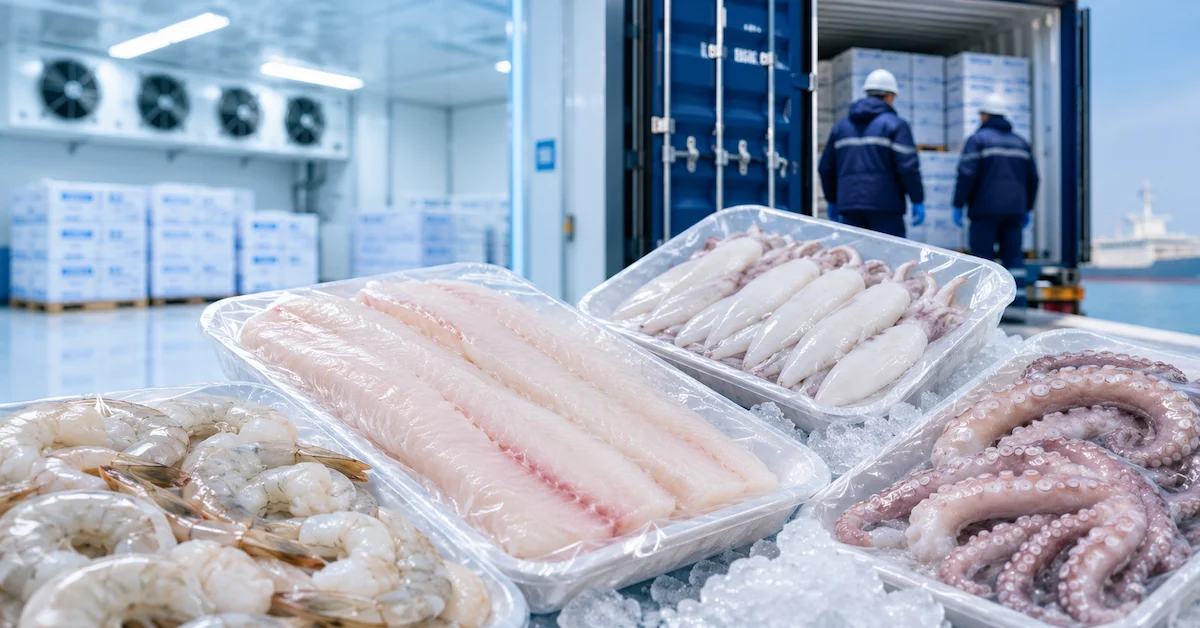


Understanding what makes frozen seafood export grade is important for importers, distributors, wholesalers, supermarkets, food service buyers, and food processing factories. Export-grade frozen seafood must be suitable for long-distance transportation, frozen storage, local resale, and market-specific applications.
For global buyers, export grade does not only mean the seafood is frozen. It means the product has clear specifications, stable quality, suitable packaging, cold-chain control, and enough documentation support for international trade. If these details are not well managed, buyers may face product damage, customer complaints, lower usable weight, or import-related delays.
This guide explains the main factors that make frozen seafood suitable for export and how buyers can evaluate suppliers before placing bulk orders.
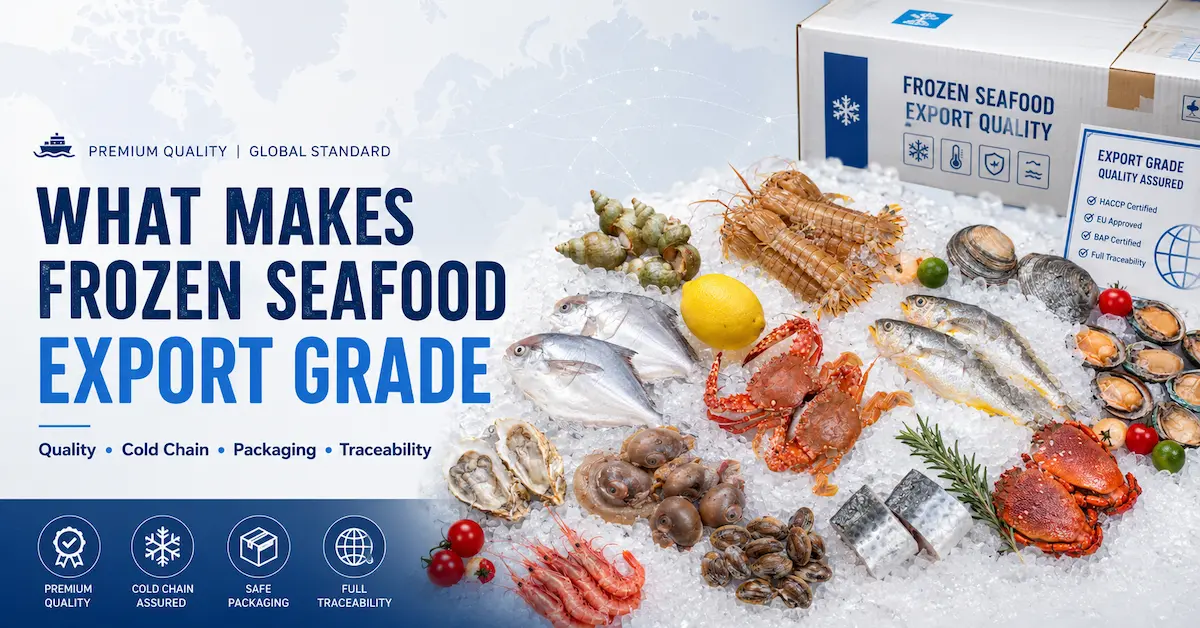
Quick Answer: What Makes Frozen Seafood Export Grade?
Frozen seafood is considered export grade when it has stable product quality, clear species information, consistent size grading, proper freezing, controlled glazing, strong packaging, suitable shelf life, traceable product information, and reliable cold-chain handling.
A good export-grade frozen seafood product should include:
- Clear product name and species
- Stable size grade
- Proper processing method
- Confirmed net weight and glazing ratio
- IQF or block frozen format based on buyer use
- Strong export cartons or suitable retail packaging
- Storage temperature around -18°C or lower
- Clear shelf life and storage instructions
- Traceable origin or batch information
- Export-ready supplier communication
Bothwin Food supplies frozen fish, fresh or frozen shrimp, cephalopods, canned goods, spices, and condiments for global B2B buyers. Buyers can review seafood categories through the Products page, learn more about the company on the About Us page, or submit sourcing requirements through the Contact Us page.
Why Export Grade Matters in Frozen Seafood Sourcing
Export buyers usually purchase larger quantities and ship products across long distances. This means small quality problems can become large business risks.
For example, weak cartons may collapse during container transport. Excessive glazing may reduce real seafood weight. Inconsistent size grading may create customer complaints. Poor cold-chain handling may affect seafood texture and shelf life.
Export-grade frozen seafood helps buyers:
- Reduce quality disputes
- Protect resale value
- Improve customer confidence
- Support repeat orders
- Manage inventory more safely
- Compare quotations more accurately
- Build long-term supplier relationships
For serious importers and distributors, export grade should be judged by product details, not by supplier claims alone.
1. Clear Product Specifications
The first sign of export-grade frozen seafood is clear specification. Buyers should never accept vague descriptions such as “good quality shrimp” or “frozen fish available.”
A complete specification should include:
- Product name
- Species
- Origin or sourcing area
- Size grade
- Processing method
- Net weight
- Gross weight
- Glazing ratio
- Freezing method
- Packaging format
- Shelf life
- Storage requirement
- Carton details
Clear specifications help buyers compare suppliers fairly. They also reduce misunderstanding before shipment.
2. Stable Size Grading
Size grading is important for frozen seafood because it affects pricing, cooking performance, retail appearance, and processing yield.
For frozen shrimp, common size grades may include 21/25, 26/30, 31/40, or market-specific sizes. For fish fillets, buyers may check portion weight, thickness, and cutting style. For squid and octopus, buyers may check piece size, cleaning level, and cutting consistency.
Stable grading is especially important for:
- Restaurants controlling portion cost
- Supermarkets building retail product lines
- Food processors managing production yield
- Wholesalers reselling to different customer groups
If the grading is inconsistent, the product may not meet export buyer expectations.
3. Proper Freezing Method
The freezing method affects texture, shelf life, and usability. Export-grade seafood should be frozen in a way that matches the buyer’s application.
| Freezing Method | Features | Best For |
|---|---|---|
| IQF seafood | Each piece frozen separately | Restaurants, supermarkets, food service, seafood mixes |
| Block frozen seafood | Products frozen together in blocks | Processors, wholesalers, high-volume buyers |
| Vacuum packed seafood | Better protection and presentation | Premium retail and branded seafood |
| Glazed seafood | Ice layer protects surface | Long-distance frozen shipping |
IQF frozen seafood is useful when buyers need portion control. Block frozen seafood may be better for factories that process large batches at once.
4. Controlled Glazing Ratio
Glazing is a thin ice layer used to protect frozen seafood during storage and shipping. It can help prevent freezer burn and moisture loss.
However, excessive glazing reduces real seafood weight. This is one of the most common hidden cost risks in frozen seafood sourcing.
Export buyers should confirm:
- Net weight
- Gross weight
- Glazing ratio
- Drained or usable weight where relevant
- Whether price is based on net weight or gross weight
A reliable supplier should explain glazing clearly before quotation.
5. Strong Export Packaging
Packaging is a key part of export-grade frozen seafood. Products must survive frozen storage, container loading, sea freight, warehousing, and local distribution.
Common export packaging options include:
| Packaging Type | Best For | Main Advantage |
| Bulk cartons | Importers, wholesalers, processors | Cost-effective for large orders |
| IQF bags | Food service and retail channels | Easy portion control |
| Vacuum packs | Fish fillets and premium seafood | Better surface protection |
| Retail bags | Supermarkets and grocery chains | Better freezer display |
| Private label packs | Brands and retail buyers | Supports market differentiation |
Buyers should check carton strength, inner packaging, label clarity, and storage instructions before confirming an order.
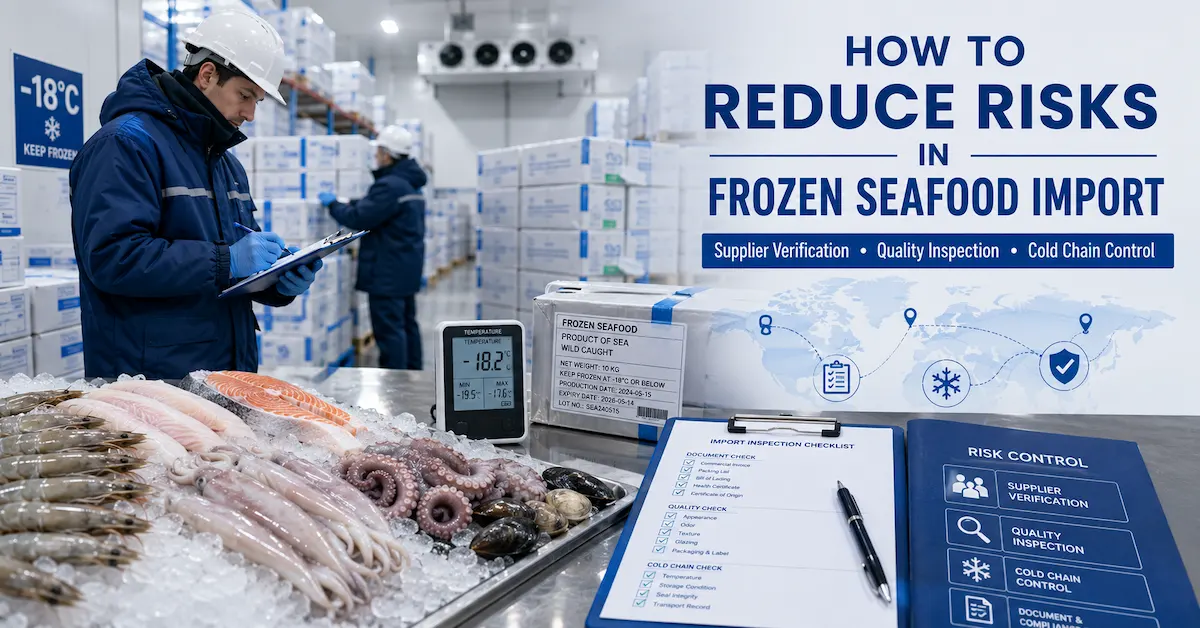
6. Cold-Chain Control
Cold-chain control is essential for frozen seafood export. Even high-quality seafood can lose value if temperature control is weak.
Most frozen seafood should be stored at around -18°C or lower. A reliable supplier should understand:
- Frozen warehouse storage
- Product handling before loading
- Carton protection
- Container loading process
- Frozen transport requirements
- Storage instructions after delivery
Cold-chain control helps maintain seafood texture, appearance, moisture, and shelf life during long-distance export.
7. Traceability and Product Information
Traceability helps buyers understand where the product comes from and how it is managed. It also supports complaint handling and repeat order consistency.
Traceable product information may include:
- Product name
- Species
- Origin
- Batch or production information
- Processing method
- Packaging date
- Shelf life
- Storage requirement
Traceability is especially useful for supermarkets, importers, distributors, and food processors that need stronger product records.
8. Suitable Shelf Life
Export-grade frozen seafood should have enough shelf life for shipping, customs clearance, warehousing, distribution, and final sale.
Buyers should confirm:
- Production date or packing date
- Shelf life
- Storage temperature
- Recommended use period
- Packaging protection
If shelf life is too short, distributors and retailers may face inventory pressure.
9. Quality Check Before Bulk Orders
Sample testing is one of the most important steps before confirming bulk export orders.
Buyers should check:
- Appearance
- Smell after thawing
- Texture after thawing
- Cooking performance
- Packaging strength
- Product size consistency
- Glazing level
- Weight accuracy
A sample should be tested under real application conditions. A restaurant buyer may test cooking performance, while a processor may test yield and cutting loss.
10. Supplier Communication and Export Support
A supplier’s communication quality can affect the whole purchasing process. Export buyers need clear quotation, fast response, and practical product suggestions.
A reliable supplier should support:
- Product matching
- Sample arrangement
- Specification confirmation
- Packaging discussion
- Bulk order planning
- Export communication
- Repeat order coordination
For B2B buyers, stable communication is often as important as product quality.
Common Mistakes When Judging Export-Grade Frozen Seafood
Choosing Only by Low Price
A low price may hide excessive glazing, weak packaging, lower net weight, or inconsistent quality.
Ignoring Freezing Method
IQF, block frozen, vacuum packed, and glazed seafood serve different business needs.
Not Checking Packaging
Poor packaging can damage seafood during export and reduce resale value.
Skipping Sample Testing
Samples help buyers verify product quality before large-volume purchase.
Accepting Vague Specifications
Without clear product details, buyers may face shipment disputes or customer complaints.
Why Work with Bothwin Food
Bothwin Food provides seafood and food product supply options for global B2B buyers. Its product range includes frozen fish, fresh or frozen shrimp, cephalopods, canned goods, spices, and condiments.
For buyers evaluating what makes frozen seafood export grade, Bothwin Food can help match seafood products based on product type, application, packaging requirement, order quantity, and destination market.
Buyers can explore available seafood categories through the Products page, learn more about the company on the About Us page, read more sourcing insights on the Blog page, or send export seafood requirements through the Contact Us page.
Export Buyer Checklist
Before confirming an export frozen seafood order, prepare and check the following:
- Product name and species
- Origin or sourcing area
- Size grade
- Processing method
- IQF or block frozen format
- Net weight and glazing ratio
- Packaging format
- Carton strength
- Shelf life
- Storage temperature
- Destination market
- Required documents
- Sample test result
- Repeat order plan
This checklist helps buyers compare suppliers more accurately and reduce sourcing risk.
FAQ
1. What makes frozen seafood export grade?
Frozen seafood is export grade when it has stable quality, clear specifications, proper freezing, controlled glazing, strong packaging, cold-chain handling, traceability, and suitable shelf life for international trade.
2. What products can be export-grade frozen seafood?
Common products include frozen fish, shrimp, squid, octopus, cuttlefish, shellfish, mixed seafood, and seafood raw materials for processing.
3. Why is size grading important?
Size grading helps buyers control pricing, cooking results, retail display, and processing yield.
4. Why does glazing ratio matter?
Glazing protects seafood, but excessive glazing reduces usable seafood weight. Buyers should confirm net weight and glazing ratio before ordering.
5. What freezing method is best for export seafood?
It depends on the buyer. IQF is suitable for portion control and retail use, while block frozen products are often suitable for processors and bulk buyers.
6. What packaging is best for frozen seafood export?
Bulk cartons, IQF bags, vacuum packs, retail bags, and private label packs can all be suitable depending on the buyer’s channel.
7. What temperature should export frozen seafood be stored at?
Most frozen seafood should be stored at around -18°C or lower to maintain quality and shelf life.
8. Should buyers request samples before bulk orders?
Yes. Sample testing helps buyers check appearance, thawing performance, texture, packaging quality, and suitability for the target market.
9. How can buyers compare frozen seafood quotations?
Buyers should compare species, size grade, net weight, glazing ratio, freezing method, packaging, shelf life, and destination requirements, not only unit price.
10. How can I request export-grade frozen seafood from Bothwin Food?
You can contact Bothwin Food with product type, size grade, packaging format, order quantity, destination market, and sample request to receive a suitable sourcing proposal.
Conclusion
Understanding what makes frozen seafood export grade helps global buyers make better sourcing decisions. Export-grade frozen seafood should have clear specifications, stable grading, proper freezing, controlled glazing, strong packaging, reliable cold-chain handling, traceable information, and supplier support for bulk orders.
Bothwin Food supplies frozen seafood and related food products for global B2B buyers, including frozen fish, fresh or frozen shrimp, cephalopods, canned goods, spices, and condiments. For export-grade frozen seafood sourcing, contact Bothwin Food to discuss product specifications, sample testing, packaging options, order quantity, and destination market requirements.