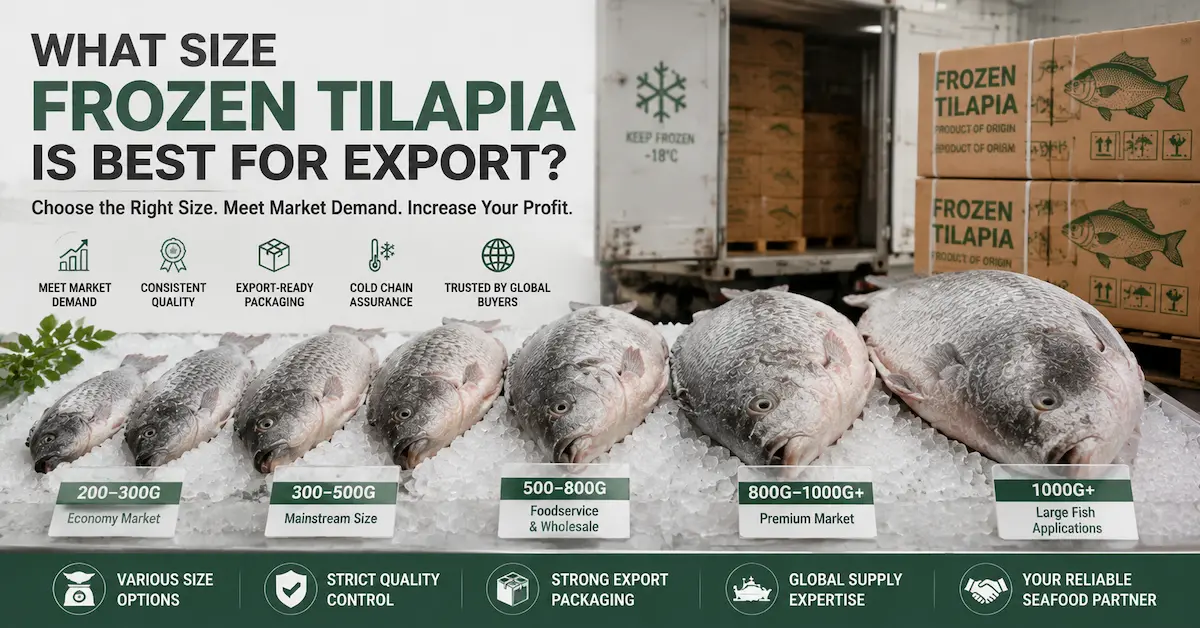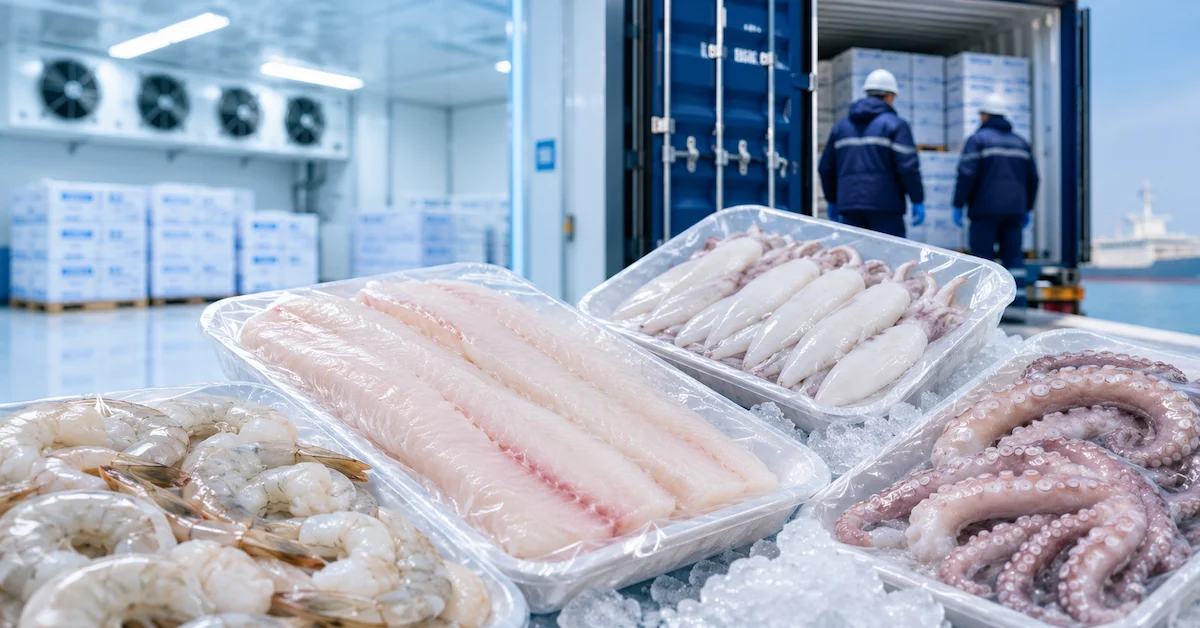


Understanding how to reduce risks in frozen seafood import is essential for importers, distributors, wholesalers, supermarkets, restaurants, and food processing companies. Frozen seafood can offer stable supply and attractive margins, but a shipment may also involve quality, temperature, documentation, packaging, payment, and delivery risks.
Many problems begin before the container leaves the origin country. An unclear species name, incorrect glazing ratio, weak carton, incomplete certificate, or untested sample can create customs delays, customer complaints, lower processing yield, and unexpected costs.
A safer import process starts with clear specifications, qualified supplier communication, realistic sample testing, reliable cold-chain planning, and written agreement on every important commercial detail.
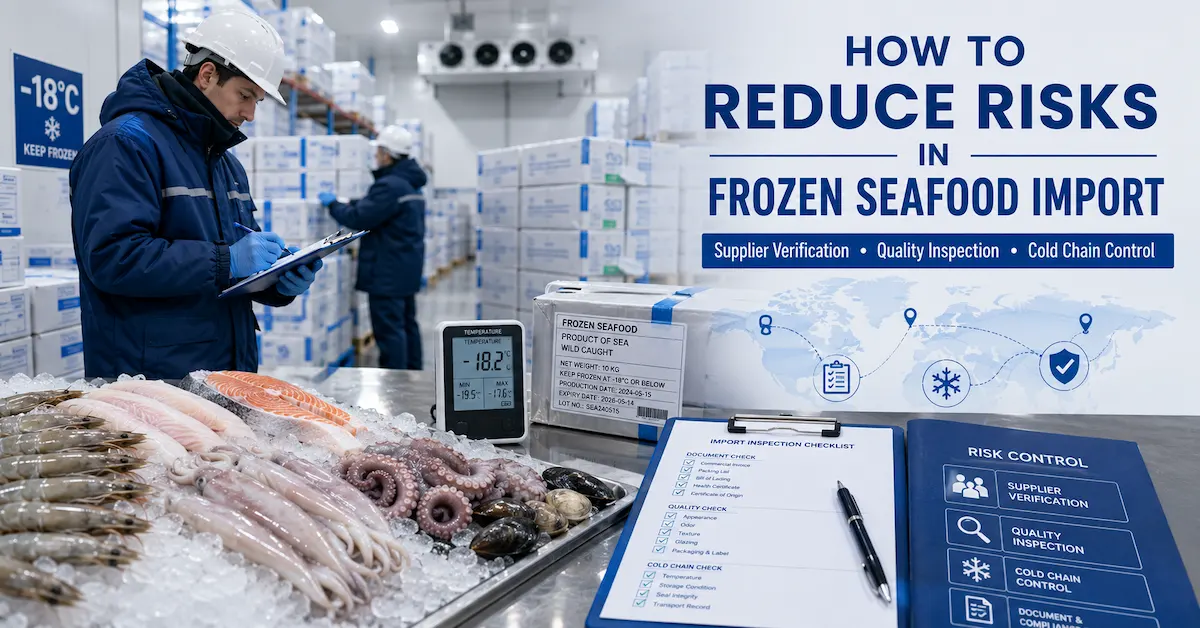
Quick Answer: How Can Buyers Reduce Frozen Seafood Import Risks?
Buyers can reduce frozen seafood import risks by verifying the supplier, confirming complete product specifications, testing samples, checking required documents, reviewing packaging, controlling the cold chain, using clear payment and inspection terms, and preparing a contingency plan before shipment.
The most important actions include:
- Verify the supplier and processing source
- Confirm species, size, processing form, and origin
- Compare net weight instead of carton price alone
- Define an acceptable glazing ratio
- Test samples under real-use conditions
- Confirm export and import documents in advance
- Review carton strength and inner packaging
- Maintain frozen storage and transport conditions
- Use pre-shipment inspection when appropriate
- Record claims procedures in the purchase contract
- Confirm cargo insurance and liability
- Prepare an alternative supply plan
Bothwin Food supplies frozen fish, fresh or frozen shrimp, cephalopods, canned goods, spices, and condiments for global B2B buyers. Buyers can explore available categories on the Products page, learn more through the About Us page, or submit sourcing requirements through the Contact Us page.
What Are the Main Risks in Frozen Seafood Import?
Frozen seafood import risks can be divided into several groups.
| Risk Category | Common Problem | Possible Business Impact |
|---|---|---|
| Supplier risk | Unstable quality or poor communication | Delays, disputes, inconsistent repeat orders |
| Product risk | Wrong species, size, weight, or processing form | Customer complaints and market mismatch |
| Quality risk | Poor texture, odor, freezer burn, or excessive glazing | Lower resale value and processing yield |
| Cold-chain risk | Temperature fluctuation or partial thawing | Shorter shelf life and product deterioration |
| Packaging risk | Weak cartons, poor seals, or unclear labels | Cargo damage and retail problems |
| Documentation risk | Missing or inconsistent certificates | Customs delay, inspection, or rejection |
| Commercial risk | Unclear price basis or payment terms | Hidden cost and financial loss |
| Logistics risk | Delay, container shortage, or port congestion | Storage cost and supply interruption |
| Compliance risk | Product does not meet destination requirements | Detention, recall, or rejected entry |
A successful import plan should address each category before the purchase order is confirmed.
1. Verify the Frozen Seafood Supplier
Supplier verification is the first step in reducing risk. A professional website and attractive quotation do not automatically prove that the supplier can deliver consistent frozen seafood.
Buyers should confirm:
- Registered company information
- Export experience
- Product categories
- Processing or sourcing arrangements
- Quality-control procedures
- Cold-storage capability
- Packaging options
- Traceability information
- Typical lead time
- Repeat supply capacity
- Available market-specific documents
Buyers should also understand whether they are working with a processor, exporter, trading company, or integrated seafood supplier. Each model can work, but responsibilities must be clear.
Ask who processes the seafood, who controls final inspection, who issues the commercial documents, and who manages quality claims.
2. Confirm the Exact Product Specification
A vague purchase description creates unnecessary risk. “Frozen shrimp” or “frozen fish” is not enough for a bulk import contract.
The specification should include:
- Commercial product name
- Scientific species name where relevant
- Country or sourcing area
- Wild-caught or farmed origin
- Processing form
- Size grade
- Skin-on or skinless
- Bone-in or boneless
- Head-on or headless
- Raw or cooked
- IQF or block frozen
- Net weight
- Gross weight
- Glazing ratio
- Inner packaging
- Outer carton
- Shelf life
- Storage temperature
- Label requirements
Two quotations may look similar but represent different products. A lower price may reflect smaller size, higher glazing, lower net weight, weaker packaging, or a different species.
Written specifications help buyers compare offers fairly and reduce disputes after delivery.
3. Control Net Weight and Glazing Risk
Glazing is a protective ice layer used to reduce dehydration and freezer burn. Proper glazing can protect seafood during storage and transport.
However, excessive glazing reduces the amount of usable seafood in each carton.
Before ordering, confirm:
- Declared net weight
- Gross weight
- Glazing percentage
- Whether the price is based on net or gross weight
- Packaging weight
- Drained weight where relevant
- Local labeling requirements
For wholesalers and food processors, a small weight difference across a full container can create a significant financial loss.
Buyers should include an agreed weight tolerance and inspection method in the purchase specification.
4. Test Samples Under Real Conditions
Sample testing is one of the best ways to reduce frozen seafood import risk. A sample should not only be viewed while frozen. It should be thawed, weighed, prepared, and evaluated according to the intended application.
Check:
- Frozen appearance
- Package condition
- Product count or size grade
- Ice and glazing level
- Weight before and after thawing
- Odor
- Color
- Texture
- Moisture loss
- Broken pieces
- Cooking performance
- Processing yield
Different buyers should test different factors.
Restaurants should evaluate cooking and portion consistency. Supermarkets should check appearance and packaging. Processors should measure thawing loss, cutting yield, and recipe performance. Wholesalers should consider resale value and downstream customer expectations.
The approved sample and written specification should become the quality reference for the bulk order.
5. Review Cold-Chain Control
Cold-chain failure can reduce the value of an otherwise acceptable product. Frozen seafood should remain under stable frozen conditions from processing and storage through loading, transport, customs clearance, and final delivery.
Most frozen seafood is commonly held at around -18°C or lower, subject to the product specification and destination requirements.
Buyers should confirm:
- Freezing method
- Pre-shipment cold-storage conditions
- Reefer container set point
- Loading time
- Container pre-trip inspection
- Temperature monitoring
- Transit time
- Destination cold-store arrangements
- Procedures for delayed clearance
- Receiving temperature checks
Temperature fluctuation may cause:
- Partial thawing and refreezing
- Large ice crystals
- Freezer burn
- Moisture loss
- Soft texture
- Damaged packaging
- Shorter shelf life
For higher-risk or high-value shipments, buyers may consider using an independent temperature data logger.
6. Check Packaging Before Shipment
Frozen seafood packaging must survive low temperatures, moisture, stacking, container transport, unloading, and warehouse handling.
Common packaging formats include:
| Packaging Format | Suitable Buyers | Main Consideration |
| Bulk cartons | Importers, wholesalers, processors | Strength and cost efficiency |
| IQF bags | Restaurants, supermarkets, food service | Seal quality and portion control |
| Vacuum packs | Premium fish and retail products | Seal integrity and appearance |
| Foodservice packs | Hotels, catering, commercial kitchens | Handling and storage convenience |
| Retail bags | Supermarkets and private labels | Design, label, barcode, and freezer display |
| Block frozen packs | Processors and high-volume buyers | Thawing method and bulk usability |
Before production, confirm:
- Bag thickness
- Seal strength
- Carton material
- Moisture resistance
- Carton dimensions
- Net weight per pack
- Number of packs per carton
- Shipping marks
- Storage instructions
- Batch identification
- Pallet requirements
A packaging sample should be reviewed before mass production when custom or private-label packaging is involved.
7. Confirm Seafood Export and Import Documents Early
Documentation errors can delay seafood shipments even when product quality is acceptable.
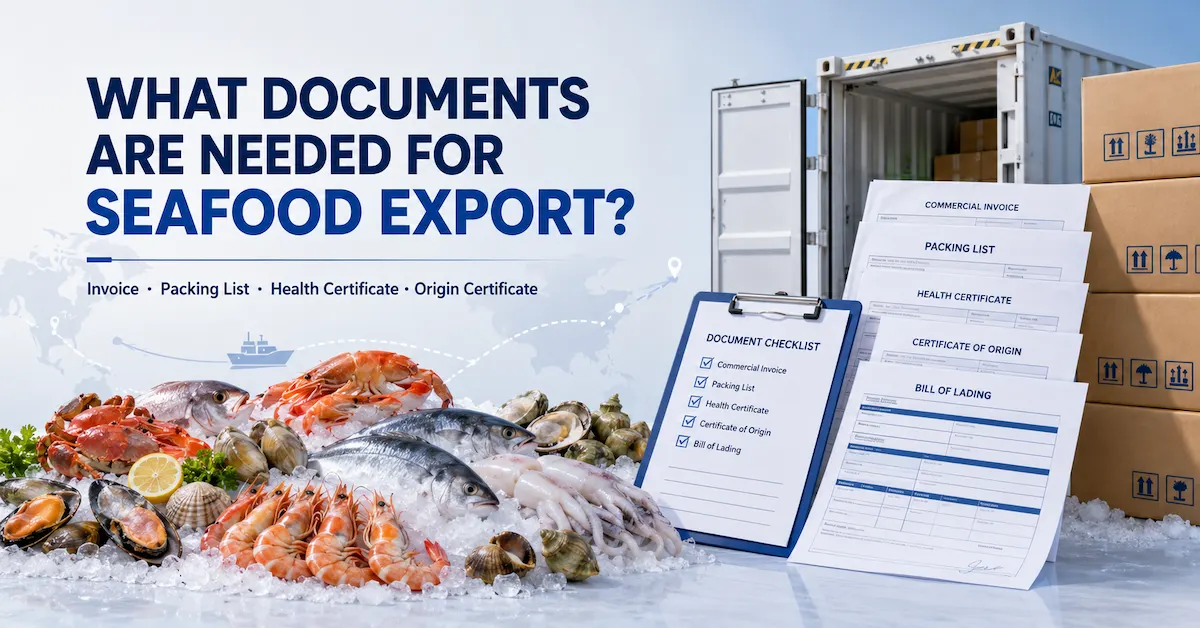
Common documents may include:
- Commercial invoice
- Packing list
- Bill of lading
- Certificate of origin
- Health or sanitary certificate
- Product specification sheet
- Catch certificate where applicable
- Laboratory report where required
- Insurance certificate
- Temperature record
- Import permit or registration
- Market-specific declaration
Requirements depend on the destination country, species, origin, processing form, and intended use.
The importer should ask the customs broker or local authority for a written checklist before production. The supplier should receive that checklist early enough to arrange inspections, official certificates, or laboratory testing.
Names, weights, species, container numbers, seal numbers, and shipment details must be consistent across documents.
8. Use Clear Purchase and Quality Terms
A purchase order should explain what happens when the delivered product does not match the approved specification.
Important contract points may include:
- Product specification
- Approved sample
- Quantity tolerance
- Weight tolerance
- Glazing tolerance
- Packaging standard
- Label artwork approval
- Required documents
- Inspection method
- Shipment deadline
- Cold-chain requirements
- Claim notification period
- Evidence required for claims
- Compensation or replacement process
- Applicable Incoterm
- Payment schedule
Avoid relying only on chat messages. Important commercial and quality details should be confirmed in the purchase order, contract, or specification sheet.
9. Choose Safer Payment Terms
Payment risk should be managed according to supplier history, order value, production customization, and buyer experience.
Possible structures include:
- Deposit with balance before shipment
- Deposit with balance against shipping documents
- Letter of credit
- Documentary collection
- Credit terms for established relationships
- Trade credit insurance where available
New buyers should be cautious about paying the full amount before production without adequate supplier verification and written terms.
Customized packaging may require a larger deposit because the supplier cannot easily resell the finished packaging. This commercial risk should be considered during negotiation.
10. Arrange Inspection When Appropriate
Pre-shipment inspection can help confirm that the bulk order matches the approved requirements.
An inspection may check:
- Product identity
- Species and format
- Size grade
- Quantity
- Net and gross weight
- Glazing
- Packaging
- Labels
- Cartons
- Frozen condition
- Container condition
- Loading process
- Seal number
- Document consistency
Inspection cannot remove every risk, but it can identify obvious problems before the goods leave the origin country.
High-value orders, first orders, customized packaging, and products with strict size or weight requirements may justify independent inspection.
11. Protect the Shipment with Insurance
Cargo insurance can help reduce financial loss from certain transport risks, but coverage varies.
Buyers should confirm:
- Who arranges the insurance
- Insured value
- Covered risks
- Deductible
- Temperature-related exclusions
- Delay exclusions
- Packaging exclusions
- Claim evidence requirements
- Notification deadline
Insurance does not replace proper packaging or cold-chain management. Some policies may exclude deterioration caused by inadequate packing, inherent product defects, or ordinary delay.
Review the policy wording before shipment.
12. Prepare a Contingency Plan
Even a well-planned frozen seafood shipment may face vessel delay, customs inspection, port congestion, equipment failure, or warehouse problems.
A practical contingency plan may include:
- Alternative cold storage at destination
- Backup customs broker
- Secondary transport provider
- Emergency temperature monitoring
- Alternative supplier
- Safety stock
- Customer communication plan
- Claims evidence procedure
- Inspection contact
- Insurance contact
Wholesalers, restaurant chains, and processors should avoid depending on one shipment for critical supply.
Frozen Seafood Import Risk-Control Checklist
Before confirming an order, use this checklist:
- Has the supplier been verified?
- Is the exact species confirmed?
- Is the origin clear?
- Are product specifications complete?
- Is the size grade acceptable?
- Are net weight and glazing confirmed?
- Has a sample been tested?
- Is the freezing format suitable?
- Is the packaging strong enough?
- Are labels approved?
- Is cold-chain handling confirmed?
- Are import documents listed?
- Is pre-shipment inspection needed?
- Are payment terms acceptable?
- Is cargo insurance confirmed?
- Is there a claims procedure?
- Is destination cold storage ready?
- Is there a backup supply plan?
This checklist helps buyers identify problems before they become shipment losses.
Why Work with Bothwin Food
Bothwin Food supplies frozen fish, fresh or frozen shrimp, cephalopods, canned goods, spices, and condiments for global B2B buyers.
For importers looking to reduce frozen seafood sourcing risks, Bothwin Food can help organize product information based on:
- Product category
- Species
- Processing form
- Size grade
- Freezing method
- Net weight
- Glazing requirement
- Packaging
- Order quantity
- Destination market
- Intended application
Buyers can review available products through the Products page, learn more about company background on the About Us page, or submit product, packaging, and documentation requirements through the Contact Us page.
Buyer Inquiry Checklist
To receive a more accurate quotation, include:
- Destination country and port
- Seafood product
- Species
- Preferred origin
- Wild-caught or farmed requirement
- Processing format
- Size grade
- IQF or block frozen preference
- Net weight
- Maximum glazing ratio
- Packaging format
- Label requirements
- Order quantity
- Required documents
- Sample request
- Inspection requirement
- Target shipment date
A detailed inquiry helps the supplier recommend a more suitable product and reduces quotation misunderstandings.
FAQ
1. What are the main risks in frozen seafood import?
The main risks include inconsistent quality, excessive glazing, wrong species, cold-chain failure, weak packaging, incomplete documents, delayed shipment, and unclear payment terms.
2. How can importers verify frozen seafood quality?
Importers can verify quality through clear specifications, approved samples, thawing tests, weight checks, glazing checks, packaging review, and pre-shipment inspection.
3. Why is glazing a risk in frozen seafood import?
Excessive glazing reduces the usable seafood weight and may make a low quotation more expensive in real terms.
4. How can buyers reduce cold-chain risk?
Buyers should confirm freezing, storage, reefer settings, loading procedures, destination cold storage, and temperature-monitoring arrangements.
5. What documents should be checked before shipment?
Buyers should check the commercial invoice, packing list, bill of lading, health certificate, certificate of origin, catch document where relevant, and market-specific import files.
6. Should importers request samples before ordering?
Yes. Samples should be thawed and tested for appearance, smell, texture, weight loss, glazing, cooking performance, and packaging quality.
7. Is pre-shipment inspection necessary?
It is especially useful for first orders, high-value shipments, custom packaging, and products with strict weight or grading requirements.
8. How can buyers reduce seafood payment risk?
Use verified supplier information, clear contracts, suitable deposit structures, documentary payment methods, and insurance where appropriate.
9. What should be included in a frozen seafood contract?
The contract should include specifications, quantity, weight, glazing, packaging, documents, shipment date, inspection, payment, cold-chain requirements, and claims procedures.
10. How can Bothwin Food support frozen seafood importers?
Bothwin Food can help buyers match seafood products, specifications, packaging options, and sourcing requirements according to the destination market and commercial application.
Conclusion
Learning how to reduce risks in frozen seafood import helps buyers protect product quality, cash flow, customer relationships, and long-term supply stability.
The safest approach is to verify the supplier, confirm specifications, test samples, control glazing, review packaging, protect the cold chain, prepare documents early, and record commercial responsibilities in writing.
Bothwin Food supplies frozen seafood and related food products for global B2B buyers. Contact Bothwin Food with your product, size, packaging, destination, order quantity, document checklist, and sample requirements to receive a more suitable sourcing proposal.