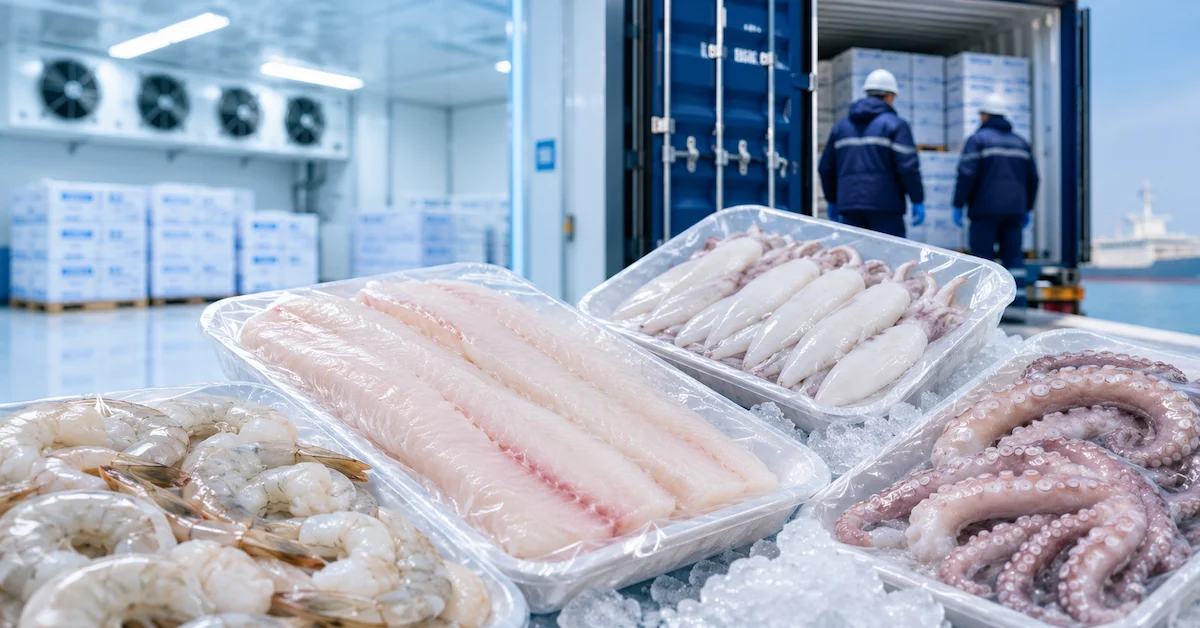


Understanding what documents are needed for seafood export is essential for importers, exporters, distributors, wholesalers, supermarkets, and food processing companies. Seafood shipments involve more than commercial paperwork. Depending on the product and destination, buyers may also need health certificates, origin records, catch documentation, establishment approval, traceability information, or species-specific permits.
Missing, inconsistent, or inaccurate documents can cause customs delays, additional inspection, storage charges, shipment detention, or rejection at the destination port.
The exact document package depends on several factors:
- Destination country
- Seafood species
- Wild-caught or farmed origin
- Frozen, chilled, cooked, or processed condition
- Packaging format
- Intended use
- Shipping method
- Buyer contract
- Local food import regulations
This guide explains the most common seafood export documents and how global buyers can prepare a more reliable shipment.
Quick Answer: What Documents Are Usually Needed for Seafood Export?
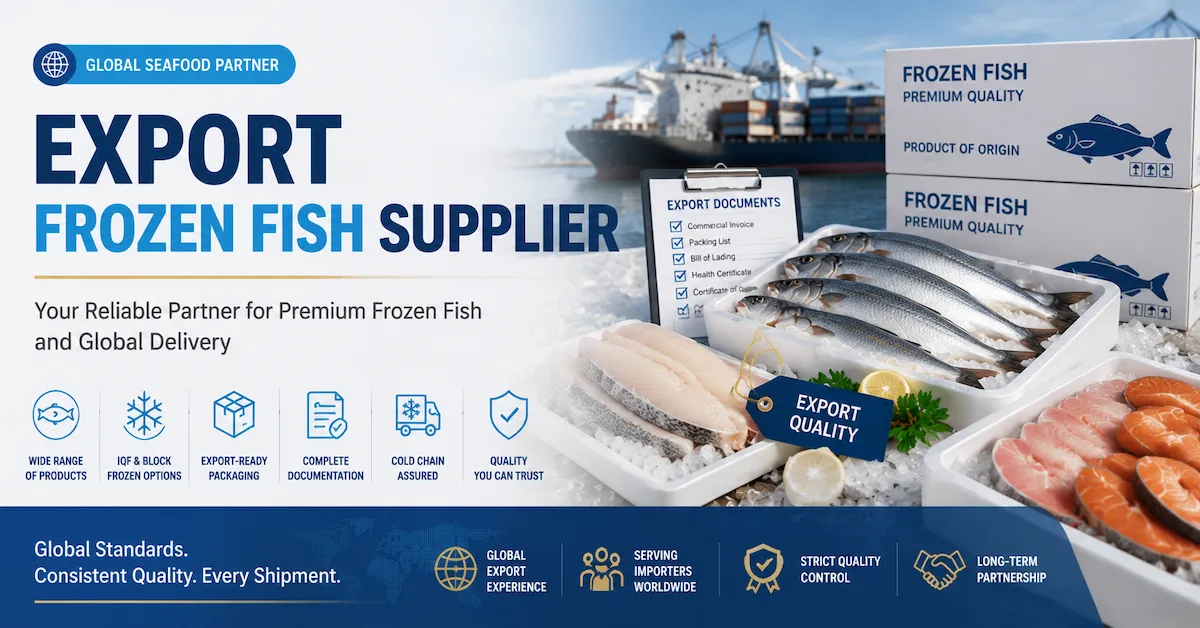
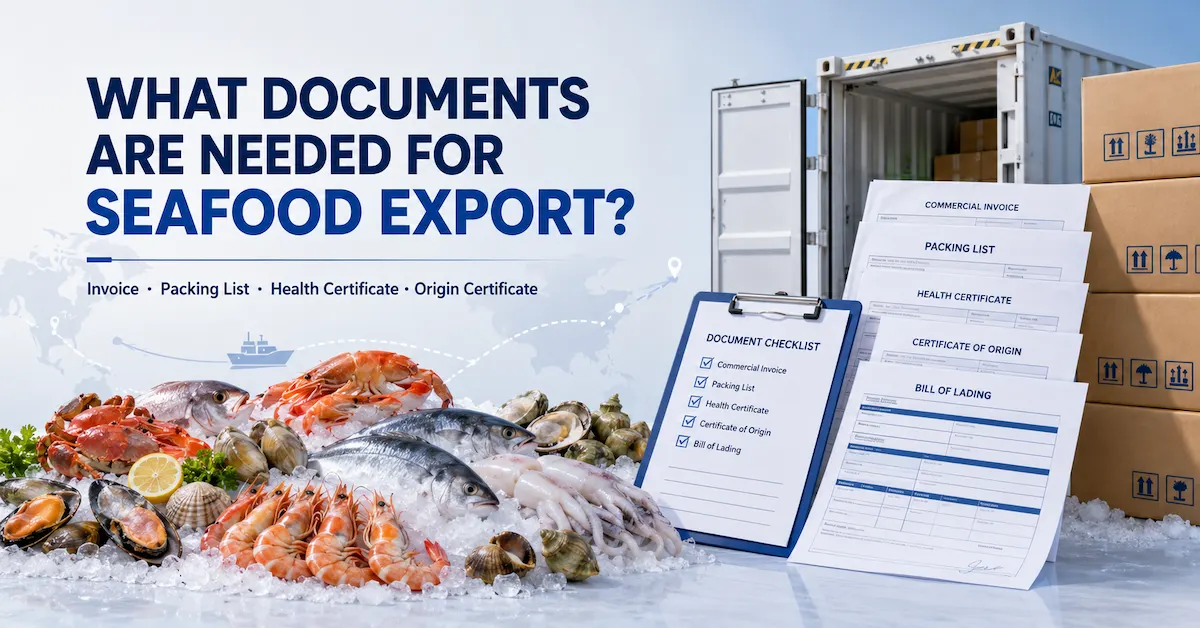
Most seafood export shipments require a commercial invoice, packing list, bill of lading or air waybill, and product specification information. Depending on the destination and product, buyers may also need a certificate of origin, official health certificate, catch certificate, import permit, insurance certificate, traceability records, or laboratory report.
The most common documents include:
- Pro forma invoice
- Commercial invoice
- Packing list
- Bill of lading or air waybill
- Certificate of origin
- Health or sanitary certificate
- Catch certificate or IUU documentation
- Product specification sheet
- Certificate of analysis or test report
- Temperature and cold-chain records
- Insurance certificate
- Import permit or market-specific declaration
Not every document is required for every shipment. Buyers should confirm the final checklist with the importer, customs broker, freight forwarder, and destination authority before production and loading.
Bothwin Food supplies frozen fish, fresh or frozen shrimp, cephalopods, canned goods, spices, and condiments for global B2B buyers. Buyers can review available products on the Products page, learn more through the About Us page, or submit product and documentation requirements through the Contact Us page.
Core Seafood Export Documents at a Glance
| Document | Main Purpose | Usually Prepared or Issued By | Requirement |
|---|---|---|---|
| Pro forma invoice | Confirms preliminary offer and order terms | Exporter | Before order confirmation |
| Commercial invoice | Supports customs valuation and payment | Exporter | Commonly required |
| Packing list | Describes cartons, weights, and packing | Exporter | Commonly required |
| Bill of lading | Confirms ocean transport and cargo receipt | Carrier or freight forwarder | Required for sea freight |
| Air waybill | Confirms air cargo transport | Airline or freight forwarder | Required for air freight |
| Certificate of origin | Confirms product country of origin | Exporter or authorized organization | Market-dependent |
| Health certificate | Confirms sanitary compliance | Competent government authority | Frequently required for seafood |
| Catch certificate | Supports legal catch and IUU controls | Relevant fishing or government authority | Species and market-dependent |
| Product specification | Defines species, size, processing, and packing | Supplier or processor | Strongly recommended |
| Test report or COA | Shows selected quality or safety results | Laboratory, processor, or inspection body | Buyer or market-dependent |
| Insurance certificate | Confirms cargo insurance | Insurer or broker | Incoterm or contract-dependent |
| Temperature record | Supports cold-chain verification | Warehouse, carrier, or data logger provider | Buyer or market-dependent |
1. Pro Forma Invoice
A pro forma invoice is normally issued before the final order. It works as a formal quotation and helps the buyer review the commercial terms.
A seafood pro forma invoice may include:
- Exporter and buyer information
- Product name
- Species
- Product form
- Size grade
- Unit price
- Total quantity
- Packaging
- Incoterm
- Payment terms
- Delivery time
- Port of loading
- Destination port
- Quotation validity
The buyer may use the pro forma invoice to apply for an import permit, arrange payment, open a letter of credit, or obtain internal purchase approval.
A pro forma invoice is not normally a replacement for the final commercial invoice.
2. Commercial Invoice
The commercial invoice is one of the most important documents in a seafood export shipment. Customs authorities use it to identify the goods, establish customs value, and calculate duties and taxes where applicable.
A complete seafood commercial invoice should normally include:
- Exporter name and address
- Importer or consignee information
- Invoice number and date
- Product description
- Scientific species name where required
- Processing form
- Quantity
- Net and gross weight
- Unit price and total value
- Currency
- Country of origin
- HS code where available
- Incoterm
- Payment terms
- Shipping marks
- Port of loading and destination
The product description on the invoice should match the packing list, bill of lading, health certificate, origin document, and import declaration.
Small differences in product names, weights, container numbers, or consignee information can create questions during customs clearance.
3. Packing List
The packing list explains how the seafood shipment is physically packed. It does not normally replace the commercial invoice because it focuses on cartons, weights, dimensions, and packing structure rather than customs value.
A seafood packing list may show:
- Product name
- Lot or batch number
- Number of cartons
- Units per carton
- Net weight per carton
- Gross weight per carton
- Total net weight
- Total gross weight
- Package dimensions
- Pallet quantity
- Container number
- Seal number
- Shipping marks
For mixed seafood shipments, each product should be listed separately. Frozen shrimp, fish, squid, octopus, and other items should not be combined under a vague description such as “frozen seafood products.”
A detailed packing list helps customs officers, warehouses, buyers, and inspection agencies verify the cargo.
4. Bill of Lading or Air Waybill
The bill of lading is used for ocean shipments. It confirms that the carrier has received the cargo and records key transport information.
It normally includes:
- Shipper
- Consignee
- Notify party
- Vessel and voyage
- Port of loading
- Port of discharge
- Cargo description
- Number of packages
- Gross weight
- Container number
- Seal number
- Freight terms
An air waybill performs a similar transport function for air cargo, although it is not generally treated as a negotiable title document in the same way as certain ocean bills of lading.
Buyers should ensure that the cargo description and package quantity agree with the invoice and packing list.
5. Certificate of Origin
A certificate of origin confirms where the exported seafood originates. It may be required by customs, the buyer, a bank, or the terms of a trade agreement.
There are two common types:
Non-Preferential Certificate of Origin
This confirms the origin of the goods but does not automatically provide reduced customs duties.
Preferential Certificate of Origin
This may help the importer claim reduced or zero tariffs under an applicable free trade agreement, provided the seafood meets the relevant rules of origin.
The certificate may need to be:
- Issued by an authorized organization
- Certified by a chamber of commerce
- Completed by the exporter
- Submitted electronically
- Supported by additional origin evidence
Buyers should confirm whether the product actually qualifies for preferential treatment before requesting an FTA origin declaration.
6. Health or Sanitary Certificate
A health certificate is one of the most important seafood-specific documents. Many markets require fishery products for human consumption to be accompanied by an official certificate issued or endorsed by the competent authority in the exporting country.
The certificate may confirm matters such as:
- Approved processing establishment
- Product identification
- Species and processing form
- Production conditions
- Storage temperature
- Hygiene compliance
- Shipment quantity
- Container and seal details
- Destination country
- Official inspection or certification
The required certificate model varies by destination. Exporters should not use a generic health certificate without confirming that it matches the importing market’s approved format.
The certificate information should agree with the invoice, packing list, labels, and bill of lading.
7. Catch Certificate and IUU Documentation
Wild-caught fishery products may require a catch certificate or related documentation showing that the seafood was harvested legally.
These documents are designed to combat illegal, unreported, and unregulated fishing.
A catch document may include:
- Fishing vessel information
- Flag state
- Catch area
- Species
- Catch quantity
- Harvest dates
- Fishing method
- Landing information
- Processing statement
- Transport details
- Government validation
For processed seafood made from imported raw material, an additional processing statement may be required.
The European Union requires importers to submit catch certificates and related documents through its CATCH system for relevant fishery products. Buyers should confirm whether their species and product format fall within the applicable rules.
8. Product Specification Sheet
A product specification sheet is not always a customs certificate, but it is essential for B2B seafood purchasing and quality control.
A useful specification sheet should include:
- Commercial product name
- Scientific species name
- Origin
- Wild-caught or farmed
- Processing method
- Size grade
- IQF or block frozen
- Glazing percentage
- Net weight
- Packaging format
- Storage temperature
- Shelf life
- Label information
- Intended application
The specification should be approved before production. It becomes an important reference for sample testing, inspection, shipment acceptance, and repeat orders.
9. Certificate of Analysis or Laboratory Test Report
Some buyers or markets may request a certificate of analysis, microbiological report, residue test, heavy-metal test, histamine report, or other laboratory documentation.
The required tests depend on:
- Species
- Product form
- Destination
- Customer standard
- Food safety risk
- Processing method
- Previous compliance history
Possible testing items include:
- Microbiological indicators
- Histamine
- Heavy metals
- Veterinary drug residues
- Chemical residues
- Additives
- Moisture
- Net weight
- Species identification
A test report should clearly identify the product, batch, sampling date, testing method, laboratory, and result.
Buyers should avoid asking for unnecessary reports without first confirming the destination market and product risk.
10. HACCP and Food Safety Records
A HACCP plan is generally part of a processor’s food safety management system rather than a standard document attached to every shipment.
However, buyers may request supporting records such as:
- HACCP certificate or audit report
- Hazard analysis summary
- Processing flow chart
- Critical control point records
- Sanitation records
- Supplier approval documents
- Traceability procedure
- Recall procedure
- Factory audit report
For the United States, seafood importers have responsibilities under the FDA seafood HACCP framework. The importer must take appropriate steps to verify that imported fish and fishery products were processed in accordance with applicable requirements.
Buyers should clarify which food safety records are needed for supplier qualification and which documents must accompany the shipment.
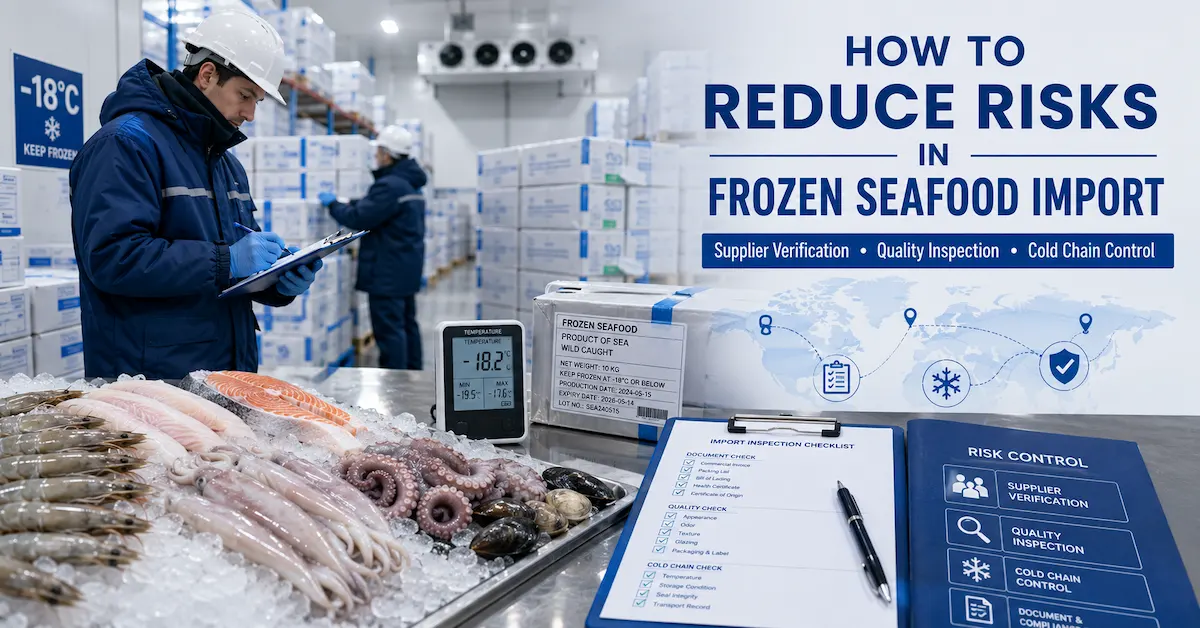
11. Cold-Chain and Temperature Records
Frozen seafood quality depends on stable temperature management. Most frozen seafood is stored and transported at approximately -18°C or below, subject to product specifications and local regulations.
Cold-chain documents may include:
- Cold-store temperature records
- Container pre-trip inspection
- Reefer set-point confirmation
- Temperature data logger report
- Container loading record
- Seal record
- Delivery temperature report
- Warehouse receiving record
Temperature records may not be legally required for every shipment, but they can be valuable when investigating quality complaints or insurance claims.
12. Insurance Certificate
An insurance certificate may be required when:
- Cargo insurance is included in the agreed Incoterm
- The buyer requests coverage
- A letter of credit requires it
- The shipment carries higher commercial risk
- The bank requires documentary proof
The certificate should identify:
- Insured party
- Shipment
- Vessel or voyage
- Cargo value
- Coverage amount
- Covered risks
- Policy or certificate number
Buyers should understand what risks are covered. Standard cargo insurance may not automatically cover losses caused by poor packaging, temperature abuse, delay, or inherent product defects.
13. Import Permit or Product Registration
Some destination markets require the importer to obtain an import permit, food registration, quota, veterinary approval, or product-specific authorization before shipment.
The importer may need information from the exporter, including:
- Factory name
- Establishment approval number
- Product specification
- Species
- Country of origin
- Health certificate details
- Label artwork
- HS code
- Pro forma invoice
- Catch information
The exporter should confirm that the importer has completed necessary registration before production and loading.
Market-Specific Seafood Documentation Examples
Requirements vary significantly between markets.
| Destination | Examples of Additional Requirements |
| United States | FDA facility registration, prior notice, seafood HACCP importer verification, and SIMP records for covered species |
| European Union | Approved country and establishment, official health certificate, TRACES documentation, and CATCH certificate for relevant fishery products |
| Great Britain | Relevant model health certificate and importer pre-notification requirements |
| Markets with FTAs | Preferential certificate or origin declaration where eligibility is proven |
| Species-specific markets | Catch records, tuna forms, protected-species permits, or admissibility certificates |
This table is only a starting point. Requirements should be checked for the exact HS code, species, origin, processing form, and destination.
Common Seafood Export Documentation Mistakes
Product Descriptions Do Not Match
The invoice may say “frozen fish,” while the health certificate lists a specific species and processing format. Descriptions should be consistent across documents.
Weight Differences
Net and gross weights may differ between the invoice, packing list, certificate, and bill of lading. Even small differences can trigger questions.
Wrong Certificate Model
A health certificate intended for one destination may not be accepted by another country.
Missing Scientific Species Name
Some markets or buyers require the scientific species name in addition to the commercial name.
Incorrect Container or Seal Number
The health certificate, packing list, loading record, and transport document should use the correct final container and seal information where required.
Late Certificate Application
Official certificates may require inspection, sampling, or authority review. Waiting until the container is ready can delay shipment.
Assuming Every Market Uses the Same Documents
Seafood documentation changes according to the destination, species, origin, and processing method.
How to Prepare a Seafood Export Document Package
Step 1: Confirm the Destination Requirements
Ask the importer and customs broker for a written document checklist before confirming the order.
Step 2: Identify the Exact Product
Confirm the species, processing form, HS code, origin, packaging, and intended use.
Step 3: Confirm Factory Eligibility
Check whether the processing establishment must be registered or approved for the destination market.
Step 4: Approve Specifications and Labels
Make sure the specification sheet, label, packing, and buyer requirements are aligned.
Step 5: Apply for Official Certificates Early
Schedule any government inspection, testing, health certification, or catch-document validation before loading.
Step 6: Cross-Check Every Document
Verify names, dates, quantities, weights, container numbers, seal numbers, species, and destination information.
Step 7: Send Drafts to the Importer
Let the importer or customs broker review document drafts before originals are issued where possible.
Why Work with Bothwin Food
Bothwin Food supports global B2B buyers sourcing frozen fish, fresh or frozen shrimp, cephalopods, canned goods, spices, and condiments.
For seafood export inquiries, Bothwin Food can help buyers organize product information such as:
- Product category
- Species
- Processing method
- Size grade
- Net weight
- Glazing ratio
- Packaging
- Shelf life
- Storage requirements
- Destination market
Document availability and official certificate requirements depend on the product, destination, order, and applicable authority. Buyers should provide their complete import checklist before order confirmation.
Explore available seafood categories on the Products page, review company information on the About Us page, or submit your product and documentation requirements through the Contact Us page.
Seafood Export Inquiry Checklist
To receive a more accurate quotation and document review, include:
- Destination country
- Destination port
- Product name
- Scientific species name if known
- Wild-caught or farmed preference
- Processing format
- Size grade
- Net weight
- Glazing requirement
- Packaging format
- Order quantity
- Intended use
- Required health certificate
- Catch certificate requirement
- Certificate of origin requirement
- Laboratory testing requirement
- Label language
- Target shipment date
A detailed inquiry helps the supplier confirm whether the product, packaging, documents, and delivery plan are suitable.
FAQ
1. What documents are needed for seafood export?
Common documents include a commercial invoice, packing list, bill of lading, certificate of origin, health certificate, product specification, and catch certificate where applicable.
2. Is a health certificate required for seafood export?
Many destination markets require an official health or sanitary certificate for fishery products intended for human consumption. The required certificate model depends on the destination and product.
3. Is a catch certificate required for all seafood?
No. Catch-certificate requirements generally depend on the market, species, product origin, and whether the seafood is wild-caught.
4. What information should appear on a seafood commercial invoice?
The invoice should include buyer and exporter details, product description, species where required, quantity, weight, value, origin, currency, Incoterm, and shipping information.
5. What is the difference between a packing list and a commercial invoice?
The commercial invoice focuses on transaction value and customs information. The packing list describes cartons, weights, dimensions, and physical packing details.
6. Is HACCP certification a shipment document?
A HACCP plan or certificate is normally a supplier qualification or food safety record, not necessarily a document attached to every shipment.
7. Is a certificate of origin always required?
No. It depends on the destination, customs rules, buyer request, payment terms, and whether preferential tariff treatment is claimed.
8. Do frozen seafood shipments need temperature records?
Not every shipment legally requires a temperature report, but buyers may request records or data loggers to support cold-chain verification.
9. Who issues a seafood health certificate?
The health certificate is normally issued or endorsed by the competent government authority in the exporting country.
10. How can I confirm the correct seafood export documents?
Confirm requirements with the importer, customs broker, freight forwarder, competent authority, and supplier before production and shipment.
Conclusion
Understanding what documents are needed for seafood export helps buyers reduce customs delays, document discrepancies, inspection risks, and unexpected costs.
A standard shipment often includes a commercial invoice, packing list, and bill of lading. Seafood may also require an official health certificate, certificate of origin, catch documentation, product specifications, laboratory reports, or cold-chain records depending on the market.
Bothwin Food supplies frozen seafood and related food products for global B2B buyers. To discuss a seafood export order, provide your destination, species, product format, packaging, order quantity, and complete document checklist through the Contact Us page.