
Seafood Expo Global: what buyers should actually look for at a seafood trade show
Seafood Expo Global is not just a place to collect brochures and sample a few bites of fish. For many sourcing teams, it is one of the few times in the year when suppliers, processors, exporters, and foodservice buyers all stand in the same hall and try to solve the same practical question: who can supply the right seafood, in the right form, with the least amount of risk? That matters whether you are buying frozen seafood for distribution, ingredients for a manufacturing line, or menu items for a restaurant group.
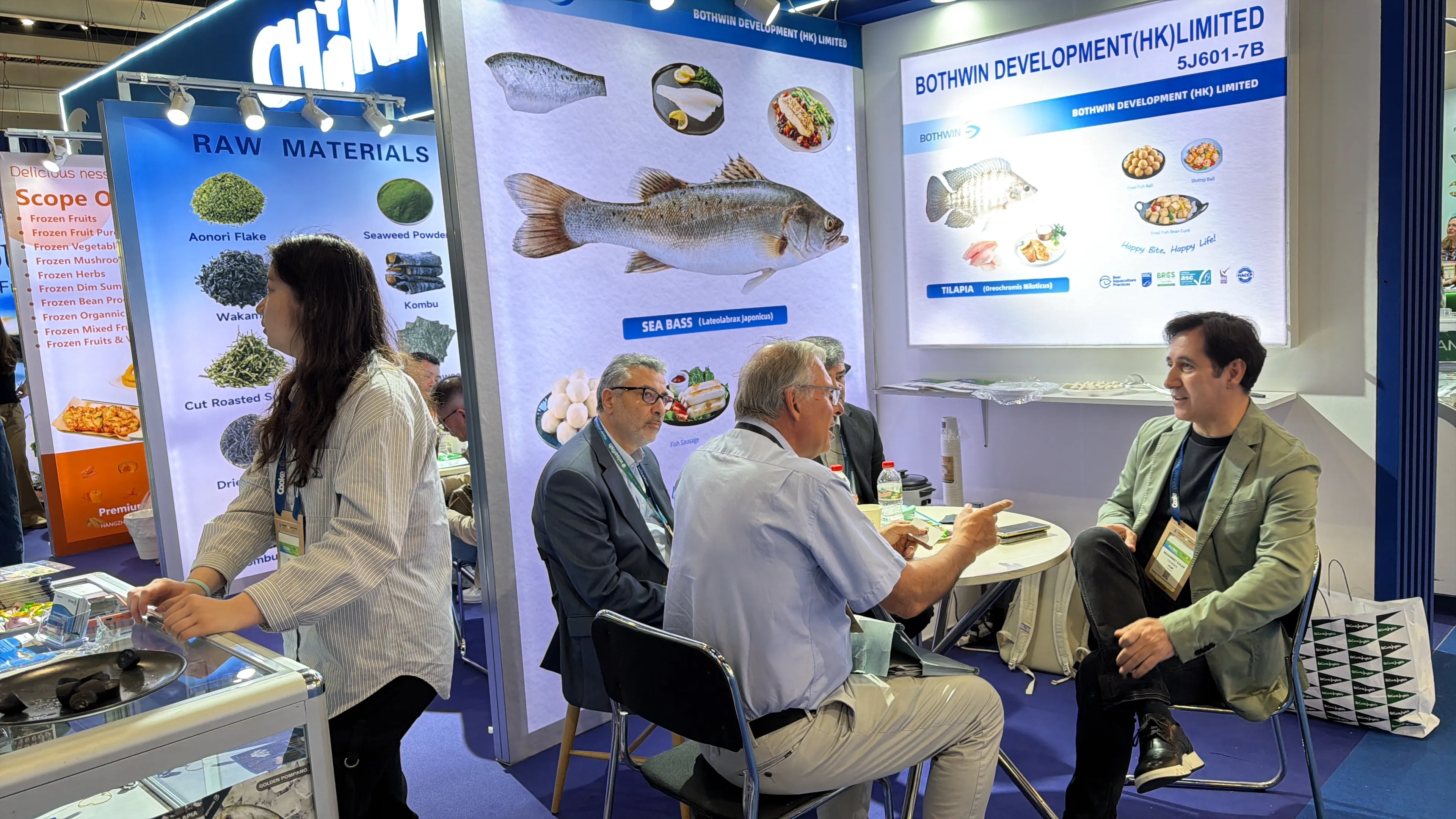
The booths can look similar at first glance, but the details tell you a lot. A display showing sea bass and tilapia posters, a refrigerated case with sample trays, and a “RAW MATERIALS” panel listing aonori flakes, wakame, kombu, and seaweed powder points to a supplier that is not only selling finished seafood, but likely working across several layers of the supply chain. That kind of booth is worth a closer look, because it often sits at the intersection of sourcing, processing, and export capability.
Why this show matters to sourcing and product teams
A seafood trade show is useful because it compresses the early stages of supplier discovery. Instead of emailing five vendors and waiting for scattered product sheets, buyers can compare product categories, handling approaches, and market positioning in one walk through the hall. You can see whether a company leans toward whole fish, value-added seafood, seaweed ingredients, or broader marine raw materials.
For foodservice buyers, that can mean menu consistency. For retail and wholesale teams, it can mean dependable volume and a better fit for cold-chain logistics. For product development teams, it can reveal ingredient options that are useful in seasoning blends, garnishes, prepared meals, or frozen meal kits. The booth itself is often a quick read on how the supplier thinks about the market.
That is especially true when a stand shows both fish species and ingredient names. Sea bass and tilapia are familiar to buyers, but aonori flake, wakame, kombu, and seaweed powder point to broader marine ingredient use. It suggests a supplier who may be serving more than one segment of the market, which can be useful if your sourcing strategy needs consolidation.
Quick takeaways from a booth like this
If you are walking the floor with a procurement checklist in mind, a booth like Bothwin Development (HK) Limited, booth 5J601-7B, gives you a few immediate signals:
The supplier appears to cover seafood and marine ingredients rather than a single consumer-ready product line.
The visible species names, sea bass and tilapia, suggest mainstream commercial fish rather than niche specialty items.
The raw materials panel suggests seaweed-derived ingredients that may suit foodservice, industrial food manufacturing, or Asian cuisine applications.
A refrigerated display case with sample trays indicates that at least part of the product portfolio needs chilled handling, which matters for logistics conversations.
Those are not final conclusions, of course. They are clues. And in sourcing, clues are often where the most useful questions begin.
What the product mix suggests about supply capability
A booth that combines whole fish imagery with seaweed ingredient graphics usually signals a supplier that works somewhere along the seafood processing chain. That may include farming, processing, freezing, drying, grinding, or export services, though you should not assume every one of those steps unless the company confirms them.
For buyers, the useful point is not the backstory itself but the supply logic. A vendor able to present multiple marine categories may be able to support different use cases:
Restaurant and catering menus that need dependable seafood portions.
Frozen seafood distribution into wholesale or regional channels.
Food manufacturing ingredients for prepared foods, toppings, sauces, or seasoning systems.
Private-label or wholesale sourcing where consistency matters more than novelty.
Seaweed ingredients deserve special attention. Aonori flake, wakame, kombu, and seaweed powder are small line items on a booth graphic, but they can be strategically important. They are common in Japanese-style cooking, seaweed seasoning blends, garnish applications, and some industrial formulations. If you develop noodle bowls, rice dishes, snack coatings, or soup bases, these materials can matter more than a premium fish cut that looks good in a photo.
How to evaluate a seafood supplier at the show
The temptation at a trade show is to focus on what looks good. That is understandable. But seafood buyers know that glossy graphics do not protect a cold chain, and a nice plate of grilled fish does not prove process control.
A better approach is to ask a few practical questions:
What exact forms are available: whole fish, fillets, portions, dried seaweed, powders, or mixed ingredients?
Which products are intended for foodservice, retail, or industrial use?
How are temperature-sensitive products handled at the booth and, more importantly, in shipment?
Can the supplier support repeated orders rather than just a one-time exhibition sample?
What documentation is normally available for product specifications, origin, and handling, even if you are not discussing those details on the stand?
That last point is worth emphasizing. Many buyers at seafood shows spend too long on visual first impressions and too little time on the boring paperwork that later determines whether a supplier can actually be onboarded.
Common sourcing mistakes
One common mistake is assuming that all seafood suppliers are interchangeable. They are not. A company strong in whole fish may not be the right fit for seaweed-derived ingredients, and a supplier that looks export-friendly on a booth panel may not have the cold-chain discipline your business needs.
Another mistake is overreading the sample presentation. Small trays in a refrigerated case can suggest care and product readiness, but they do not tell you the full story of shelf life, batch consistency, or packaging format. Buyers should treat samples as a starting point, not proof of operational fit.
A more subtle mistake is ignoring ingredient breadth. If your business needs both seafood and marine seasonings, a supplier with broader coverage can simplify procurement. If you only need one narrow spec, though, a broad booth may be less useful than a specialist who focuses on that one product line.
What this means for different buyer types
For distributors, the appeal is range. A supplier showing sea bass, tilapia, and seaweed ingredients may be able to support multiple customer types without requiring separate vendor relationships for every marine category.
For foodservice buyers, the question is consistency and menu utility. Can the supplier support products that perform well in kitchens where labor, storage space, and speed matter? Seafood that looks good on a poster still needs to behave properly in a busy prep environment.
For product developers, the seaweed materials may be the more interesting part of the stand. Wakame and kombu are familiar names, but the presence of seaweed powder and aonori flakes hints at ingredient formats that can be integrated into blends, coatings, or ready-to-eat concepts. That is often where the real development value sits.
For private-label teams, the decision is more commercial. Booth presence alone does not prove packaging capability, but a supplier presenting across multiple marine categories may be better positioned for wholesale relationships than a brand-facing niche producer.
Practical questions to ask before you follow up
If you plan to contact a supplier after Seafood Expo Global, it helps to be specific. Instead of asking for “more information,” ask for the product family that fits your channel.
You might request details on sea bass or tilapia supply if you are buying for frozen distribution or foodservice. If your interest is ingredient development, ask about aonori flake, wakame, kombu, and seaweed powder in terms of intended use, handling, and available formats. If the conversation moves toward chilled seafood, ask how the supplier manages freshness or frozen status across export lanes.
And if the stand leaves you uncertain, say so. A cautious follow-up is better than pretending the display told you more than it did. In seafood sourcing, ambiguity is expensive later.
FAQ for trade buyers walking the hall
Is Seafood Expo Global only useful for large importers?
No. It is useful for large importers, but also for restaurant groups, product developers, wholesalers, and contract manufacturers who need to compare seafood and marine ingredient options quickly.
What does a mixed seafood and seaweed booth usually indicate?
It often suggests a supplier active in multiple marine categories, possibly including processing, export, or ingredient supply. But buyers should confirm scope rather than assume it.
Why do seaweed ingredients matter at a seafood show?
Because many marine sourcing strategies now include more than fish. Seaweed ingredients can serve seasoning, garnish, and formulation needs across foodservice and manufacturing.
What should I remember about booth samples?
They are useful for first impressions and sensory checks, but they do not replace product specifications, logistics review, or follow-up on supply capability.
A better way to use the show floor
The most productive Seafood Expo Global meetings are rarely the loudest ones. They are the conversations where a buyer asks a supplier to connect what is on the wall with what can be delivered into a real supply chain. A booth showing sea bass, tilapia, and seaweed raw materials may not tell you everything, but it can tell you enough to decide whether the next conversation is worth your time.
If you are sourcing seafood, frozen marine products, or seaweed ingredients, start with the display, then move quickly to fit, handling, and documentation. That sequence saves time and helps you separate attractive stands from genuinely workable suppliers.
For teams building a sourcing list after the show, Bothwin Development (HK) Limited, booth 5J601-7B, is the kind of exhibitor that deserves a closer review if your needs cross seafood and marine ingredients. The real value is not in the posters. It is in whether the supply match holds up once the hall noise is gone.