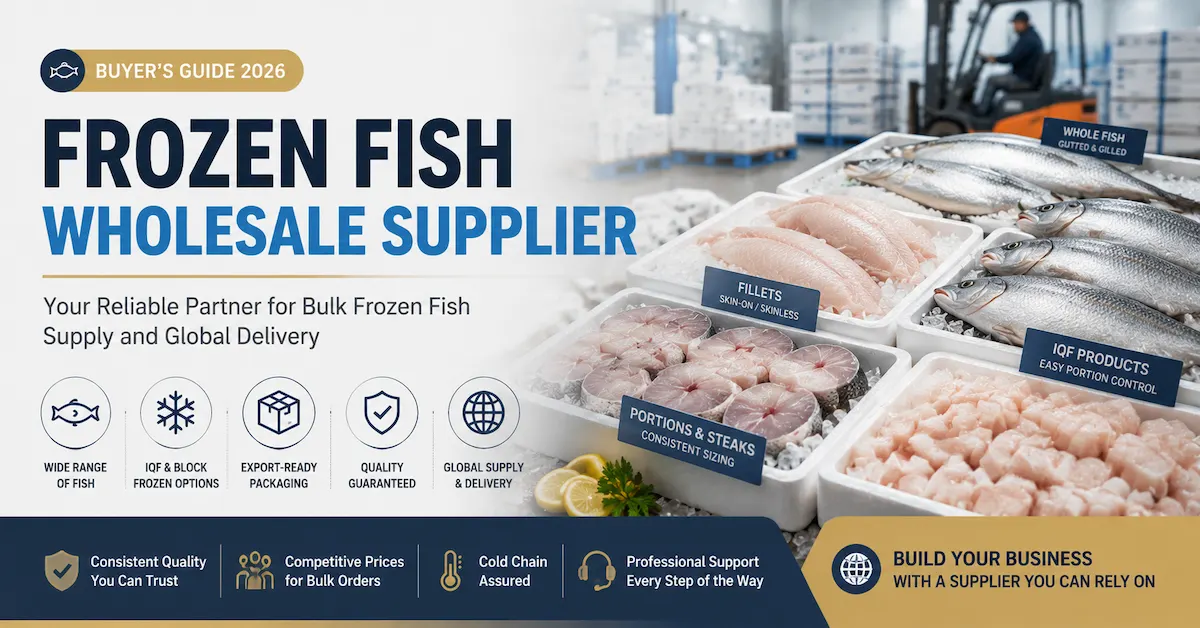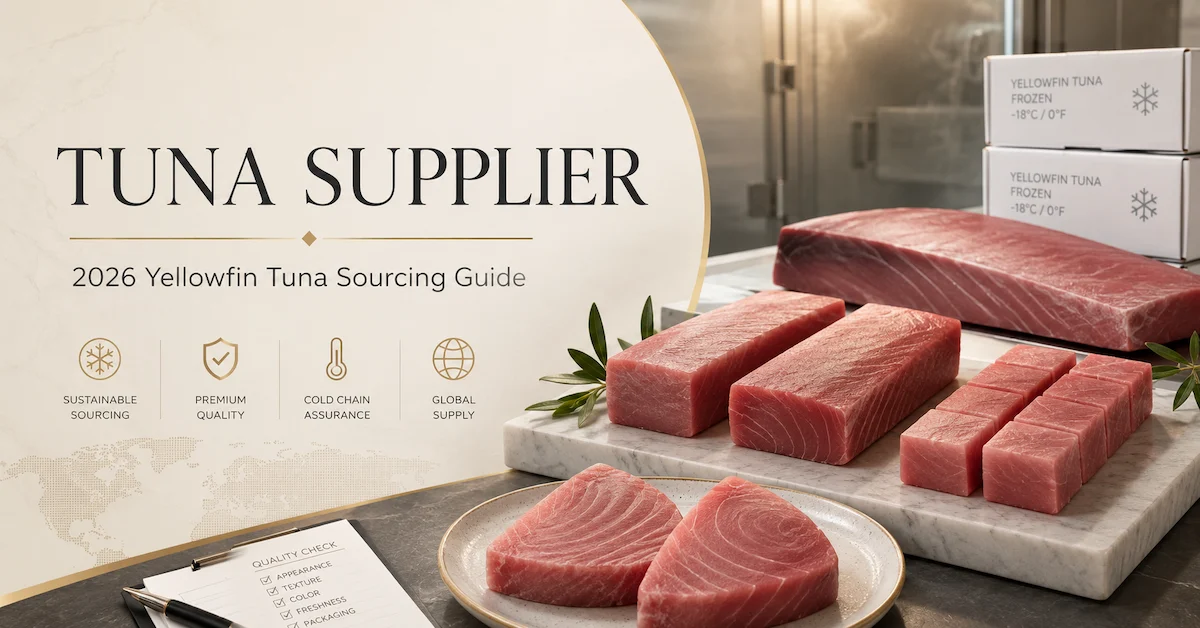


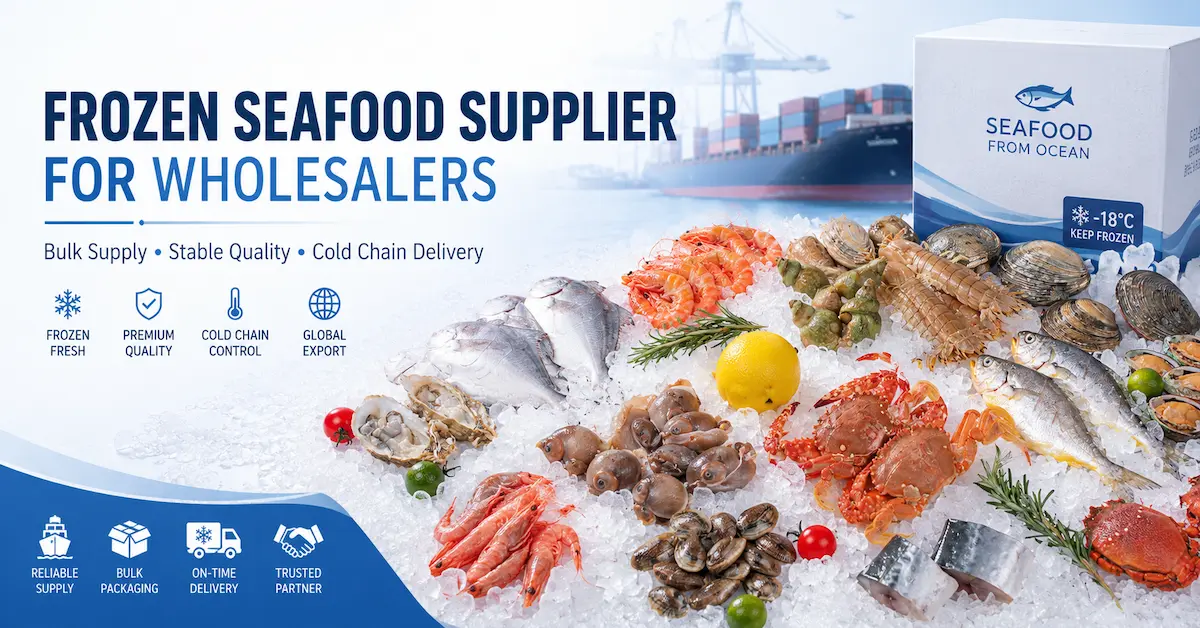
A frozen seafood supplier for wholesalers helps seafood distributors, importers, regional food suppliers, and trading companies source frozen seafood products in bulk for resale. For wholesalers, the right supplier is not only about low price. It is about stable quality, clear specifications, cold-chain handling, packaging strength, delivery reliability, and enough product variety to serve different customer groups.
Wholesalers often supply restaurants, hotels, supermarkets, catering companies, smaller distributors, and food processors. If the seafood quality is unstable, the wholesaler may face complaints from multiple downstream customers. A reliable frozen seafood supplier can help wholesalers protect profit margins, reduce sourcing risk, and build long-term repeat business.
Quick Answer: What Should Wholesalers Look for in a Frozen Seafood Supplier?
Wholesalers should choose a supplier that provides stable bulk frozen seafood products, clear product specifications, strong packaging, cold-chain awareness, flexible product matching, and export-ready communication.
Important sourcing points include:
- Wide product range for resale channels
- Stable size grading and product appearance
- Clear net weight and glazing ratio
- IQF or block frozen options
- Bulk cartons or distributor-ready packaging
- Cold-chain storage and transport control
- Repeat order capability
- Sample support before bulk purchase
- Fast quotation and export document support
Bothwin Food supplies frozen fish, fresh or frozen shrimp, cephalopods, canned goods, spices, and condiments for global B2B buyers. Wholesalers can explore product categories on the Products page, learn more through the About Us page, or send sourcing requirements through the Contact Us page.
Why Wholesalers Need a Stable Frozen Seafood Supply Chain
Wholesalers operate between suppliers and multiple customer types. Their business depends on repeat orders, price control, inventory planning, and customer trust.
A stable frozen seafood supplier helps wholesalers solve several common problems.
Better Inventory Planning
Frozen seafood can be stored longer than fresh seafood when kept under proper frozen conditions. This helps wholesalers plan stock for restaurants, supermarkets, and regional buyers.
Wider Customer Coverage
A wholesaler may sell frozen shrimp to restaurants, fish fillets to hotels, squid rings to foodservice buyers, and mixed seafood to local distributors. A supplier with multiple categories makes product expansion easier.
Improved Profit Control
Clear net weight, glazing ratio, and packaging details help wholesalers calculate real product cost and selling margins more accurately.
Lower Complaint Risk
Consistent specifications and cold-chain handling reduce problems such as broken products, unstable thawing performance, and customer dissatisfaction.
Main Frozen Seafood Products for Wholesalers
A professional frozen seafood supplier for wholesalers should provide products suitable for bulk resale and multiple downstream channels.
1. Frozen Shrimp for Wholesalers
Frozen shrimp is one of the strongest wholesale seafood categories because it has broad demand from restaurants, supermarkets, foodservice buyers, and retail distributors.
Common shrimp formats include:
- Head-on shrimp
- Headless shrimp
- Peeled shrimp
- Peeled and deveined shrimp
- IQF shrimp
- Block frozen shrimp
- Raw or cooked shrimp
For wholesalers, shrimp size grading is critical. Size grades such as 21/25, 26/30, 31/40, or market-specific grades help wholesalers serve different customer price levels.
2. Frozen Fish for Wholesalers
Frozen fish products are widely used in restaurants, hotels, supermarkets, and food processing factories.
Common formats include:
- Whole frozen fish
- Headless and gutted fish
- Fish fillets
- Fish portions
- Skin-on or skinless cuts
- Processing-grade fish raw materials
Wholesalers should check species, portion size, texture after thawing, packaging, and shelf life before placing repeat orders.
3. Cephalopods: Squid, Octopus, and Cuttlefish
Cephalopods are suitable for Asian restaurants, Mediterranean menus, barbecue buyers, food processors, and frozen meal producers.
Common product types include:
- Squid rings
- Squid tubes
- Whole cleaned squid
- Octopus
- Cuttlefish
- Sliced or diced cephalopod products
For wholesale channels, cleaning level and cutting consistency are important because they affect resale value and customer satisfaction.
4. Mixed Seafood and Supporting Food Products
Mixed seafood packs are useful for wholesalers serving restaurants, catering companies, and retail buyers. Some wholesalers also source canned goods, spices, and condiments together with frozen seafood to build a broader food supply portfolio.
A supplier with seafood and related food product options can help wholesalers reduce sourcing time and improve purchasing efficiency.
Bulk Packaging Options for Wholesale Buyers
Packaging is important for wholesale frozen seafood because products often pass through multiple storage, transport, and resale stages.
| Packaging Format | Best For | Main Advantage |
|---|---|---|
| Bulk cartons | Wholesalers, distributors, processors | Cost-effective for large-volume resale |
| IQF bags | Restaurants, foodservice, retail distribution | Easy portion control and flexible selling |
| Block frozen packs | Processing factories and bulk users | Lower unit cost for high-volume demand |
| Vacuum packs | Premium seafood and retail channels | Better product appearance and protection |
| Private label packs | Brand owners and supermarket suppliers | Supports market differentiation |
Wholesalers should choose packaging based on customer type, warehouse capacity, resale method, and destination market.
Cold-Chain Control for Wholesale Frozen Seafood
Cold-chain control is essential for wholesale seafood distribution. If seafood is exposed to unstable temperatures, quality may decline before reaching the final customer.
A reliable supplier should understand:
- Frozen storage before shipment
- Suitable packaging for low-temperature handling
- Container loading requirements
- Temperature stability during transport
- Shelf life management
- Storage instructions for downstream buyers
Most frozen seafood should be stored at around -18°C or lower. Wholesalers should also ensure that their own warehouse and distribution network can maintain proper frozen conditions.
IQF vs Block Frozen Seafood for Wholesalers
Different freezing formats serve different wholesale customers.
| Freezing Format | Features | Best For Wholesalers Selling To |
| IQF seafood | Each piece frozen separately | Restaurants, supermarkets, foodservice buyers |
| Block frozen seafood | Products frozen together in bulk blocks | Food processors and large-volume users |
| Vacuum packed seafood | Better protection and premium appearance | Retail and branded channels |
| Glazed seafood | Ice layer protects seafood surface | Long-distance frozen distribution |
IQF seafood is often easier to resell across multiple channels because customers can use smaller portions. Block frozen seafood can be useful when wholesalers supply processors or large kitchens.
Key Quality Factors Wholesalers Should Check
Before confirming a bulk order, wholesalers should review both product quality and resale value.
| Quality Factor | Why It Matters for Wholesalers |
| Product range | Helps serve restaurants, supermarkets, processors, and distributors |
| Species accuracy | Prevents customer complaints and labeling issues |
| Size grading | Supports clear pricing and customer segmentation |
| Net weight | Helps calculate real buying cost |
| Glazing ratio | Affects usable seafood weight and profit margin |
| Freezing method | Influences texture and end-use suitability |
| Packaging strength | Protects products during storage and distribution |
| Shelf life | Supports inventory planning |
| Cold-chain control | Maintains quality before resale |
| Repeat supply ability | Supports long-term customer relationships |
A good wholesale seafood supplier should provide clear product details before shipment, not only a simple price list.
Common Buying Risks for Seafood Wholesalers
Wholesale buyers often purchase larger volumes. Small specification problems can become large business losses.
Excessive Glazing
Glazing protects frozen seafood, but excessive glazing reduces real seafood weight. Wholesalers should compare quotations based on net weight and glazing ratio.
Inconsistent Size
Uneven shrimp, fish fillets, or squid products can make resale difficult because different customers may have strict size expectations.
Weak Cartons
Wholesalers may store and redistribute products multiple times. Weak cartons can collapse, damage products, and reduce resale value.
Poor Thawing Performance
Downstream customers judge seafood by texture, smell, appearance, and cooking result after thawing. Sample testing is important before large-volume purchase.
Unstable Supply
Wholesalers need repeat supply to serve long-term customers. A one-time low price is less valuable than stable quality and reliable communication.
How to Choose a Frozen Seafood Supplier for Wholesalers
A reliable supplier should understand wholesale business needs and provide practical support.
1. Match Products to Your Customer Base
If your customers are restaurants, IQF shrimp, squid rings, and fish portions may be suitable. If your customers are processors, block frozen raw materials may be more practical. If your customers are supermarkets, retail-ready packaging may be important.
2. Confirm Full Specifications
Before asking for a final quotation, confirm:
- Product name
- Species
- Origin
- Size grade
- Processing method
- Net weight
- Glazing ratio
- Freezing method
- Packaging format
- Shelf life
- Storage requirements
Clear specifications help wholesalers compare prices fairly and avoid disputes.
3. Request Samples Before Bulk Orders
Samples help wholesalers check seafood appearance, thawing result, texture, smell, packaging quality, and customer suitability.
4. Review Packaging and Loading
Bulk frozen seafood needs strong cartons and suitable loading. Packaging should protect the product during international shipping, warehouse storage, and local distribution.
5. Evaluate Communication Speed
Wholesale buyers often need quick quotations, product alternatives, and shipment updates. A professional supplier should respond clearly and support long-term cooperation.
Applications for Wholesale Frozen Seafood
Frozen seafood for wholesalers can serve multiple downstream markets.
Restaurant Supply
Wholesalers can supply shrimp, fish fillets, squid, and octopus to restaurants, hotels, and catering companies.
Supermarket Distribution
Retail buyers may need frozen shrimp bags, fish fillets, mixed seafood packs, and private label products.
Food Processing Supply
Food processors need frozen seafood raw materials for ready meals, seafood mixes, fried products, canned foods, dumplings, and value-added seafood.
Regional Distribution
Wholesalers can distribute frozen seafood to smaller local suppliers, seafood shops, and foodservice operators.
Seasonal Sales Programs
Frozen seafood can support holiday promotions, barbecue seasons, hotpot seasons, and family cooking demand.
Why Work with Bothwin Food
Bothwin Food provides seafood and food product supply options for B2B buyers. Its product range includes frozen fish, fresh or frozen shrimp, cephalopods, canned goods, spices, and condiments.
For wholesalers, Bothwin Food can help match seafood products based on customer type, packaging requirement, order quantity, and destination market. Whether buyers need shrimp for restaurants, fish for distributors, squid for foodservice, or mixed seafood for retail channels, clear sourcing communication can support a more stable purchasing plan.
Buyers can explore seafood categories through the Products page, learn more about Bothwin Food on the About Us page, read more sourcing insights on the Blog page, or send bulk order requirements through the Contact Us page.
Wholesale Buyer Inquiry Checklist
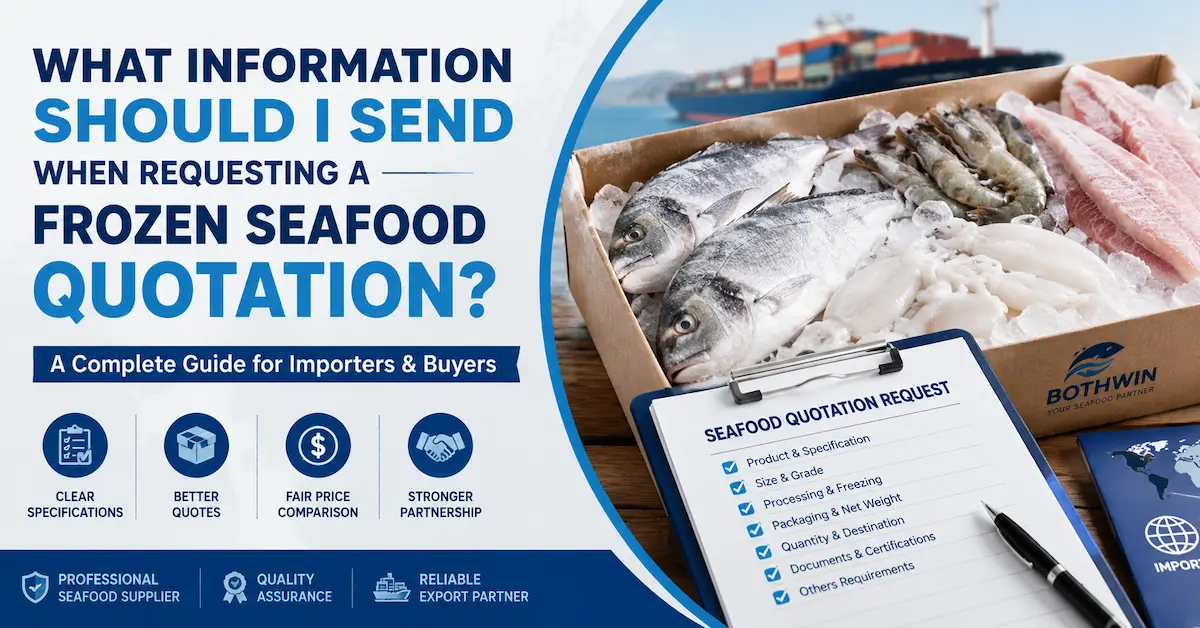
To receive a faster and more accurate quotation, prepare these details:
- Target seafood product
- Species or preferred origin
- Size grade
- Processing method
- IQF or block frozen preference
- Net weight requirement
- Acceptable glazing ratio
- Packaging format
- Order quantity
- Destination market or port
- Customer application: restaurant, retail, processing, or distribution
- Sample request details
Clear inquiry information helps suppliers recommend better products and reduce misunderstanding before shipment.
FAQ
1. What does a frozen seafood supplier for wholesalers provide?
A frozen seafood supplier for wholesalers provides bulk frozen seafood products such as fish, shrimp, squid, octopus, and mixed seafood for distributors, importers, and resale channels.
2. What frozen seafood products are best for wholesale?
Popular wholesale products include frozen shrimp, fish fillets, whole fish, squid rings, octopus, cuttlefish, and mixed seafood packs.
3. What should wholesalers check before buying frozen seafood?
Wholesalers should check species, size grade, net weight, glazing ratio, freezing method, packaging, shelf life, storage requirements, and sample quality.
Conclusion
Choosing a reliable frozen seafood supplier for wholesalers is essential for stable resale, better profit control, and long-term customer satisfaction. Wholesalers need more than frozen seafood products. They need clear specifications, strong packaging, cold-chain awareness, repeat supply capability, and fast B2B communication.
Bothwin Food supplies frozen seafood and related food products for global buyers, including frozen fish, fresh or frozen shrimp, cephalopods, canned goods, spices, and condiments. For wholesale frozen seafood sourcing, contact Bothwin Food to discuss product specifications, samples, packaging formats, order quantity, and bulk supply plans.