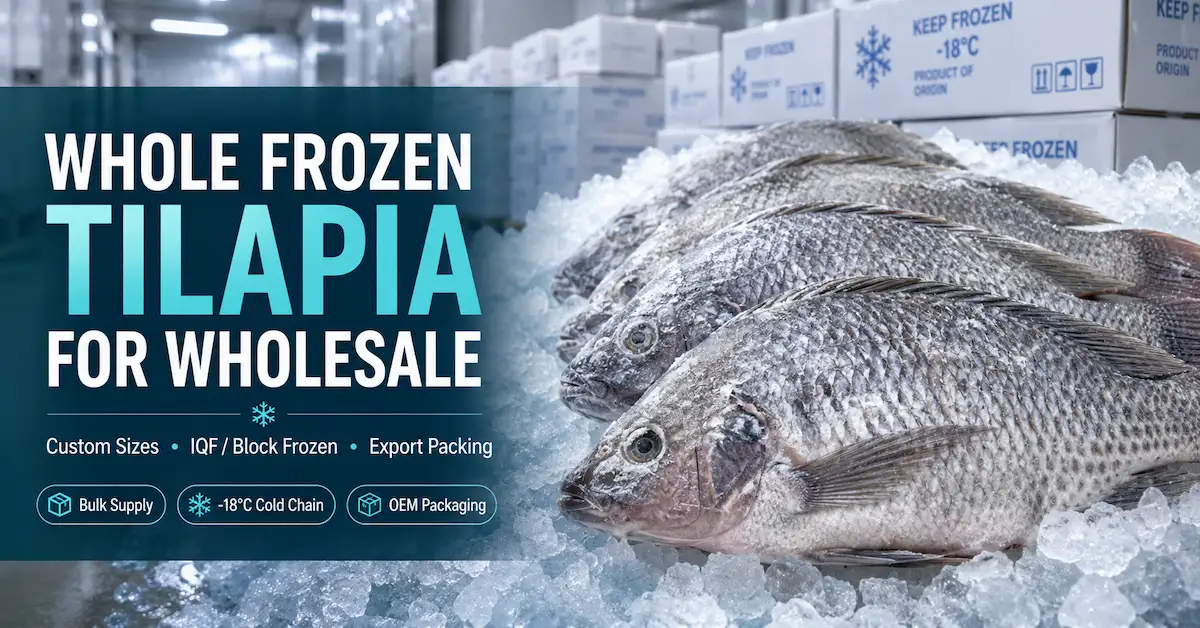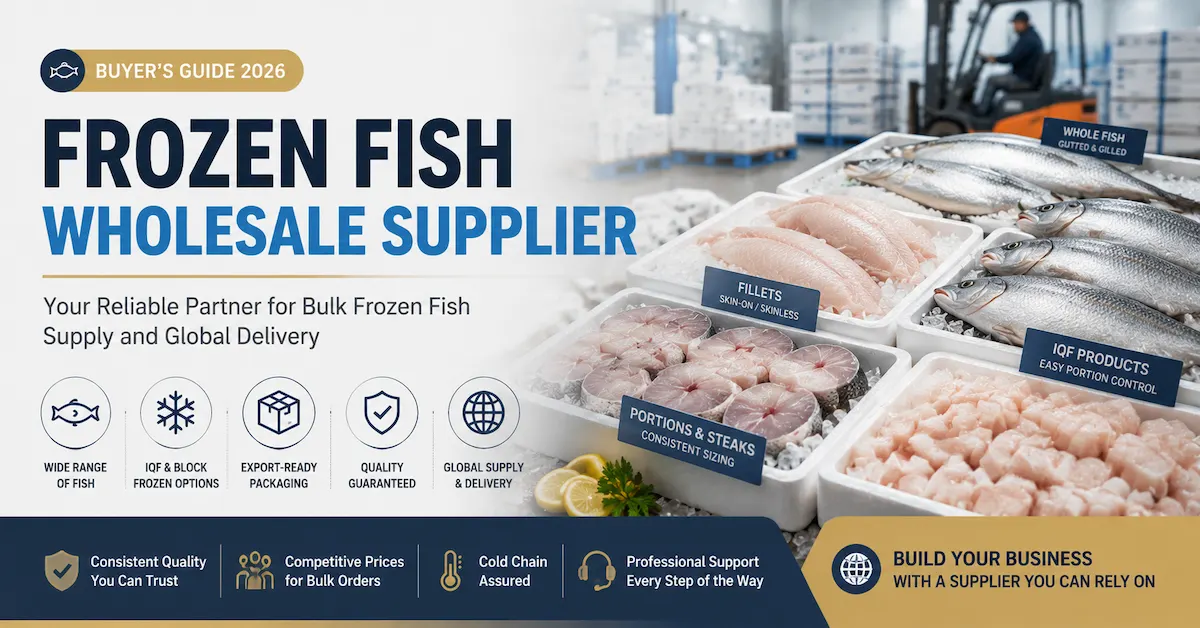


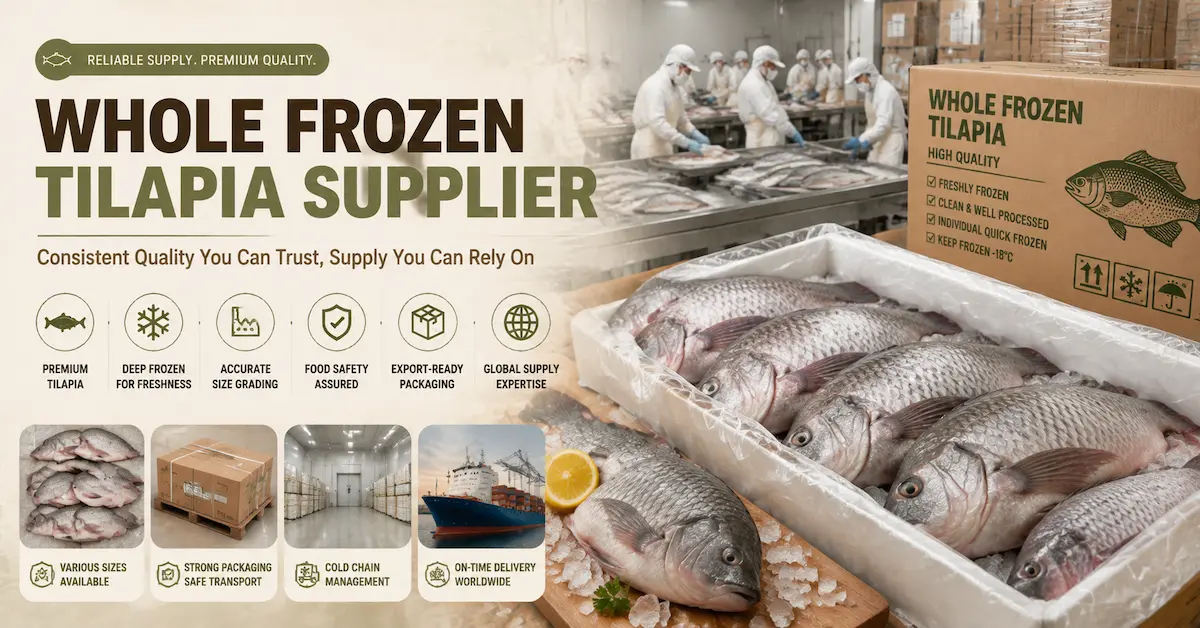
Choosing the right whole frozen tilapia supplier is important for seafood importers, wholesalers, restaurants, supermarkets, and food processing companies that purchase frozen fish in bulk.
Whole frozen tilapia is widely traded internationally because of its mild flavor, stable supply, flexible cooking applications, and competitive cost. It is commonly supplied to wholesale markets, traditional seafood retailers, restaurants, foodservice companies, and further processing factories.
However, successful tilapia sourcing requires more than comparing prices. Buyers need to evaluate species, farming origin, size grading, processing method, freezing technology, packaging, glazing ratio, cold-chain control, and supplier reliability.
A professional whole frozen tilapia supplier should provide consistent specifications and support buyers throughout the sourcing process, from sample approval to international delivery.
Quick Answer: What Should Buyers Expect from a Whole Frozen Tilapia Supplier?
A reliable whole frozen tilapia supplier should provide:
- Confirmed tilapia species
- Farmed or wild-caught information
- Country of origin
- Individual fish weight range
- Whole or processed format
- Scaling and gutting options
- Freezing method
- Net weight
- Glazing percentage
- Export packaging
- Storage temperature
- Shelf life
- Traceability information
- Export documents
- Stable production capacity
Buyers should also define their target market before ordering because different customers require different specifications.
For example:
- Traditional seafood markets may prefer whole fish with specific weight ranges.
- Restaurants may need consistent individual sizes.
- Supermarkets may require retail packaging.
- Processors may focus on yield and raw material cost.
Bothwin Food supplies frozen seafood products for international B2B buyers, including frozen fish categories. Buyers can explore available products through the Products page, learn more about Bothwin Food through the About Us page, or submit sourcing requirements through the Contact Us page.
What Is Whole Frozen Tilapia?
Whole frozen tilapia refers to tilapia fish frozen in complete form rather than being processed into fillets or portions.
Common formats include:
- Whole round tilapia
- Scaled whole tilapia
- Gutted tilapia
- Headless and gutted tilapia
- Individually frozen tilapia
- Block frozen tilapia
Whole frozen tilapia is popular because it provides:
- Competitive purchasing cost
- Flexible cooking applications
- Long storage capability
- Easy wholesale distribution
- Suitable raw material for further processing
Compared with fillets, whole fish usually requires less processing before export, making it a cost-effective option for many buyers.
Why Global Buyers Choose Whole Frozen Tilapia
Whole frozen tilapia has several advantages for international buyers.
Competitive Cost
Whole fish usually has lower processing costs compared with fillets and portions.
This makes it suitable for:
- Wholesale distribution
- Traditional markets
- Restaurant supply
- Foodservice businesses
Flexible Applications
Whole tilapia can be prepared through:
- Steaming
- Grilling
- Frying
- Baking
- Braising
- Soup preparation
Stable Supply
Tilapia farming provides relatively stable availability compared with many wild-caught species.
Suitable for Different Markets
Whole frozen tilapia is commonly supplied to:
- Africa
- Middle East
- Asia
- Latin America
- Caribbean markets
- Ethnic seafood markets worldwide
Main Whole Frozen Tilapia Product Formats
A professional supplier may provide different processing options.
| Product Format | Description | Suitable Buyers |
|---|---|---|
| Whole round tilapia | Complete fish | Wholesale markets |
| Scaled tilapia | Scales removed | Restaurants and retail |
| Gutted tilapia | Internal organs removed | Foodservice buyers |
| Headless gutted tilapia | Reduced preparation work | Distributors |
| IQF whole tilapia | Individually frozen fish | Flexible inventory |
| Block frozen tilapia | Bulk frozen products | Large-volume buyers |
Buyers should select the format based on customer needs and local processing capabilities.
Whole Frozen Tilapia Size Grading
Size grading is one of the most important purchasing factors.
Tilapia is commonly sold according to individual fish weight.
Typical grading information includes:
- Individual weight
- Pieces per carton
- Weight tolerance
- Size range
- Percentage outside grade
Examples of buyer requirements:
- Small size for retail markets
- Medium size for restaurants
- Large size for premium foodservice
A reliable whole frozen tilapia supplier should maintain consistent grading between shipments.
Inconsistent sizes can create problems for:
- Restaurant portion control
- Retail pricing
- Customer expectations
- Cooking performance
Red Tilapia vs Black Tilapia
Tilapia products may include different varieties, including red tilapia and black tilapia.
Red Tilapia
Common advantages:
- Attractive appearance
- Suitable for retail display
- Popular in some consumer markets
Black Tilapia
Common advantages:
- Traditional tilapia appearance
- Widely used in wholesale markets
- Suitable for various cooking applications
Buyers should confirm:
- Exact species or variety
- Origin
- Size
- Color requirements
- Market preference
The commercial name alone may not provide enough information.
Whole Frozen Tilapia Processing Options
Before purchasing, buyers should define processing requirements.
Common options include:
Whole Round
Fish remains complete with minimal processing.
Advantages:
- Lower cost
- Flexible applications
- Suitable for wholesalers
Scaled
Scales are removed to reduce preparation work.
Advantages:
- More convenient for restaurants
- Easier kitchen handling
Gutted
Internal organs are removed.
Advantages:
- Reduced labor
- Better preparation efficiency
Headless and Gutted
A higher processing level.
Advantages:
- Reduced preparation time
- Suitable for distributors and processors
The correct option depends on labor cost, market requirements, and final use.
How to Check Whole Frozen Tilapia Quality
Professional buyers should inspect samples before bulk orders.
Frozen Appearance
Check:
- Natural skin color
- Fish shape
- Size consistency
- Clean processing
- No excessive ice
- No freezer burn
- Intact packaging
After Thawing
Evaluate:
- Odor
- Flesh firmness
- Color
- Texture
- Water loss
- Processing quality
Cooking Test
For restaurants and foodservice buyers, test:
- Flavor
- Texture
- Meat yield
- Cooking loss
- Appearance after cooking
A good supplier should provide samples that represent actual production quality.
Why Glazing Ratio Matters
Glazing is a protective ice layer applied to frozen fish.
It helps:
- Reduce dehydration
- Protect texture
- Prevent freezer burn
However, excessive glazing reduces the actual fish quantity.
Buyers should confirm:
- Gross weight
- Net weight
- Glazing percentage
- Packaging weight
- Price calculation basis
For container-scale purchases, even a small difference in glazing can significantly affect total costs.
Packaging Options for Whole Frozen Tilapia
Export packaging should protect fish during international transportation.
Common options include:
| Packaging | Suitable For |
|---|---|
| Bulk cartons | Importers and wholesalers |
| IQF bags | Retail and foodservice |
| Plastic-lined cartons | Frozen distribution |
| Private-label packaging | Retail brands |
Packaging should include:
- Product name
- Species information
- Net weight
- Storage instructions
- Production date
- Batch number
- Country of origin
Cold Chain Management for Whole Frozen Tilapia
Cold-chain control is essential for maintaining product quality.
A reliable whole frozen tilapia supplier should manage:
- Freezing process
- Frozen storage
- Container loading
- Transportation
- Temperature monitoring
Poor temperature control may cause:
- Texture changes
- Freezer burn
- Ice crystal growth
- Moisture loss
- Reduced shelf life
Buyers should confirm:
- Storage conditions
- Container preparation
- Temperature monitoring
- Destination storage requirements
Whole Frozen Tilapia Export Documents
International shipments may require:
- Commercial invoice
- Packing list
- Bill of lading
- Health certificate
- Certificate of origin
- Product specification
- Traceability documents
- Inspection reports where required
Documents should match:
- Product name
- Species
- Quantity
- Weight
- Origin
Incorrect documents may delay customs clearance.
What Determines Whole Frozen Tilapia Prices?
Pricing depends on:
- Fish size
- Species or variety
- Origin
- Farming method
- Processing level
- Freezing method
- Packaging
- Glazing ratio
- Order quantity
- Freight cost
- Destination market
Buyers should compare total value instead of only unit price.
A lower price may result from:
- Smaller fish
- Higher glazing
- Lower net weight
- Different specifications
- Lower processing standards
Common Risks When Choosing a Whole Frozen Tilapia Supplier
Unstable Size Grading
Mixed sizes affect customer satisfaction.
Unclear Species Information
Different varieties may have different market value.
Excessive Glazing
Higher ice content reduces usable fish quantity.
Poor Processing Quality
Incomplete scaling or gutting increases labor costs.
Weak Packaging
Damaged cartons reduce product value.
Unstable Supply
Importers need suppliers capable of supporting repeat orders.
How to Choose a Reliable Whole Frozen Tilapia Supplier
Confirm Product Experience
Choose suppliers familiar with international tilapia markets.
Request Complete Specifications
Confirm:
- Species
- Size
- Processing
- Packaging
- Freezing
Test Samples
Evaluate:
- Appearance
- Weight
- Texture
- Cooking performance
Review Production Ability
Check:
- Supply capacity
- Lead time
- Quality control
Confirm Export Capability
Review:
- Documents
- Logistics support
- Cold-chain management
Start with Trial Orders
Trial orders help verify quality before long-term cooperation.
Why Work with Bothwin Food?
Bothwin Food supplies frozen seafood products for global B2B buyers, including wholesalers, importers, restaurants, supermarkets, and food processors.
For whole frozen tilapia projects, Bothwin Food can support:
- Product selection
- Specification confirmation
- Packaging solutions
- Export support
- Cold-chain coordination
- Bulk purchasing requirements
Buyers can explore seafood products through the Products page, learn more through the About Us page, or request sourcing support through the Contact Us page.
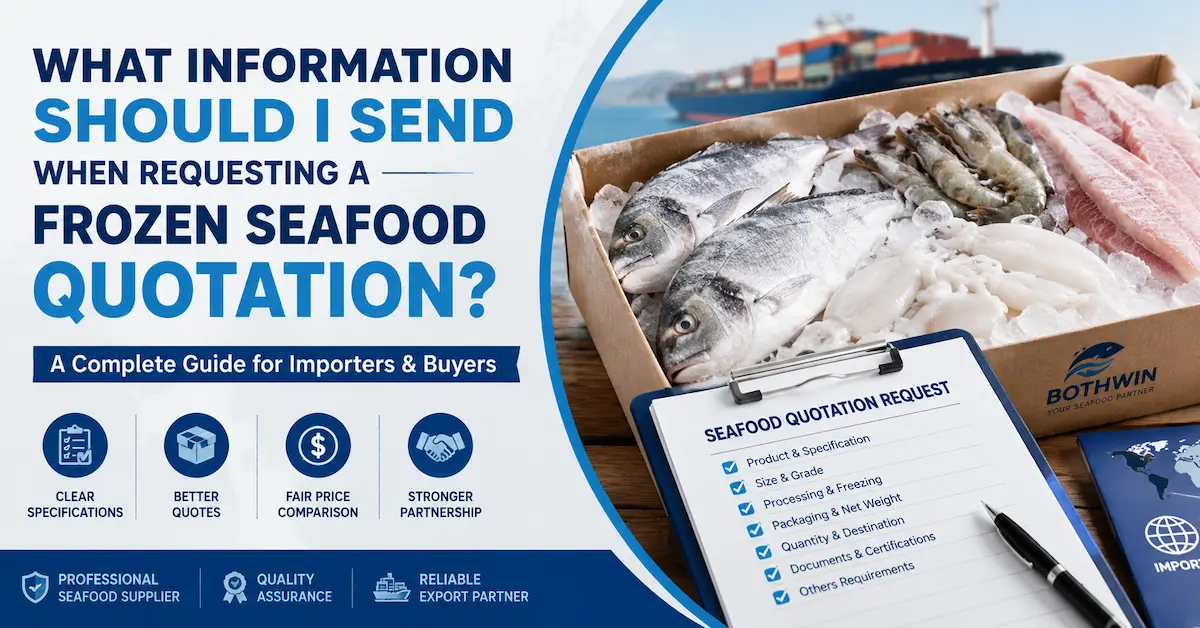
Whole Frozen Tilapia RFQ Checklist
Provide:
- Tilapia variety
- Whole or processed format
- Individual weight range
- Scaling requirement
- Gutting requirement
- Packaging
- Freezing method
- Quantity
- Destination country
- Required documents
- Sample requirements
FAQ
What does a whole frozen tilapia supplier provide?
A supplier provides whole frozen tilapia in different sizes and processing formats for importers, wholesalers, restaurants, and processors.
Why do buyers choose whole frozen tilapia?
Whole tilapia offers competitive cost, flexible applications, and suitability for wholesale markets.
What should buyers check before ordering tilapia?
Buyers should confirm species, size, processing method, weight, glazing, packaging, and cold-chain control.
Is whole frozen tilapia cheaper than fillets?
Usually yes, because less processing is required. However, buyers should consider labor and yield costs.
Can suppliers provide red and black tilapia?
Many suppliers can provide different tilapia varieties depending on availability and market requirements.
How should frozen tilapia be stored?
Frozen tilapia should be stored under stable frozen conditions according to product specifications.
Should importers request samples?
Yes. Samples help verify size, appearance, processing quality, and cooking performance.
What affects whole frozen tilapia pricing?
Size, origin, processing, packaging, quantity, and logistics affect pricing.
Can whole frozen tilapia be supplied with private labels?
Private-label packaging may be available depending on order quantity and market requirements.
How can I request a quotation from Bothwin Food?
Provide your tilapia size, processing requirements, quantity, packaging, and destination details.
Conclusion
Choosing the right whole frozen tilapia supplier helps seafood buyers build a stable and cost-effective supply chain.
Professional buyers should evaluate species, size grading, processing standards, packaging, glazing, cold-chain management, documents, and supplier reliability.
Bothwin Food supports global seafood buyers with flexible frozen fish sourcing solutions.
Contact Bothwin Food with your whole frozen tilapia requirements to discuss suitable supply options.