

What Information Should I Send for a Frozen Seafood Quotation?
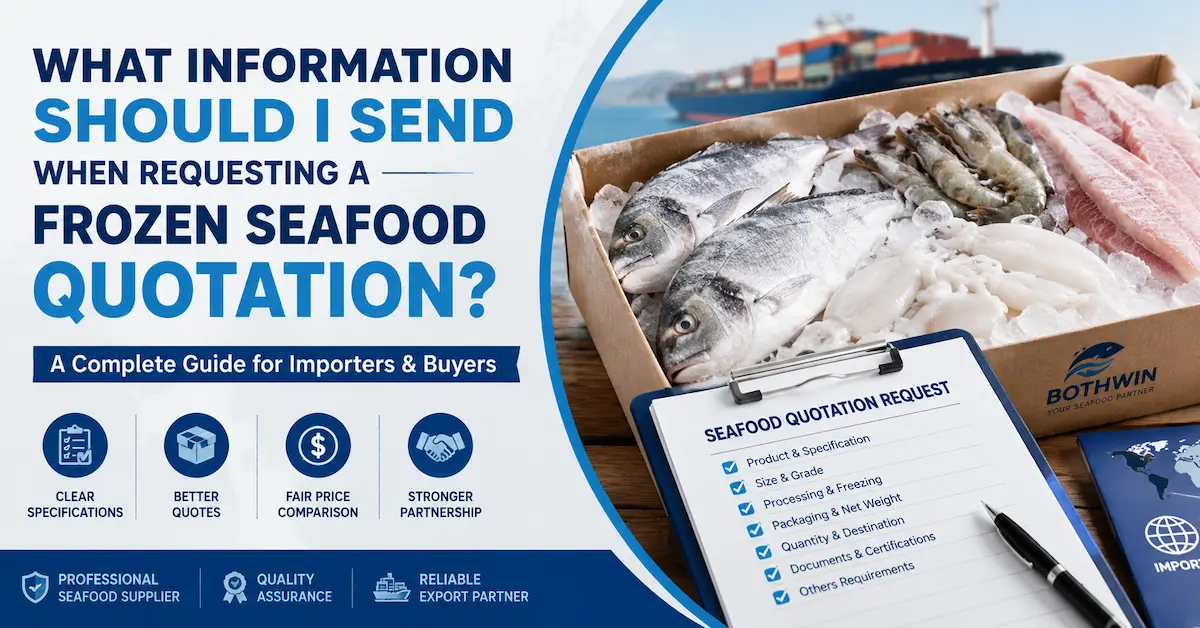
To receive an accurate frozen seafood quotation, buyers should provide at least the species, product form, size grade, processing requirement, freezing method, glazing requirement, net weight, packaging, order quantity, destination country, and required documents.
Sending only:
“Please quote frozen fish.”
usually leaves too many commercial variables undefined.
A more useful inquiry would look like this:
“Please quote whole frozen tilapia, 500–800 g/pc, IQF, agreed glazing and net-weight basis, export carton, private-label requirement, one 40-foot container, destination specified.”
The second inquiry allows the supplier to understand what is actually being purchased.
For international B2B seafood orders, a detailed RFQ also makes it easier to compare several suppliers on the same specification instead of comparing prices for products that may look similar but are commercially different.
Why Is a Detailed Seafood RFQ So Important?
Frozen seafood prices depend on multiple variables.
Two suppliers may both quote “frozen tilapia,” “tuna steak,” or “frozen squid,” but their offers may differ in:
- species
- size
- processing
- freezing method
- glazing
- net seafood weight
- carton configuration
- packaging
- tolerance
- destination requirements
Without a standardized specification, the buyer cannot know whether Supplier A and Supplier B are actually quoting equivalent products.
This is especially important for large-volume orders because small differences in size, yield, glazing, or net weight can become significant across thousands of kilograms.
Bothwin's existing bulk seafood sourcing guidance similarly emphasizes specification control, grading, freezing, packaging, cold-chain handling, documentation, and repeat-order consistency as important parts of international bulk seafood purchasing.
1. Start With the Exact Seafood Product
The first item in a seafood RFQ should be the product identity.
Avoid broad descriptions such as:
- fish
- shrimp
- tuna
- squid
Instead, specify the product as accurately as necessary for the market.
Examples:
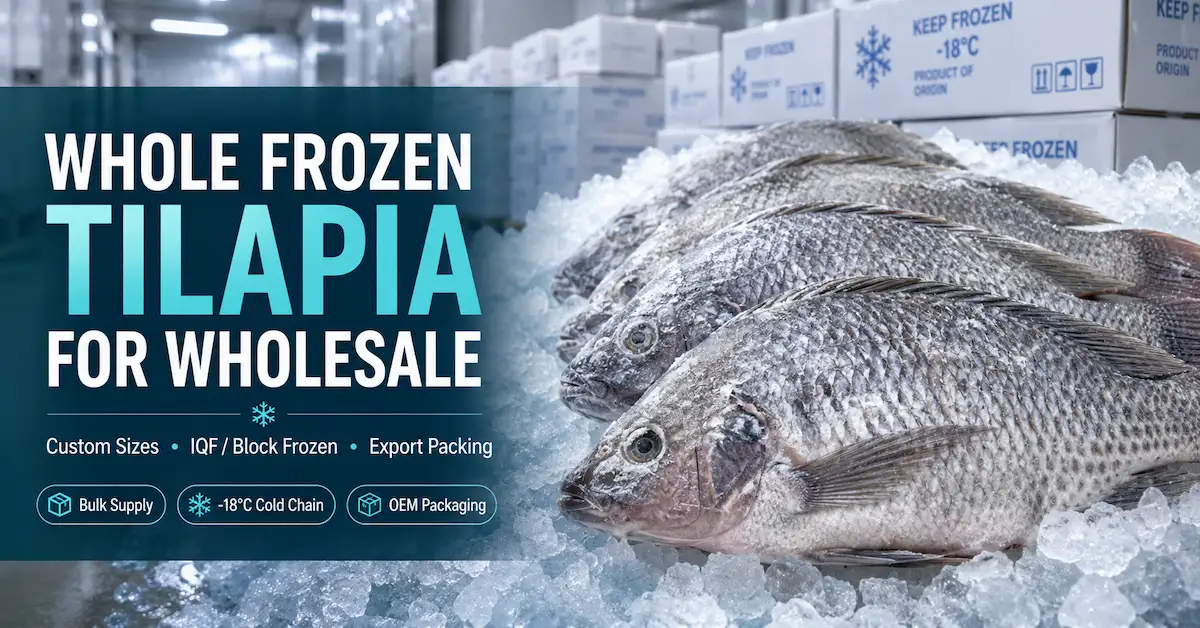
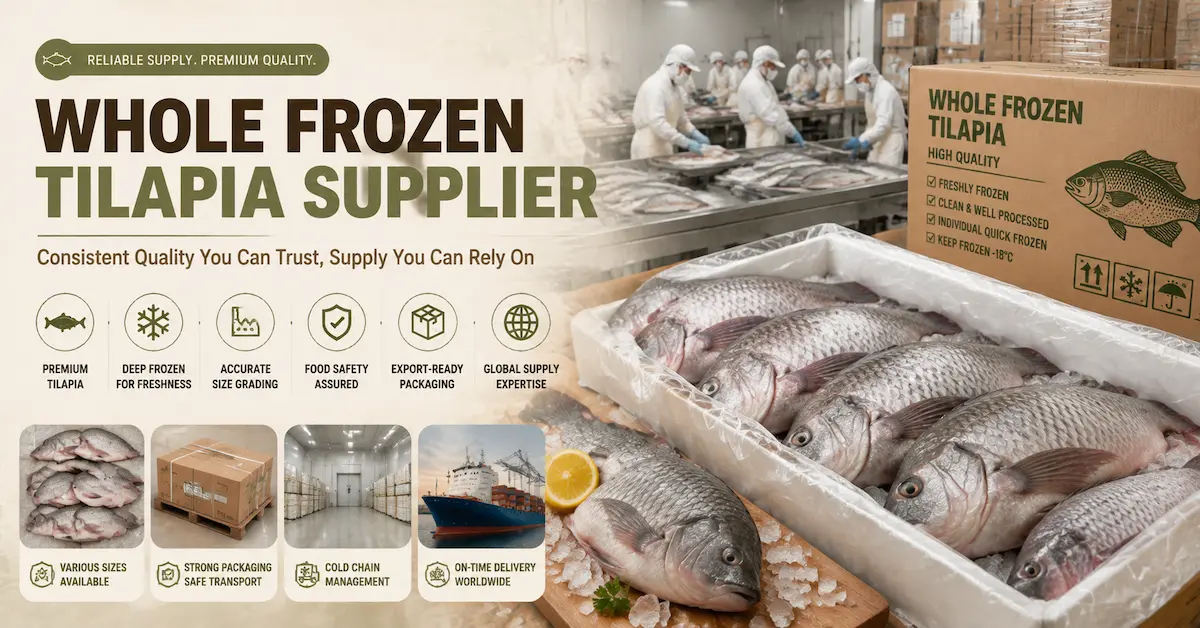
- whole frozen tilapia
- red tilapia
- black tilapia
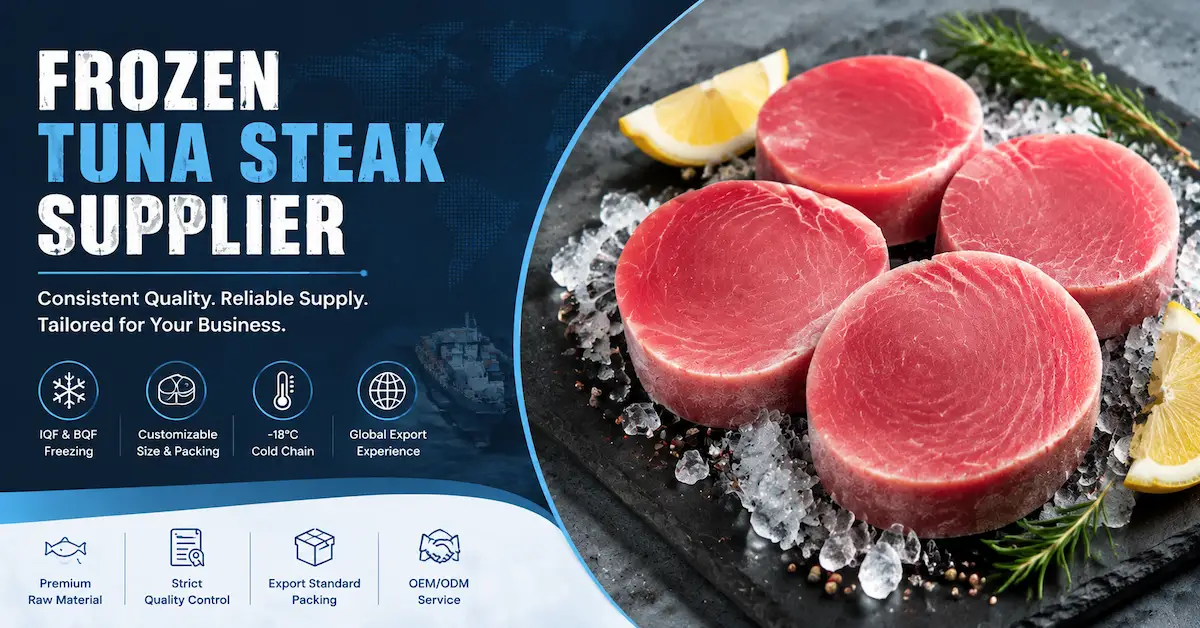
- frozen tuna steak
- frozen tuna loin
- whole black tiger shrimp
- frozen squid
Where regulatory or commercial requirements make species identification important, buyers should also confirm the appropriate scientific or accepted market identity.
Why Product Identity Matters
Different species can have different:
- market prices
- product characteristics
- labeling requirements
- processing options
- customer expectations
A supplier cannot prepare a meaningful quotation if the exact product is unclear.
Buyers can review the current Bothwin seafood product range before preparing their sourcing request.
2. Define the Product Form
The same seafood species can be supplied in multiple forms.
For fish, this may include:
- whole round
- gutted
- scaled
- cleaned
- fillet
- steak
- loin
- portion
- saku
For shrimp, buyers may need to define whether the product is:
- head-on
- headless
- shell-on
- peeled
- another agreed commercial form
For squid, the quotation may depend heavily on:
- whole or cleaned
- tube
- ring
- other processing format
Product Form Changes Cost
Processing adds:
- labor
- handling
- trimming
- yield loss
- equipment requirements
Therefore, a whole fish quotation should not be compared directly with a processed or portion-ready quotation.
For example, Bothwin's current Premium Frozen Tuna range includes different commercial formats such as tuna steaks, loins, saku, and whole-product options, so buyers should state the required format before requesting pricing.
3. Specify the Size Grade
Size is one of the most common causes of seafood quotation differences.
Depending on the product, size may be expressed as:
- weight per fish
- weight per piece
- shrimp count
- portion weight
- steak weight
- thickness
- dimensional specification
For example, a whole frozen tilapia buyer should not simply ask for:
“large tilapia.”
Instead, provide an agreed weight range such as:
“500–800 g/pc”
where that grade is applicable and available.
Why Size Matters Commercially
Size affects:
- raw-material cost
- piece count per carton
- restaurant portioning
- supermarket display
- processing yield
- customer demand
A foodservice distributor may prefer narrow size tolerances because restaurants need predictable portions.
A processor may accept wider grading if usable yield remains satisfactory.
For tilapia buyers, Bothwin's Whole Frozen Tilapia for Export page can be used as a starting point when discussing customized size grades.
4. State the Acceptable Size or Weight Tolerance
Defining a nominal size is only part of the specification.
Professional buyers should also determine how much variation is acceptable.
Questions may include:
- What is the target weight range?
- What percentage outside the grade is acceptable?
- Does each individual piece need to meet the range?
- Is average carton weight sufficient?
- Does thickness matter as well as weight?
This becomes particularly important with portion-controlled products.
For example, two tuna steaks can both weigh 150 g but have different thickness and diameter.
For restaurant buyers, that difference can affect:
- cooking time
- plating
- portion appearance
- menu consistency
The quotation should therefore reflect what the final customer actually needs.
5. Tell the Supplier Which Freezing Method You Need
Freezing method is another important RFQ variable.
Common commercial terms include:
- IQF
- BQF
- block frozen
- other product-specific freezing methods
IQF
Individually quick frozen products can provide easier individual-piece handling.
This can be useful for:
- restaurants
- foodservice distributors
- retailers
- buyers that remove products individually
Block Frozen
Block-frozen formats can be practical for:
- processors
- bulk users
- customers handling larger quantities at once
Neither format should automatically be considered better.
The correct choice depends on the buyer's distribution and processing model.
If you are uncertain, describe your intended application and ask the supplier which available format fits it.
6. Clarify the Glazing Requirement
Glazing is particularly important when purchasing frozen seafood because it affects both product protection and commercial weight comparison.
The RFQ should clarify:
- whether glazing is required
- agreed glazing level or basis
- how net weight will be declared
- how gross weight is calculated
Why This Matters When Comparing Prices
Imagine two suppliers offer cartons at similar prices.
Supplier A may have:
- more protective ice
- lower usable seafood weight
Supplier B may have:
- less glazing
- greater net seafood weight
Looking only at carton price may produce the wrong purchasing conclusion.
The buyer should understand:
How much usable seafood am I receiving for the quoted price?
7. Define Net Weight Clearly
Net weight should be one of the clearest points in the RFQ.
Confirm:
- seafood net weight per pack
- seafood net weight per carton
- gross carton weight where relevant
- relationship between glazing and declared weight
- weight tolerance
This helps prevent disputes after shipment.
For procurement comparison, it is often more useful to calculate:
cost per usable kilogram
rather than simply comparing:
cost per carton.
This becomes increasingly important at container scale.
8. Specify the Packaging Format
Packaging should be matched to the buyer's sales channel.
Wholesale Buyers
May prefer:
- bulk export cartons
- efficient inner packing
- easy warehouse handling
Foodservice Buyers
May prefer:
- manageable pack sizes
- individually separated products
- portion-oriented packs
Retail Buyers
May require:
- consumer bags
- vacuum packs
- labels
- barcodes
- net-weight declarations
- local-language information
Private-Label Buyers
May also need:
- custom artwork
- branded cartons
- custom bags
- buyer logos
- label approval
Packaging can affect both quotation and lead time.
Do not wait until production is about to start before telling the supplier that private-label packaging is required.
9. Tell the Supplier Your Order Quantity
“Bulk order” can mean very different things to different buyers.
Your RFQ should state whether the requirement is:
- sample
- trial quantity
- pallet quantity
- partial container
- full container
- multiple containers
- recurring monthly/quarterly volume
Quantity affects:
- production planning
- packaging
- logistics
- purchasing cost
- commercial feasibility
If this is a repeat program, also provide expected purchasing frequency.
For example:
“Initial order: 1 × 40-ft container; expected repeat volume subject to quality approval.”
is more useful than:
“We need large quantities.”
10. Include the Destination Country
The destination is essential because seafood export requirements are not identical across markets.
Buyers should provide:
- destination country
- destination port where known
- importing entity requirements
- target sales channel
For example:
USA – foodservice distribution
provides more commercial context than simply:
export order.
For the U.S. market, FDA maintains specific imported seafood safety and Seafood HACCP requirements, so buyers and suppliers need to confirm applicable import obligations for the actual product and processing arrangement.
The same principle applies to other markets: regulatory requirements should be verified for the actual destination rather than assumed from another country's program.
11. State Which Documents You Require
Do not wait until the container is ready to discover that a required document was never discussed.
Depending on product and destination, buyers may need to consider documents such as:
- commercial invoice
- packing list
- bill of lading
- certificate of origin
- health-related documentation where applicable
- product specification
- batch/traceability information
- destination-specific documentation
The exact requirements differ by product and market.
FDA, for example, maintains specific oversight programs for seafood imported into the United States and explicitly treats imported fish and fishery products as subject to applicable U.S. food-safety requirements.
Buyers should verify actual requirements with the relevant authority, importer, customs broker, and supplier before shipment.
You can also review Bothwin's Seafood Export Standards & Certifications content when preparing an export inquiry.
12. Explain the Intended Application
One of the most useful pieces of information in an RFQ is often overlooked:
What are you going to do with the product?
Tell the supplier whether the seafood is intended for:
- wholesale market
- supermarket
- restaurant
- hotel
- catering
- foodservice distribution
- further processing
- private-label retail
Why?
Because the application affects specification decisions.
A frozen fish intended for a traditional wholesale market may need different:
- sizing
- processing
- packaging
from seafood intended for supermarket retail.
Similarly, tuna for further processing may not require the same format as portion-ready tuna steaks for restaurants.
13. Tell the Supplier Whether OEM or Private Label Is Required
Private-label seafood programs require more preparation than standard bulk cartons.
Specify whether you need:
- buyer brand
- artwork
- printed bag
- printed carton
- label
- barcode
- local language
- custom pack weight
Also clarify who will provide the artwork and who needs to approve it.
Private-label requirements can affect:
- MOQ
- packaging cost
- production preparation
- lead time
Bothwin's current B2B seafood positioning includes OEM and customized packaging support for suitable orders, so buyers should include these requirements when submitting the initial inquiry rather than treating them as a later modification.
14. Include Your Required Delivery or Trade Terms
Where relevant to the RFQ, buyers should clarify:
- desired shipment timing
- destination port
- preferred Incoterm
- whether freight quotation is required
- any special container requirements
For example:
FOB China port
and:
CIF destination port
do not represent the same commercial offer.
When comparing multiple suppliers, make sure the trade terms are identical before comparing the final price.
15. Mention Any Special Quality Requirements
If your company has internal acceptance requirements, tell the supplier before quotation.
These may involve:
- appearance
- size tolerance
- thaw performance
- processing quality
- packaging strength
- labeling
- inspection method
- sampling plan
Avoid vague statements such as:
“Must be premium quality.”
Instead, convert quality into specifications that can be checked.
For example:
“Steak weight within agreed tolerance.”
is measurable.
“Very good steaks” is not.
What Does an Incomplete Frozen Seafood RFQ Look Like?
An incomplete inquiry may say:
Hello, please send your best price for frozen seafood. We need good quality and large quantity.
The supplier still does not know:
- which product
- what size
- what processing
- which freezing method
- how much glazing
- packaging
- destination
- quantity
- documents
The quotation will therefore either require repeated clarification or be based on assumptions.
What Does a Better Frozen Seafood RFQ Look Like?
A better inquiry might say:
We are a seafood distributor sourcing whole frozen tilapia for our market. Please quote the required size grade, IQF, agreed glazing/net-weight specification, export cartons, private-label option, one 40-ft container, destination country and port specified. Please also advise available packaging, production planning, and applicable export documents.
Now the supplier can respond commercially.
Frozen Seafood RFQ Template for Importers
Buyers can use the following structure:
| RFQ Item | Buyer Information |
|---|---|
| Product | Frozen seafood product/species |
| Product form | Whole / gutted / fillet / steak / etc. |
| Size | Required grade |
| Tolerance | Acceptable variation |
| Processing | Required processing |
| Freezing | IQF / BQF / block / other |
| Glazing | Required basis |
| Net weight | Per pack/carton |
| Packaging | Bulk / foodservice / retail |
| Private label | Yes / No |
| Quantity | Pallet / FCL / multiple FCL |
| Destination | Country + port |
| Application | Wholesale / retail / foodservice / processing |
| Documents | Required documents |
| Trade terms | FOB / CIF / other |
| Target timing | Required shipment window |
This template can be reused across tuna, tilapia, shrimp, squid, and other frozen seafood purchasing programs.
How Should Buyers Compare Frozen Seafood Quotations?
Once suppliers respond, do not immediately sort the offers from cheapest to most expensive.
First normalize the specifications.
Check whether every supplier quoted:
- the same species
- the same size
- the same product form
- the same freezing method
- the same glazing
- the same net weight
- the same packaging
- the same order quantity
- the same trade term
Only after these variables are aligned does the price comparison become meaningful.
A future quotation comparison should focus on:
product cost + usable yield + packaging + freight + duties + handling + quality risk
rather than unit price alone.
How Bothwin Handles Frozen Seafood Inquiries
Bothwin's current B2B seafood content positions the company around frozen seafood sourcing for importers, wholesalers, distributors, processors, supermarkets, and foodservice buyers, with attention to product specifications, export packaging, cold-chain handling, and documentation support.
Buyers can first explore:
Then send the required commercial specification through the Bothwin Contact Us page.
The more complete the inquiry, the easier it is to determine whether the requested product, specification, packaging, and destination requirements can be supported.
Frozen Seafood RFQ Checklist
Before pressing “Send,” check that your inquiry includes:
-
Exact seafood product
-
Species where required
-
Product form
-
Size grade
-
Size/weight tolerance
-
Processing requirements
-
Freezing method
-
Glazing requirement
-
Net weight
-
Packaging
-
OEM/private label
-
Order quantity
-
Destination country
-
Destination port where known
-
Intended application
-
Required documents
-
Trade terms
-
Target shipment timing
-
Special QC requirements
If several of these items are unknown, tell the supplier your application and ask which options are available rather than guessing.
FAQ About Frozen Seafood Quotations
What information should I send when requesting a frozen seafood quotation?
Provide the product/species, product form, size, processing, freezing method, glazing, net weight, packaging, quantity, destination, application, required documents, and trade terms.
Why can't a supplier quote accurately from just the product name?
Because seafood products can differ substantially in size, processing, freezing, glazing, packaging, and net weight. Each variable may affect the commercial price.
Should I tell the supplier my destination country?
Yes. Destination can affect regulatory, documentation, labeling, logistics, and commercial requirements.
Why should glazing be included in the RFQ?
Glazing can affect both product protection and usable product weight. Defining the glazing and net-weight basis makes supplier quotations easier to compare.
Is net weight more important than carton weight?
Both can matter, but buyers need to understand the actual seafood net weight to compare usable product value accurately.
Should I include my target price?
It is optional. A target can help communicate market positioning, but it should never replace a complete technical and commercial specification.
What does FCL mean in a seafood quotation?
FCL means Full Container Load. If you intend to purchase a full reefer container, state this clearly so the supplier can plan quantity and packaging accordingly.
Can I request OEM packaging in the first quotation?
Yes. It is better to mention OEM/private-label requirements from the beginning because customized packaging can affect MOQ, cost, and preparation time.
What should U.S. seafood importers confirm before ordering?
U.S. buyers should verify applicable FDA seafood import and HACCP requirements for the specific product, facility, and import arrangement rather than assuming that a generic certificate is sufficient.
How can I request a frozen seafood quotation from Bothwin?
Send Bothwin your product, size, processing, freezing, glazing/net-weight specification, packaging, destination, quantity, and document requirements through the Contact Us page.
Conclusion
A useful frozen seafood quotation starts with a useful buyer specification.
The more clearly an importer defines the species, product form, size grade, processing, freezing method, glazing, net weight, packaging, quantity, destination, application, and documentation requirements, the easier it becomes to receive comparable quotations and reduce misunderstandings before production.
For professional buyers, the objective should not be to collect the largest number of seafood prices. It should be to obtain comparable offers for the same commercial product.
If you are preparing a new frozen seafood order, review Bothwin's seafood products and send your completed RFQ through Contact Bothwin for product-specific discussion.