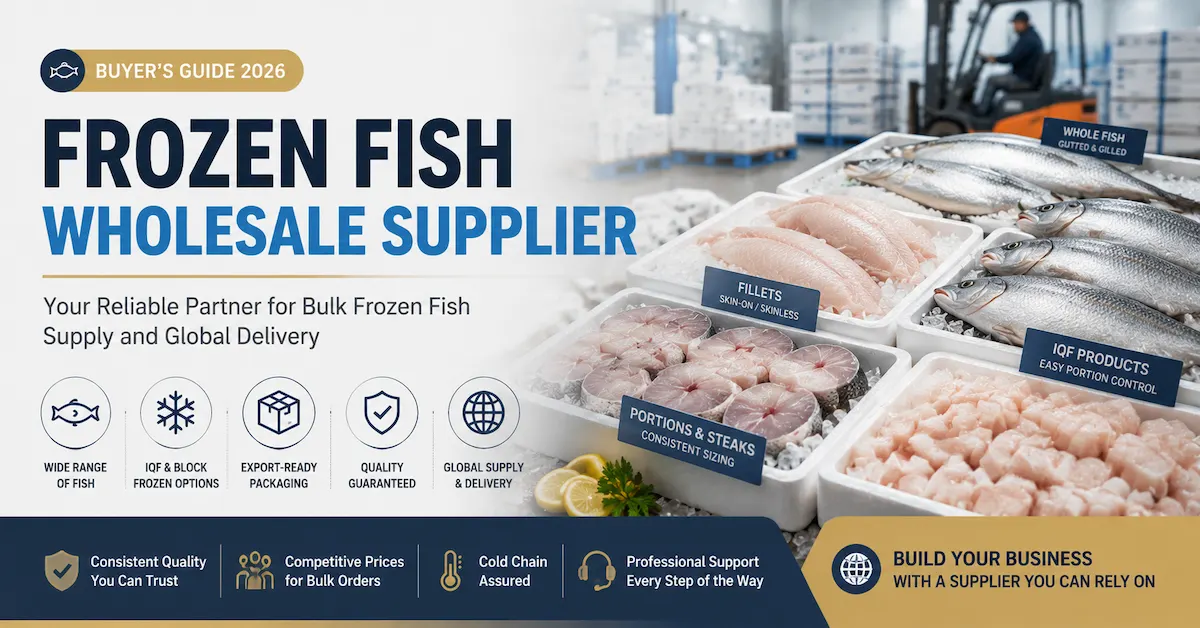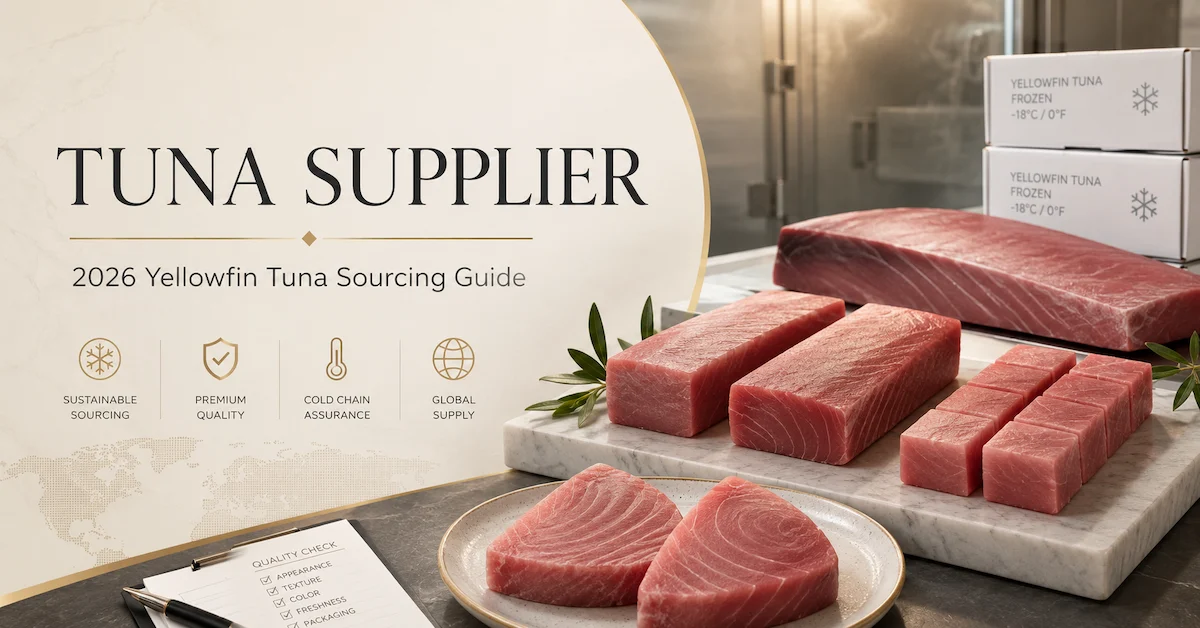


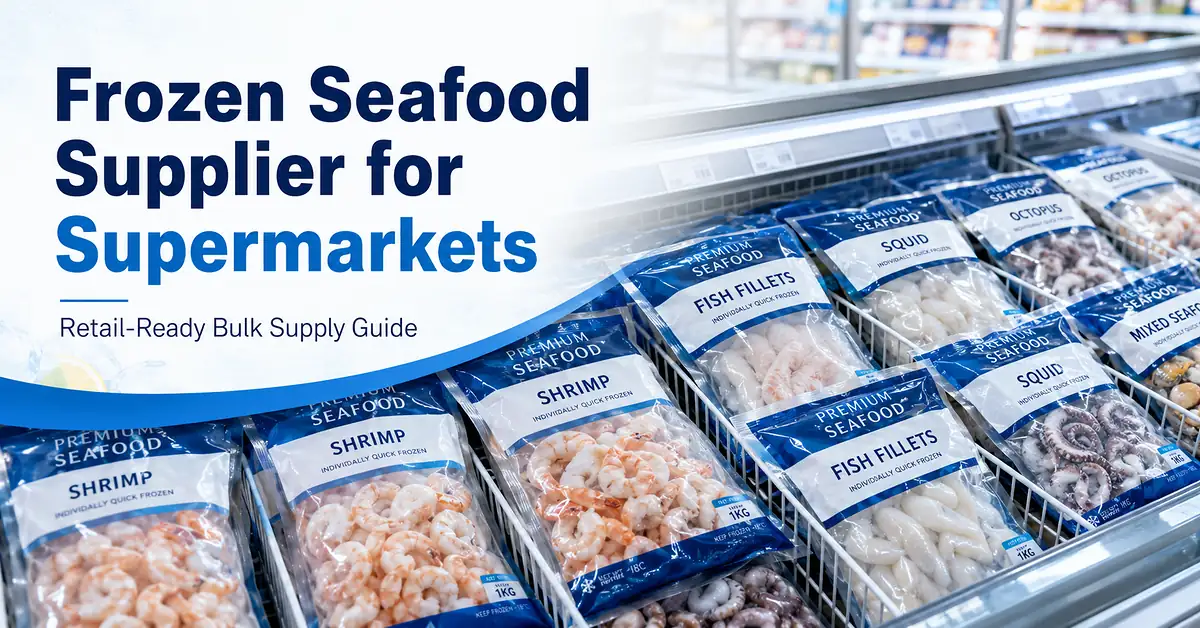
A frozen seafood supplier for supermarkets helps grocery chains, retail buyers, and food distributors source frozen seafood products that are suitable for freezer display, consumer packaging, and repeat retail sales. For supermarkets, frozen seafood is not only about product quality. It also depends on packaging appearance, shelf life, size consistency, cold-chain control, and stable supply.
Supermarket buyers need seafood products that look attractive in frozen cabinets, meet local market preferences, and support long-term inventory planning. A reliable supplier can help reduce sourcing risks, improve product turnover, and build a stronger frozen seafood category.
Quick Answer: What Should Supermarkets Look for in a Frozen Seafood Supplier?
Supermarkets should choose a supplier that can provide retail-ready frozen seafood, stable product specifications, export packaging, cold-chain delivery, clear labeling support, and flexible bulk supply.
The most important points include:
- Consistent product size and appearance
- Retail-friendly packaging
- Proper freezing and storage control
- Clear net weight and glazing information
- Long shelf life
- Private label or custom packaging support
- Stable repeat order capacity
- Export documentation when required
Bothwin Food supplies frozen fish, fresh or frozen shrimp, cephalopods, canned goods, spices, and condiments for global B2B buyers, including supermarkets, distributors, restaurants, and food service companies.
Why Supermarkets Need Reliable Frozen Seafood Supply
Frozen seafood is a high-value category for supermarkets. It can attract family shoppers, restaurant-style home cooking customers, seafood lovers, and health-conscious consumers.
However, supermarket seafood buyers face different challenges from restaurant buyers. They need products that are not only good for cooking but also suitable for retail display.
A reliable frozen seafood supplier helps supermarkets solve several common problems.
Stable Freezer Shelf Availability
Supermarkets need regular stock replenishment. If seafood supply is unstable, frozen cabinets may have empty shelves or inconsistent product choices.
Better Category Planning
Frozen shrimp, fish fillets, squid, octopus, and mixed seafood packs can be arranged into different price levels and customer groups.
Longer Shelf Life
Proper frozen seafood supports longer storage under controlled conditions, helping supermarkets manage inventory more efficiently.
Attractive Retail Presentation
Consumers often make purchase decisions based on packaging, visible product quality, and clear product information. Good packaging directly affects sales.
Main Frozen Seafood Products for Supermarkets
A professional frozen seafood supplier for supermarkets should offer product categories that fit retail demand, freezer display, and consumer cooking habits.
1. Frozen Shrimp for Supermarkets
Frozen shrimp is one of the most popular retail seafood products. It is easy to cook, widely accepted by consumers, and suitable for many dishes.
Common supermarket shrimp products include:
- Head-on shrimp
- Headless shrimp
- Peeled shrimp
- Peeled and deveined shrimp
- IQF shrimp
- Cooked shrimp
- Raw frozen shrimp
For retail buyers, shrimp size grading is important. Clear size grades such as 21/25, 26/30, 31/40, or market-specific grades help supermarkets build different product lines.
2. Frozen Fish for Supermarkets
Frozen fish is suitable for family meals, grilling, frying, steaming, baking, and ready-to-cook retail products.
Common product formats include:
- Whole frozen fish
- Fish fillets
- Fish portions
- Skin-on fish cuts
- Skinless fish cuts
- Headless and gutted fish
Supermarkets often prefer fish products with stable portion size, clean appearance, and easy cooking instructions.
3. Cephalopods: Squid, Octopus, and Cuttlefish
Cephalopods are suitable for customers who enjoy Asian cuisine, Mediterranean dishes, barbecue seafood, fried appetizers, and home cooking.
Common retail formats include:
- Squid rings
- Squid tubes
- Whole cleaned squid
- Octopus
- Cuttlefish
- Sliced cephalopod products
For supermarkets, cleaning level and appearance after freezing are important because customers expect convenience and visual quality.
4. Mixed Seafood Packs
Mixed seafood packs are useful for retail customers who want convenient cooking solutions. They can be used for pasta, hotpot, soups, fried rice, seafood stew, and family meals.
For supermarket buyers, mixed seafood packs can improve freezer category diversity and increase average basket value.
Retail Packaging Requirements for Frozen Seafood
Packaging is one of the most important differences between supermarket seafood and food service seafood. Supermarkets need products that are easy to display, easy to scan, and easy for customers to understand.
Common packaging formats include:
| Packaging Type | Best For | Main Advantage |
|---|---|---|
| Retail bags | Frozen shrimp, squid, mixed seafood | Easy freezer display and customer handling |
| Vacuum packs | Fish fillets, premium seafood | Better appearance and protection |
| Tray packs | Retail seafood portions | Clear product presentation |
| Bulk-to-retail packs | Distributors and supermarket chains | Flexible repacking options |
| Private label packaging | Supermarket brands and importers | Supports brand building |
A strong supplier should understand that packaging is not only protection. It is also part of retail marketing.
Private Label Frozen Seafood for Supermarkets
Many supermarket chains and distributors prefer private label frozen seafood. Private label products help retailers build customer loyalty, improve margins, and differentiate from competitors.
A frozen seafood supplier may support:
- Custom packaging design
- Private label printing
- Market-specific language labels
- Custom carton size
- Retail bag weight options
- Barcode and product information support
- Product line matching for different price levels
For supermarkets, private label seafood can be positioned as economy, standard, or premium depending on market demand.
Cold-Chain Control for Supermarket Seafood
Cold-chain control is critical for frozen seafood retail. Poor temperature management can affect product texture, appearance, shelf life, and customer satisfaction.
A reliable supplier should pay attention to:
- Freezing method
- Frozen storage condition
- Packaging protection
- Container loading
- Transport temperature
- Storage instructions
- Shelf life management
Most frozen seafood should be stored at around -18°C or lower. Supermarket buyers should also confirm that their distribution centers and retail freezer cabinets can maintain proper storage conditions.
IQF Seafood vs Block Frozen Seafood for Supermarkets
Supermarkets usually prefer packaging formats that are convenient for consumers. IQF seafood is often suitable for retail because each piece can be separated easily.
| Freezing Format | Features | Best For Supermarkets |
| IQF seafood | Individually frozen pieces | Shrimp, squid rings, fish portions |
| Vacuum frozen seafood | Packed for appearance and protection | Fish fillets, premium seafood |
| Block frozen seafood | Lower cost, bulk format | Repacking or distributor channels |
| Glazed frozen seafood | Ice layer protects product surface | Long-distance shipping and retail storage |
IQF frozen shrimp and squid are especially popular because customers can use only the amount they need and return the rest to the freezer.
Key Quality Factors Supermarket Buyers Should Check
Before placing a bulk order, supermarket buyers should review product details carefully. A low price may not be attractive if the product has poor presentation, excessive glazing, or unclear specifications.
| Quality Factor | Why It Matters for Supermarkets |
| Product appearance | Affects customer buying decision |
| Size grading | Helps build clear retail product lines |
| Net weight | Impacts pricing and consumer trust |
| Glazing ratio | Affects real seafood value |
| Packaging quality | Protects product and improves shelf display |
| Shelf life | Supports inventory planning |
| Label clarity | Helps customers understand product use |
| Cold-chain control | Maintains quality during storage and sales |
A supermarket seafood supplier should be able to provide clear specifications and packaging details before shipment.
Common Buying Risks for Supermarkets
Supermarket buyers should avoid choosing a supplier only based on low quotation. Retail seafood products need stable quality because customers may compare products directly in the freezer section.
Poor Packaging Appearance
If packaging looks cheap or unclear, customers may not trust the product even if the seafood quality is acceptable.
Excessive Glazing
Too much glazing reduces the real seafood weight. It may also lead to customer complaints if expectations are not managed clearly.
Inconsistent Product Size
Inconsistent shrimp, fish portions, or squid pieces can make retail bags look uneven and less professional.
Weak Cartons
Frozen seafood often travels long distances. Weak cartons may collapse, causing damaged retail packs and freezer display problems.
Unstable Repeat Supply
Supermarkets need consistent replenishment. A supplier should be able to support ongoing orders, not only one-time shipments.
How to Choose a Frozen Seafood Supplier for Supermarkets
Choosing a supplier requires both product review and commercial evaluation.
1. Check Product Range
A supplier should provide seafood products that match your supermarket category plan, such as frozen shrimp, fish, squid, octopus, and mixed seafood packs.
2. Confirm Retail Packaging Ability
Ask whether the supplier can support retail bags, vacuum packs, private label packaging, or market-specific labeling.
3. Review Product Specifications
Buyers should confirm:
- Species
- Size grade
- Processing method
- Net weight
- Glazing ratio
- Packaging format
- Shelf life
- Storage requirement
- Carton details
4. Test Samples Before Bulk Orders
Sample testing helps buyers check appearance, thawing performance, packaging quality, taste, and customer suitability.
5. Evaluate Communication and Export Support
A good supplier should provide fast communication, clear quotations, and export document support when needed.
Supermarket Applications and Retail Display Ideas
Frozen seafood can support multiple retail sales strategies.
Family Cooking Section
Products such as frozen shrimp, fish portions, and mixed seafood packs are suitable for everyday home cooking.
Premium Seafood Freezer
Vacuum-packed fish fillets, octopus, and larger shrimp can be positioned as premium products.
Quick Meal Solutions
Mixed seafood packs, squid rings, and peeled shrimp are suitable for customers who want convenient meal preparation.
Seasonal Promotions
Seafood products can be promoted during holidays, barbecue seasons, hotpot seasons, and family gathering periods.
Private Label Product Lines
Supermarkets can create their own frozen seafood range to improve brand recognition and repeat purchases.
Why Work with Bothwin Food
Bothwin Food supplies seafood and food products for B2B buyers, including frozen fish, fresh or frozen shrimp, cephalopods, canned goods, spices, and condiments.
For supermarket buyers, Bothwin Food can help match products based on retail packaging needs, cold-chain requirements, product type, and target market. Buyers can explore available categories through the Products page, learn more about the company on the About Us page, or submit sourcing requirements through the Contact Us page.
Supermarket Buyer Checklist
Before confirming a frozen seafood order, use this checklist:
- Does the product fit your frozen seafood category plan?
- Is the packaging suitable for supermarket display?
- Are product size and weight clearly confirmed?
- Is the glazing ratio acceptable?
- Is the retail label clear and market-appropriate?
- Can the supplier support private label packaging?
- Is the carton strong enough for international shipping?
- Can samples be tested before bulk purchase?
- Can the supplier support repeat orders?
- Are export documents available when needed?
This checklist can help supermarkets reduce sourcing risk and build a more stable frozen seafood retail program.
FAQ
1. What does a frozen seafood supplier for supermarkets provide?
A frozen seafood supplier for supermarkets provides retail-ready frozen seafood such as shrimp, fish, squid, octopus, and mixed seafood packs for grocery stores, supermarket chains, and distributors.
2. What frozen seafood products are best for supermarkets?
Popular supermarket products include frozen shrimp, fish fillets, squid rings, octopus, whole fish, and mixed seafood packs.
3. Can frozen seafood be packed for retail display?
Yes. Frozen seafood can be packed in retail bags, vacuum packs, tray packs, or private label packaging depending on market needs.
Conclusion
Choosing a reliable frozen seafood supplier for supermarkets is essential for building a strong frozen seafood category. Supermarket buyers need more than basic seafood supply. They need retail-ready packaging, consistent quality, clear labeling, cold-chain control, and stable replenishment.
Bothwin Food provides frozen seafood and related food products for global B2B buyers, including fish, shrimp, cephalopods, canned goods, spices, and condiments. For supermarket seafood sourcing, buyers can contact Bothwin Food to discuss product specifications, retail packaging, private label options, samples, and wholesale supply plans.