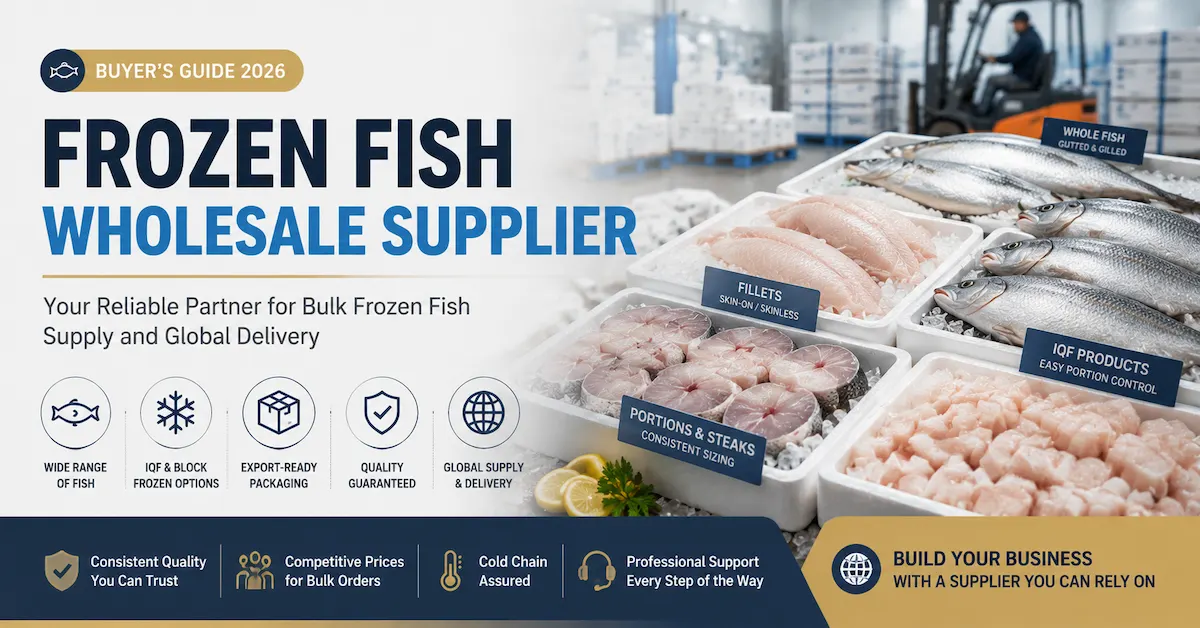


A reliable frozen fish supplier helps importers, wholesalers, supermarkets, restaurants, hotels, and food processors source fish products with stable specifications, suitable packaging, consistent quality, and dependable cold-chain support.
For B2B buyers, frozen fish procurement is not simply about finding the lowest price. Species accuracy, portion size, processing format, glazing, net weight, freezing method, packaging strength, shelf life, and thawing performance can all affect the true cost of a shipment.
A lower quotation may become expensive when it includes excessive glazing, inconsistent fillet sizes, weak cartons, poor yield, or products that lose texture after thawing.
This guide explains how to evaluate a frozen fish supplier and prepare a more accurate bulk purchasing inquiry.
Quick Answer: What Should Buyers Expect from a Frozen Fish Supplier?
A professional frozen fish supplier should provide clear information about the fish species, origin, processing method, size grade, net weight, glazing ratio, freezing method, packaging, storage temperature, shelf life, and available export documents.
Buyers should look for:
- Accurate commercial and scientific species names
- Stable size or piece-weight grading
- Whole fish, fillets, portions, or processing formats
- IQF or block frozen options
- Clear net weight and glazing information
- Strong bulk or retail packaging
- Cold-chain storage and transport support
- Traceable batch information
- Samples before bulk orders
- Consistent repeat supply
- Clear quotation and documentation support
Bothwin Food supplies frozen seafood products for international B2B buyers. Buyers can review available fish and seafood categories through the Products page, learn more about the company through the About Us page, or send detailed product requirements through the Contact Us page.
Who Buys Frozen Fish in Bulk?
Different buyers require different fish formats, specifications, and packaging.
Importers and Distributors
Importers usually need export-ready cartons, stable supply, clear documents, and products that match local market demand.
They may distribute frozen fish to:
- Supermarkets
- Restaurants
- Hotels
- Seafood wholesalers
- Food processors
- Local retail chains
Restaurants and Hotels
Foodservice buyers often prioritize:
- Stable portion size
- Easy preparation
- Consistent cooking results
- Low trimming loss
- Reliable monthly supply
Fish fillets and portion-controlled cuts are usually more convenient than whole fish for high-volume kitchens.
Supermarkets
Retail buyers need frozen fish with:
- Clean appearance
- Suitable shelf life
- Attractive packaging
- Clear labels
- Consistent piece size
- Private-label potential
Food Processing Factories
Processors may use frozen fish for:
- Ready meals
- Breaded fish
- Fish portions
- Fish balls
- Canned products
- Soups and sauces
- Value-added seafood products
Processing buyers focus heavily on yield, moisture, texture, trimming level, and repeat batch consistency.
Main Frozen Fish Product Formats
A capable frozen fish supplier should help buyers choose a format that fits their market and production process.
Whole Frozen Fish
Whole fish may be supplied as:
- Whole round
- Scaled
- Gutted
- Headless and gutted
- Individually frozen
- Block frozen
Whole frozen fish is commonly used by wholesalers, traditional markets, restaurants, and processors that prefer further cutting at destination.
Frozen Fish Fillets
Fillets may be:
- Skin-on
- Skinless
- Boneless
- Bone-in
- Trimmed
- Untrimmed
- Individually vacuum packed
- IQF packed
Fish fillets are suitable for supermarkets, restaurants, catering companies, and ready-meal factories.
Frozen Fish Portions
Portions offer more consistent piece weights and help buyers control serving cost.
Common applications include:
- Restaurant meals
- Hotel catering
- School meals
- Airline catering
- Prepared foods
- Retail meal kits
Processing-Grade Frozen Fish
Processing factories may purchase frozen fish in bulk for cutting, mincing, cooking, breading, or mixing with other ingredients.
In this case, buyers should focus on:
- Usable yield
- Bone content
- Skin percentage
- Moisture
- Texture
- Cutting loss
- Thawing loss
What Specifications Should Buyers Confirm?
A quotation should clearly define the product. “Frozen fish” is not detailed enough for a commercial order.
| Specification | Why It Matters |
|---|---|
| Commercial name | Identifies the product in sales and documents |
| Scientific species name | Reduces species and labeling confusion |
| Origin | Supports traceability and market requirements |
| Wild-caught or farmed | Affects supply, positioning, and documentation |
| Processing format | Determines labor and intended application |
| Size grade | Affects price and customer use |
| Piece weight | Supports portion and yield calculations |
| Net weight | Shows the real fish quantity |
| Glazing ratio | Affects usable weight and price comparison |
| Freezing method | Influences handling and portion control |
| Packaging | Protects fish during transport and resale |
| Shelf life | Supports inventory planning |
| Storage temperature | Protects product quality |
A reliable frozen fish supplier should confirm these details in writing before the buyer approves the order.
How Fish Species Affect Purchasing Decisions
Different fish species have different textures, fat levels, flavors, applications, and price ranges.
Buyers should consider:
- Local consumer preferences
- Menu application
- Retail positioning
- Cooking method
- Processing yield
- Seasonal availability
- Import restrictions
- Target price
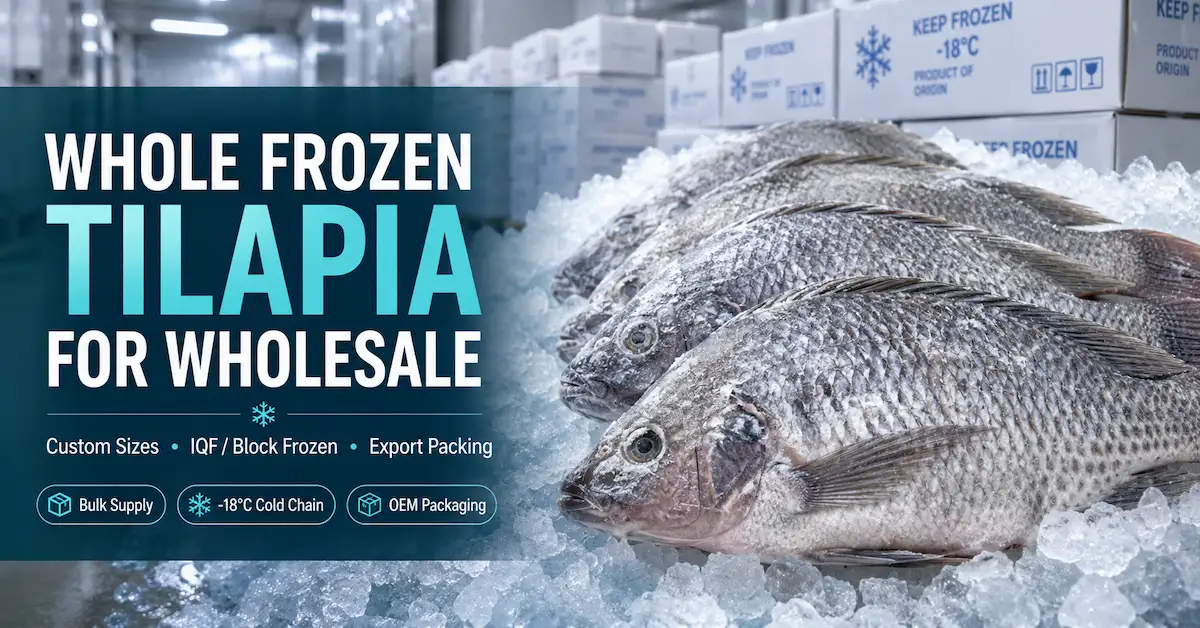
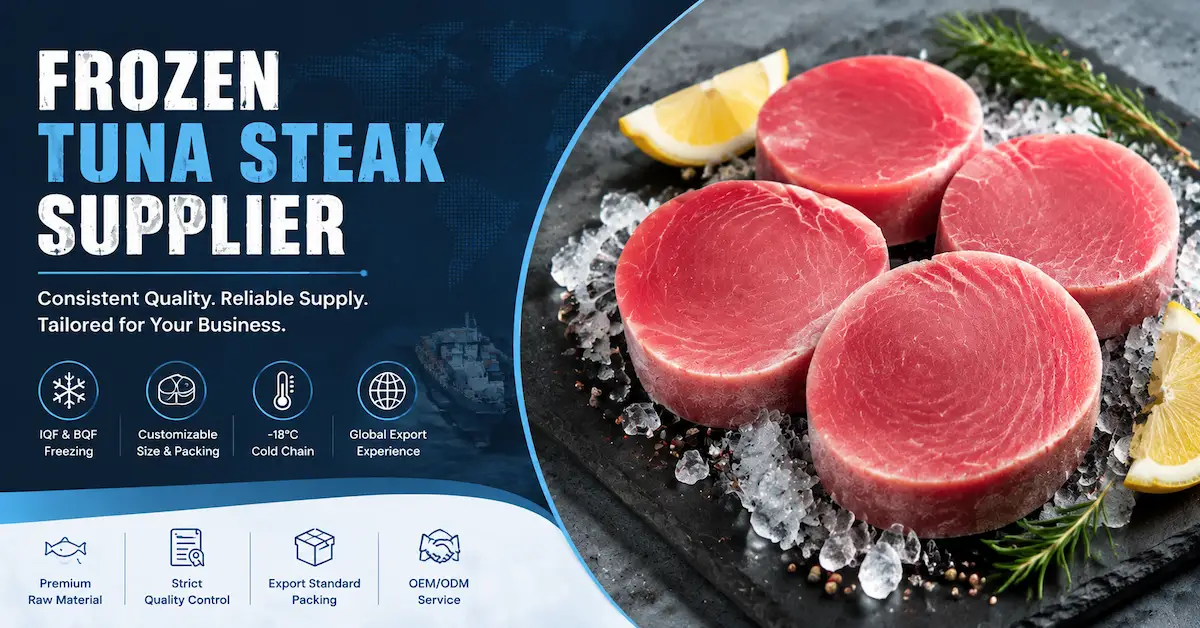
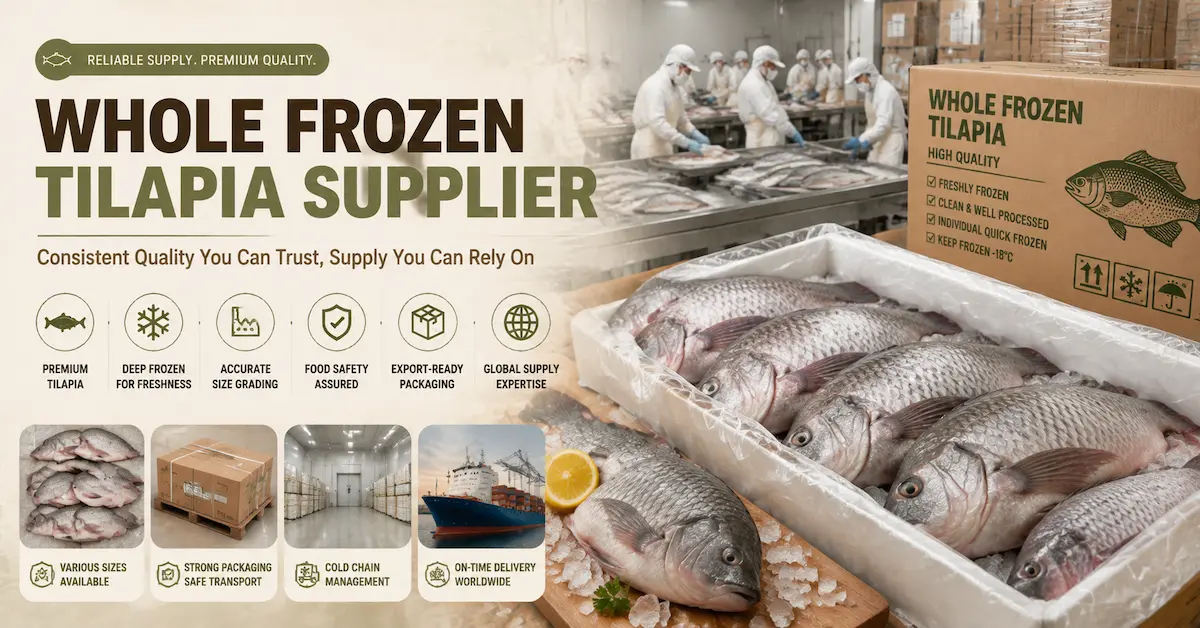
For example, whole tilapia may suit wholesale and traditional retail markets, while fillets may be more suitable for supermarkets and foodservice channels. Tuna products may serve different retail, foodservice, or processing applications depending on the cut and specification.
The supplier should not recommend a product only because it is available. It should match the buyer’s intended use.
IQF vs Block Frozen Fish
Freezing format affects storage, handling, and production efficiency.
| Freezing Format | Main Characteristics | Best For |
| IQF | Pieces frozen separately | Restaurants, supermarkets, portion control |
| Block frozen | Products frozen together | Processing factories and large-volume users |
| Vacuum packed | Sealed individual or grouped packs | Premium retail and fillets |
| Interleaved frozen | Layers separated by film | Fillets and foodservice buyers |
| Glazed frozen | Protective ice coating | Long-distance storage and shipping |
IQF products allow buyers to remove only the amount needed. Block frozen fish can offer a more cost-effective format when the entire block is processed at once.
How to Evaluate Frozen Fish Quality
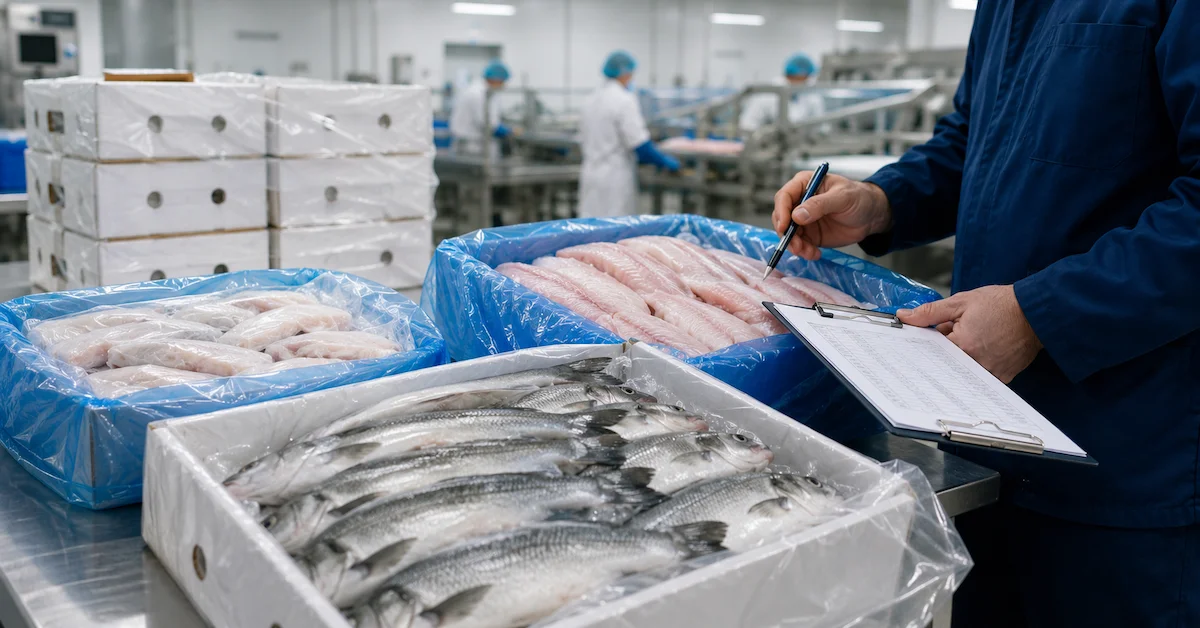
Buyers should inspect frozen fish both before and after thawing.
Frozen Appearance
Check for:
- Natural and consistent color
- Clean cutting
- Limited broken pieces
- No severe dehydration
- No excessive frost
- No damaged packaging
- No unusual surface discoloration
After Thawing
Check:
- Odor
- Firmness
- Color
- Drip loss
- Moisture retention
- Shape
- Bone content
- Skin condition
- Cooking performance
A sample should be tested using the same preparation or production method planned for the bulk shipment.
Why Glazing and Net Weight Matter
Glazing is a thin protective ice layer applied to frozen fish. It helps reduce moisture loss and freezer burn.
However, excessive glazing reduces the actual fish weight.
Before comparing prices, buyers should confirm:
- Gross carton weight
- Declared net weight
- Glazing percentage
- Packaging weight
- Price basis
- Acceptable weight tolerance
- Inspection method
A quotation with a lower price but higher glazing may result in a higher cost per kilogram of usable fish.
This is particularly important for wholesalers, restaurants, and processors that calculate margins or yield based on actual edible weight.
Packaging Options for Frozen Fish
Packaging should fit the fish format, buyer type, and distribution channel.
| Packaging Format | Best For | Main Benefit |
| Bulk cartons | Wholesalers and processors | Cost-efficient large-volume supply |
| IQF bags | Foodservice and supermarkets | Flexible portion use |
| Vacuum packs | Fillets and premium retail | Better appearance and protection |
| Retail bags | Grocery stores | Easier freezer display |
| Foodservice packs | Restaurants and hotels | Convenient kitchen handling |
| Private-label packs | Brands and retail chains | Supports brand development |
Buyers should confirm:
- Inner bag material
- Pack weight
- Seal strength
- Carton strength
- Moisture resistance
- Label information
- Batch code
- Storage instructions
Weak packaging can reduce the value of otherwise acceptable fish.
Cold-Chain Requirements
Most frozen fish should remain stored and transported under stable frozen conditions, commonly around -18°C or lower, subject to the product specification and destination requirements.
A professional frozen fish supplier should understand:
- Frozen warehouse management
- Temperature monitoring
- Efficient loading
- Reefer container preparation
- Packaging protection
- Shelf-life control
- Destination storage requirements
Temperature fluctuations may contribute to:
- Freezer burn
- Large ice crystals
- Moisture loss
- Soft texture
- Damaged packaging
- Shorter effective shelf life
For higher-value or first-time orders, buyers may request temperature data logging.
Common Risks When Buying Frozen Fish
Incorrect Species
A vague commercial name may result in species confusion and labeling problems.
Inconsistent Size
Different piece sizes may affect restaurant portions, retail appearance, and processing yield.
Excessive Glazing
Too much protective ice reduces usable fish weight.
High Thawing Loss
Poor raw material or freezing may result in excessive moisture loss.
Weak Cartons
Frozen cartons may become damaged during shipping, warehousing, or local distribution.
Poor Repeat Consistency
A good sample does not guarantee every future shipment. Buyers need clear specifications and batch control.
Incomplete Documents
Missing or inconsistent export documents can delay customs clearance.
How Frozen Fish Prices Are Calculated
Frozen fish prices may depend on:
- Species
- Origin
- Wild-caught or farmed status
- Size
- Processing format
- Fillet yield
- Skin and bone requirements
- Freezing method
- Glazing ratio
- Packaging
- Order quantity
- Season
- Freight
- Incoterm
- Destination market
Buyers should compare offers based on the same specification.
A cheaper fish may not provide better value when its usable yield is lower or its packaging and quality are less consistent.
How to Choose a Reliable Frozen Fish Supplier
Verify the Business
Check the supplier’s company identity, export experience, product categories, and processing sources.
Request Full Specifications
Do not rely on photos or short product names.
Test Samples
Thaw, weigh, cook, and evaluate samples before bulk orders.
Review Quality Control
Ask about raw material inspection, grading, glazing, packaging, storage, and final checks.
Confirm Documents
Provide a destination-market document checklist before production.
Review Cold-Chain Capability
Ask about storage, container loading, temperature monitoring, and transport arrangements.
Start with a Trial Order
A manageable initial order helps evaluate quality, packaging, documents, and communication.
Frozen Fish Supplier Comparison Table
| Evaluation Point | Reliable Supplier | Higher-Risk Supplier |
| Species information | Clear and accurate | Vague |
| Product specifications | Complete | Incomplete |
| Net weight | Transparent | Unclear |
| Glazing | Confirmed | Not explained |
| Samples | Available | Avoided |
| Packaging | Market-appropriate | Generic or weak |
| Cold-chain procedures | Clearly explained | Vague |
| Documentation | Reviewed before shipment | Confirmed too late |
| Lead time | Realistic | Overpromised |
| Communication | Fast and specific | Slow or inconsistent |
Why Work with Bothwin Food
Bothwin Food focuses on farmed and wild seafood supply for international B2B customers. Its current product range includes fish and seafood products for importers, wholesalers, supermarkets, foodservice companies, and processors.
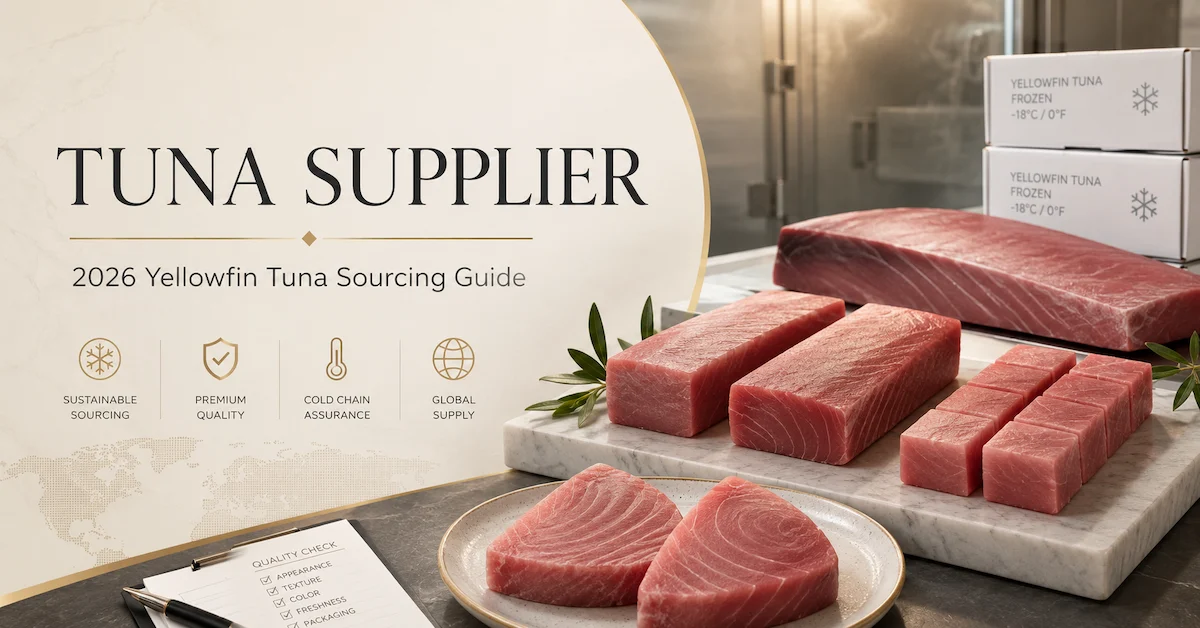
Examples shown on the current product page include sea bass, premium frozen tuna, and whole frozen tilapia for export.
Buyers can explore available products through the Products page, learn about Bothwin Food’s company background through the About Us page, review seafood quality and processing information through the Blog, or send a detailed request through the Contact Us page.
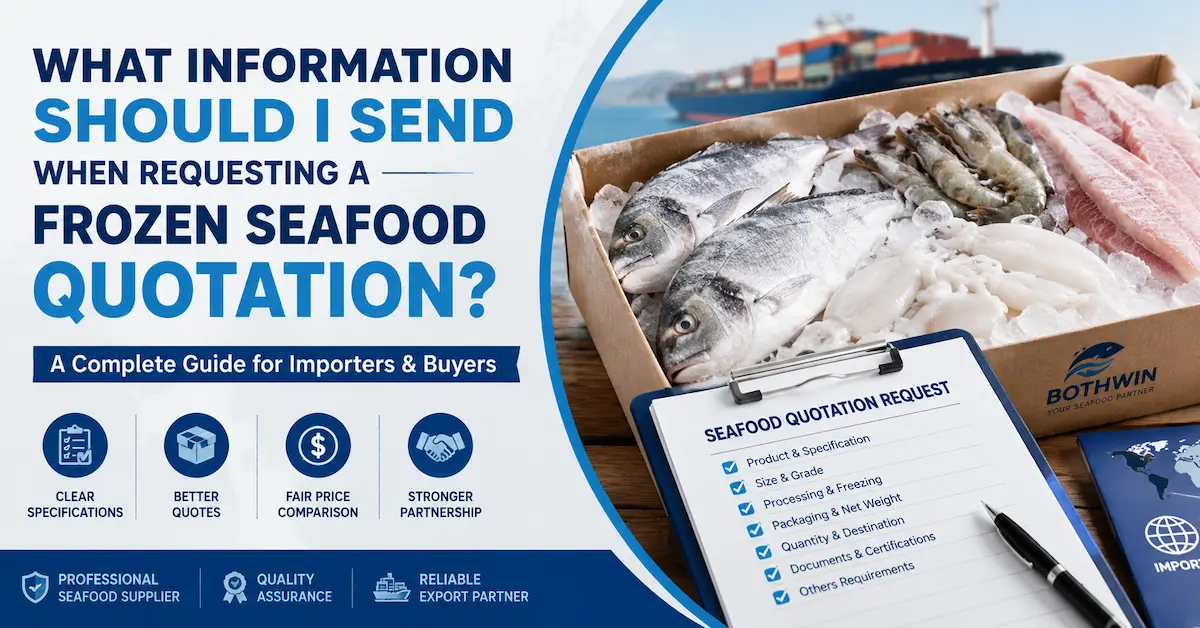
Frozen Fish RFQ Checklist
To receive a faster and more accurate quotation, provide:
- Fish product name
- Scientific species name if known
- Preferred origin
- Wild-caught or farmed requirement
- Whole, fillet, or portion format
- Skin and bone requirements
- Size or piece weight
- IQF or block frozen preference
- Net weight
- Maximum glazing ratio
- Inner packaging
- Outer carton
- Private-label requirement
- Order quantity
- Destination country and port
- Required documents
- Sample request
- Target shipment date
A detailed RFQ helps the frozen fish supplier recommend the correct product and reduces unnecessary quotation revisions.
FAQ
1. What does a frozen fish supplier provide?
A frozen fish supplier provides whole fish, fillets, portions, or processing-grade fish in bulk packaging for importers, wholesalers, restaurants, supermarkets, and factories.
2. What should buyers check before ordering frozen fish?
Buyers should check species, origin, size, processing format, net weight, glazing, freezing method, packaging, shelf life, samples, and cold-chain handling.
3. Is IQF frozen fish better than block frozen fish?
IQF is usually more convenient for portion control, while block frozen fish may be more economical for high-volume processing.
4. Why is glazing used on frozen fish?
Glazing protects fish from dehydration and freezer burn. Buyers should still confirm the percentage because excessive glazing reduces usable weight.
5. What temperature should frozen fish be stored at?
Frozen fish is commonly stored at around -18°C or lower, depending on the product specification and applicable requirements.
6. Should buyers request frozen fish samples?
Yes. Samples help buyers evaluate appearance, weight, texture, thawing loss, cooking performance, and packaging.
7. What packaging is available for frozen fish?
Options may include bulk cartons, IQF bags, vacuum packs, foodservice packs, retail bags, and private-label packaging.
8. Can frozen fish be customized for supermarkets?
Retail buyers may request specific piece weights, vacuum packs, retail bags, labels, barcodes, and private-label packaging.
9. What affects frozen fish wholesale prices?
Prices depend on species, origin, size, processing, yield, glazing, freezing method, packaging, order volume, season, and shipping terms.
10. How can I request a quotation from Bothwin Food?
Send Bothwin Food your fish species, product format, size, glazing, packaging, quantity, destination, documents, and sample requirements.
Conclusion
Choosing a reliable frozen fish supplier requires more than comparing unit prices. Global buyers should evaluate species accuracy, processing format, grading, usable weight, glazing, sample performance, packaging, cold-chain management, documentation, and repeat supply capacity.
Bothwin Food supplies frozen fish and related seafood products for international importers, wholesalers, supermarkets, foodservice buyers, and processors.
Contact Bothwin Food with your species, format, size, packaging, order quantity, destination, and document requirements to receive a suitable frozen fish sourcing proposal.