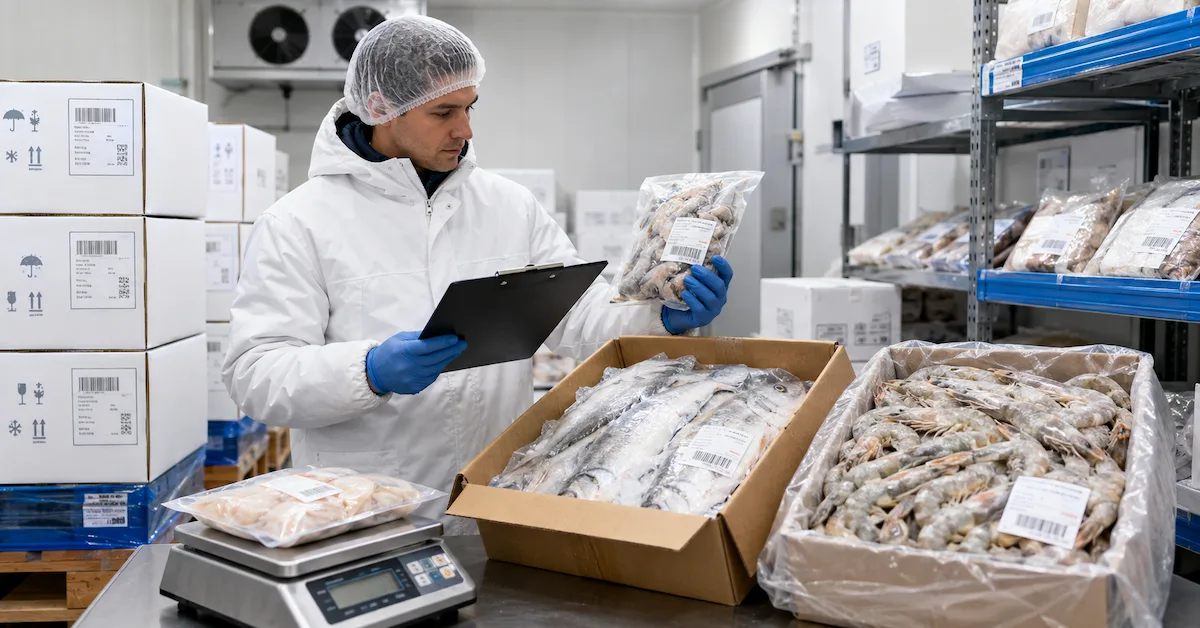


For international seafood buyers, food safety does not depend only on the quality of raw materials. It requires a complete management system covering processing, freezing, storage, transportation, and delivery.
A professional HACCP frozen seafood supplier uses preventive food safety practices to identify potential risks and control critical points throughout the seafood supply chain.
For importers purchasing frozen seafood internationally, HACCP management helps reduce risks related to:
- product contamination
- temperature problems
- inconsistent processing
- traceability issues
- shipment quality claims
A reliable frozen seafood supplier should not only provide products but also demonstrate how seafood safety is controlled from production to export.
The complete supply chain includes:
Raw Material Selection
↓
Processing Control
↓
Freezing Process
↓
Cold Storage
↓
Transportation
↓
Reefer Container Shipping
↓
Importer Warehouse
Each stage can influence the final quality of frozen seafood.
Bothwin provides frozen seafood sourcing solutions for international buyers, supporting product selection, specification confirmation, quality coordination, and export preparation. Buyers can explore Bothwin frozen seafood products for different commercial seafood requirements.
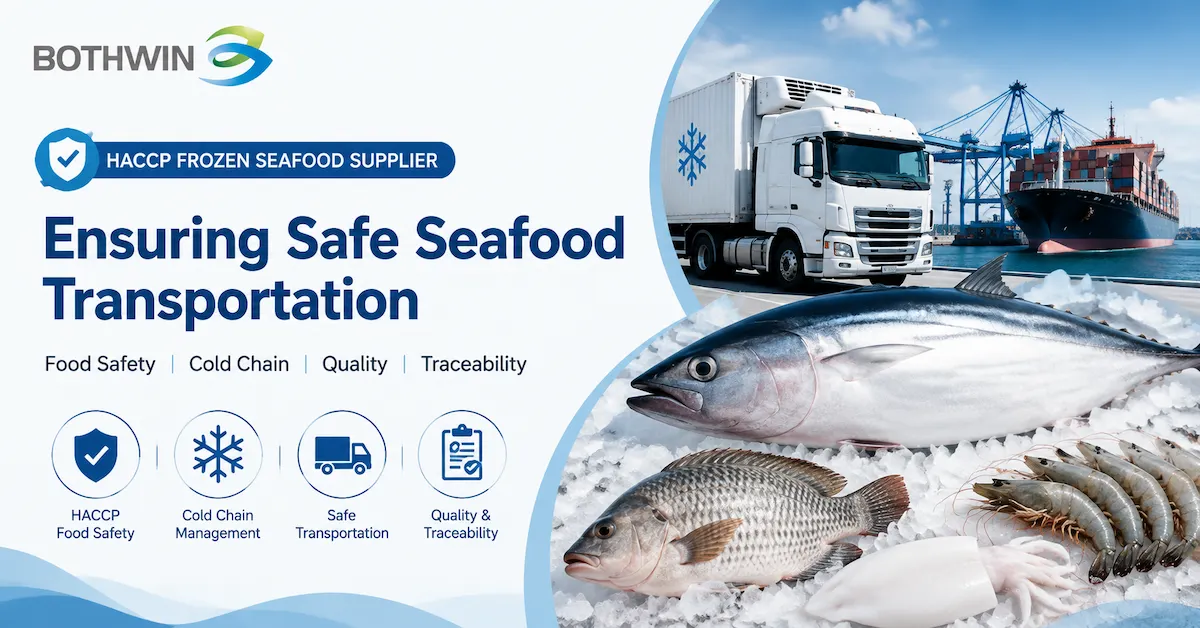
What Is HACCP Frozen Seafood?
HACCP stands for:
Hazard Analysis and Critical Control Points
It is a preventive food safety management system designed to identify, evaluate, and control potential hazards before they affect product quality.
For frozen seafood production, HACCP focuses on controlling risks throughout the entire process.
The main risk categories include:
Biological Hazards
Examples:
- harmful microorganisms
- bacterial contamination
- improper handling conditions
Chemical Hazards
Examples:
- chemical contamination
- unsuitable materials
- processing-related risks
Physical Hazards
Examples:
- foreign materials
- packaging-related issues
The purpose of HACCP is not only to test finished products.
Instead, it creates a systematic approach to prevent problems during production and transportation.
Why Is HACCP Important for Frozen Seafood Importers?
HACCP is one part of a complete seafood quality management system. Importers should also evaluate product inspection procedures before purchasing. Read more in Bothwin's guide: What Quality Checks Should Importers Perform Before Buying Frozen Seafood?.
Importers usually need to manage several risks:
Food Safety Risk
Seafood products require careful handling because they are sensitive to:
- temperature changes
- processing conditions
- storage environments
HACCP helps suppliers establish preventive controls.
Quality Consistency Risk
For bulk seafood orders, buyers expect:
- consistent specifications
- stable quality
- repeatable production
A controlled production system helps maintain shipment consistency.
Import Compliance Risk
Different markets have different seafood import requirements.
A structured food safety system helps suppliers prepare products according to customer and market expectations.
Customer Reputation Risk
For distributors and retailers, product quality affects:
- customer satisfaction
- brand reputation
- repeat business
Therefore, supplier selection should consider food safety management capability, not only price.
How Does HACCP Control Frozen Seafood Production?
A HACCP frozen seafood supplier manages quality through multiple production stages.
Raw Material Control
The first step is controlling incoming seafood materials.
Important considerations include:
- raw material source
- product condition
- freshness evaluation
- supplier management
Consistent raw materials create a stable foundation for finished products.
Processing Hygiene Control
During seafood processing, suppliers should control:
- facility hygiene
- equipment sanitation
- employee practices
- product handling procedures
These controls help reduce contamination risks during production.
Freezing Process Control
Freezing is a critical stage for maintaining seafood quality.
Suppliers should manage:
- freezing temperature
- freezing time
- product handling
Different seafood products may require different freezing methods.
Examples:
- IQF freezing for individual seafood pieces
- block freezing for specific commercial applications
The freezing method should match the buyer's product requirements.
Packaging and Label Control
Packaging protects frozen seafood during storage and transportation.
Important controls include:
- packaging materials
- product identification
- batch information
- label accuracy
Proper labeling also supports traceability throughout the supply chain.
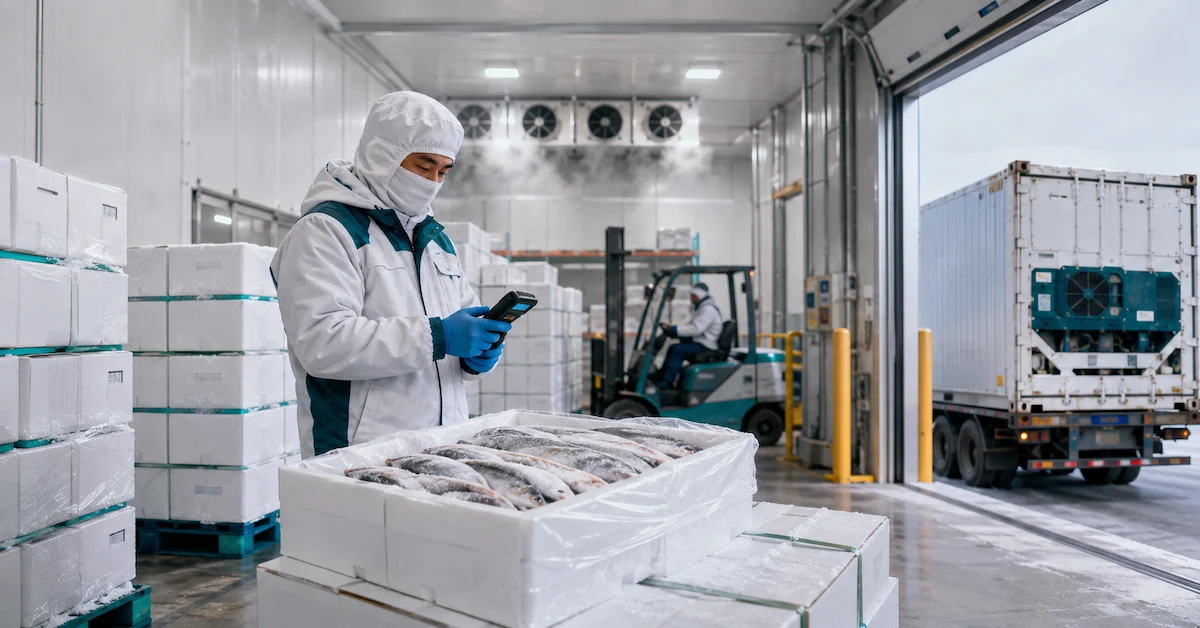
How Does a HACCP Frozen Seafood Supplier Manage Cold Chain Transportation?
For frozen seafood exporters, HACCP food safety control should not stop after production.
Maintaining product safety and quality during transportation is equally important because frozen seafood may travel thousands of kilometers before reaching the importer.
A professional HACCP frozen seafood supplier should integrate food safety principles with cold chain management throughout the export process. Importers can learn more about transportation practices in Bothwin's guide: How Does Cold Chain Management Affect Frozen Seafood Quality During Export?.
The frozen seafood cold chain usually includes:
Processing Facility
↓
Frozen Storage Warehouse
↓
Refrigerated Truck Transportation
↓
Port Handling
↓
Reefer Container Shipping
↓
Importer Cold Storage
Every stage requires proper control to reduce risks related to:
- temperature fluctuation
- product thawing
- packaging damage
- quality deterioration
Why Is Cold Chain Management Important for HACCP Frozen Seafood?
Frozen seafood quality depends heavily on stable temperature control.
Even if seafood is processed under strict HACCP procedures, poor transportation conditions may affect the final product quality.
Effective cold chain management helps maintain:
- product texture
- seafood appearance
- moisture retention
- shelf stability
- customer acceptance
For importers, cold chain capability is an important factor when evaluating a frozen seafood supplier.
A supplier should be able to explain:
- how products are stored
- how temperatures are controlled
- how shipments are handled
- how quality is maintained during transportation
What Temperature Control Is Required for Frozen Seafood Transportation?
Temperature control is one of the most important parts of frozen seafood export.
Commercial frozen seafood products are commonly maintained at approximately -18°C or below, but exact requirements depend on:
- seafood type
- destination market
- customer specifications
- regulatory requirements
Importers should confirm:
- required storage temperature
- transportation temperature
- reefer container settings
- temperature monitoring procedures
Temperature stability helps prevent:
- partial thawing
- ice crystal damage
- moisture loss
- product quality reduction
A professional supplier should include temperature management as part of its overall quality control system.
How Does a Reefer Container Protect Frozen Seafood During Export?
A reefer container is a refrigerated shipping container designed to maintain controlled temperatures during international transportation.
For frozen seafood exports, reefer management is a key part of the cold chain.
Before shipment, suppliers should confirm:
Container Condition
Check:
- refrigeration system condition
- cleanliness
- suitability for frozen products
Loading Process
Proper loading helps maintain:
- airflow circulation
- temperature stability
- product protection
Shipment Management
Important considerations include:
- transportation route
- transit time
- container temperature settings
- destination handling
For importers, understanding reefer management helps evaluate whether a supplier can support long-distance seafood transportation.
How Does HACCP Support Frozen Seafood Traceability?
Traceability is another important element when selecting a HACCP frozen seafood supplier.
A complete traceability system helps buyers understand:
- where products come from
- when products are processed
- how products are managed
- which batch they belong to
Important traceability information may include:
- production batch
- processing records
- packaging information
- shipment details
Traceability provides benefits such as:
Faster Quality Investigation
If a quality issue occurs, buyers can identify the related production information more efficiently.
Better Import Management
Importers can maintain clearer records for:
- inventory management
- customer requirements
- compliance needs
Stronger Supplier Cooperation
Transparent information helps build long-term relationships between suppliers and buyers.
What Should Importers Check When Choosing a HACCP Frozen Seafood Supplier?
Before selecting a supplier, buyers should evaluate product capability, quality systems, export experience, and supply reliability. See Bothwin's guide: How to Choose a Reliable Frozen Seafood Supplier for International Bulk Orders.
| Evaluation Area | Buyer Should Check |
|---|---|
| HACCP Management | Food safety control system |
| Product Quality | Specifications and consistency |
| Processing | Hygiene and production control |
| Freezing | Freezing method and temperature |
| Cold Chain | Storage and transportation |
| Traceability | Batch and production records |
| Export Capability | Shipment and documentation support |
| Communication | Response and cooperation efficiency |
A supplier evaluation process helps buyers select partners with reliable long-term capabilities.
What Questions Should Buyers Ask a HACCP Frozen Seafood Supplier?
Before cooperation, importers can ask:
About Food Safety
- Do you follow HACCP food safety procedures?
- How do you control risks during processing?
- How do you manage production hygiene?
About Product Quality
- What product specifications can you provide?
- How do you control size and weight consistency?
- What inspection procedures are used before shipment?
About Cold Chain
- How is frozen seafood stored before export?
- What temperature is maintained during transportation?
- How is reefer container loading managed?
About Export Support
- What export documents are available?
- Which markets do you supply?
- How do you handle international shipment requirements?
A detailed quotation request should include product specifications, quantity, packaging, and quality requirements. Buyers can refer to Bothwin's Frozen Seafood Quotation Guide when preparing RFQs.
Frozen Seafood Transportation Checklist for Importers
Before shipment, buyers can review the following checklist:
| Check Point | Verification |
|---|---|
| HACCP System | Food safety procedures confirmed |
| Product Specification | Requirements clearly defined |
| Freezing Process | Suitable freezing method confirmed |
| Cold Storage | Temperature controlled |
| Transportation | Refrigerated logistics arranged |
| Reefer Container | Suitable shipping condition |
| Traceability | Batch records available |
| Documents | Export information prepared |
| Arrival Inspection | Receiving process planned |
This checklist helps importers reduce risks before purchasing frozen seafood in bulk.
How Does Bothwin Support Safe Frozen Seafood Export?
Bothwin focuses on helping international buyers source frozen seafood with clear specifications, quality coordination, and export support.
The company supports buyers through:
Frozen Seafood Product Solutions
Bothwin provides frozen seafood options for different commercial applications, including:
- frozen fish
- tuna products
- tilapia
- squid
- other seafood products
Buyers can explore Bothwin frozen seafood products for sourcing requirements.
Quality and Specification Management
Before production, buyers can confirm:
- product type
- size requirements
- processing standards
- packaging needs
Export and Supply Support
Bothwin assists buyers with:
- order communication
- shipment preparation
- export coordination
Buyers can learn more about the company through the Bothwin About Us page.
FAQ About HACCP Frozen Seafood Suppliers
What is a HACCP frozen seafood supplier?
A HACCP frozen seafood supplier is a seafood exporter that applies HACCP-based food safety management practices during seafood processing, storage, and transportation.
The system focuses on identifying potential hazards and controlling critical points to help maintain product safety and quality.
Why should importers choose a HACCP frozen seafood supplier?
Importers choose HACCP-based seafood suppliers because they need greater confidence in:
- food safety management
- production control
- product consistency
- traceability
- export compliance
For bulk seafood purchasing, a structured quality management system helps reduce supply risks.
Does HACCP guarantee frozen seafood quality?
HACCP helps control food safety risks through preventive management, but product quality also depends on:
- raw material selection
- processing capability
- freezing method
- cold chain management
- transportation conditions
Importers should evaluate the complete supply chain when selecting a supplier.
How does HACCP improve frozen seafood safety?
HACCP improves seafood safety by identifying potential risks and establishing control procedures during:
- raw material handling
- seafood processing
- freezing
- packaging
- storage
- transportation
This preventive approach helps suppliers manage risks before products reach customers.
What should buyers check before choosing a HACCP frozen seafood supplier?
Buyers should evaluate:
- HACCP management practices
- product specifications
- processing capability
- quality inspection procedures
- cold-chain management
- traceability system
- export experience
A complete supplier evaluation helps importers build stable seafood supply relationships.
How is frozen seafood transported safely for export?
Safe frozen seafood transportation requires:
- proper freezing before shipment
- controlled cold storage
- refrigerated transportation
- suitable reefer containers
- temperature management during transit
Maintaining the cold chain helps preserve seafood quality during international shipping.
What temperature should frozen seafood maintain during transportation?
Frozen seafood transportation temperatures depend on product requirements and destination regulations.
Many commercial frozen seafood products are commonly stored and transported at approximately -18°C or below, but buyers should confirm specific requirements with suppliers.
Why is traceability important for frozen seafood imports?
Traceability allows buyers to identify:
- production batches
- processing information
- product records
- shipment details
It helps support quality management, customer requirements, and compliance needs.