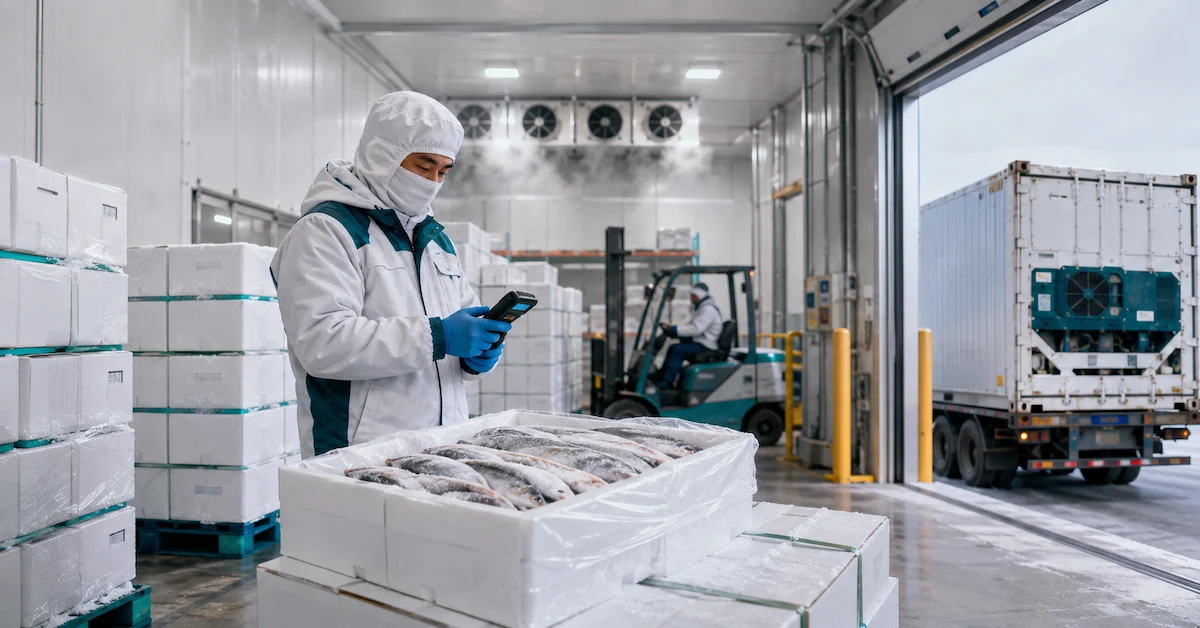


What Quality Checks Should Importers Perform Before Buying Frozen Seafood?
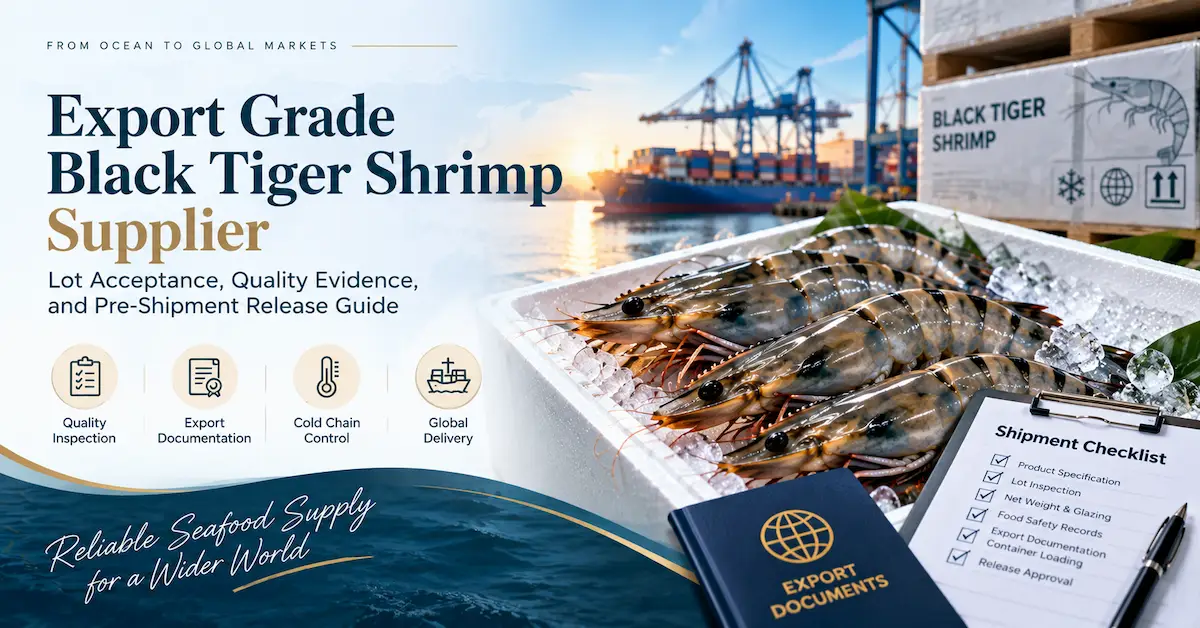
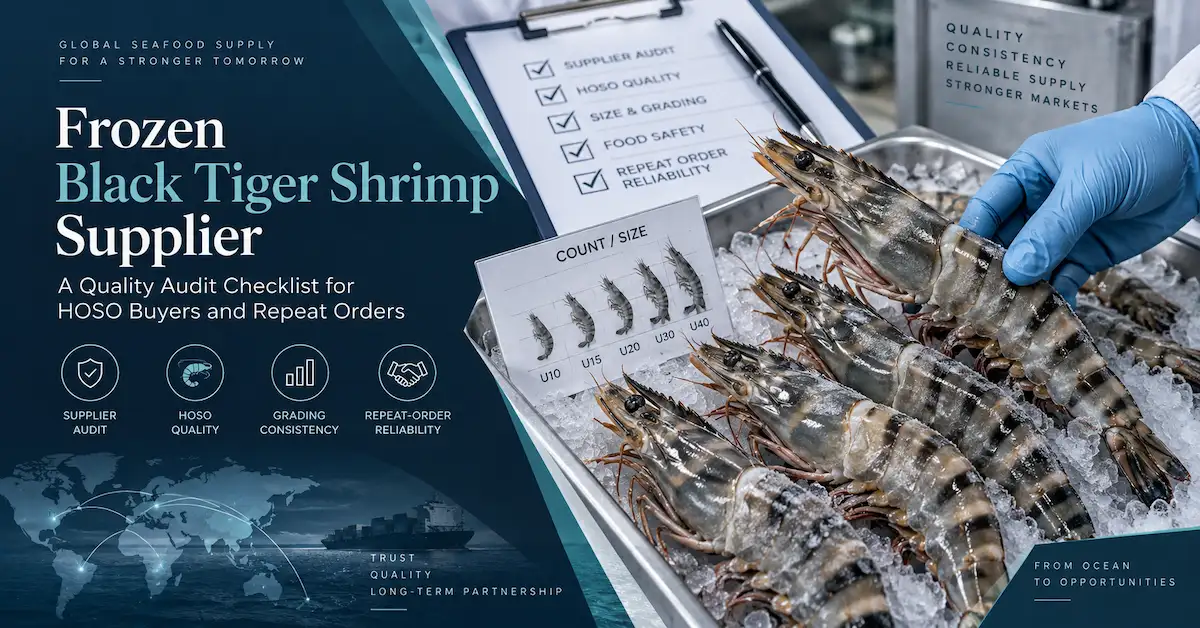
For international seafood buyers, choosing a supplier is only the first step. Before purchasing frozen seafood in bulk, importers should verify product specifications, physical condition, processing standards, packaging, temperature control, traceability, and shipment documentation.
A professional frozen seafood quality check helps buyers confirm that the product they receive matches the agreed specification, including:
- seafood species
- product form
- size grade
- weight requirements
- freezing method
- glazing specification
- packaging format
- storage condition
- export documents
The purpose of quality inspection is not only to identify defective products. It is also to prevent misunderstandings between suppliers and buyers before production and shipment.
For importers, the key question is:
Does the supplier have a repeatable quality control system that can consistently deliver the same seafood specification?
This is especially important for container-volume orders where a small specification difference can affect thousands of kilograms of product.
Bothwin supports international seafood buyers by focusing on product specification confirmation, quality control coordination, export packaging, and cold-chain preparation throughout the sourcing process. Buyers can review the company's seafood product range when preparing their purchasing requirements.
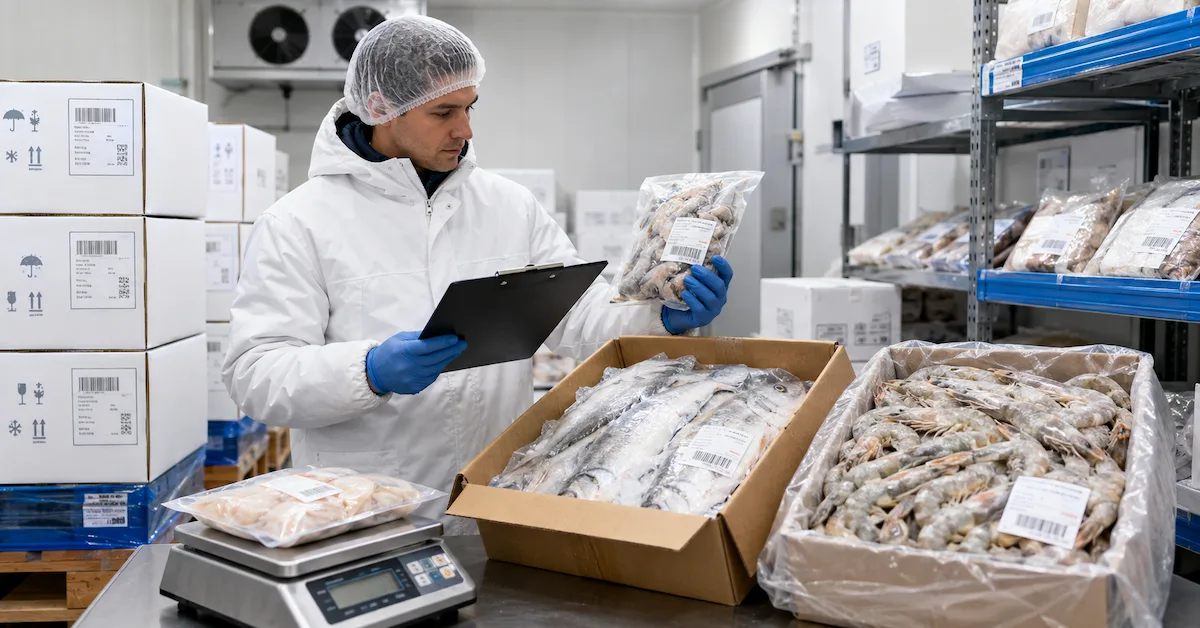
Why Are Frozen Seafood Quality Checks Important for Importers?
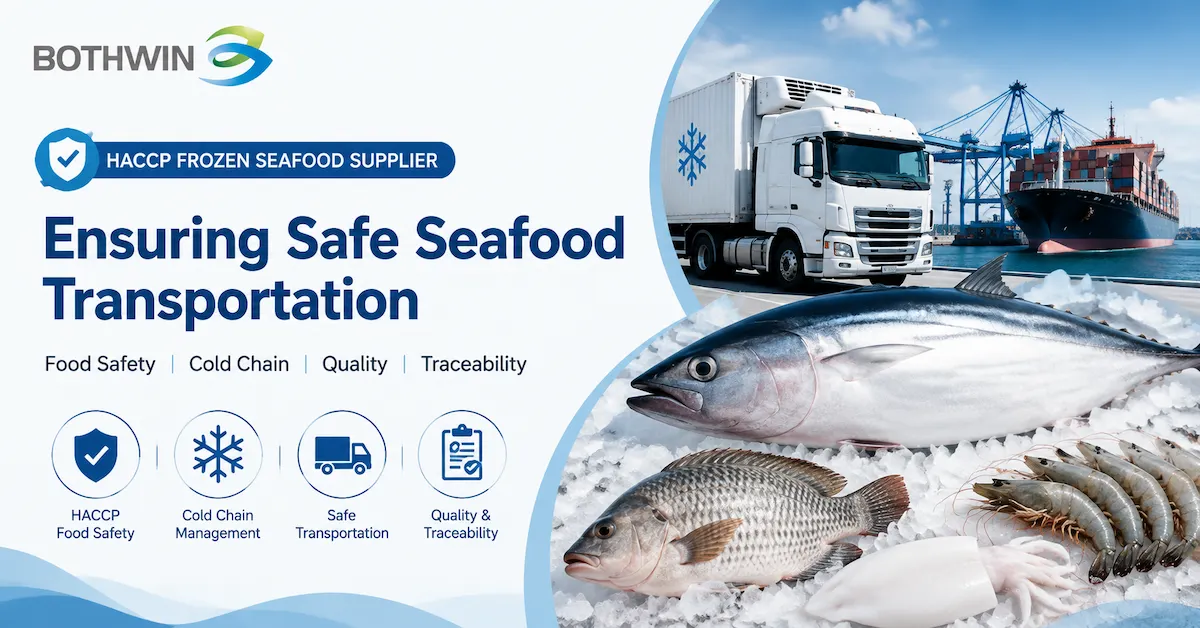
Frozen seafood is usually transported across long distances through multiple supply-chain stages:
processing facility → cold storage → inland transportation → port → reefer container → destination warehouse
Each stage creates potential quality risks.
Common issues that importers may face include:
- inconsistent product sizes
- incorrect weight specifications
- excessive glazing differences
- damaged packaging
- temperature fluctuations
- incomplete documentation
- inconsistent repeat shipments
A supplier quotation alone cannot confirm product quality.
Two suppliers may offer similar prices but provide different products because of differences in:
- raw material selection
- processing standards
- grading accuracy
- freezing technology
- packaging control
Therefore, quality verification should happen before final shipment approval, not only after the container arrives.
For buyers sourcing bulk frozen seafood, Bothwin's guide on bulk frozen seafood supplier selection also highlights the importance of specifications, cold-chain management, packaging, and repeat-order consistency.
What Should Importers Check Before Buying Frozen Seafood?
A complete frozen seafood inspection should evaluate multiple areas rather than only checking the appearance of the product.
The main inspection categories include:
| Quality Check Area | What Buyers Should Verify |
|---|---|
| Product Identity | Correct species and seafood type |
| Product Specification | Size, form, processing requirements |
| Appearance | Color, texture, defects |
| Size Consistency | Weight range and grading accuracy |
| Net Weight | Actual seafood quantity |
| Glazing | Ice coating specification |
| Temperature | Frozen storage condition |
| Packaging | Carton, label and protection |
| Traceability | Batch and production information |
| Documents | Export and compliance records |
These checks create a complete quality evaluation system.
Check 1: Verify Seafood Species and Product Identity
The first step is confirming that the supplier is providing the exact product requested.
A seafood name alone may not always be enough.
Buyers should confirm:
- commercial product name
- species information where required
- origin information where applicable
- processing form
For example, a buyer requesting frozen tuna should clarify whether the requirement is:
- whole tuna
- tuna loin
- tuna steak
- saku block
These products have different:
- processing requirements
- applications
- pricing structures
- customer expectations
The same principle applies to:
- tilapia
- shrimp
- squid
- other frozen seafood products
A reliable supplier should be able to clearly define the product specification before quotation and production.
Importers sourcing tuna products can review Bothwin's Premium Frozen Tuna solutions for different commercial formats.
Check 2: Confirm Product Specifications Before Production
Many seafood quality disputes are caused by unclear specifications rather than production problems.
Before placing an order, buyers should confirm:
Product Form
Examples:
- whole
- gutted
- fillet
- steak
- loin
- peeled shrimp
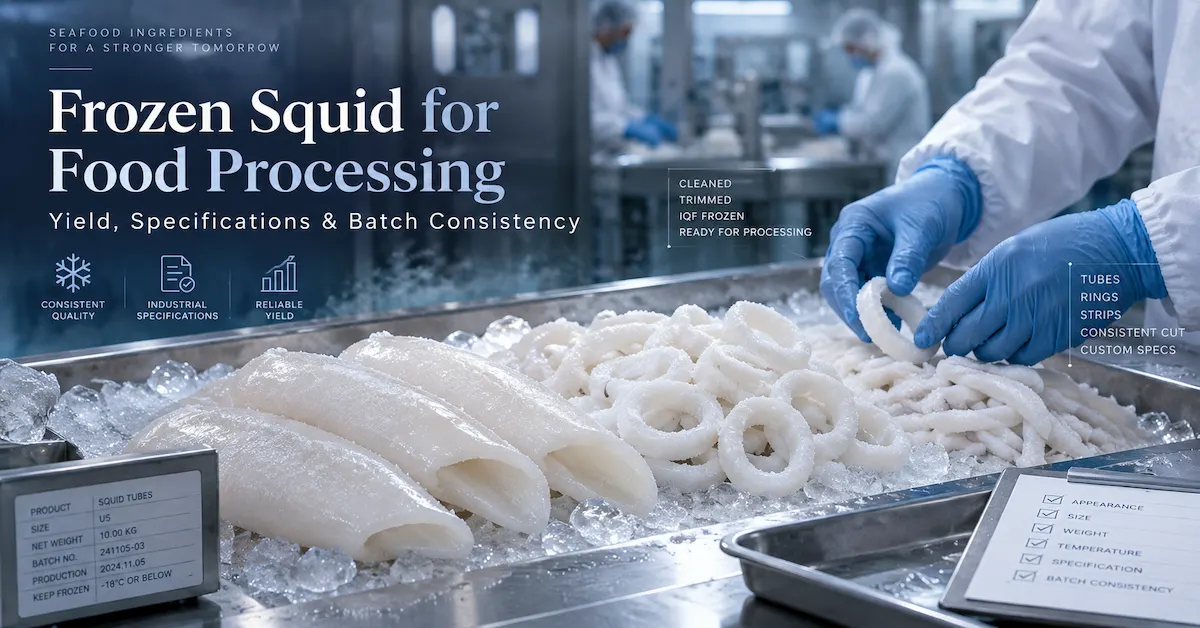
- cleaned squid
Size Grade
Examples:
- weight range per piece
- shrimp count size
- portion weight
- thickness requirements
Processing Requirements
Confirm:
- trimming level
- cleaning method
- cutting standard
- packaging format
Freezing Method
Confirm whether the product requires:
- IQF
- block frozen
- BQF
- another agreed method
Clear specifications allow both sides to evaluate quality using the same standard.
For buyers preparing quotations, the specification should also match the information provided in the Frozen Seafood Quotation Guide.
Check 3: Verify Frozen Seafood Size Consistency and Weight Accuracy
For importers, size consistency is one of the most important frozen seafood quality checks because it directly affects:
- selling price
- customer expectations
- processing yield
- portion control
- inventory planning
A seafood supplier may provide the correct species but still fail to meet buyer expectations if the size distribution is inconsistent.
For example, a foodservice distributor purchasing frozen fish portions may require consistent weights because restaurants need predictable serving sizes.
A wholesaler purchasing whole frozen tilapia may need stable size grades because different markets prefer different weight ranges.
Before production, buyers should confirm:
- target size range
- acceptable tolerance
- grading method
- sampling method
- percentage of pieces outside the agreed range
A professional seafood specification should not only state:
Frozen tilapia 500–800g
It should also clarify:
- how many pieces are sampled
- how size variation is evaluated
- what tolerance is acceptable
This helps avoid disagreements after shipment.
For buyers sourcing whole frozen tilapia, Bothwin's Whole Frozen Tilapia for Export information can be used as a reference when discussing size requirements and commercial specifications.
Check 4: Verify Net Weight and Glazing Before Shipment
Net weight verification is one of the most important quality checks in frozen seafood purchasing.
Importers should clearly distinguish between:
- gross weight
- frozen glazed weight
- net seafood weight
- packaging weight
The buyer's concern is:
How much actual seafood product am I receiving?
not only:
How heavy is the carton?
Glazing provides protection for frozen seafood, but buyers need to confirm that the product weight declaration follows the agreed specification.
According to Codex standards for quick-frozen seafood products, declared net contents of glazed products should exclude the glaze. (fao.org)
FDA also states that ice glaze should not be included in the declared net weight of frozen seafood products sold in the U.S. market. (fda.gov)
Before shipment, buyers should confirm:
- glazing percentage
- calculation method
- net weight basis
- acceptable tolerance
- inspection method
This is especially important when comparing multiple suppliers.
A lower quotation may not always represent a lower real cost if one supplier includes different weight assumptions.
Buyers can also review Bothwin's previous guide:
How Does Glazing Percentage Affect Frozen Seafood Cost for Importers?
to understand how glazing affects seafood cost comparison.
Check 5: Evaluate Frozen Seafood Appearance and Physical Condition
Visual inspection is one of the basic but important frozen seafood quality checks.
Before shipment, buyers should evaluate:
Product Appearance
Check:
- natural color
- surface condition
- visible damage
- abnormal discoloration
- dehydration signs
Frozen Condition
Check:
- product remains frozen
- no excessive ice accumulation
- no signs of thawing and refreezing
- packaging remains intact
Product Integrity
Depending on the seafood type, buyers may inspect:
- broken pieces
- damaged fillets
- crushed products
- excessive surface defects
The acceptable appearance standard depends on the product application.
For example:
- supermarket products may require stronger appearance standards
- processing buyers may focus more on yield and functionality
- foodservice buyers may prioritize consistency and cooking performance
Therefore, quality inspection should always match the final application.
Check 6: Verify Frozen Seafood Temperature Control
Temperature control is essential throughout the frozen seafood supply chain.
A frozen seafood product may experience several temperature-control points:
processing → cold storage → transportation → port handling → reefer shipment → destination warehouse
Importers should verify:
- product freezing condition
- cold storage capability
- reefer transportation arrangement
- loading procedures
- temperature monitoring method
Temperature problems may affect:
- texture
- moisture retention
- appearance
- shelf life
- customer acceptance
The buyer should confirm:
- required storage temperature
- shipment temperature requirement
- monitoring records if applicable
- cold-chain handling procedures
For export buyers, Bothwin's content on How to Store Frozen Fish for Export provides additional information about frozen seafood storage and transportation considerations.
Check 7: Review Processing and Hygiene Control
Frozen seafood quality is not only determined by the final product.
The processing stage also affects consistency.
Importers should understand how suppliers control:
Raw Material Inspection
Questions to ask:
- How are raw materials selected?
- How is freshness evaluated?
- How is incoming material checked?
Processing Control
Verify:
- cleaning procedures
- cutting standards
- grading process
- handling conditions
Production Control
Confirm:
- product identification
- batch management
- packaging procedures
- production records
A consistent processing system helps suppliers produce repeatable products across multiple shipments.
For long-term buyers, repeatability is usually more valuable than a single low-price shipment.
Check 8: Verify Seafood Traceability Before Import
Traceability helps buyers identify where a product came from and how it moved through the supply chain.
A professional frozen seafood supplier should be able to support product identification through information such as:
- production batch
- processing date
- product specification
- packaging information
- shipment records
Traceability becomes especially important when:
- customers request product information
- quality issues occur
- import regulations require documentation
- buyers manage retail programs
For supermarkets and branded seafood programs, traceability is often a key supplier-selection factor.
Check 9: Inspect Frozen Seafood Packaging and Labels
Packaging protects seafood during international transportation.
Importers should check:
Carton Condition
Verify:
- carton strength
- moisture resistance
- stacking condition
- damage prevention
Product Labels
Confirm:
- product name
- net weight
- storage instructions
- batch information
- destination requirements
Retail or Private Label Packaging
For OEM buyers, confirm:
- artwork approval
- label language
- barcode requirements
- packaging format
Packaging problems can create unnecessary issues even when the seafood itself meets specifications.
For buyers requiring customized seafood packaging, requirements should be discussed before production begins.
Check 10: Review Export Documents Before Shipment
Documentation is an important part of seafood quality management because it connects the physical product with regulatory and commercial requirements.
Depending on destination and product type, buyers may need to review:
- commercial invoice
- packing list
- bill of lading
- certificate of origin
- health-related documents where applicable
- product specifications
- traceability information
Requirements vary by market.
For example, seafood imported into the United States must comply with applicable FDA requirements, including Seafood HACCP-related requirements for covered products. (fda.gov)
Importers should confirm requirements with:
- supplier
- importer of record
- customs broker
- local regulatory authority
before shipment.
What Should Be Included in a Frozen Seafood Pre-Shipment Inspection?
A pre-shipment inspection helps buyers confirm that the order matches the agreed specification before loading.
A typical inspection checklist may include:
| Inspection Item | Buyer Verification |
|---|---|
| Product identity | Correct species and product |
| Size grade | Matches purchase specification |
| Quantity | Correct cartons and units |
| Net weight | Meets agreed weight requirement |
| Glazing | Matches agreed specification |
| Appearance | No unacceptable defects |
| Packaging | Cartons and labels correct |
| Temperature | Product remains frozen |
| Documents | Shipment records complete |
| Batch information | Traceability available |
The inspection scope should be agreed before production.
Different products may require different acceptance criteria.
For example:
- frozen tuna steak buyers may focus on cut consistency
- tilapia buyers may focus on size grading
- shrimp buyers may focus on count size and glazing
- squid buyers may focus on cleaning and processing standards
Frozen Seafood Quality Checks for Different Buyers
Different buyers may prioritize different inspection points.
Seafood Importers
Main concerns:
- supplier reliability
- documentation
- product consistency
- container shipment quality
Seafood Wholesalers
Main concerns:
- size grading
- packaging
- resale value
- repeat supply
Foodservice Distributors
Main concerns:
- portion consistency
- cooking performance
- product handling
Supermarket Buyers
Main concerns:
- labeling
- appearance
- traceability
- packaging
Seafood Processors
Main concerns:
- yield
- raw material quality
- processing suitability
A good quality inspection system should match the buyer's business model.
Frozen Seafood Quality Inspection Checklist for Importers
Before placing a bulk frozen seafood order, importers should create a clear inspection checklist based on the actual product requirements.
A complete checklist should cover not only the seafood itself but also:
- specification accuracy
- production consistency
- packaging condition
- cold-chain control
- documentation
- shipment readiness
A practical frozen seafood quality checklist can include:
| Inspection Category | What Buyers Should Check |
|---|---|
| Product Identity | Species, product type and processing form |
| Size & Grade | Weight range, count size and tolerance |
| Appearance | Color, texture, defects and dehydration |
| Freezing Condition | Frozen status and product integrity |
| Glazing | Glaze specification and weight basis |
| Net Weight | Actual seafood quantity |
| Packaging | Carton, inner packing and labels |
| Temperature | Storage and transportation condition |
| Traceability | Batch and production information |
| Documents | Export and compliance records |
This checklist helps buyers evaluate suppliers based on measurable criteria instead of only comparing prices.
What Are the Most Common Frozen Seafood Quality Mistakes Importers Make?
Even experienced seafood buyers can face problems when specifications are not clearly defined.
Mistake 1: Choosing Suppliers Based Only on Price
The lowest quotation does not always represent the lowest purchasing cost.
A lower price may come with differences in:
- product grade
- size consistency
- net weight
- glazing basis
- packaging quality
- shipment reliability
Professional buyers should compare the complete product specification before making a decision.
The better question is:
Which supplier provides the best overall value for the required seafood specification?
Mistake 2: Not Defining Product Specifications Clearly
A common purchasing mistake is sending a request like:
“Please quote frozen fish.”
This leaves many important questions unanswered:
- Which species?
- What size?
- Whole or processed?
- What freezing method?
- What packaging?
- What destination?
A detailed specification reduces communication time and prevents quotation misunderstandings.
Mistake 3: Ignoring Net Weight and Glazing Details
As discussed in previous sections, glazing can affect how buyers understand product value.
Importers should always confirm:
- declared net seafood weight
- glazing percentage
- calculation method
- inspection procedure
This is especially important for container-volume purchases.
Buyers can also review:
How Does Glazing Percentage Affect Frozen Seafood Cost for Importers?
to understand how glazing influences seafood cost evaluation.
Mistake 4: Not Checking Samples or Trial Orders
For new supplier relationships, samples or trial shipments can help verify:
- product appearance
- size consistency
- packaging
- cooking performance
- customer acceptance
A trial order allows buyers to evaluate actual performance before increasing purchase volume.
Mistake 5: Not Confirming Cold Chain Management
Frozen seafood quality depends heavily on temperature control.
A supplier may produce acceptable seafood, but quality can still decline if:
- storage conditions are unstable
- transportation is poorly managed
- loading procedures are not controlled
Importers should understand how the supplier manages frozen products from production to shipment.
How Can Importers Build a Reliable Frozen Seafood Quality Control Process?
A strong quality management process should not start after receiving complaints.
It should begin before purchasing.
A practical process includes:
Step 1: Define Product Requirements
Before quotation, confirm:
- seafood type
- size
- processing form
- freezing method
- packaging
- quantity
- destination
Step 2: Review Supplier Capability
Evaluate:
- product experience
- processing ability
- export experience
- communication efficiency
- documentation support
Step 3: Confirm Quality Standards
Agree on:
- product specifications
- tolerance levels
- inspection requirements
- acceptance criteria
Step 4: Conduct Pre-Shipment Verification
Before loading:
- inspect products
- verify quantities
- confirm packaging
- review documents
- check agreed specifications
Step 5: Maintain Shipment Records
Keep records of:
- purchase specifications
- inspection reports
- shipment documents
- supplier communication
This helps create a repeatable sourcing system.
How Does Bothwin Support Frozen Seafood Quality Management?
For international seafood buyers, Bothwin focuses on helping customers match product requirements with suitable seafood specifications.
The sourcing process can involve:
- product selection
- specification confirmation
- processing requirement discussion
- packaging coordination
- export preparation
- shipment support
Buyers can review:
When requesting a quotation, providing detailed product requirements helps suppliers respond more accurately.
A complete inquiry should include:
- seafood product
- size grade
- processing form
- freezing method
- packaging
- quantity
- destination
- quality requirements
Frozen Seafood Quality Control Checklist Before Ordering
Importers can use this checklist before confirming a supplier:
| Item | Confirmed |
|---|---|
| Exact seafood product identified | ☐ |
| Species confirmed | ☐ |
| Product form confirmed | ☐ |
| Size grade agreed | ☐ |
| Weight tolerance defined | ☐ |
| Freezing method confirmed | ☐ |
| Glazing requirement confirmed | ☐ |
| Net weight basis confirmed | ☐ |
| Packaging approved | ☐ |
| Label requirements confirmed | ☐ |
| Cold-chain requirements discussed | ☐ |
| Traceability information available | ☐ |
| Export documents confirmed | ☐ |
| Inspection method agreed | ☐ |
| Shipment requirements confirmed | ☐ |
This checklist can help importers reduce uncertainty before committing to large-volume frozen seafood purchases.
FAQ About Frozen Seafood Quality Checks
What are the most important frozen seafood quality checks?
The most important checks include product identity, size consistency, net weight, glazing, appearance, temperature control, packaging, traceability and export documentation.
Why should importers inspect frozen seafood before shipment?
Pre-shipment inspection allows buyers to confirm that products match agreed specifications before international transportation, reducing the risk of receiving unsuitable goods.
How can buyers check frozen seafood quality?
Buyers can review product specifications, inspect samples, verify packaging, confirm weight requirements, check cold-chain records where applicable, and review shipment documents.
What should buyers check about frozen fish size?
Buyers should confirm the required weight range, grading method, tolerance and sampling procedure to ensure consistent product quality.
Why is net weight important in frozen seafood purchasing?
Net weight helps buyers understand the actual seafood quantity purchased and allows fair comparison between supplier quotations.
Does glazing affect frozen seafood quality?
Yes. Glazing can help protect frozen seafood from dehydration and freezer-related quality problems. However, buyers should clearly define glazing requirements and net-weight basis.
How important is temperature control for frozen seafood?
Temperature control is essential because frozen seafood quality can be affected by storage and transportation conditions.
What documents should frozen seafood importers request?
Depending on the destination market, buyers may request commercial invoices, packing lists, certificates, product specifications, traceability information and other applicable export documents.
Should buyers test samples before bulk orders?
For new suppliers or new products, samples or trial orders can help verify whether the product meets commercial expectations before larger purchases.
How can I request frozen seafood quality information from Bothwin?
Buyers can send product specifications, quantity requirements, destination information and quality expectations through the Bothwin Contact Us page.
Conclusion
For frozen seafood importers, quality control should begin before the purchase order is placed.
A reliable sourcing process is not only about finding competitive pricing. It requires confirming:
- the right product
- the right specification
- the right weight basis
- the right quality standards
- the right cold-chain management
- the right documentation
The most effective buyers create clear inspection requirements before production and shipment instead of solving quality problems after delivery.
By applying a structured frozen seafood quality check process, importers can reduce purchasing risks, improve supplier communication and build more stable long-term seafood supply relationships.
For your next frozen seafood sourcing project, explore Bothwin's seafood product range and contact Bothwin with your product specifications, quality requirements and purchasing plans.