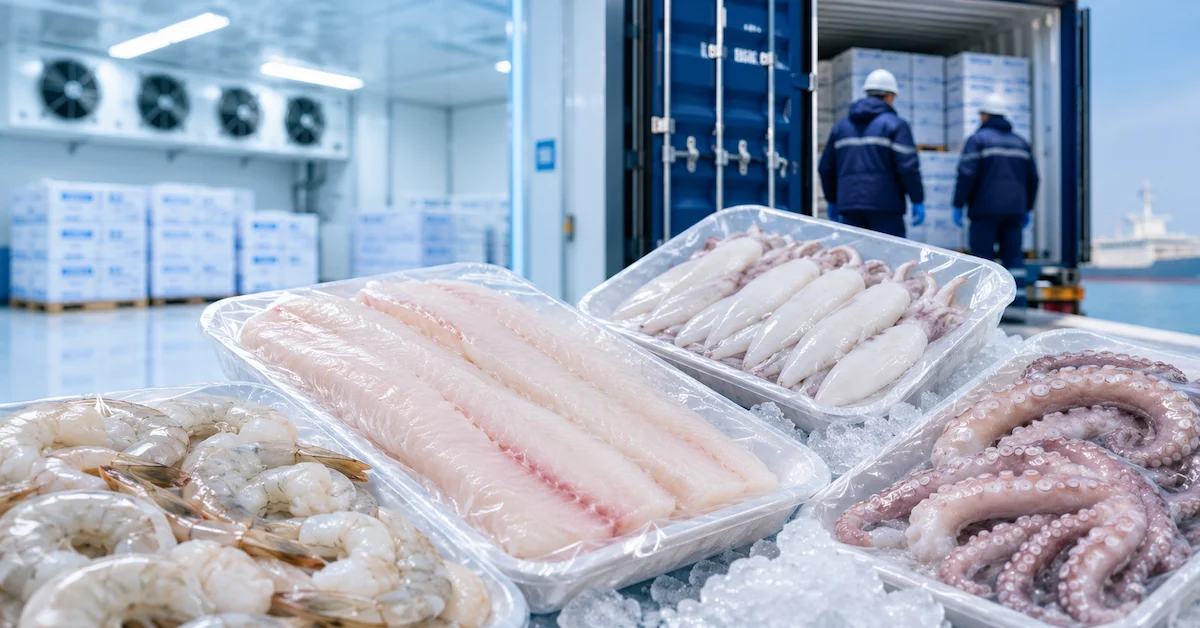


Choosing the right export frozen fish supplier is essential for importers, seafood distributors, wholesalers, supermarkets, restaurants, and food processing companies that source seafood internationally.
International frozen fish purchasing involves much more than selecting a product and comparing prices. Buyers need to evaluate species accuracy, processing standards, size grading, freezing technology, packaging, export documents, cold-chain control, and supplier reliability.
A professional exporter should help buyers manage the entire sourcing process, from product selection and sample approval to production, shipment, customs clearance, and repeat supply.
A supplier offering the lowest price may not always provide the best value. Higher glazing, inconsistent sizing, weak packaging, unclear origin information, or unstable quality can increase the real cost of imported frozen fish.
This guide explains how global buyers can evaluate an export frozen fish supplier and build a reliable seafood supply chain.
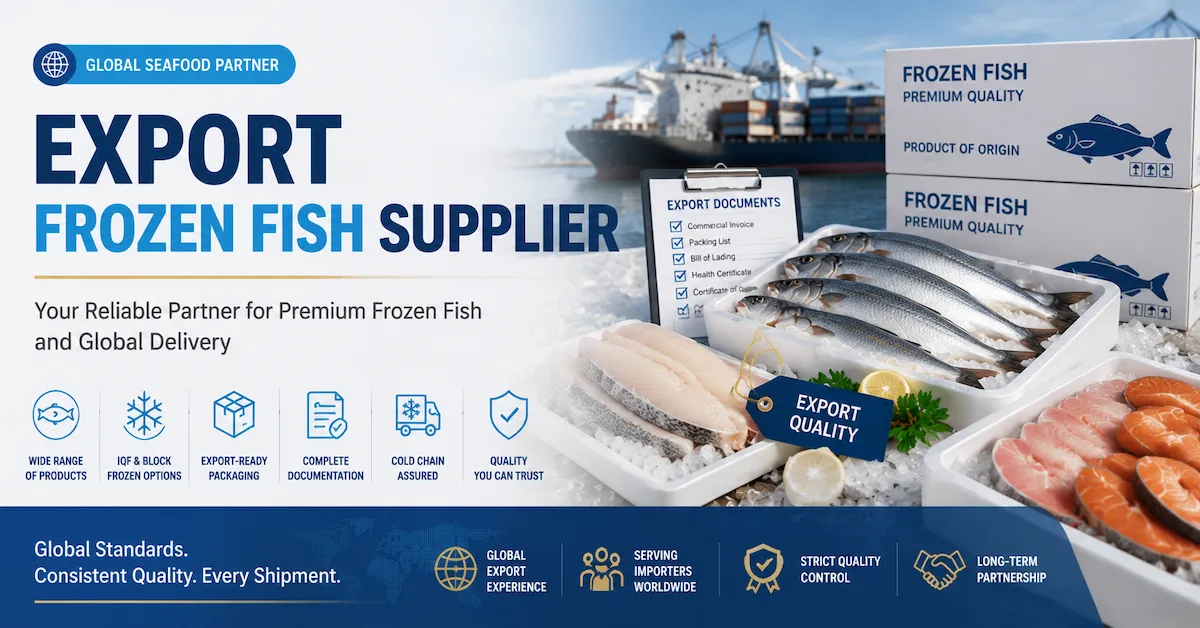
What Is an Export Frozen Fish Supplier?
An export frozen fish supplier provides frozen fish products prepared for international markets.
Unlike local seafood sellers, export suppliers must manage additional requirements, including:
- International packaging standards
- Export documentation
- Food safety requirements
- Cold-chain transportation
- Product traceability
- Import regulations
- Container shipping
- Destination market requirements
A qualified supplier should understand both seafood production and international trade requirements.
Typical export frozen fish products include:
- Whole frozen fish
- Headless and gutted fish
- Frozen fish fillets
- Fish steaks
- Fish portions
- IQF frozen fish
- Block frozen fish
- Processing-grade fish materials
Who Buys Frozen Fish for Export?
Seafood Importers
Importers usually purchase container quantities and distribute products locally.
They focus on:
- Stable supply
- Competitive landed cost
- Export documents
- Product consistency
- Reliable shipment schedules
Wholesale Distributors
Wholesale buyers need products that can be stored and resold efficiently.
Their priorities include:
- Multiple fish categories
- Flexible packaging
- Stable specifications
- Repeat supply
- Competitive pricing
Restaurants and Foodservice Companies
Foodservice buyers usually require:
- Consistent portion size
- Easy preparation
- Good cooking performance
- Reliable monthly supply
Supermarkets
Retail buyers evaluate:
- Product appearance
- Packaging design
- Labels
- Shelf life
- Private-label capability
- Consumer acceptance
Food Processing Factories
Processors focus on:
- Yield
- Moisture content
- Bone tolerance
- Processing efficiency
- Raw material consistency
Main Frozen Fish Products for Export
A professional export frozen fish supplier should provide different product formats according to buyer requirements.
| Product Type | Common Formats | Main Buyers |
|---|---|---|
| Whole frozen fish | Whole round, gutted, H&G | Wholesalers, restaurants |
| Frozen fillets | Skin-on, skinless, boneless | Retail and foodservice |
| Frozen portions | Fixed weight cuts | Restaurant chains |
| IQF fish | Individually frozen pieces | Supermarkets, distributors |
| Block frozen fish | Bulk frozen blocks | Processors |
| Value-added fish | Breaded, seasoned, prepared | Retail and foodservice |
Whole Frozen Fish Export
Whole frozen fish is one of the most common export formats.
Advantages:
- Lower processing cost
- Flexible market applications
- Suitable for wholesalers
- Suitable for further processing
Buyers should confirm:
- Species
- Origin
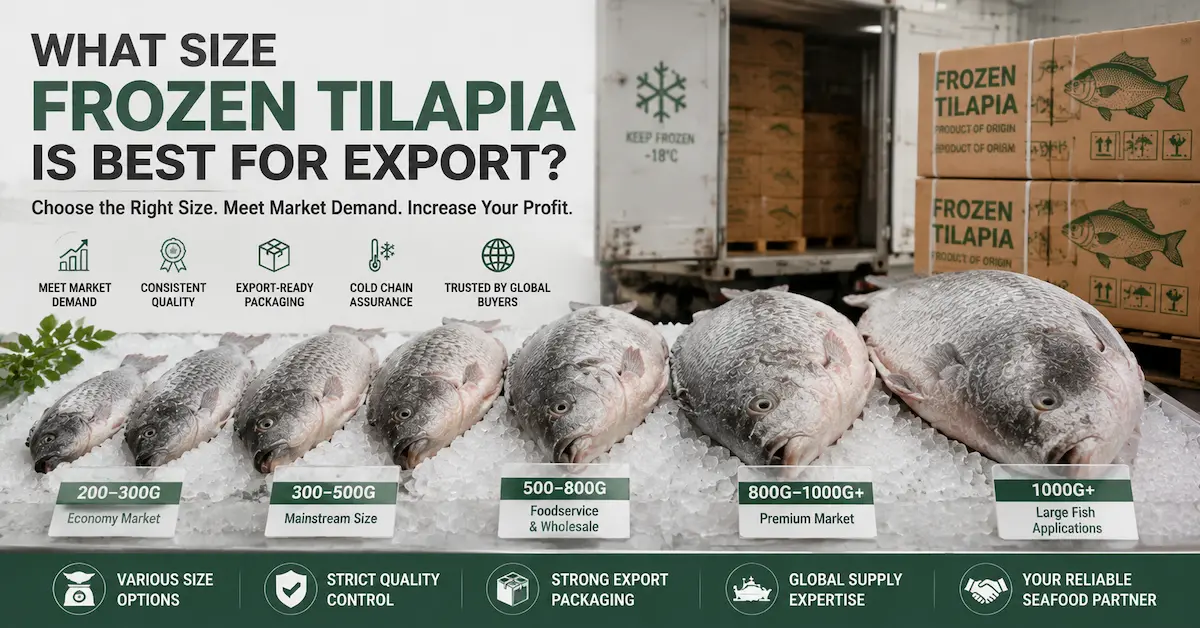
- Individual weight
- Whole or gutted format
- Head-on or headless
- Scaling requirements
- Carton quantity
- Net weight
- Glazing percentage
Whole fish buyers often require stable size grading because inconsistent sizes affect retail pricing and restaurant preparation.
Frozen Fish Fillet Export
Frozen fish fillets are widely used by supermarkets, restaurants, hotels, and food factories.
Common formats include:
- Skin-on fillets
- Skinless fillets
- Boneless fillets
- Portion cuts
- Vacuum-packed fillets
- IQF fillets
Important specifications include:
- Fillet weight
- Trim standard
- Bone tolerance
- Moisture level
- Freezing method
- Packaging format
A reliable export frozen fish supplier should provide clear trimming standards because fillet yield directly affects buyer profitability.
IQF Frozen Fish Export
IQF (Individually Quick Frozen) fish is popular in international foodservice and retail markets.
Benefits include:
- Individual piece separation
- Flexible portion control
- Less product waste
- Easy inventory management
- Convenient kitchen operation
IQF products are commonly used for:
- Restaurants
- Supermarkets
- Catering companies
- Meal manufacturers
Buyers should confirm:
- Freezing speed
- Piece separation
- Size consistency
- Packaging
- Storage requirements
How to Evaluate Export Frozen Fish Quality
Before placing bulk orders, buyers should test samples.
Frozen Product Inspection
Check:
- Fish appearance
- Natural color
- Size consistency
- Packaging condition
- Frost level
- Freezer burn
- Broken pieces
- Carton quality
Thawing Test
Evaluate:
- Odor
- Texture
- Flesh firmness
- Water loss
- Color
- Shape retention
- Cooking performance
Weight Check
Confirm:
- Gross weight
- Net weight
- Glazing ratio
- Pack quantity
The approved sample should become the reference standard for future shipments.
Why Product Specifications Matter in Export
A professional export frozen fish supplier should provide detailed specifications.
| Specification | Purpose |
|---|---|
| Species name | Prevents product confusion |
| Origin | Supports traceability |
| Processing format | Defines application |
| Size grade | Controls pricing and usage |
| Net weight | Confirms actual quantity |
| Glazing ratio | Controls ice content |
| Freezing method | Affects quality |
| Packaging | Protects during shipping |
| Shelf life | Supports inventory planning |
| Storage temperature | Maintains quality |
A simple product name such as “frozen fish” is not enough for international purchasing.
Cold Chain Requirements for Export Frozen Fish
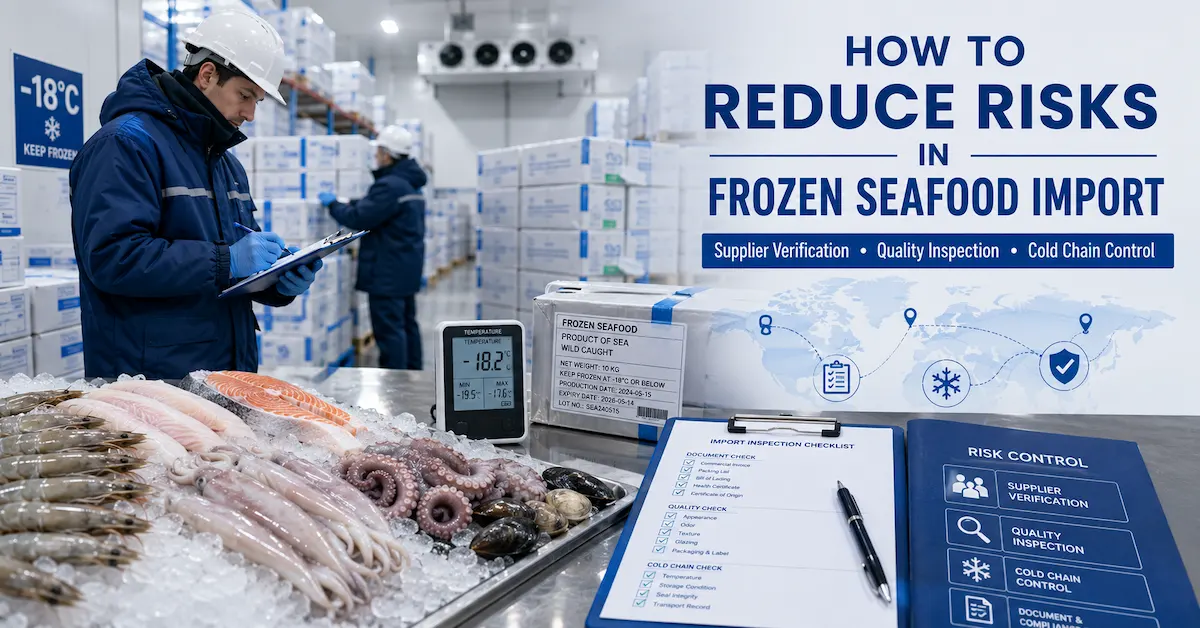
Cold-chain management is one of the most important factors in international frozen fish export.
A supplier should control:
- Processing temperature
- Frozen storage
- Container loading
- Reefer settings
- Transportation
- Temperature monitoring
Temperature problems may cause:
- Texture damage
- Freezer burn
- Ice crystal growth
- Moisture loss
- Reduced shelf life
Buyers should confirm:
- Storage temperature
- Container preparation
- Loading time
- Temperature records
- Destination cold storage
The cold chain does not end when the shipment arrives. Importers must also maintain suitable storage conditions.
Export Packaging Requirements
Frozen fish packaging must protect products during:
- Frozen storage
- Container shipping
- Port handling
- Warehouse storage
- Local distribution
Common export packaging includes:
| Packaging | Application |
|---|---|
| Bulk cartons | Importers and wholesalers |
| IQF bags | Restaurants and supermarkets |
| Vacuum packs | Premium retail |
| Foodservice packs | Hotels and catering |
| Retail bags | Supermarket sales |
| Private-label packs | Branded products |
Packaging should include:
- Product name
- Species
- Net weight
- Storage instructions
- Production date
- Batch number
- Country of origin
- Required labels
Frozen Fish Export Documents
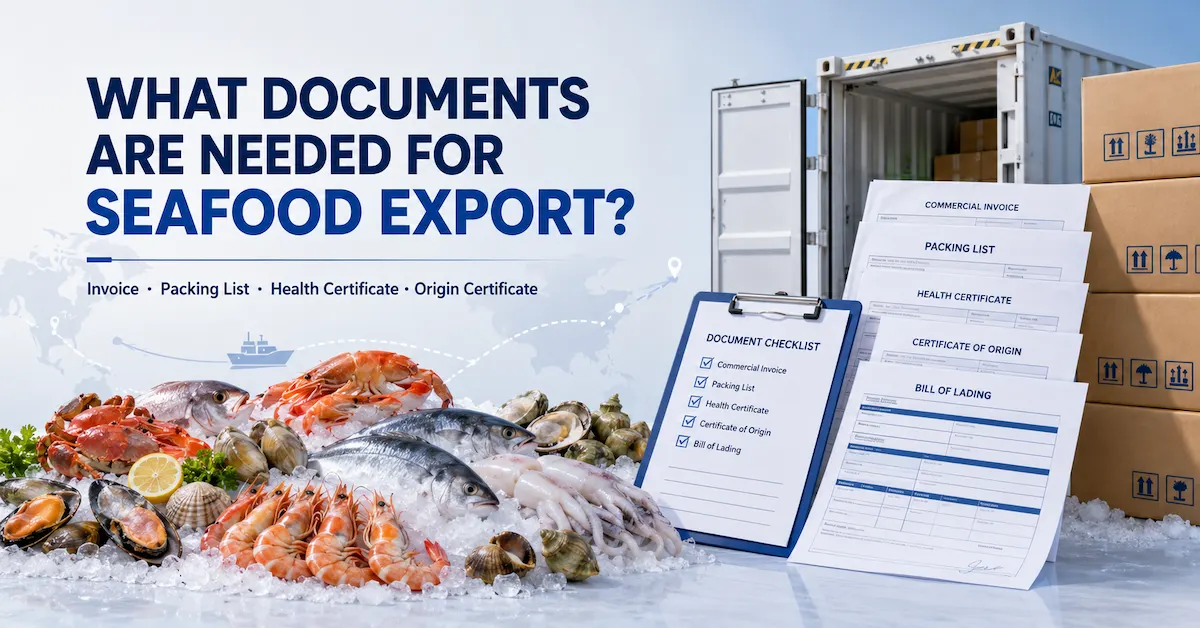
International seafood shipments require accurate documentation.
Common documents include:
- Commercial invoice
- Packing list
- Bill of lading
- Health certificate
- Certificate of origin
- Product specification sheet
- Laboratory reports where required
- Traceability records
- Temperature records where requested
Documents should match:
- Product name
- Species
- Weight
- Quantity
- Origin
- Container information
Incorrect information may cause customs delays or shipment problems.
What Determines Export Frozen Fish Prices?
Frozen fish export prices depend on:
- Species
- Origin
- Fishing or farming method
- Size
- Processing format
- Freezing technology
- Packaging
- Glazing
- Order quantity
- Freight cost
- Destination market
Buyers should compare suppliers based on total value rather than unit price.
A cheaper product may have:
- Higher glazing
- Lower net weight
- More processing loss
- Weaker packaging
- Less stable quality
Common Risks When Choosing a Frozen Fish Export Supplier
Unclear Species
Different fish species may have different prices and import requirements.
Poor Size Control
Mixed sizes create problems for retail and foodservice buyers.
Excessive Ice Content
High glazing reduces usable fish quantity.
Weak Packaging
Damaged cartons reduce product value.
Poor Cold Chain
Temperature fluctuations damage quality.
Missing Export Documents
Incomplete documents delay customs clearance.
Unstable Repeat Supply
B2B buyers need long-term consistency.
How to Choose a Reliable Export Frozen Fish Supplier
Verify Supplier Experience
Check:
- Export markets
- Product categories
- Processing ability
- Supply capacity
Request Product Specifications
Confirm:
- Species
- Origin
- Size
- Processing
- Packaging
- Storage requirements
Test Samples
Evaluate:
- Appearance
- Texture
- Weight
- Cooking performance
Review Quality Control
Ask about:
- Processing procedures
- Inspection systems
- Traceability
- Cold storage
Confirm Export Ability
Check:
- Documents
- Logistics support
- Destination requirements
Start with Trial Orders
Trial shipments reduce risk before long-term cooperation.
OEM and Private Label Frozen Fish Export
Many importers and retailers require customized products.
A flexible supplier may provide:
- Retail packaging
- Custom cartons
- Labels
- Barcode printing
- Different pack sizes
- Foodservice packaging
OEM projects should confirm:
- MOQ
- Packaging cost
- Production time
- Label requirements
- Artwork approval
Why Work with Bothwin Food?
Bothwin Food supplies frozen seafood products for global B2B buyers, including importers, wholesalers, restaurants, supermarkets, and processors.
As an export frozen fish supplier, Bothwin Food can support:
- Product selection
- Specification confirmation
- Packaging solutions
- Cold-chain coordination
- Export documentation
- Bulk supply requirements
Buyers can explore seafood categories through the Products page, learn more through the About Us page, or request a quotation through the Contact Us page.
Export Frozen Fish RFQ Checklist
Provide:
- Fish species
- Product format
- Origin requirement
- Size grade
- Weight range
- Freezing method
- Glazing requirement
- Packaging
- Order quantity
- Destination country
- Required documents
- Sample requirements
- Private-label needs
FAQ
What does an export frozen fish supplier provide?
An export supplier provides frozen fish products prepared for international markets with packaging, documentation, and cold-chain support.
What frozen fish products can be exported?
Common products include whole fish, fillets, portions, IQF fish, block frozen fish, and processing-grade materials.
How do buyers check frozen fish quality?
Buyers check appearance, size, weight, glazing, packaging, thawing performance, and cooking results.
Why is cold-chain important for frozen fish export?
Stable temperatures protect texture, quality, shelf life, and product value.
What documents are required for frozen fish export?
Requirements vary but commonly include invoices, packing lists, health certificates, origin documents, and product specifications.
Can export suppliers provide private-label packaging?
Yes, many suppliers support customized packaging depending on product and order quantity.
How do buyers compare frozen fish exporters?
Compare product specifications, quality, packaging, documents, logistics, and total landed cost.
Should buyers request samples?
Yes. Samples help verify quality before bulk purchasing.
What affects frozen fish export prices?
Species, size, processing, packaging, quantity, freight, and destination market affect prices.
How can I request a quotation from Bothwin Food?
Provide your fish type, specifications, quantity, destination, and packaging requirements.
Conclusion
Choosing the right export frozen fish supplier helps global buyers build a stable seafood supply chain.
A reliable supplier should provide consistent products, clear specifications, strong packaging, proper cold-chain management, accurate documents, and long-term cooperation support.
Bothwin Food supports international seafood buyers with frozen fish sourcing solutions tailored to different markets and applications.
Contact Bothwin Food with your frozen fish requirements to discuss export supply options.