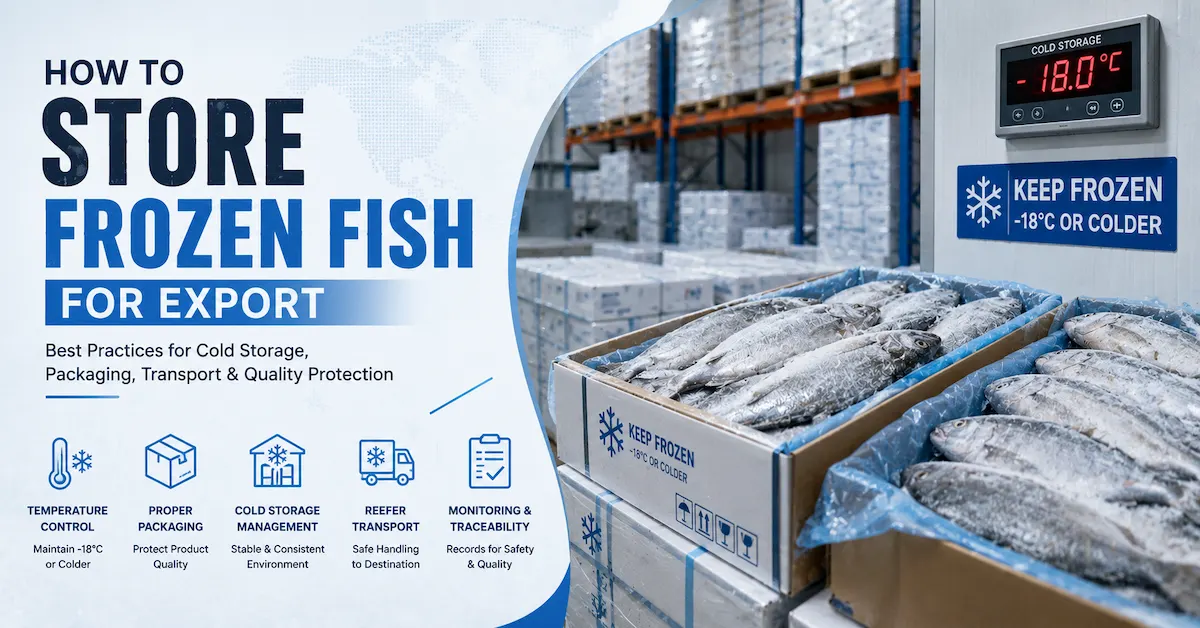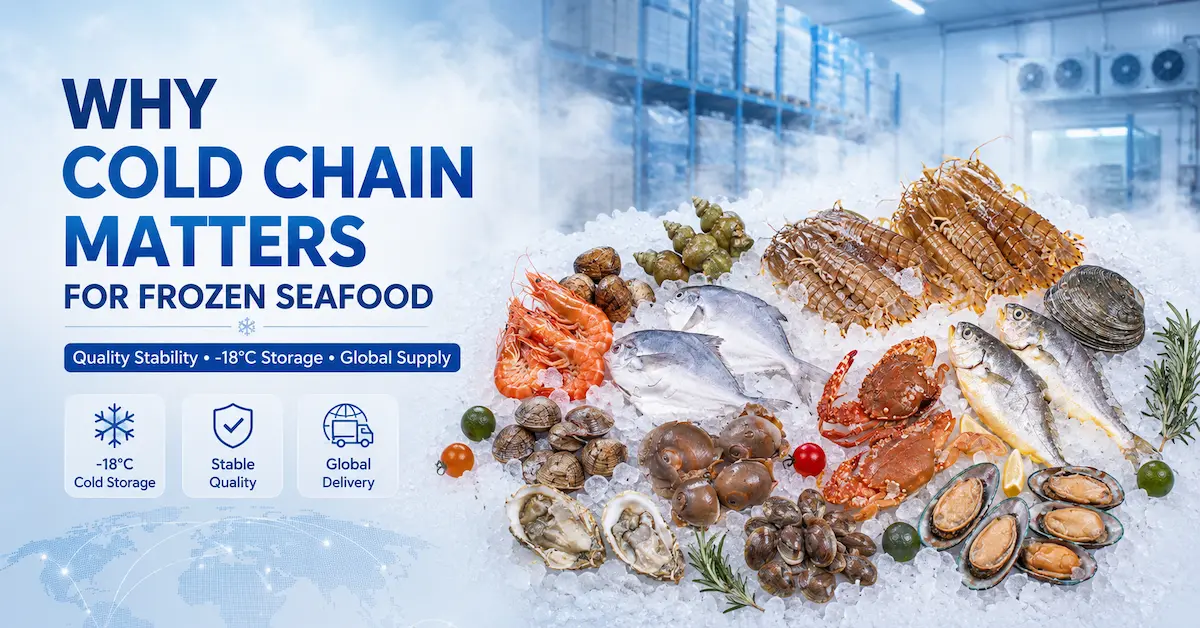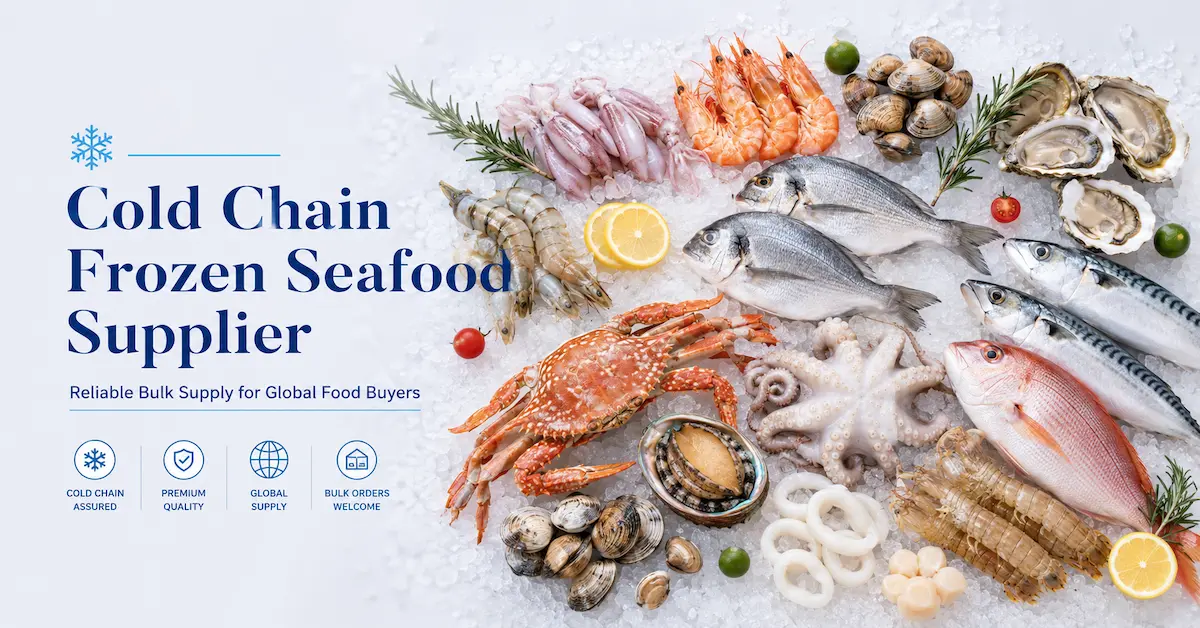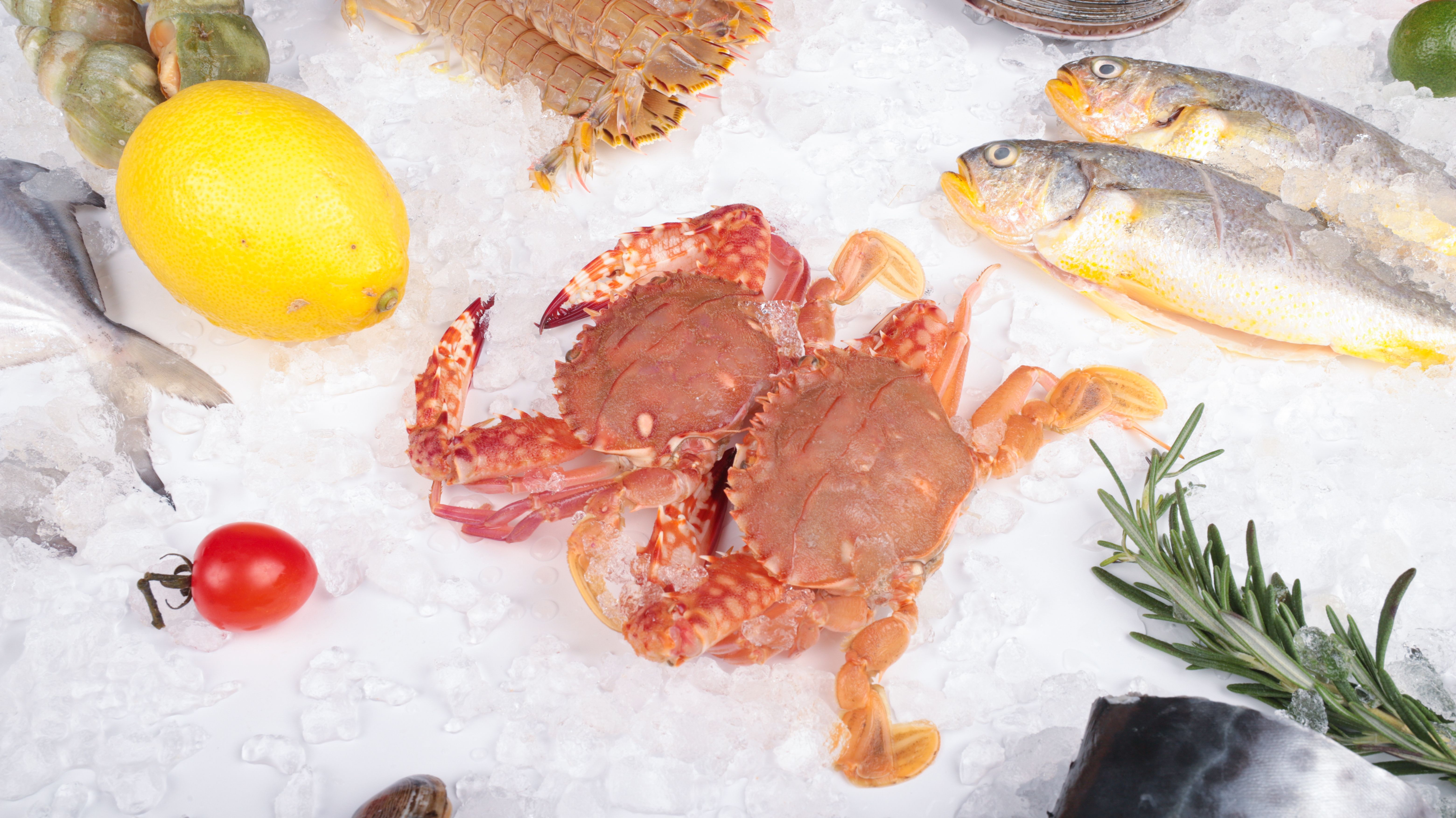


The recommended frozen seafood storage temperature is generally -18°C (0°F) or lower. This temperature is widely used as a baseline for frozen fish, shrimp, squid, octopus, shellfish, and mixed seafood products during storage and distribution.
However, temperature alone does not guarantee quality. Buyers must also consider product temperature, storage stability, freezing method, packaging condition, shelf life, loading time, and evidence of partial thawing.
For importers, wholesalers, restaurants, supermarkets, and food processors, proper temperature control protects product texture, appearance, usable yield, and customer satisfaction. It also reduces claims, rejected deliveries, and hidden inventory losses.
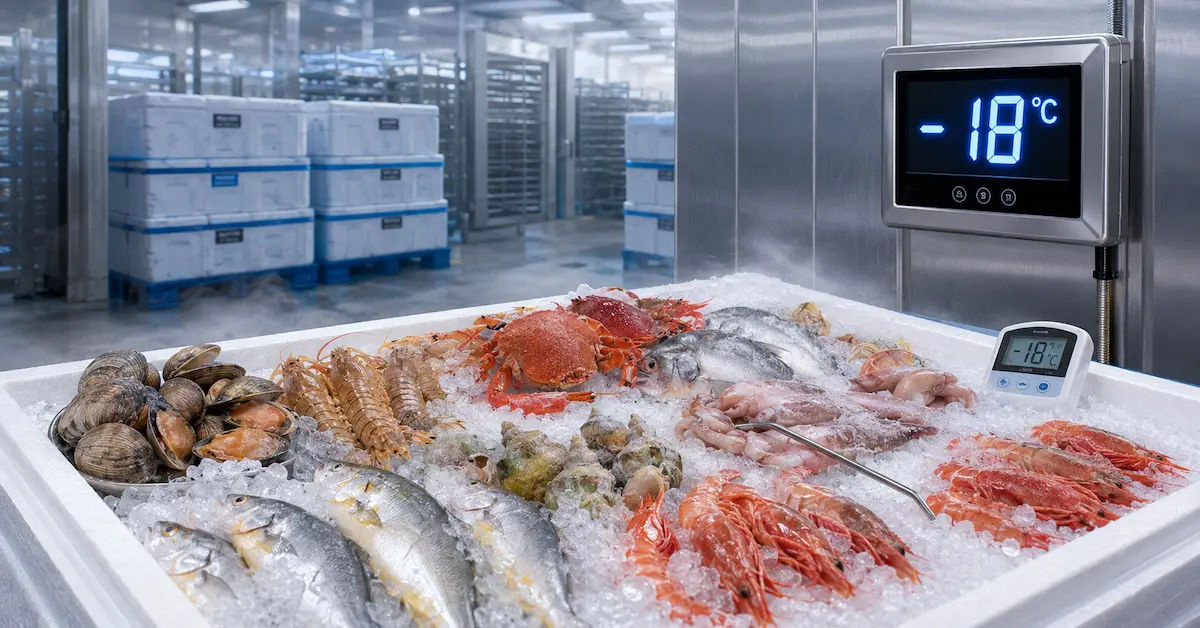
Quick Answer: What Temperature Should Frozen Seafood Be Stored At?
Frozen seafood should generally be stored at -18°C or below throughout the cold chain.
For commercial buyers, this means:
- The cold room should maintain the agreed frozen set point.
- The seafood itself should remain fully frozen.
- Temperature fluctuations should be minimized.
- Packaging should remain sealed and undamaged.
- Product temperature should be checked when receiving high-risk shipments.
- Storage records should be maintained where required.
- The supplier’s label and product specification should always be followed.
Some products may benefit from colder storage, especially when they have a long distribution period or strict quality requirements. Buyers should therefore treat -18°C as a baseline rather than assume it is the ideal temperature for every product.
Why -18°C Is the Common Frozen Seafood Baseline
At properly controlled frozen temperatures, microbial growth is greatly slowed, and the deterioration of seafood quality becomes much slower.
However, freezing does not improve poor raw material. It also does not completely stop changes in flavor, color, moisture, or texture over long storage periods.
The purpose of maintaining the correct frozen seafood storage temperature is to:
- Keep the product fully frozen
- Reduce moisture migration
- Limit freezer burn
- Protect surface appearance
- Maintain texture after thawing
- Support the declared shelf life
- Reduce partial thawing and refreezing
- Preserve value during export and distribution
For B2B buyers, the goal is not only food safety. It is also to ensure that the seafood still performs correctly when it reaches the restaurant, supermarket, distributor, or processing line.
Is Colder Than -18°C Better?
In many cases, colder and more stable storage can help protect seafood quality during long-term storage.
Temperatures such as -20°C, -25°C, or lower may be used depending on:
- Seafood species
- Fat content
- Product thickness
- Freezing method
- Packaging
- Glazing level
- Expected storage period
- Transport duration
- Buyer specification
- Destination-market requirements
Fatty fish may be more sensitive to oxidation and flavor changes than some lean fish. Products with weak packaging may also lose moisture faster.
Buyers should not automatically request the lowest possible temperature without considering cost and operational requirements. Lower-temperature storage uses more energy and may require different equipment.
The correct decision should balance product quality, storage duration, transport conditions, and commercial cost.
Air Temperature vs Product Temperature
Cold-room air temperature and actual seafood temperature are not always the same.
A wall display may show -18°C, but products near doors, loading zones, damaged pallets, or warm airflow may experience different conditions.
B2B buyers should understand two measurements:
Air Temperature
This shows the temperature inside the cold room, freezer, or refrigerated container.
Air temperature can change quickly when:
- Doors are opened
- Products are loaded
- Warm cartons enter the room
- Air circulation is blocked
- Refrigeration equipment cycles
- Defrosting occurs
Product Temperature
This shows the temperature of the frozen seafood itself.
Product temperature normally changes more slowly than air temperature. For receiving inspections and quality disputes, product temperature may provide more useful information than a single air reading.
High-risk or high-value shipments may require:
- Surface temperature checks
- Between-carton temperature checks
- Core temperature measurement where appropriate
- Continuous data logger records
- Receiving inspection records
The measurement method should avoid unnecessary product damage and follow the buyer’s food safety procedure.
Recommended Temperature Checks Across the Supply Chain
| Supply Chain Stage | Recommended Control | Main Buyer Concern |
|---|---|---|
| Frozen warehouse | Maintain the agreed set point, commonly -18°C or lower | Shelf life and quality stability |
| Order picking | Minimize time outside cold storage | Surface warming |
| Container loading | Load efficiently and verify reefer condition | Temperature rise before departure |
| Frozen transport | Maintain the contract set point | Partial thawing and refreezing |
| Port handling | Avoid unnecessary delays outside controlled storage | Cold-chain interruption |
| Receiving | Check documents, packaging, and temperature where needed | Shipment acceptance |
| Distributor storage | Maintain stable cold-room conditions | Repeat sale quality |
| Restaurant or factory storage | Follow product label and inventory rotation | Cooking or processing performance |
A reliable cold chain requires every participant to manage temperature correctly. A good supplier cannot fully protect the product if the destination warehouse or local delivery system is poorly controlled.
Storage Requirements for Different Frozen Seafood Products
The -18°C baseline applies broadly, but different seafood products have different quality risks.
Frozen Fish
Frozen fish can include:
- Whole fish
- Headless and gutted fish
- Fish fillets
- Fish portions
- Skin-on cuts
- Skinless cuts
Buyers should monitor:
- Surface drying
- Freezer burn
- Discoloration
- Broken fillets
- Texture after thawing
- Package sealing
Fatty fish may require especially careful packaging and storage because flavor changes can become more noticeable over time.
Frozen Shrimp
Frozen shrimp products include:
- Head-on shrimp
- Headless shrimp
- Peeled shrimp
- Peeled and deveined shrimp
- Raw shrimp
- Cooked shrimp
- IQF shrimp
- Block frozen shrimp
The frozen seafood storage temperature should remain stable to protect shrimp color, texture, glazing, and piece separation.
Buyers should also check for:
- Excessive frost
- Blackening or discoloration
- Broken shrimp
- Large ice accumulation
- Damaged retail bags
- Incorrect glazing levels
Frozen Squid, Octopus, and Cuttlefish
Cephalopods are valued for their texture. Poor temperature management can affect firmness and thawing performance.
Buyers should review:
- Cleaning quality
- Cutting consistency
- Package condition
- Ice buildup
- Product shape
- Texture after thawing
Mixed Seafood Packs
Mixed seafood packs may contain fish, shrimp, squid, mussels, octopus, or other ingredients.
Because several products are packed together, buyers should check:
- Ingredient consistency
- Piece separation
- Glazing distribution
- Label accuracy
- Seal quality
- Thawing performance
How Temperature Fluctuations Damage Frozen Seafood
A product does not need to become fully thawed before quality problems begin.
Repeated warming and cooling can contribute to:
- Larger ice crystals
- Moisture loss
- Drip loss after thawing
- Soft or damaged texture
- Freezer burn
- Surface dehydration
- Packaging condensation
- Ice buildup inside bags
- Reduced shelf appearance
- Shorter effective product life
A frozen product may still feel hard while having experienced temperature abuse. Visual inspection alone may therefore be insufficient for important shipments.
Temperature history, receiving records, package condition, and sample testing can provide a more complete quality assessment.
Signs That Frozen Seafood May Have Been Stored Incorrectly
Buyers should investigate products showing:
- Heavy frost inside sealed packaging
- Large ice crystals
- Packages frozen together unexpectedly
- Damaged or wet cartons
- Torn bags or failed seals
- Deformed products
- Discoloration
- Dry white patches
- Unusual odor after thawing
- Excessive liquid after thawing
- Product temperatures outside the agreed specification
One sign does not always prove cold-chain failure. For example, glazing is intentionally applied to some seafood.
The buyer should compare the product with the approved sample, specification, temperature records, and packaging standard before making a final decision.
Packaging and Frozen Seafood Storage Temperature
Packaging protects seafood from cold-store air, moisture loss, physical damage, and contamination.
Common frozen seafood packaging includes:
| Packaging Format | Main Application | Key Storage Check |
| IQF bag | Shrimp, squid rings, mixed seafood | Seal integrity and piece separation |
| Vacuum pack | Fish fillets and premium products | Vacuum retention and punctures |
| Block frozen pack | Processors and wholesalers | Block condition and inner liner |
| Retail bag | Supermarkets and private labels | Label clarity and freezer appearance |
| Foodservice pack | Restaurants, hotels, catering | Portion convenience and bag strength |
| Bulk carton | Importers and processors | Carton strength and moisture resistance |
Even at the correct temperature, weak packaging can cause freezer burn, broken products, and poor appearance.
Buyers should confirm packaging materials before bulk production, especially for private-label or long-distance export orders.
How to Monitor Frozen Seafood Storage Temperature
Commercial seafood buyers should not rely on a single thermometer reading.
A stronger monitoring plan may include:
Calibrated Cold-Room Thermometers
Cold stores should use reliable temperature monitoring equipment and verify readings regularly.
Continuous Data Logging
A data logger can record temperature over time. This helps identify overnight fluctuations, loading problems, equipment failure, or transport issues.
Reefer Set-Point Verification
Before loading, the buyer or supplier should confirm the refrigerated container set point and equipment condition.
Receiving Temperature Checks
The receiving team should inspect selected cartons or pallets according to a documented procedure.
Temperature Record Retention
Records may be useful for:
- Quality claims
- Customer complaints
- Insurance cases
- Supplier evaluation
- Internal audits
- Traceability
How Long Can Frozen Seafood Be Stored?
There is no single storage period for every frozen seafood product.
Shelf life depends on:
- Seafood species
- Raw material freshness
- Freezing speed
- Product thickness
- Fat content
- Packaging
- Glazing
- Storage stability
- Processing method
- Market requirements
Buyers should always follow the declared shelf life and storage instructions on the approved product specification.
A product remaining frozen does not mean its quality will remain unchanged forever. Color, texture, flavor, and moisture can gradually decline.
For B2B inventory management, use:
- Clear production and expiry dates
- Batch identification
- First-expired, first-out rotation
- Regular package inspections
- Temperature records
- Periodic product testing
Common Storage Mistakes B2B Buyers Should Avoid
Setting the Cold Room at Exactly -18°C with No Operating Margin
Door opening, loading, defrosting, and airflow can cause fluctuations. The operating set point should support the required product temperature under normal working conditions.
Blocking Air Circulation
Pallets and cartons placed too close to evaporators, walls, doors, or each other may create uneven temperatures.
Leaving Products in Loading Areas Too Long
Order picking and loading should be organized to minimize exposure outside controlled storage.
Ignoring Damaged Cartons
Crushed, wet, or open cartons may indicate packaging failure or handling problems.
Mixing New Warm Loads with Stable Frozen Inventory
Products entering storage should already meet the agreed frozen condition. A cold room is designed to maintain frozen products, not quickly freeze warm seafood.
Relying Only on Appearance
Frozen seafood can still look hard after temperature abuse. Temperature records and thawing tests provide additional evidence.
How to Choose a Supplier with Reliable Temperature Control
When evaluating a frozen seafood supplier, buyers should ask:
- What storage temperature is used?
- Is temperature continuously monitored?
- How are products handled during loading?
- What freezing methods are available?
- What packaging formats are offered?
- Are temperature records available when required?
- Can data loggers be used?
- What is the product shelf life?
- How are claims investigated?
- Can samples be tested before bulk orders?
The supplier should also provide clear specifications for:
- Species
- Size grade
- Processing form
- Net weight
- Glazing ratio
- Packaging
- Storage temperature
- Shelf life
- Destination market
Why Work with Bothwin Food
Bothwin Food supplies frozen fish, fresh or frozen shrimp, cephalopods, canned goods, spices, and condiments for global B2B buyers.
For buyers concerned about frozen seafood storage temperature, Bothwin Food can help organize sourcing requirements based on product type, packaging format, order quantity, application, and destination market.
Buyers can explore available seafood products through the Products page, learn more about the company on the About Us page, or submit product and cold-chain requirements through the Contact Us page.
Frozen Seafood Temperature Inquiry Checklist
To receive a more accurate sourcing proposal, buyers should provide:
- Seafood product
- Species
- Processing form
- Size grade
- IQF or block frozen requirement
- Net weight
- Glazing requirement
- Packaging format
- Required storage temperature
- Expected transport time
- Destination country and port
- Shelf-life requirement
- Temperature-record requirement
- Data logger requirement
- Order quantity
- Sample request
Clear information helps the supplier recommend a suitable product and cold-chain plan.
FAQ
1. What temperature should frozen seafood be stored at?
Frozen seafood should generally be stored at -18°C (0°F) or lower, subject to the product label, contract, and destination-market requirements.
2. Is -18°C cold enough for frozen fish?
-18°C is a common frozen-storage baseline. Colder and more stable storage may provide better long-term quality for some fish products.
3. What is the best frozen shrimp storage temperature?
Frozen shrimp is generally stored at -18°C or below. Buyers should follow the approved product specification and packaging instructions.
4. Can frozen seafood be stored at -15°C?
A temperature of -15°C is warmer than the common -18°C frozen-storage benchmark. Buyers should investigate the exposure and assess it against the product specification and applicable rules.
5. Does freezing kill bacteria in seafood?
Freezing stops or greatly slows microbial growth, but it does not reliably kill all bacteria. Safe handling, hygienic processing, and proper cooking remain important.
6. How can buyers check frozen seafood temperature?
Buyers can use calibrated thermometers, product probes, between-carton measurements, cold-room records, and transport data loggers according to their inspection procedure.
7. What happens when frozen seafood partially thaws?
Partial thawing can contribute to moisture loss, ice-crystal changes, poor texture, damaged packaging, and shorter effective shelf life.
8. Should frozen seafood be kept colder than -18°C?
Some products and longer storage programs may benefit from colder temperatures. The decision should be based on species, packaging, shelf life, transport time, and quality targets.
9. How should frozen seafood be handled during loading?
Loading should be organized efficiently, products should remain protected from warm conditions, and the refrigerated container should be prepared for the agreed set point.
10. How can I request frozen seafood from Bothwin Food?
Send Bothwin Food your product type, size grade, packaging, quantity, destination, shelf-life needs, and required frozen-storage conditions for a suitable sourcing proposal.
Conclusion
The recommended frozen seafood storage temperature is generally -18°C or lower. However, reliable frozen seafood management requires more than setting a thermostat.
Buyers should monitor temperature stability, inspect packaging, verify product condition, minimize loading exposure, maintain cold-chain records, and follow the approved product specification.
Bothwin Food supplies frozen seafood and related food products for global B2B buyers. Contact Bothwin Food to discuss product specifications, packaging formats, temperature requirements, samples, and bulk supply options.