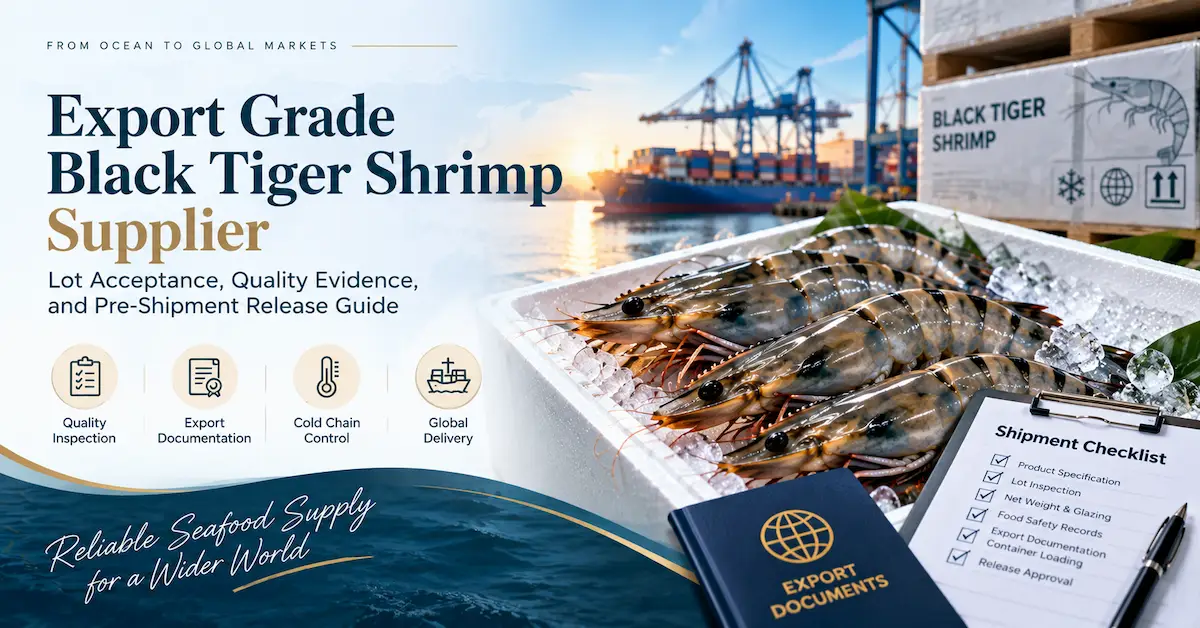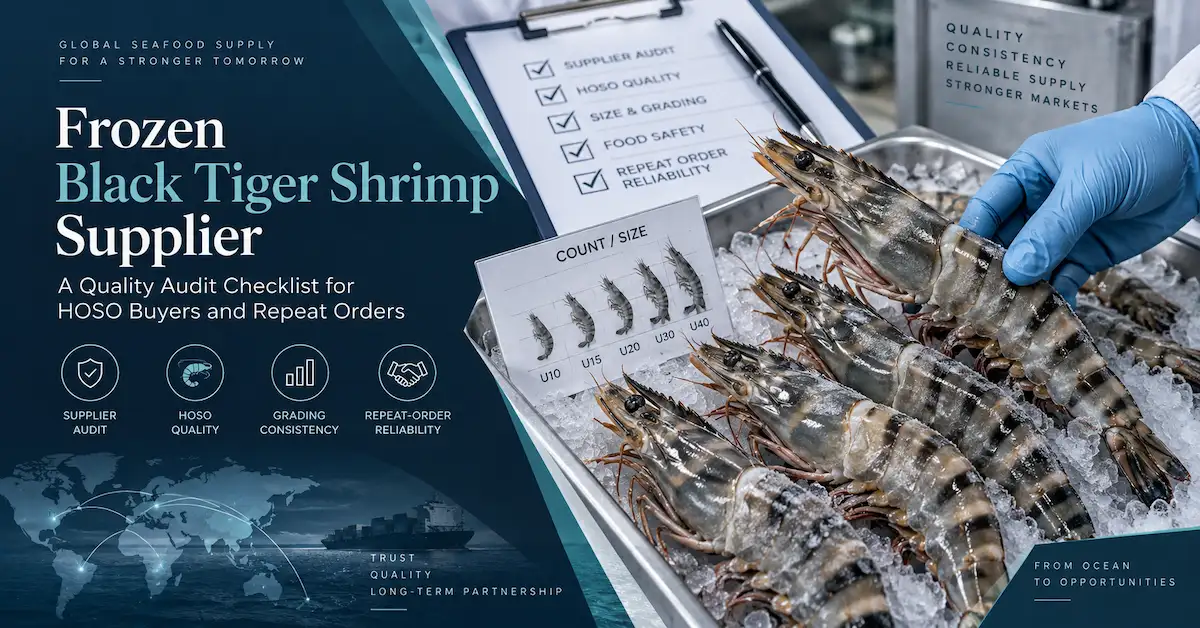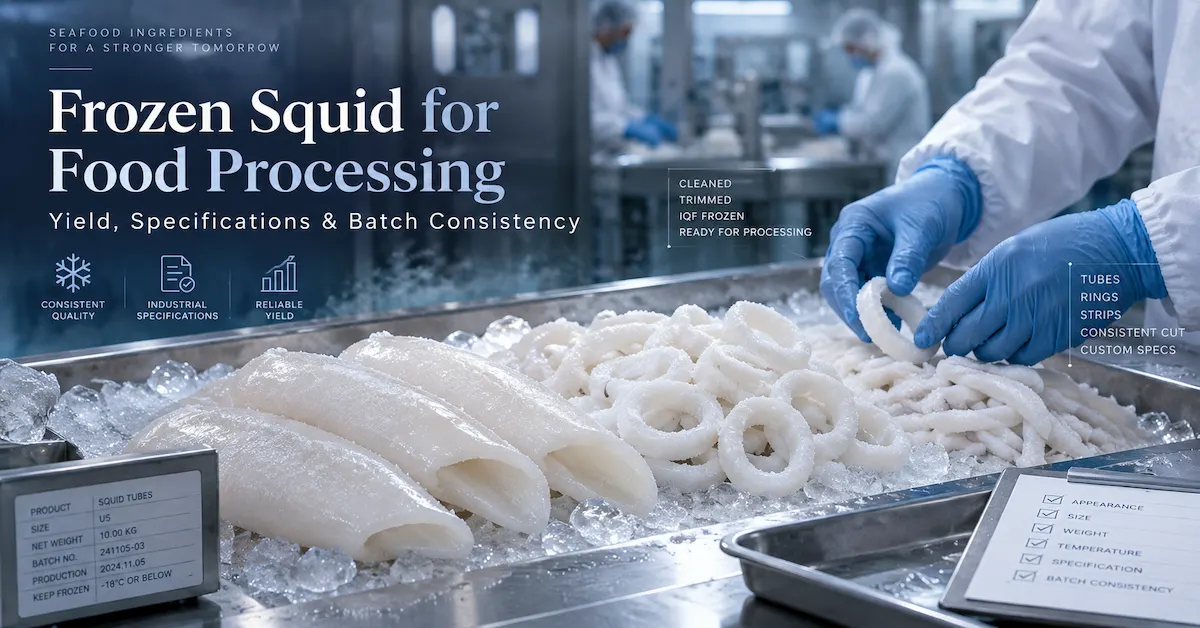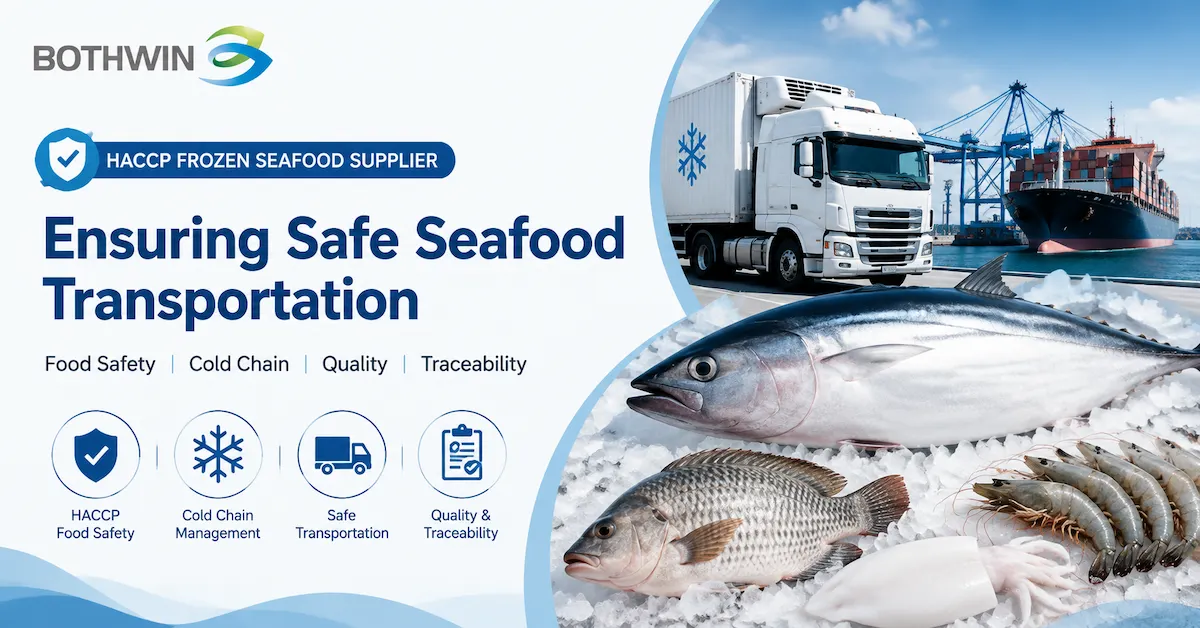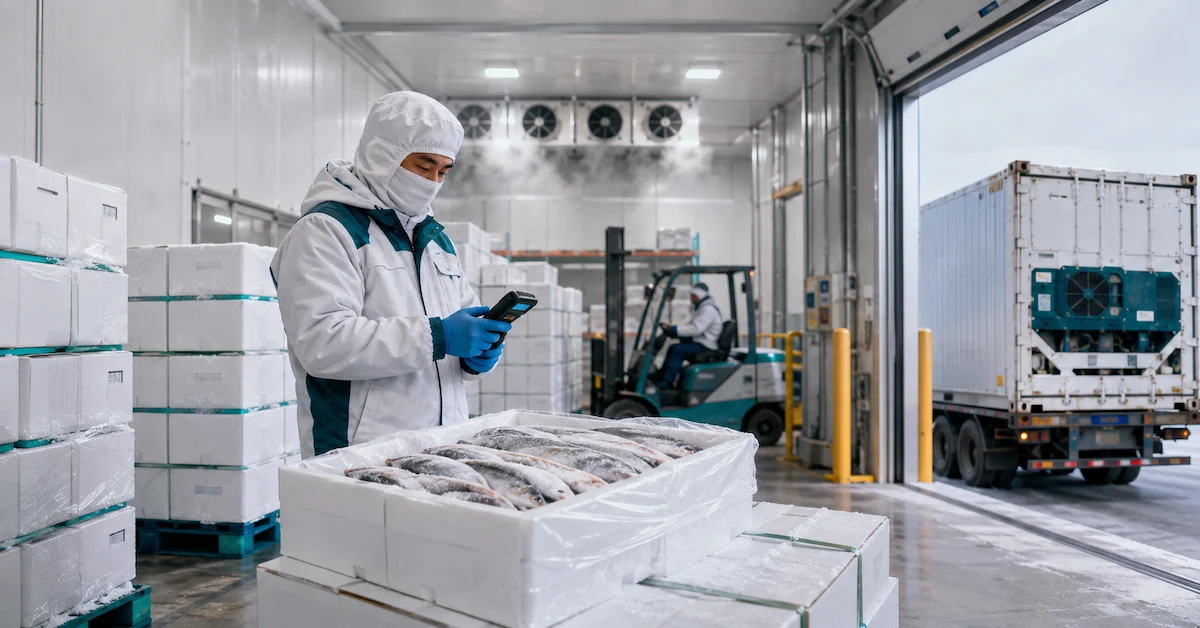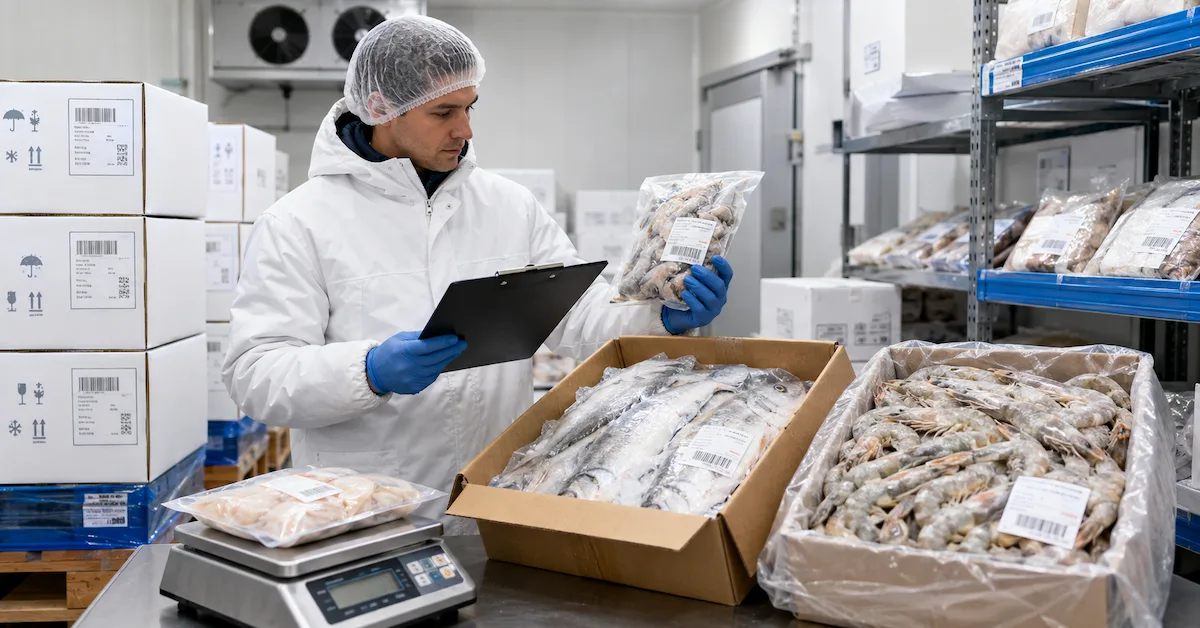

Knowing how to check frozen seafood quality is essential for importers, wholesalers, restaurants, supermarkets, food service buyers, and food processing factories. Frozen seafood can look acceptable at first glance, but real quality depends on product specifications, freezing method, glazing ratio, packaging condition, cold-chain control, and performance after thawing.
For B2B buyers, quality problems can create serious business losses. Excessive glazing, inconsistent size, broken packaging, poor texture, or unclear product information may lead to customer complaints, lower yield, shipment disputes, and reduced profit margins.
This guide explains how global buyers can check frozen seafood quality before confirming bulk orders.
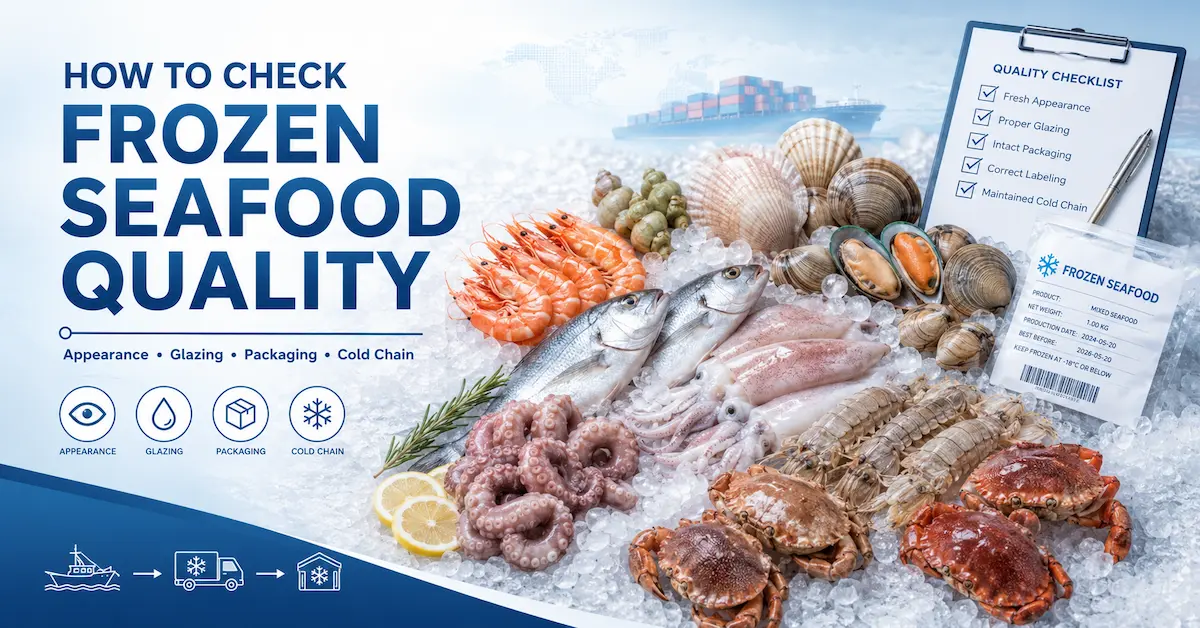
Quick Answer: What Should Buyers Check First?
Buyers should check frozen seafood quality by reviewing appearance, species, size grade, net weight, glazing ratio, packaging, freezing method, shelf life, cold-chain handling, and thawing performance. Sample testing before bulk orders is strongly recommended.
The most important quality checks include:
- Clear product name and species
- Stable size grading
- Clean and natural appearance
- Proper glazing without excessive ice
- No strong odor after thawing
- Firm and suitable texture
- Strong packaging and carton condition
- Clear net weight and gross weight
- Storage temperature around -18°C or lower
- Supplier communication and repeat supply ability
Bothwin Food supplies frozen fish, fresh or frozen shrimp, cephalopods, canned goods, spices, and condiments for global B2B buyers. Buyers can explore seafood categories on the Products page, learn more through the About Us page, or send sourcing requirements through the Contact Us page.
Why Frozen Seafood Quality Checking Matters
Frozen seafood quality affects every part of the buyer’s business. Restaurants need seafood that cooks consistently. Supermarkets need products that look attractive in freezer cabinets. Wholesalers need stable quality for resale. Food processors need predictable yield and texture.
If buyers only compare price, they may miss hidden quality risks.
Common risks include:
- Too much glazing
- Unstable size grading
- Damaged cartons
- Freezer burn
- Poor thawing texture
- Weak packaging
- Short shelf life
- Unclear origin or species
- Inconsistent repeat orders
A good frozen seafood quality check helps buyers reduce these risks before shipment.
1. Check Product Appearance
Appearance is the first quality signal. Frozen seafood should look clean, natural, and properly protected.
For frozen fish, buyers should check:
- Natural color
- No obvious dehydration
- No heavy freezer burn
- No broken or crushed portions
- No excessive frost inside packaging
For frozen shrimp, buyers should check:
- Uniform size
- Natural shell or meat color
- No black spots beyond normal tolerance
- No broken pieces
- No excessive ice inside the bag
For squid, octopus, and cuttlefish, buyers should check:
- Clean surface
- Proper cutting or cleaning
- No unusual discoloration
- Good shape retention
- No excessive broken pieces
Appearance alone cannot prove full quality, but it helps buyers quickly identify obvious problems.
2. Confirm Species and Product Specification
A reliable supplier should provide clear product specifications. Buyers should avoid vague descriptions such as “good shrimp” or “frozen fish available.”
Before confirming an order, ask for:
| Specification Item | Why It Matters |
|---|---|
| Product name | Avoids quotation confusion |
| Species | Supports labeling and market compliance |
| Origin | Helps traceability and buyer records |
| Size grade | Affects pricing and application |
| Processing method | Confirms product suitability |
| Net weight | Shows real seafood value |
| Gross weight | Helps shipping and cost calculation |
| Glazing ratio | Reduces hidden weight risk |
| Freezing method | Affects texture and usability |
| Packaging format | Supports storage and distribution |
| Shelf life | Helps inventory planning |
Clear specifications make supplier comparison more accurate and reduce dispute risk.
3. Check Glazing Ratio
Glazing is a protective ice layer used to protect frozen seafood from freezer burn and moisture loss. Proper glazing can be useful, especially for long-distance shipping.
However, excessive glazing reduces the actual seafood weight. This is a major issue for importers, wholesalers, restaurants, and processors.
Buyers should confirm:
- Net weight
- Gross weight
- Glazing percentage
- Price basis
- Usable seafood weight
- Whether the quoted price includes glazing
For example, two suppliers may offer similar carton prices, but the real value may be different if one product contains much more ice.
4. Review Size Grading Consistency
Size grading affects cooking, retail display, processing yield, and resale value.
Frozen shrimp may use grades such as 21/25, 26/30, 31/40, or other market-specific sizes. Frozen fish may be graded by piece weight, fillet size, thickness, or cutting style. Squid and octopus may be graded by piece size, cleaning level, or cut format.
Consistent size grading helps:
- Restaurants control portion cost
- Supermarkets build clear product lines
- Wholesalers resell products more easily
- Food processors maintain recipe consistency
If product size varies too much, buyers may face complaints from downstream customers.
5. Test Thawing Performance
Frozen seafood quality should be checked after thawing, not only while frozen.
After thawing, buyers should check:
- Smell
- Texture
- Color
- Moisture loss
- Shape retention
- Broken pieces
- Cooking performance
Good frozen seafood should not have a strong unpleasant odor. Texture should remain suitable for the intended use. Fish should not become overly mushy. Shrimp should not feel excessively soft. Squid and octopus should maintain reasonable structure.
Sample testing is especially important before placing large-volume orders.
6. Check Packaging and Carton Strength
Packaging protects frozen seafood during storage, loading, shipping, and distribution. Weak packaging can damage even good-quality seafood.
Buyers should review:
- Inner packaging condition
- Seal strength
- Carton strength
- Label clarity
- Net weight information
- Storage instructions
- Moisture resistance
- Pallet or loading condition if required
Different buyers need different packaging.
| Packaging Format | Best For | Main Advantage |
| Bulk cartons | Wholesalers, processors, importers | Cost-effective for large orders |
| IQF bags | Restaurants, supermarkets, food service | Easy portion control |
| Vacuum packs | Fish fillets and premium seafood | Better appearance and protection |
| Retail bags | Supermarkets and grocery chains | Stronger shelf display |
| Foodservice packs | Hotels, restaurants, catering buyers | Easy kitchen handling |
Packaging should match the buyer’s sales channel and storage method.
7. Evaluate Cold-Chain Handling
Cold-chain control is one of the most important parts of frozen seafood quality. Most frozen seafood should be stored at around -18°C or lower.
Buyers should ask:
- How is the seafood frozen?
- How is it stored before shipment?
- How long is it kept in frozen storage?
- How is loading managed?
- Is the packaging suitable for frozen transport?
- Are storage instructions clear?
- Can the supplier support long-distance frozen shipment?
Temperature fluctuation can cause partial thawing, refreezing, freezer burn, and texture damage. For B2B buyers, cold-chain weakness can lead to hidden cost and customer complaints.
8. Compare IQF and Block Frozen Quality
Different freezing formats fit different applications.
| Freezing Format | Quality Check Focus | Best For |
| IQF seafood | Piece separation, surface condition, glaze level | Restaurants, supermarkets, seafood mixes |
| Block frozen seafood | Block condition, thawing yield, bulk usability | Processors, wholesalers, large-volume buyers |
| Vacuum packed seafood | Seal strength, appearance, surface protection | Premium retail and branded products |
| Glazed seafood | Glazing ratio, surface protection, net weight | Long-distance frozen shipping |
IQF seafood should separate easily. Block frozen seafood should thaw reasonably for bulk processing. Vacuum packs should keep seals intact.
9. Identify Common Quality Problems
Buyers should learn to identify early warning signs.
Excessive Ice or Frost
Too much ice inside packaging may indicate high glazing, temperature fluctuation, or poor packaging.
Freezer Burn
Dry white patches, dehydration, or rough surface texture may suggest poor storage or packaging protection.
Broken Pieces
Broken shrimp, crushed fish fillets, or damaged squid can reduce resale value and customer satisfaction.
Unclear Labeling
Labels should match product specifications. Unclear labels can create import, retail, or customer communication problems.
Strong Odor After Thawing
A strong unpleasant smell after thawing is a warning sign. Buyers should reject questionable samples.
Unstable Repeat Quality
A sample may look good, but repeat orders also need consistency. Buyers should evaluate long-term supplier reliability.
10. Ask the Right Supplier Questions
To check frozen seafood quality more effectively, buyers should ask suppliers practical questions:
- What is the exact species?
- What is the size grade?
- What is the net weight?
- What is the glazing ratio?
- Is the product IQF or block frozen?
- What packaging format is used?
- What is the shelf life?
- What storage temperature is required?
- Can samples be provided?
- Can the supplier support repeat orders?
- What documents are available for export buyers?
Clear answers show whether the supplier understands B2B seafood sourcing.
Why Work with Bothwin Food
Bothwin Food provides seafood and food product supply options for global B2B buyers. Its product range includes frozen fish, fresh or frozen shrimp, cephalopods, canned goods, spices, and condiments.
For buyers learning how to check frozen seafood quality, Bothwin Food can help match suitable products based on application, packaging requirement, order quantity, and destination market. Whether buyers need frozen shrimp for restaurants, fish fillets for supermarkets, squid for foodservice, or seafood raw materials for processing, clear sourcing communication helps reduce risk.
Buyers can review seafood categories through the Products page, learn more about company background on the About Us page, read more sourcing insights on the Blog page, or send product requirements through the Contact Us page.
Frozen Seafood Quality Checklist
Before confirming a bulk order, buyers can use this checklist:
- Is the product name clearly confirmed?
- Is the species accurate?
- Is the size grade consistent?
- Is the net weight clearly stated?
- Is the glazing ratio acceptable?
- Is the appearance clean and natural?
- Is the packaging strong enough?
- Is the freezing method suitable?
- Has the product been tested after thawing?
- Are shelf life and storage requirements clear?
- Can the supplier support repeat orders?
- Is communication fast and clear?
This checklist helps buyers reduce hidden risks before shipment.
FAQ
1. How do you check frozen seafood quality?
Check frozen seafood quality by reviewing appearance, species, size grade, net weight, glazing ratio, packaging, shelf life, storage temperature, and thawing performance.
2. What does good frozen seafood look like?
Good frozen seafood should look clean, natural, properly packed, and free from excessive frost, freezer burn, strong discoloration, or broken pieces.
3. Why is glazing ratio important?
Glazing protects frozen seafood, but excessive glazing reduces usable seafood weight. Buyers should confirm net weight and glazing percentage.
4. How can I check frozen shrimp quality?
Check shrimp size consistency, color, shell or meat condition, glazing level, smell after thawing, texture, and packaging.
5. How can I check frozen fish quality?
Check fish species, fillet shape, color, texture after thawing, packaging condition, shelf life, and smell.
6. Should buyers test samples before bulk orders?
Yes. Sample testing helps buyers check real product performance before purchasing large quantities.
7. What temperature should frozen seafood be stored at?
Most frozen seafood should be stored at around -18°C or lower to maintain quality and shelf life.
8. What packaging is best for frozen seafood quality?
The best packaging depends on use. Bulk cartons suit wholesalers, IQF bags suit foodservice, and vacuum packs suit premium retail fish products.
9. What are common frozen seafood quality problems?
Common problems include excessive glazing, freezer burn, broken pieces, poor texture after thawing, weak packaging, and unclear specifications.
10. How can I request quality samples from Bothwin Food?
You can contact Bothwin Food with product type, size grade, packaging requirement, order quantity, and destination market to request suitable product samples.
Conclusion
Understanding how to check frozen seafood quality helps global B2B buyers make safer and more profitable sourcing decisions. Quality should be evaluated through product specifications, appearance, glazing ratio, size grading, thawing performance, packaging, cold-chain handling, and supplier communication.
Bothwin Food supplies frozen seafood and related food products for importers, wholesalers, restaurants, supermarkets, and food processors. For frozen seafood sourcing, contact Bothwin Food to discuss product specifications, samples, packaging formats, order quantity, and destination market requirements.