

Knowing how to find reliable seafood exporters is essential for importers, wholesalers, distributors, supermarkets, restaurants, and food processing companies. A seafood exporter may offer an attractive price, but price alone does not show whether the supplier can provide consistent quality, complete documents, strong packaging, cold-chain support, and reliable repeat supply.
Seafood sourcing involves several risks. Buyers may receive the wrong species, inconsistent sizes, excessive glazing, damaged cartons, incomplete certificates, or products that perform poorly after thawing.
A reliable seafood exporter should make the purchasing process clearer. The supplier should provide accurate specifications, practical product recommendations, transparent communication, and suitable support from sample confirmation to final shipment.
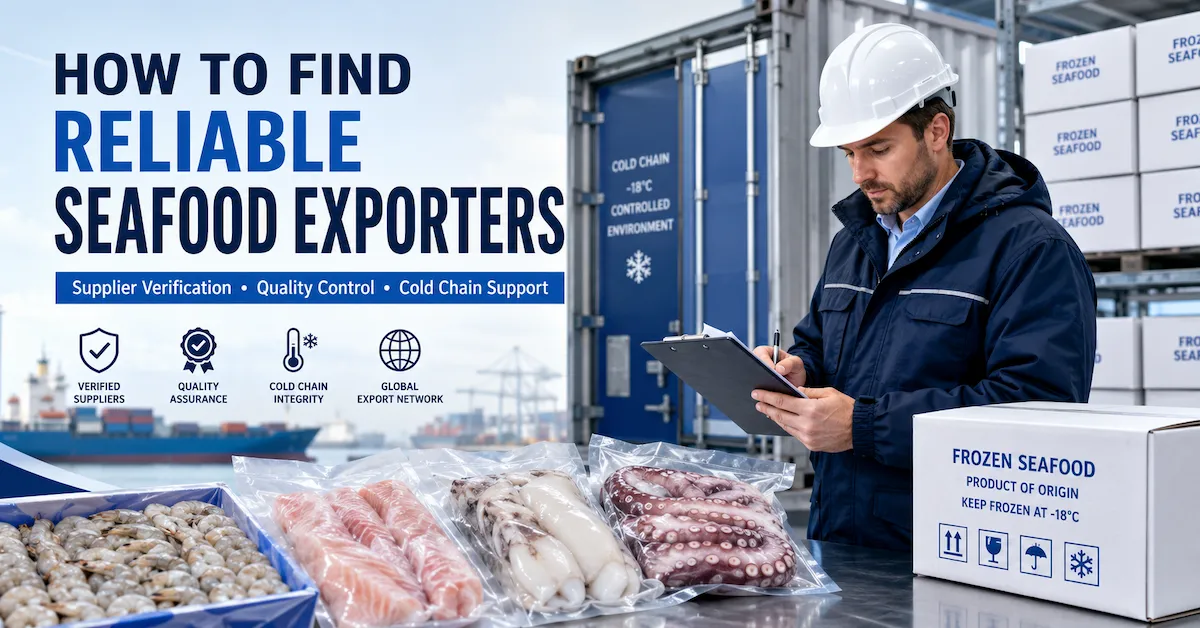
Quick Answer: How Can Buyers Find Reliable Seafood Exporters?
Buyers can find reliable seafood exporters by checking company registration, export experience, product range, processing sources, food safety controls, cold-storage capability, packaging options, documentation support, and customer communication.
Before placing a bulk order, buyers should:
- Verify the exporter’s company information
- Confirm whether it is a processor, exporter, or trading supplier
- Review its main seafood categories
- Request full product specifications
- Test samples after thawing and cooking
- Check net weight and glazing ratio
- Review packaging and labeling
- Confirm destination-market documents
- Evaluate cold-chain procedures
- Agree on inspection and claim terms
- Start with a manageable trial order
- Assess repeat-order consistency
Bothwin Food supplies frozen fish, fresh or frozen shrimp, cephalopods, canned goods, spices, and condiments for international B2B customers. Buyers can explore available categories through the Products page, learn more about the business on the About Us page, or submit sourcing requirements through the Contact Us page.
Why Choosing the Right Seafood Exporter Matters
Seafood is sensitive to temperature, hygiene, processing quality, packaging, and storage. An unreliable exporter can create problems that become expensive after the shipment reaches the destination market.
Common business consequences include:
- Customs clearance delays
- Product claims
- Rejected deliveries
- Lower processing yield
- Restaurant complaints
- Supermarket returns
- Damaged private-label reputation
- Unexpected cold-storage charges
- Supply interruptions
- Lost customers
The right exporter reduces these risks by confirming product details before production and maintaining clear communication throughout the order.
1. Verify the Seafood Exporter’s Business Identity
The first step is to confirm that the exporter is a legitimate business.
Buyers should request or review:
- Registered company name
- Business address
- Company registration information
- Official website and business email
- Export experience
- Main sales markets
- Product categories
- Contact person information
- Bank account beneficiary name
- Factory or processing partner details
The company name on the contract, invoice, bank account, and export documents should be consistent.
Buyers should be cautious when:
- Payment is requested to an unrelated personal account
- The company avoids providing registration information
- The quoted products are unrelated to its normal business
- Product photos appear copied from many unrelated websites
- The supplier changes company or bank details without explanation
2. Understand the Exporter’s Business Model
A reliable seafood exporter may operate under different business models.
| Supplier Type | Main Strength | What Buyers Should Confirm |
|---|---|---|
| Processing factory | Direct production and process control | Export eligibility, product range, capacity |
| Integrated seafood company | Sourcing, processing, storage, and export | Traceability and responsibility at each stage |
| Trading exporter | Wider product sourcing and flexible categories | Processing source and final quality control |
| Aquaculture producer | Better control of farmed seafood supply | Processing, freezing, and export arrangements |
| Fishing and processing company | Direct access to wild-caught seafood | Catch records, seasonality, and legal sourcing |
A trading exporter is not automatically less reliable than a factory. It may offer broader sourcing and more flexible product matching. However, buyers should know who processes the seafood, who performs inspection, and who is responsible for quality claims.
3. Check the Exporter’s Product Specialization
The best supplier depends on the seafood category required.
Frozen Fish
Buyers may need:
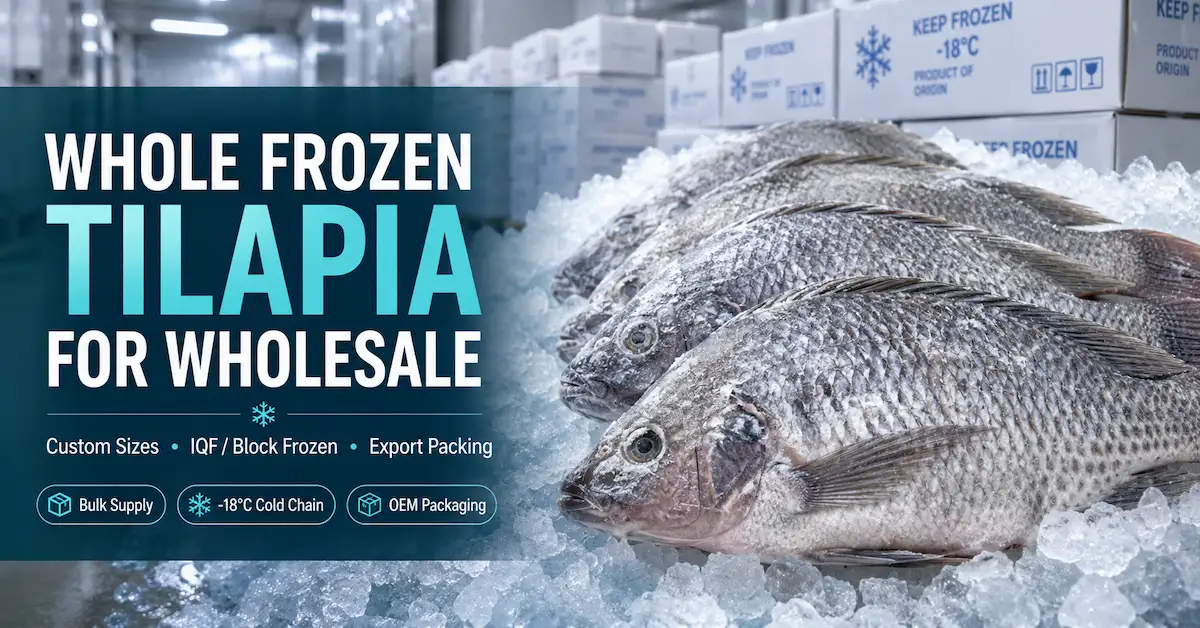
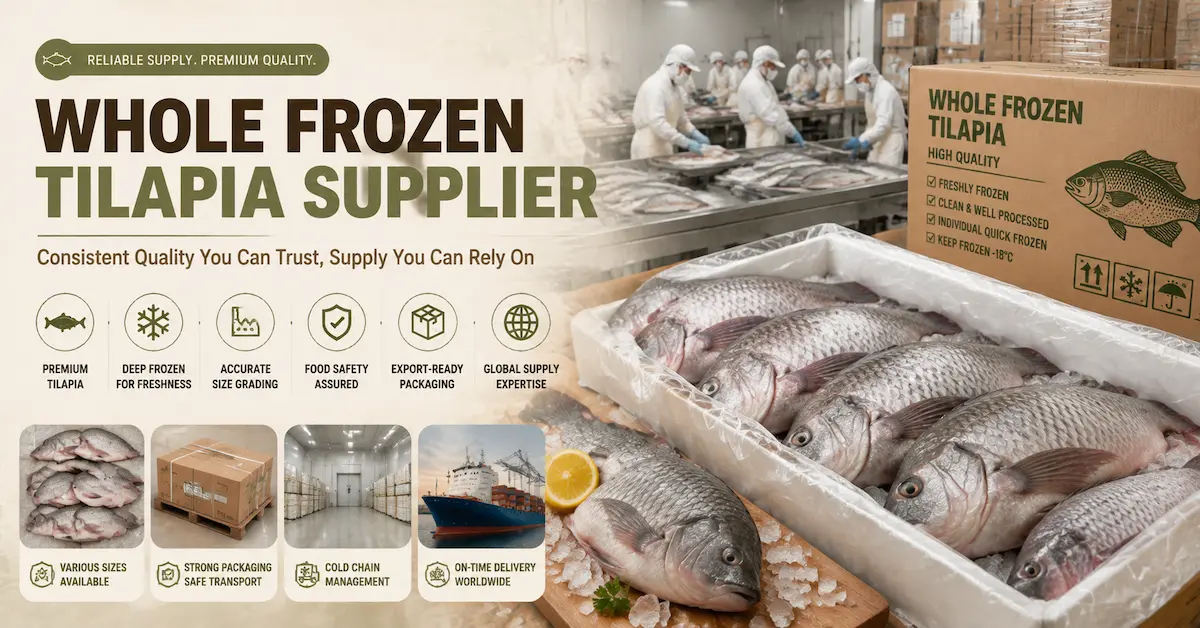
- Whole frozen fish
- Headless and gutted fish
- Fish fillets
- Fish portions
- Skin-on or skinless cuts
- Processing-grade raw materials
A frozen fish exporter should clearly identify species, origin, cutting format, piece size, freezing method, and packaging.
Frozen Shrimp
Common shrimp formats include:
- Head-on shell-on shrimp
- Headless shell-on shrimp
- Peeled shrimp
- Peeled and deveined shrimp
- Raw or cooked shrimp
- IQF shrimp
- Block frozen shrimp
A frozen shrimp exporter should confirm count size, processing method, glazing, net weight, and packaging.
Squid, Octopus, and Cuttlefish
Cephalopod products may include:
- Whole cleaned squid
- Squid tubes
- Squid rings
- Whole octopus
- Cut octopus
- Cuttlefish
- Diced or sliced products
Cleaning level, cutting consistency, texture, and thawing performance are important for these products.
A supplier that specializes in the buyer’s target category is usually better able to recommend suitable specifications and avoid product mismatches.
4. Request Complete Product Specifications
Reliable seafood exporters should provide more than a product name and price.
A complete specification should include:
| Specification | Why It Matters |
| Commercial product name | Prevents quotation confusion |
| Scientific species name | Supports accurate labeling and compliance |
| Origin | Helps traceability and market review |
| Wild-caught or farmed | Affects sourcing and documentation |
| Processing format | Confirms intended use |
| Size or count grade | Affects price, cooking, and resale |
| Freezing method | Determines portion convenience |
| Net weight | Shows actual product value |
| Glazing ratio | Prevents hidden ice-weight cost |
| Packaging | Protects seafood and supports distribution |
| Shelf life | Helps inventory planning |
| Storage temperature | Supports cold-chain management |
If the supplier cannot clearly explain its own specification, buyers may face greater risk during production and shipment.
5. Evaluate Seafood Quality Through Samples
Samples should be tested before placing a large order, especially when working with a new exporter.
Buyers should evaluate:
- Frozen appearance
- Size consistency
- Package condition
- Net weight
- Glazing level
- Odor after thawing
- Color after thawing
- Texture
- Drip loss
- Broken pieces
- Cooking performance
- Processing yield
Testing should match the buyer’s real application.
Restaurants should test cooking and portion performance. Supermarkets should review packaging and visual presentation. Food processors should measure yield, cutting loss, and recipe consistency.
The approved sample should be connected to a written specification so that both parties understand the bulk-order quality reference.
6. Review Food Safety and Quality-Control Capability
Buyers should ask how the exporter manages seafood risks from raw material receiving to final shipment.
Important areas include:
- Raw material inspection
- Processing hygiene
- Temperature control
- Size grading
- Glazing control
- Metal detection where applicable
- Packaging inspection
- Label verification
- Frozen storage
- Batch identification
- Traceability
- Final shipment inspection
Buyers may also request relevant certificates, audit documents, laboratory reports, or HACCP-related information when required by their company or destination market.
Certificates should be verified for:
- Company name
- Processing establishment
- Scope of products
- Validity period
- Issuing organization
- Destination-market relevance
A certificate alone does not guarantee every shipment. Product inspection and specification control are still necessary.
7. Check Cold-Chain Management
Cold-chain capability is a key sign of a reliable seafood exporter.
Most frozen seafood is commonly stored and transported at approximately -18°C or below, subject to product specifications and destination regulations.
Ask the exporter about:
- Freezing method
- Cold-store temperature
- Temperature monitoring
- Loading procedure
- Reefer container set point
- Container inspection
- Loading duration
- Temperature data logger options
- Storage instructions
- Claim investigation process
Poor cold-chain handling may cause partial thawing, refreezing, freezer burn, moisture loss, soft texture, and reduced shelf life.
8. Review Packaging and Labeling Options
A reliable seafood exporter should recommend packaging based on the sales channel.
| Packaging Format | Best For |
| Bulk cartons | Importers, wholesalers, and processors |
| IQF bags | Restaurants, supermarkets, and foodservice |
| Vacuum packs | Fish fillets and premium seafood |
| Retail bags | Grocery stores and private-label brands |
| Foodservice packs | Hotels, restaurants, and catering companies |
| Block frozen packs | High-volume processors |
Buyers should confirm:
- Inner packaging material
- Seal strength
- Pack weight
- Carton dimensions
- Carton strength
- Moisture resistance
- Label language
- Batch code
- Production date
- Shelf life
- Storage instructions
- Shipping marks
For private-label orders, label artwork and packaging samples should be approved before mass production.
9. Confirm Export Documentation Capability
A reliable seafood exporter should understand the documents needed for the destination market.
Common documents may include:
- Commercial invoice
- Packing list
- Bill of lading
- Certificate of origin
- Official health certificate
- Product specification
- Catch certificate where applicable
- Laboratory test report where required
- Insurance certificate
- Temperature records
- Market-specific declarations
Document requirements depend on the destination, species, origin, and processing format.
Buyers should provide a written document checklist before production. Draft documents should be reviewed before originals are issued whenever possible.
10. Compare More Than the Unit Price
The lowest quotation may not offer the lowest real cost.
When comparing seafood exporters, calculate:
- Net product weight
- Glazing ratio
- Packaging cost
- Shipping cost
- Customs duties
- Inspection cost
- Cold-storage charges
- Processing yield
- Product damage risk
- Customer complaint risk
- Replacement or claim difficulty
For example, a cheaper shrimp quotation with higher glazing may cost more per kilogram of usable seafood.
Buyers should compare specifications on an equal basis.
11. Evaluate Communication Quality
Good communication is one of the clearest signs of a reliable exporter.
A professional supplier should:
- Answer technical questions clearly
- Confirm specifications in writing
- Explain unavailable products honestly
- Provide realistic lead times
- Identify documentation risks early
- Update production and shipment status
- Respond to quality concerns
- Maintain consistent contact information
Warning signs include vague answers, unrealistic promises, frequent price changes without explanation, or resistance to written specifications.
12. Use a Trial Order and Inspection Plan
For a new exporter, a trial order can reduce risk before long-term cooperation.
A trial order helps buyers assess:
- Product quality
- Packaging
- Documentation
- Communication
- Lead time
- Loading
- Cold-chain handling
- Destination performance
Depending on order value and risk, buyers may also arrange:
- Factory audit
- Sample inspection
- During-production inspection
- Pre-shipment inspection
- Container-loading supervision
- Temperature data logging
The goal is not to create unnecessary cost. It is to apply a level of verification appropriate to the order risk.
Common Warning Signs When Choosing Seafood Exporters
Buyers should investigate further when a supplier:
- Offers prices far below the market without explanation
- Refuses to provide detailed specifications
- Cannot identify the scientific species
- Avoids sample testing
- Uses inconsistent company information
- Cannot explain glazing or net weight
- Provides expired or unrelated certificates
- Promises every product in every season
- Does not confirm document requirements
- Requests unusual payment arrangements
- Refuses inspection
- Gives unrealistic delivery dates
One warning sign may have a reasonable explanation, but several warning signs together create a higher sourcing risk.
Reliable Seafood Exporter Comparison Checklist
Before selecting a supplier, compare:
- Company registration
- Export experience
- Main seafood categories
- Processing source
- Quality-control process
- Cold-storage capability
- Species accuracy
- Size grading
- Glazing control
- Packaging options
- Sample quality
- Certifications
- Traceability
- Export documents
- Communication speed
- Lead time
- MOQ
- Payment terms
- Inspection support
- Claims procedure
This checklist helps buyers make decisions based on the complete supply package rather than price alone.
Why Work with Bothwin Food
Bothwin Food supplies frozen fish, fresh or frozen shrimp, cephalopods, canned goods, spices, and condiments for global B2B buyers.
For buyers learning how to find reliable seafood exporters, Bothwin Food can help organize sourcing requirements according to:
- Seafood category
- Species
- Processing format
- Size grade
- Freezing method
- Net weight
- Glazing requirement
- Packaging
- Order volume
- Destination market
- Intended application
Buyers can review available products on the Products page, learn more about the company on the About Us page, or submit a detailed sourcing request through the Contact Us page.
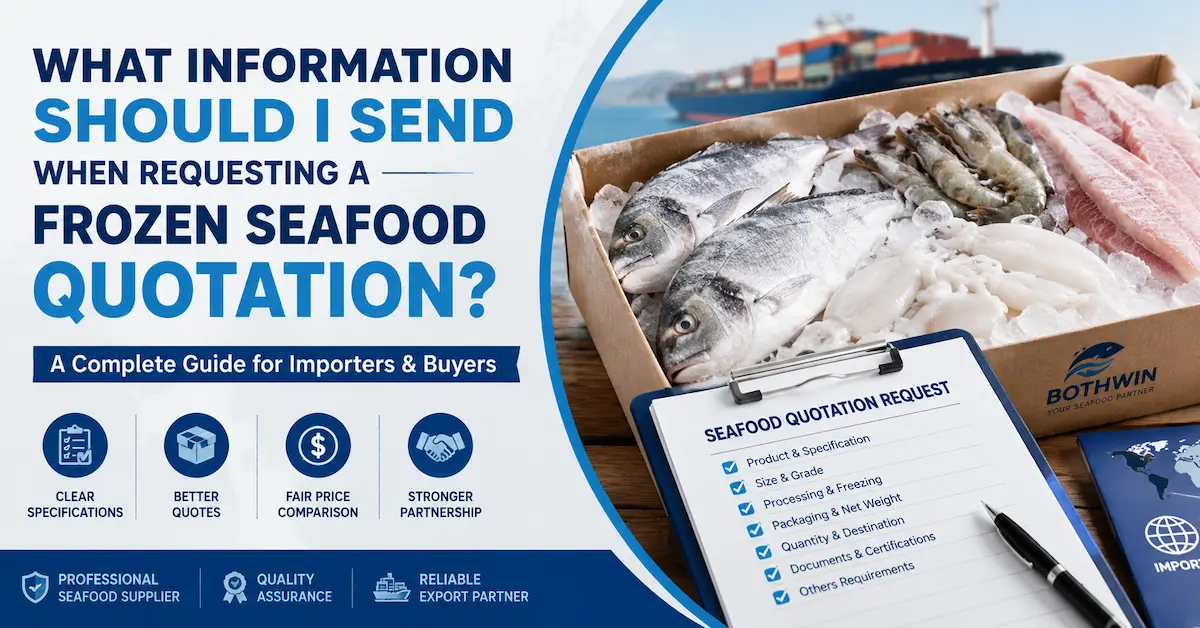
Seafood Exporter Inquiry Checklist
To receive an accurate quotation, include:
- Destination country and port
- Seafood product
- Species
- Preferred origin
- Wild-caught or farmed requirement
- Processing format
- Size grade
- IQF or block frozen preference
- Net weight
- Maximum glazing ratio
- Packaging format
- Label requirements
- Order quantity
- Required documents
- Sample request
- Inspection requirement
- Target delivery date
A detailed inquiry allows the exporter to recommend a more suitable product and reduces quotation misunderstandings.
FAQ
1. How can I find reliable seafood exporters?
Verify company registration, product specialization, samples, quality controls, cold-chain capability, export documents, packaging, and communication before placing a bulk order.
2. What should I ask a seafood exporter?
Ask about species, origin, processing format, size grade, net weight, glazing, freezing method, packaging, shelf life, documents, MOQ, and lead time.
3. Should I buy directly from a seafood factory?
Factories can offer direct processing control, while experienced trading exporters may provide wider product sourcing. The best option depends on your products and service needs.
4. How can I verify seafood quality before importing?
Request samples, approve specifications, test products after thawing, check net weight and glazing, and arrange inspection when appropriate.
5. What certificates should a seafood exporter have?
Requirements depend on the destination and product. Buyers may review HACCP-related documents, processing-establishment approvals, health certificates, audits, and market-specific records.
6. Why is cold-chain capability important?
Cold-chain control helps maintain seafood texture, appearance, shelf life, and quality during storage and international transport.
7. How do I compare frozen seafood prices?
Compare species, size, processing format, net weight, glazing, packaging, quality, shipping terms, and usable yield—not just carton price.
8. Should I arrange a trial order?
A trial order is useful for evaluating product quality, documents, packaging, communication, and delivery performance before larger purchases.
9. What are warning signs of an unreliable seafood exporter?
Warning signs include vague specifications, unusually low prices, inconsistent company information, expired certificates, unclear payment requests, and refusal of inspection.
10. How can I request seafood products from Bothwin Food?
Send Bothwin Food your target product, species, size, packaging, order quantity, destination, documents, and sample requirements for a suitable sourcing proposal.
Conclusion
Learning how to find reliable seafood exporters helps buyers protect product quality, reduce import risk, and build a stable long-term supply chain.
Reliable exporters provide clear specifications, consistent samples, practical quality control, strong packaging, cold-chain support, accurate documents, and professional communication.
Bothwin Food supplies frozen seafood and related food products for global B2B buyers. Contact Bothwin Food with your seafood category, specification, quantity, packaging, destination, and documentation needs to discuss a suitable sourcing plan.