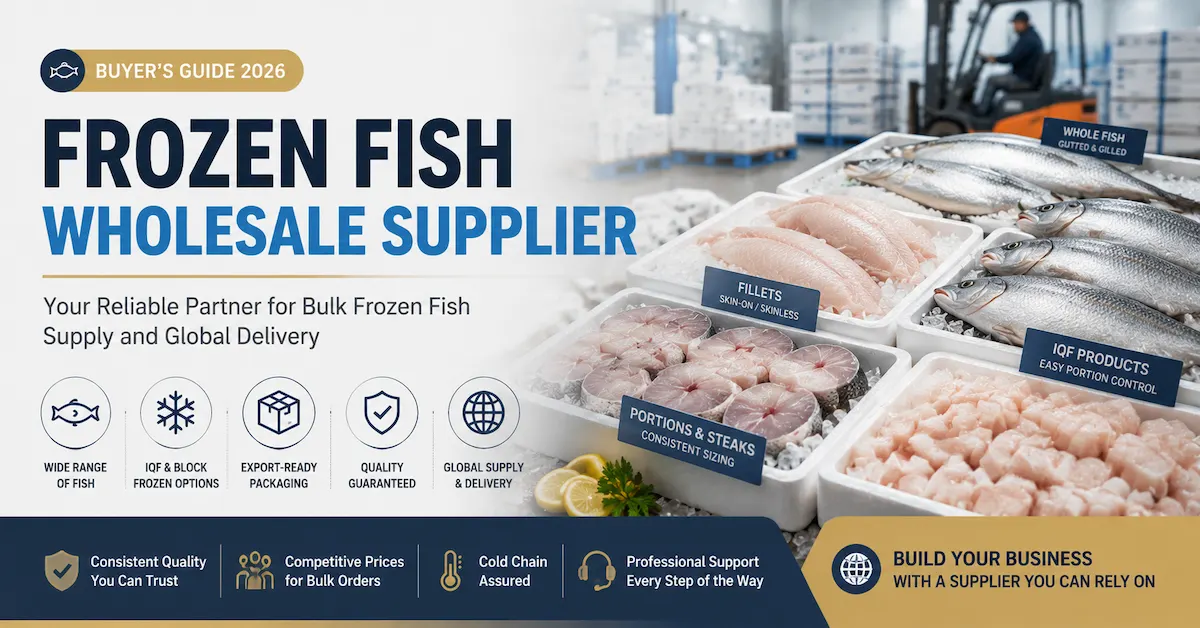


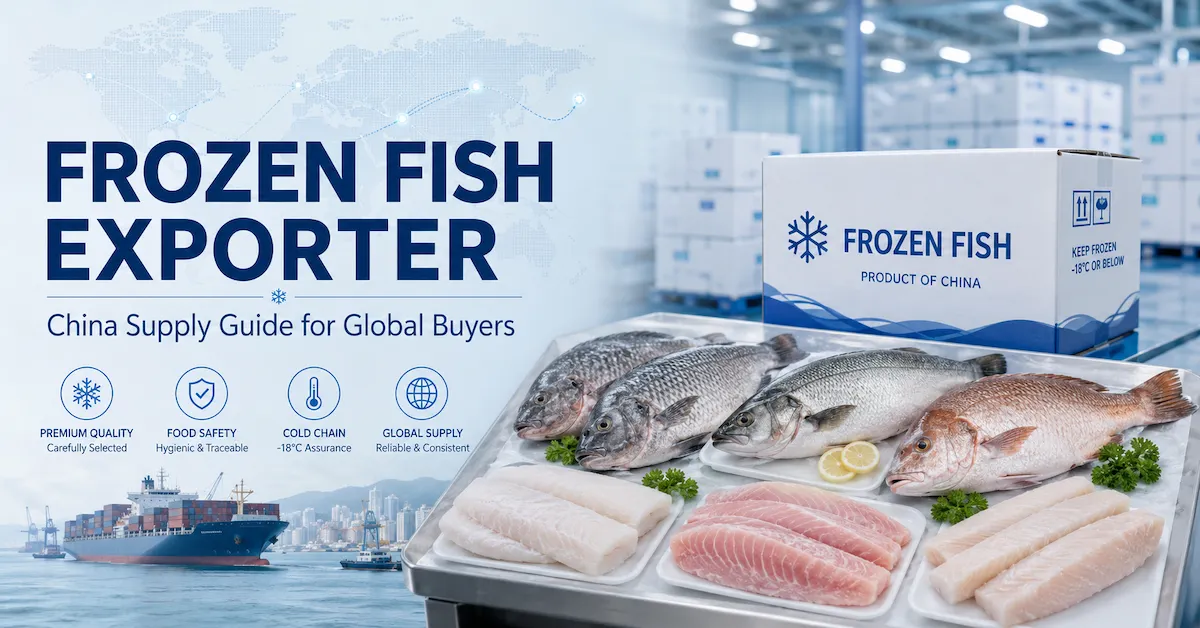
China supplies a wide range of frozen fish products to importers, wholesalers, supermarkets, restaurant distributors, and food processing companies worldwide.
However, choosing a frozen fish exporter involves more than asking which fish species are available. Buyers must also confirm the processing format, size grade, freezing method, net weight, glazing ratio, packaging, shelf life, cold-chain requirements, and destination-market documents.
A whole frozen fish supplied to a traditional wholesale market requires a different specification from a portion-controlled fillet supplied to a restaurant chain. Likewise, a processing factory may prioritize yield and bulk cost, while a supermarket may focus on retail appearance and private-label packaging.
This guide explains the main frozen fish categories available from China and how global buyers can select the right product and exporter.
Quick Answer: What Frozen Fish Does China Export?
Frozen fish exports from China can generally be divided into five commercial categories:
- Whole frozen fish
- Headless and gutted frozen fish
- Frozen fish fillets
- Portion-controlled frozen fish
- Processing-grade frozen fish materials
Common species and product groups may include:
- Tilapia
- Sea bass
- Red drum
- Snakehead
- Mackerel
- Hairtail
- Tuna
- Cod
- Pollock
- Flatfish
- Other farmed and wild-caught fish
Actual availability depends on the supplier, fishing or farming season, processing source, order quantity, destination market, and required specifications.
A professional frozen fish exporter should not simply provide a species list. The exporter should help the buyer select a product based on its intended market, cooking method, packaging format, and commercial target.
Frozen Fish Product Categories at a Glance
| Product Category | Common Formats | Typical Buyers | Main Purchasing Focus |
|---|---|---|---|
| Whole frozen fish | Whole round, scaled, gutted | Wholesalers, traditional markets, restaurants | Appearance, size, origin |
| Headless and gutted fish | H&G, tail-on, tail-off | Distributors, processors, foodservice | Yield and labor savings |
| Frozen fillets | Skin-on, skinless, boneless | Supermarkets, restaurants, meal factories | Piece weight and texture |
| Frozen portions | Fixed-weight cuts, steaks | Restaurant chains, catering, retail | Portion consistency |
| Processing-grade fish | Blocks, trimmings, bulk raw materials | Food processors | Yield, moisture, bone content |
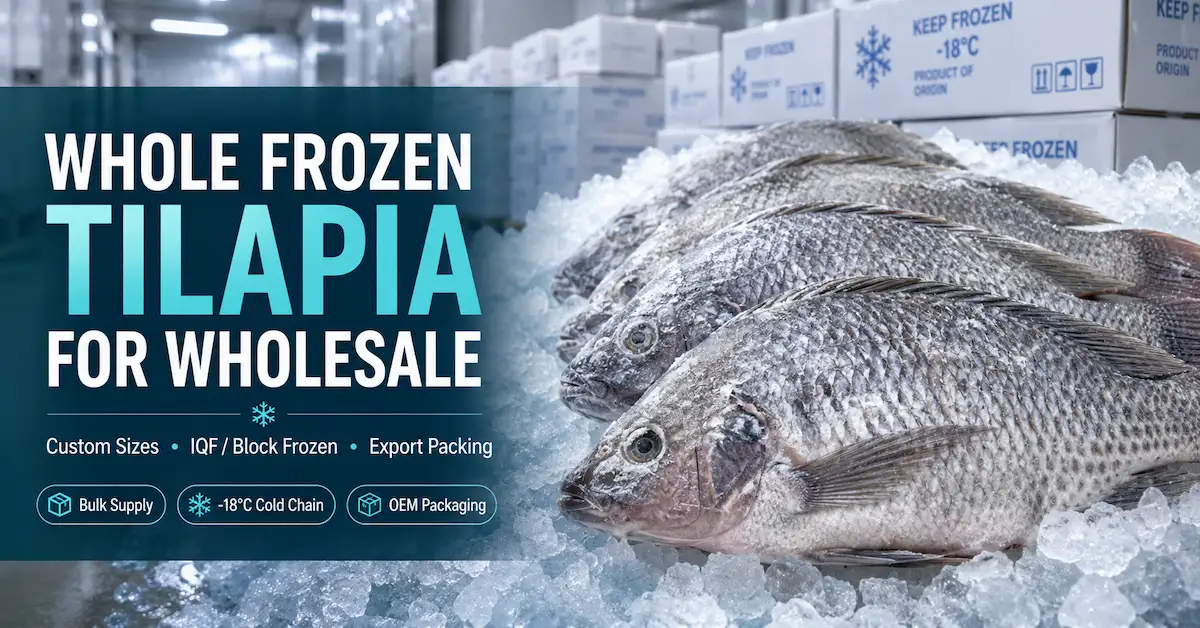
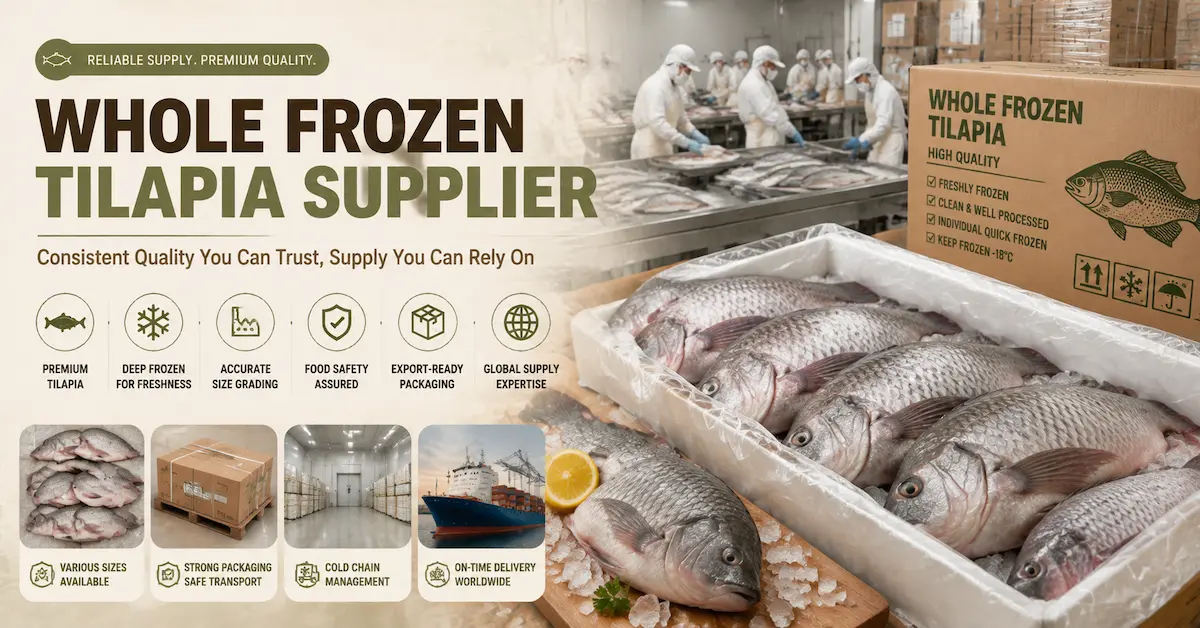
1. Whole Frozen Tilapia
Tilapia is one of the most widely recognized farmed fish products sourced from China. Its mild flavor, flexible cooking applications, and stable aquaculture supply make it suitable for several international markets.
Common formats include:
- Whole round tilapia
- Scaled and gutted tilapia
- Whole frozen red tilapia
- Whole frozen black tilapia
- Headless and gutted tilapia
- Individually frozen tilapia
- Block frozen tilapia
Whole frozen tilapia is commonly used by:
- Seafood wholesalers
- African importers
- Middle Eastern distributors
- Asian traditional markets
- Restaurants
- Food processing factories
Buyers should confirm:
- Red or black tilapia
- Individual fish weight
- Scaled or unscaled
- Gutted or whole round
- IQF or block frozen
- Net weight
- Glazing percentage
- Carton weight
Bothwin Food currently presents whole frozen tilapia, red tilapia, and black tilapia within its fish product range.
2. Frozen Sea Bass
Sea bass is suitable for restaurants, hotels, supermarkets, and wholesale markets that need a versatile whole fish.
It may be supplied as:
- Whole round sea bass
- Scaled sea bass
- Gutted sea bass
- Headless and gutted sea bass
- Whole IQF sea bass
- Vacuum-packed sea bass
- Sea bass portions or fillets, subject to availability
Sea bass can be steamed, grilled, baked, pan-fried, or used in prepared meals. Buyers serving foodservice channels often care about individual piece weight because it affects menu pricing and presentation.
Important purchasing details include:
- Scientific species name
- Farmed or wild-caught origin
- Piece-weight range
- Processing method
- Glazing
- Inner packaging
- Carton quantity
- Shelf life
A reliable frozen fish exporter should identify the exact species rather than quote only the general term “sea bass.”
3. Frozen Red Drum
Red drum is used by wholesalers, seafood restaurants, foodservice distributors, and markets that prefer whole fish with firm flesh.
Common product formats may include:
- Whole frozen red drum
- Scaled red drum
- Gutted red drum
- Headless and gutted red drum
- Individual frozen packs
- Bulk cartons
Buyers should evaluate:
- Natural skin color
- Piece-size uniformity
- Scale and gutting quality
- Package condition
- Texture after thawing
- Carton strength
- Repeat-order consistency
Bothwin Food currently lists frozen whole red drum as part of its product offering.
4. Frozen Snakehead Fish
Snakehead is consumed in several Asian markets and is commonly used in soups, hotpot, steaming, braised dishes, and further processing.
Possible formats include:
- Whole frozen snakehead
- Gutted snakehead
- Headless and gutted snakehead
- Frozen snakehead portions
- Processing-grade fish materials
The product may be suitable for:
- Asian grocery distributors
- Restaurant suppliers
- Regional wholesalers
- Food processing companies
Buyers should confirm the species, individual size, processing format, bone requirements, freezing method, and market labeling needs.
5. Frozen Mackerel
Mackerel is a high-volume international seafood product valued for its stronger flavor and relatively high fat content.
It may be sold as:
- Whole round frozen mackerel
- Headless and gutted mackerel
- Mackerel fillets
- Mackerel portions
- Block frozen mackerel
- IQF mackerel
Mackerel is widely used in:
- Wholesale markets
- Grilled fish dishes
- Canned products
- Smoked products
- Prepared meals
- Food processing
Because mackerel contains more fat than many lean whitefish products, packaging and temperature stability are especially important for maintaining flavor and quality during storage.
6. Frozen Hairtail
Hairtail is commonly traded in Asian, African, and Middle Eastern markets.
Typical formats include:
- Whole frozen hairtail
- Headless and gutted hairtail
- Hairtail sections
- Graded hairtail pieces
- Block frozen hairtail
Important specifications include:
- Width or weight grade
- Whole or cut format
- Broken-piece tolerance
- Silver skin appearance
- Glazing percentage
- Packaging method
Hairtail buyers often compare products based on width, appearance, cutting quality, and usable yield rather than price alone.
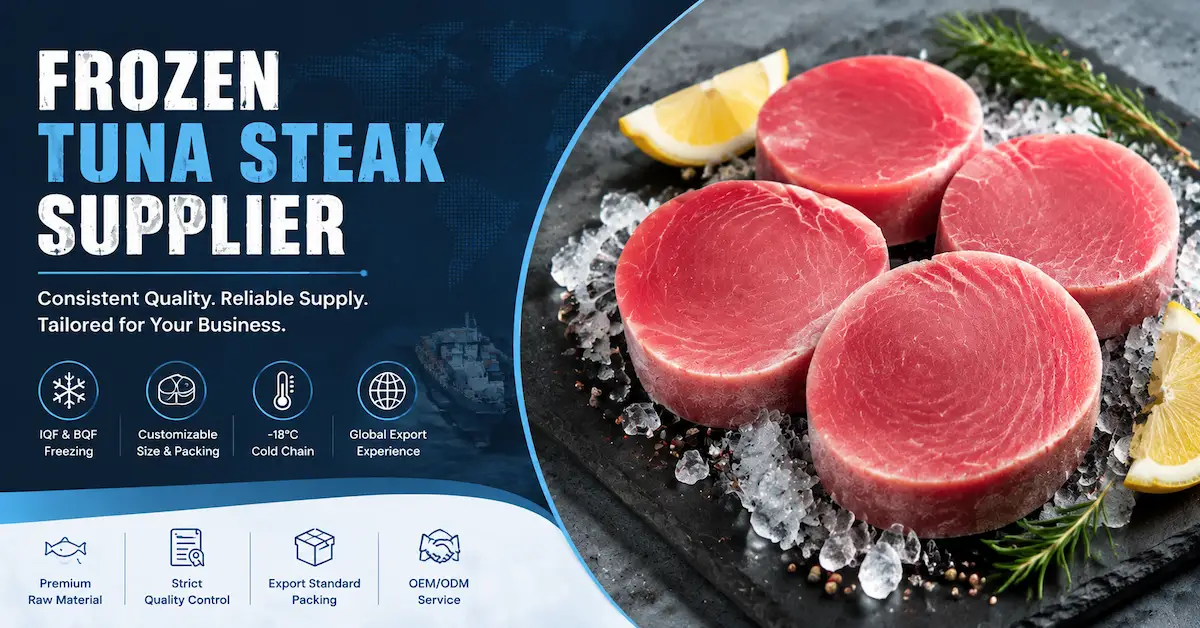
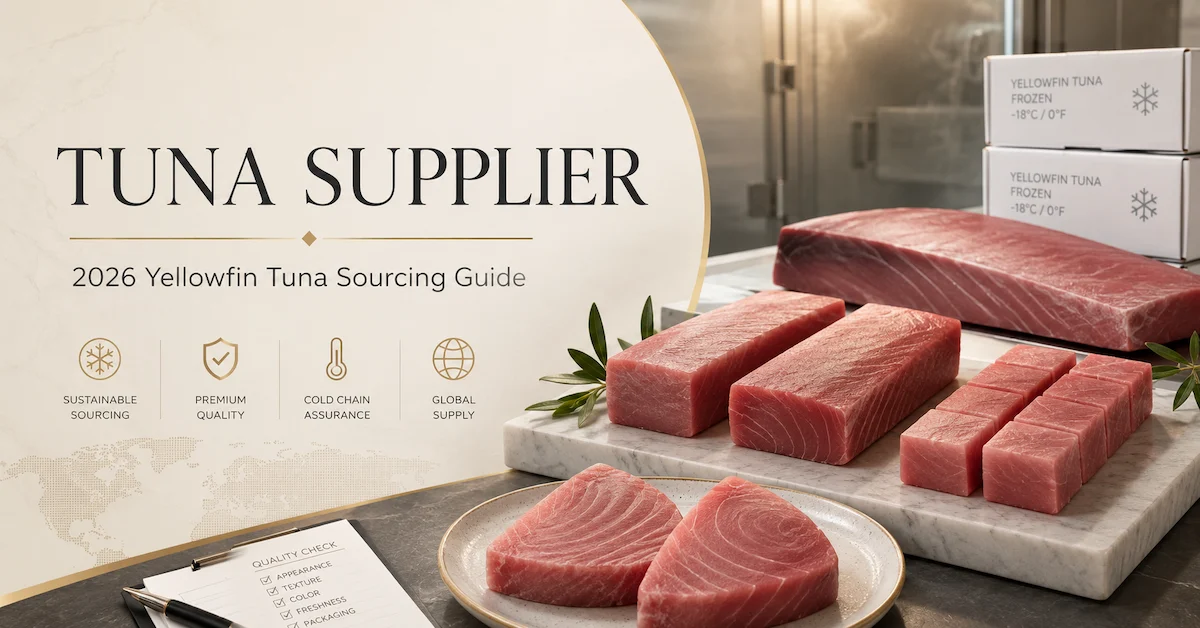
7. Frozen Tuna
Frozen tuna products serve several different markets, including wholesale, processing, foodservice, and value-added seafood production.
Possible formats include:
- Whole frozen tuna
- Tuna loins
- Tuna steaks
- Tuna portions
- Processing-grade tuna materials
Tuna specifications can vary significantly by species, size, processing method, intended application, and storage conditions.
Buyers should confirm:
- Exact tuna species
- Whole, loin, steak, or portion format
- Color requirements
- Processing method
- Storage temperature
- Packaging
- Intended use
Tuna should not be purchased under a vague specification because different products can have very different quality standards and commercial values.
8. Frozen Cod, Pollock, and Whitefish Fillets
China has a substantial fish-processing sector that produces frozen fillets and portions for international markets.
Common whitefish formats may include:
- Skinless fillets
- Skin-on fillets
- Boneless fillets
- Interleaved frozen fillets
- IQF fillets
- Portion-controlled cuts
- Block frozen fish materials
These products may be used by:
- Supermarkets
- Restaurant chains
- Institutional catering
- Breaded fish manufacturers
- Ready-meal factories
- Seafood distributors
Buyers should pay attention to:
- Raw material origin
- Scientific species name
- Fillet trimming standard
- Bone tolerance
- Piece-weight range
- Moisture and additives
- Net weight
- Glazing
- Thawing loss
A lower-priced fillet may not offer better value if the product has higher moisture, excessive glazing, unstable trimming, or lower cooking yield.
Whole Frozen Fish vs Frozen Fish Fillets
| Comparison Point | Whole Frozen Fish | Frozen Fish Fillets |
| Processing level | Low | Higher |
| Purchase price | Usually lower per kilogram | Usually higher |
| Kitchen labor | More cutting required | Easier to prepare |
| Yield control | Depends on buyer processing | More predictable |
| Best for | Wholesalers and traditional markets | Retail, restaurants, processors |
| Packaging | Bulk cartons or individual packs | IQF, interleaved, vacuum packs |
| Buyer priority | Size and whole-fish appearance | Trimming, bones, texture, weight |
Neither format is automatically better. The correct choice depends on the buyer’s customers, labor cost, processing ability, and sales channel.
IQF vs Block Frozen Fish
A frozen fish exporter may offer different freezing formats.
IQF Fish
IQF means individually quick frozen. Each fish or portion is frozen separately.
Main benefits include:
- Easy portion control
- Less product sticking
- Flexible daily use
- Suitable for restaurants and supermarkets
- Easier repacking
Block Frozen Fish
Several fish or pieces are frozen together into a block.
Main benefits include:
- Cost-efficient bulk supply
- Compact storage
- Suitable for factories
- Practical when the whole block is processed together
Buyers should choose the format according to warehouse handling, production flow, customer requirements, and price target.
What Makes Frozen Fish Export Grade?
Export-grade frozen fish should have more than an attractive appearance.
Buyers should evaluate:
| Quality Factor | Buyer Check |
| Species identity | Commercial and scientific name |
| Origin | Farming, catch, or processing source |
| Size grading | Individual weight or piece-size tolerance |
| Processing | Gutted, filleted, trimmed, or portioned |
| Freezing method | IQF, block, interleaved, or vacuum packed |
| Net weight | Actual fish quantity |
| Glazing | Declared protective ice percentage |
| Packaging | Strong enough for frozen transport |
| Shelf life | Suitable for shipment and resale |
| Cold chain | Stable frozen handling |
| Documentation | Matches destination requirements |
Buyers should request the complete specification before comparing quotations.
How to Check Frozen Fish Quality Before Buying
Sample testing is an important part of supplier approval.
Check the Frozen Product
Inspect:
- Natural appearance
- Piece-size consistency
- Glazing condition
- Broken pieces
- Frost inside the package
- Freezer burn
- Package seals
- Carton condition
Check After Thawing
Evaluate:
- Odor
- Flesh color
- Firmness
- Drip loss
- Skin condition
- Bone content
- Shape retention
- Cooking performance
Check Weight and Yield
Measure:
- Frozen gross weight
- Net product weight
- Glazing
- Thawing loss
- Cutting loss
- Cooking yield
The approved sample should be connected to a written specification and used as the reference for the bulk order.
Packaging Options from a Frozen Fish Exporter
| Packaging Format | Suitable Application |
| Bulk carton | Wholesale and processing |
| IQF inner bag | Foodservice and distribution |
| Interleaved pack | Fillets and easy separation |
| Vacuum pack | Premium retail and restaurants |
| Retail bag | Supermarkets and private labels |
| Foodservice pack | Hotels and catering |
| Custom carton | Importer or distributor branding |
Packaging should protect fish from moisture loss, physical damage, contamination, and temperature fluctuations.
Buyers should confirm:
- Inner bag material
- Pack weight
- Carton dimensions
- Carton strength
- Label language
- Production date
- Shelf life
- Storage instructions
- Batch number
- Private-label requirements
Cold-Chain Requirements for Frozen Fish Export
Frozen fish is commonly stored and transported at approximately -18°C or below, subject to the product specification and destination regulations.
Cold-chain control should include:
- Proper freezing after processing
- Stable frozen warehouse storage
- Efficient order picking
- Suitable carton protection
- Reefer container preparation
- Fast loading
- Temperature monitoring
- Destination cold storage
Temperature abuse may cause:
- Partial thawing
- Refreezing
- Large ice crystals
- Freezer burn
- Moisture loss
- Soft texture
- Shorter effective shelf life
For first orders or high-value shipments, buyers may request a temperature data logger.
How Frozen Fish Export Prices Are Calculated
Frozen fish pricing depends on several commercial factors:
- Species
- Origin
- Farmed or wild-caught status
- Season
- Individual size
- Processing method
- Fillet yield
- Trimming standard
- Bone and skin requirements
- Freezing method
- Glazing
- Net weight
- Packaging
- Order quantity
- Freight
- Incoterm
- Destination market
A buyer should not compare prices until all key specifications are aligned.
A lower price may reflect:
- Smaller size
- More glazing
- Lower net weight
- Less processing
- Weaker cartons
- Different species
- Higher bone content
- Lower trimming standards
Common Risks When Choosing a Frozen Fish Exporter
Unclear Species
Commercial names alone may create product or labeling confusion.
Inconsistent Size
Unstable grading can affect restaurant portions, retail sales, and processing yield.
Excessive Glazing
High ice weight reduces the quantity of usable fish.
Poor Packaging
Weak cartons or damaged bags reduce product value during export.
Incomplete Documents
Missing certificates or inconsistent descriptions may delay clearance.
Unstable Cold Chain
Temperature fluctuations can affect texture, shelf life, and customer satisfaction.
No Sample Reference
Without an approved sample and written specification, quality claims are difficult to resolve.
How to Choose a Reliable Frozen Fish Exporter
Check Product Specialization
Confirm whether the exporter regularly handles the species and product format you need.
Request Full Specifications
Ask for species, origin, size, processing, net weight, glazing, freezing method, packaging, and shelf life.
Test Samples
Evaluate the fish while frozen, after thawing, and after cooking or processing.
Review Cold-Chain Ability
Ask about frozen storage, loading, reefer settings, and temperature monitoring.
Confirm Packaging
Make sure the packaging suits your wholesale, foodservice, retail, or processing channel.
Verify Export Documents
Provide the destination document checklist before production.
Evaluate Communication
Choose an exporter that responds clearly, confirms details in writing, and provides realistic lead times.
Why Work with Bothwin Food
Bothwin Food is a seafood supplier serving international B2B buyers with farmed and wild seafood products.
Its current frozen fish product direction includes:
- Whole Frozen Tilapia
- Red Tilapia
- Black Tilapia
- Sea Bass
- Red Drum
- Snakehead
- Other frozen seafood products subject to availability
As a flexible frozen fish exporter, Bothwin Food can help buyers organize sourcing requirements according to species, size, processing format, freezing method, glazing, packaging, quantity, and destination market.
Buyers can review current products through the Products page, learn more about the company through the About Us page, read additional sourcing information through the Blog page, or send an RFQ through the Contact Us page.
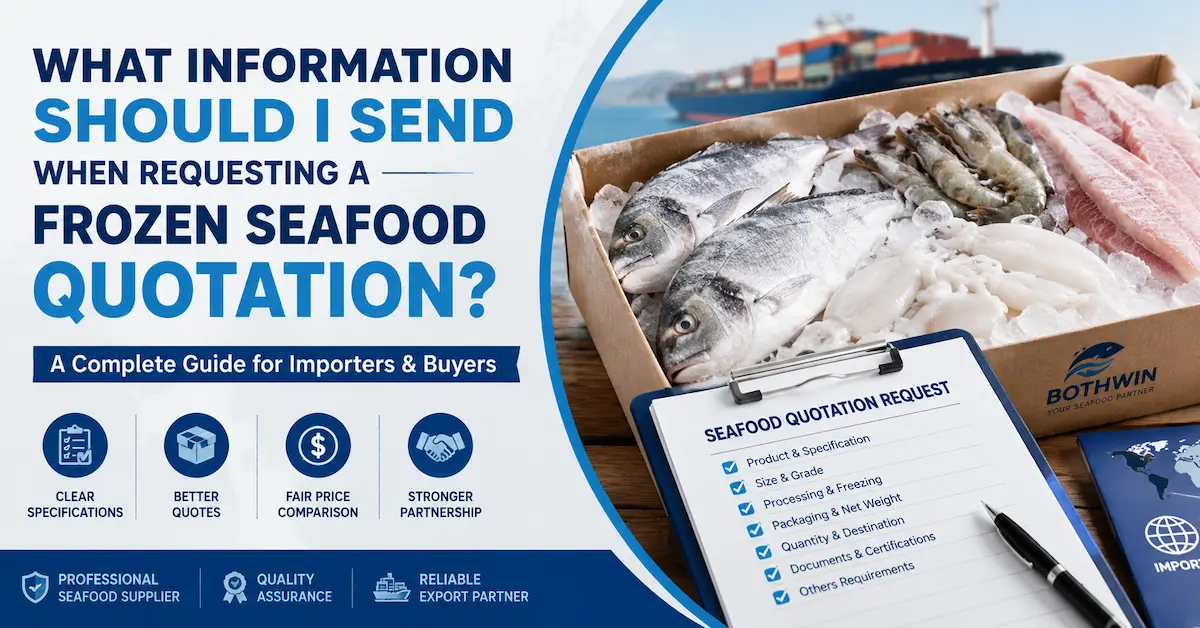
Frozen Fish RFQ Checklist
To receive an accurate quotation, include:
- Product name
- Scientific species name if known
- Preferred origin
- Farmed or wild-caught requirement
- Whole, gutted, fillet, or portion format
- Size or piece-weight range
- Skin and bone requirements
- IQF or block frozen preference
- Net weight
- Maximum glazing ratio
- Inner packaging
- Outer carton
- Private-label requirement
- Order quantity
- Destination country and port
- Required documents
- Sample request
- Target shipment date
A detailed RFQ allows the exporter to recommend a suitable product and reduces unnecessary quotation revisions.
FAQ
What types of frozen fish are exported from China?
China exports whole frozen fish, headless and gutted fish, frozen fillets, fixed-weight portions, and processing-grade fish materials across several farmed and wild-caught species.
What fish products does Bothwin Food currently offer?
Bothwin Food currently presents products including whole frozen tilapia, red tilapia, black tilapia, sea bass, red drum, and snakehead. Availability and specifications should be confirmed when requesting a quotation.
What should buyers check when choosing a frozen fish exporter?
Buyers should check species identity, origin, processing method, size grade, net weight, glazing, freezing format, packaging, samples, cold-chain capability, and export documents.
Is whole frozen fish cheaper than fillets?
Whole fish is generally less processed and may have a lower purchase price, but buyers must account for cutting labor, bones, skin, and processing loss.
What is the difference between IQF and block frozen fish?
IQF products are frozen separately for flexible use. Block frozen products are frozen together and are commonly used by processors and high-volume buyers.
Why is glazing used on frozen fish?
Glazing protects fish from moisture loss and freezer burn. Buyers should confirm the percentage because excessive glazing lowers usable fish weight.
What temperature should frozen fish be stored at?
Frozen fish is commonly stored and transported at approximately -18°C or below, depending on the specification and destination requirements.
Should buyers request samples?
Yes. Samples help buyers evaluate appearance, grading, net weight, thawing loss, texture, cooking performance, and packaging.
Can frozen fish be supplied with private-label packaging?
Private-label bags, cartons, labels, and retail packaging may be available depending on the product, order quantity, and packaging requirements.
How can I request a quotation from Bothwin Food?
Send Bothwin Food the species, product format, size, glazing, packaging, quantity, destination, documents, and sample requirements.
Conclusion
China exports a broad range of whole frozen fish, fillets, portions, and processing-grade fish products for international markets.
The right frozen fish exporter should do more than provide a product list. It should clearly confirm species, origin, processing, grading, net weight, glazing, packaging, cold-chain requirements, samples, and export documents.
Bothwin Food supplies several frozen fish products for international importers, wholesalers, restaurants, supermarkets, and processors. Contact Bothwin Food with your target species, specifications, packaging, destination, and order quantity to receive a suitable sourcing proposal.