

Where Can I Buy Frozen Tuna in Bulk From China?
If you are asking where to buy frozen tuna in bulk from China, the best starting point is not simply finding the lowest online price. International buyers should look for a supplier that can match the required tuna specification, support bulk quantities, control product quality, prepare export documentation, and coordinate cold-chain logistics.
For importers, wholesalers, seafood distributors, foodservice companies, and processors,the main sourcing options are:
| Sourcing Option | Best For | Main Consideration |
|---|---|---|
| Direct seafood supplier | Importers and wholesalers | Product and supply capability |
| Processing/export supplier | Bulk international orders | Processing and export support |
| Seafood sourcing partner | Multi-product buyers | Flexible product matching |
| Trading company | Buyers seeking broader sourcing | Need to verify supply source |
For a long-term B2B program, buyers should prioritize product consistency, specification transparency, quality control, export capability, and repeat supply over a single low quotation.
Bothwin describes itself as a Chinese farmed and wild seafood supplier focused on wholesale sourcing and international seafood trade support. Its current website states that it supports importers, wholesalers, and foodservice distributors with sourcing, cold-chain control, export packing, and flexible OEM solutions.
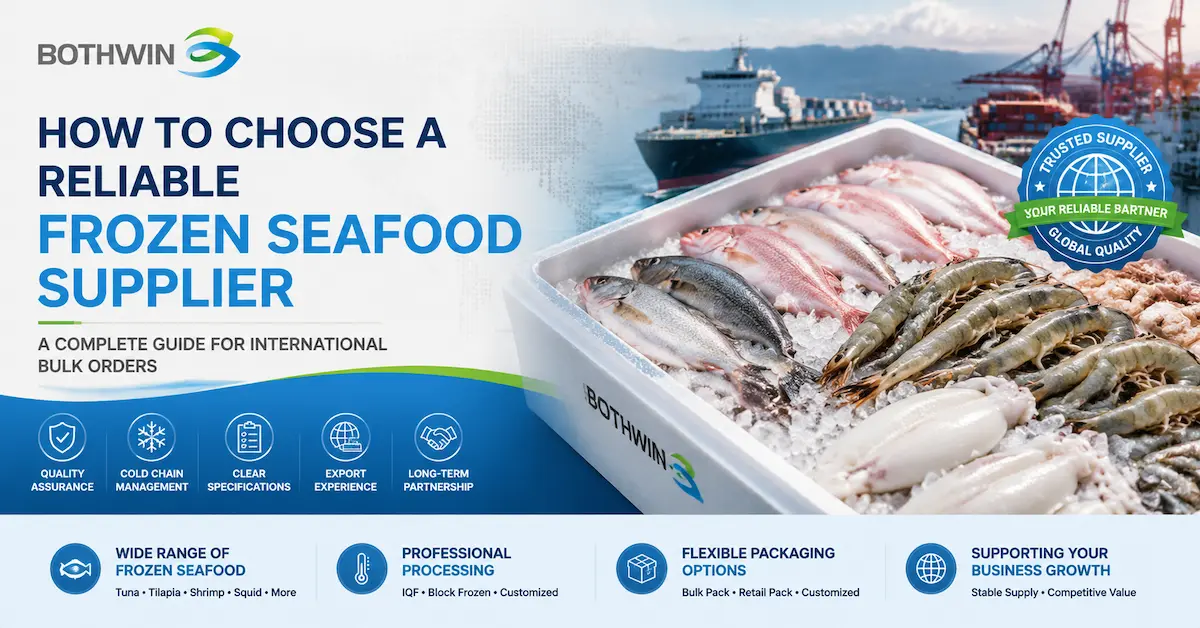
For buyers looking at multiple seafood categories alongside tuna, the Bothwin frozen seafood product range provides a starting point for discussing sourcing requirements.
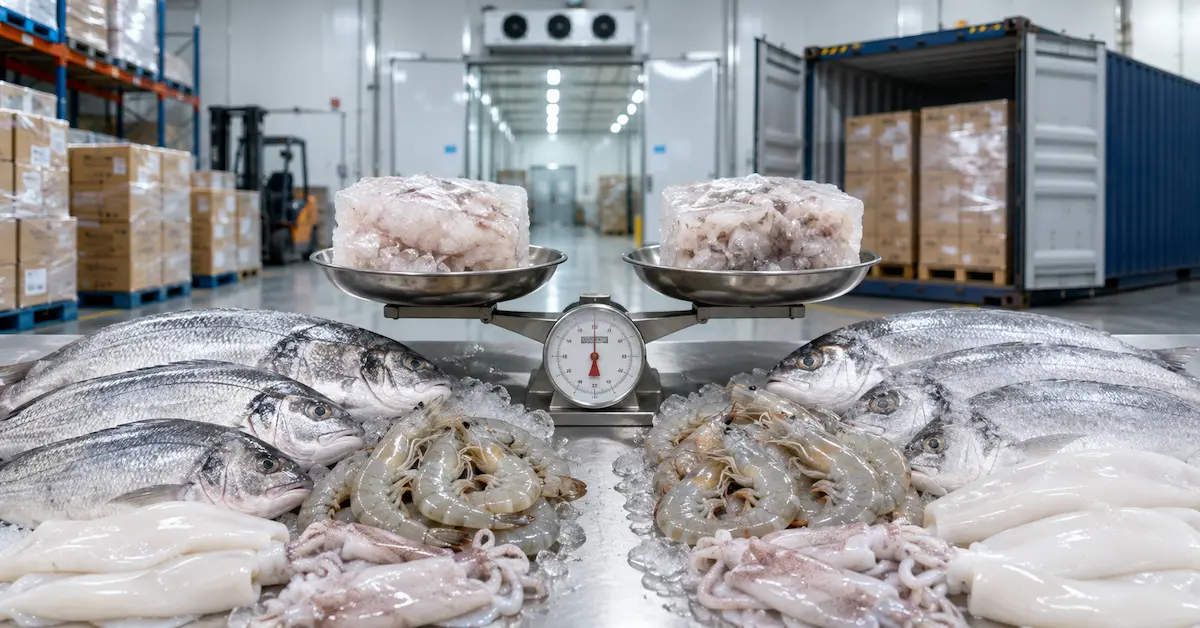
What Types of Buyers Purchase Frozen Tuna in Bulk?
Bulk frozen tuna is generally purchased by businesses that need predictable supply rather than occasional consumer quantities.
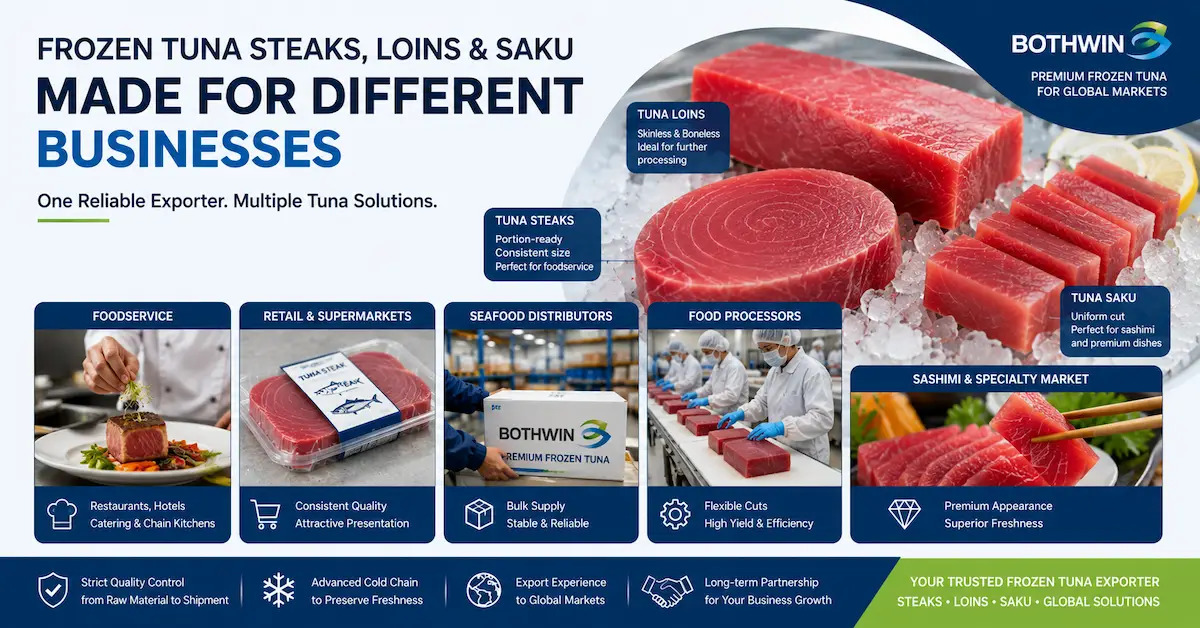
Seafood Importers
Importers may purchase container-level quantities for distribution in their domestic markets.
Their priorities often include:
- competitive landed cost
- reliable supply
- product specifications
- export documentation
- cold-chain management
Seafood Wholesalers
Wholesalers need products that can be resold to multiple customers.
They usually pay particular attention to:
- size consistency
- packaging
- product appearance
- repeat-order availability
Foodservice Distributors
Restaurants, hotels, catering companies, and foodservice distributors may require specific cuts or portion formats.
Their requirements can include:
- portion size
- thickness
- processing format
- cooking performance
- packaging
Seafood Processors
Processors may purchase tuna as raw material for further production.
They may focus on:
- species
- raw material condition
- size
- yield
- processing suitability
- bulk packaging
This is why a good bulk frozen tuna supplier should first understand the buyer's application instead of quoting a generic product.
Where Should International Buyers Source Frozen Tuna From China?
There are several ways to approach Chinese seafood sourcing, but the quality of the sourcing channel matters.
Direct Supplier Sourcing
Working directly with a seafood supplier can simplify communication around:
- product specifications
- packaging
- quality requirements
- order quantities
- delivery schedules
For repeat buyers, direct communication can also make it easier to establish a consistent specification for future orders.
Supplier With Export Experience
International buyers should consider whether the supplier understands:
- export documentation
- reefer container logistics
- destination requirements
- shipment coordination
A supplier that understands the complete export process can reduce communication gaps between production and delivery.
Multi-Category Seafood Sourcing
If your company imports several seafood categories, a supplier capable of handling multiple products may simplify procurement.
Bothwin's current product platform covers multiple seafood categories, including fish, squid, tilapia, shrimp-related products, and other seafood offerings.
This can be useful for buyers who want to consolidate seafood sourcing rather than manage every category separately.
What Should You Check Before Buying Frozen Tuna in Bulk?
Before selecting a frozen tuna supplier China, confirm the specification in writing.
The most important information includes:
| Specification | What the Buyer Should Confirm |
|---|---|
| Tuna species | Exact species required |
| Product form | Whole, loin, steak, portion, etc. |
| Size | Weight or size grade |
| Processing | Cleaning, trimming, cutting requirements |
| Freezing | IQF, block or other agreed method |
| Glazing | Required percentage or tolerance |
| Net weight | Calculation basis |
| Packaging | Carton, bag,vacuum or foodservice format |
| Storage | Required frozen storage conditions |
| Shelf life | Required remaining shelf life |
| Origin | Product sourcing requirements |
| Quantity | Trial, pallet, container or recurring volume |
The more specific the RFQ, the easier it is to compare quotations accurately.
A request such as:
“Please quote frozen tuna.”
is usually too vague.
A stronger inquiry would specify:
Frozen tuna + species + product form + size + glazing + packaging + quantity + destination.
This gives the supplier enough information to prepare a more meaningful quotation.
How Should Buyers Compare Wholesale Frozen Tuna Quotations?
Price comparison is one of the most important stages of bulk purchasing.
However, buyers should not compare two quotations simply by looking at the USD/kg number.
Consider:
Effective purchasing cost = Total purchase cost ÷ usable seafood weight
For frozen seafood,usable weight can be affected by:
- glazing
- packaging
- processing
- trimming
- product specification
For example:
| Supplier | Quoted Price | Glazing | Product Specification | Buyer Assessment |
|---|---|---|---|---|
| Supplier A | Lower | Higher | Standard | Check usable weight |
| Supplier B | Higher | Lower | Same target | Potentially better value |
| Supplier C | Lowest | Unclear | Different | Difficult to compare |
This is why importers should request the same specification from every supplier before comparing prices.
For a deeper explanation of seafood quotation evaluation, connect this article to your existing Frozen Seafood Quotation Guide.
Why Does Glazing Matter When Buying Frozen Tuna in Bulk?
Glazing is an important commercial specification for frozen seafood.
A layer of ice can help protect frozen seafood from dehydration and freezer burn. However, buyers should know exactly how the supplier calculates:
- gross weight
- net weight
- glazed weight
- product weight
If two suppliers quote different glazing levels, the apparent price difference may not represent the real difference in seafood value.
Importers should therefore specify an acceptable glazing percentage in the RFQ and purchase agreement.
This is particularly important for high-volume orders because a small difference in usable product weight can become commercially significant across an entire shipment.
See the related Bothwin guide:
How Does Glazing Percentage Affect Frozen Seafood Cost for Importers?
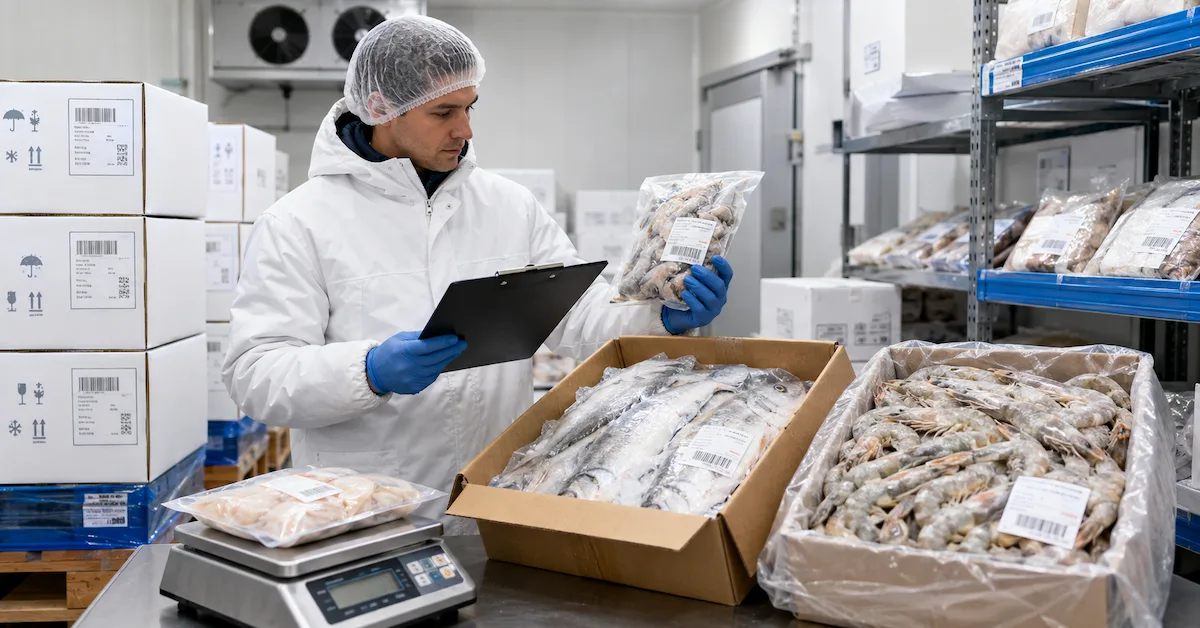
How Can Buyers Verify the Quality of Frozen Tuna?
A quotation is not enough to verify product quality.
Before placing a large order, buyers should consider a sample or trial-order process where appropriate.
Product Appearance
Check:
- color
- surface condition
- visible damage
- ice accumulation
- packaging condition
Size Consistency
Check whether actual pieces correspond to the agreed size range.
Processing Quality
Depending on the product, inspect:
- cutting
- trimming
- cleaning
- portion consistency
Weight
Verify:
- carton weight
- net weight
- piece weight where applicable
Thawing Performance
For relevant product formats, buyers may evaluate:
- drip loss
- texture
- appearance
- cooking performance
A supplier should be able to explain its quality control process rather than simply promise “high quality.”
For a broader pre-purchase inspection framework, link to What Quality Checks Should Importers Perform Before Buying Frozen Seafood?.
What Quality and Food Safety Controls Should a Frozen Tuna Supplier Have?
Food safety should be considered before the order is shipped.
A reliable supplier should have clear procedures for:
- raw material control
- processing hygiene
- freezing
- packaging
- storage
- traceability
- shipment preparation
Buyers may also need to verify applicable food safety systems and documentation according to their destination market.
HACCP-based food safety management is particularly relevant when evaluating seafood suppliers, but buyers should avoid treating a single certification or label as the only measure of supplier quality.
The full system matters:
Raw Material → Processing → Freezing → Storage → Transportation → Delivery
For related supplier evaluation, see HACCP Frozen Seafood Supplier: How Safe Seafood Transportation Is Managed.
How Is Frozen Tuna Shipped From China?
Bulk frozen tuna is commonly transported through a temperature-controlled export chain.
A typical process is:
Processing
↓
Frozen Storage
↓
Refrigerated Transportation
↓
Port
↓
Reefer Container
↓
Destination Port
↓
Importer Cold Storage
The buyer should confirm:
- storage conditions
- loading procedures
- reefer container requirements
- expected transit time
- destination cold storage
- temperature-related documentation where required
Cold-chain responsibility should not be considered only after the container reaches the destination.
Bothwin's current product positioning emphasizes cold-chain control and export packing for global B2B seafood buyers.
For additional guidance, link to How Does Cold Chain Management Affect Frozen Seafood Quality During Export?.
What Export Documents Should Buyers Discuss With a Frozen Tuna Supplier?
Documentation requirements vary according to:
- destination country
- species
- product form
- origin
- intended use
- applicable regulations
Common commercial and shipment documents can include:
- commercial invoice
- packing list
- bill of lading
- product specification
- certificate of origin
- applicable health certificate
- traceability records
- laboratory reports where required
For tuna and other species-specific seafood products, additional documents may apply depending on the market.
The important point is to confirm documentation before production and shipment, rather than discovering requirements after the cargo reaches the destination.
See Bothwin's related guide:
What Documents Are Needed for Seafood Export?
That guide explains how product name, species, processing format, quantity, weight, origin, and shipment information should remain consistent across relevant documents.
How Much Frozen Tuna Should You Buy From China?
The right order quantity depends on:
- sales volume
- storage capacity
- destination market
- shelf-life requirements
- supplier MOQ
- shipping economics
A first-time buyer should not automatically purchase the maximum possible volume.
A practical progression can be:
Supplier Evaluation
↓
Specification Confirmation
↓
Sample
↓
Trial Order
↓
Bulk Order
↓
Repeat Supply Program
This approach allows buyers to evaluate actual product performance before committing to a larger purchasing program.
For established buyers, recurring orders should use a documented product specification so that future shipments can be compared against the same commercial standard.
How Can Buyers Reduce Risk When Buying Frozen Tuna in Bulk?
Bulk seafood purchasing involves several types of risk.
| Risk | Possible Cause | Buyer Response |
|---|---|---|
| Quality variation | Unclear specification | Written product standard |
| Weight dispute | Different weight basis | Confirm net weight |
| Glazing difference | Unspecified glazing | Set acceptable ratio |
| Shipment delay | Poor coordination | Confirm schedule early |
| Documentation issue | Incomplete requirements | Review documents before shipment |
| Temperature issue | Weak cold chain | Confirm storage and transport plan |
| Product mismatch | Vague RFQ | Provide detailed specifications |
| Repeat-order variation | No agreed standard | Keep approved specifications |
The best way to reduce risk is to make important commercial details explicit before production.
This includes:
- product
- specification
- quantity
- packaging
- quality requirements
- inspection
- delivery terms
- documentation
- claims procedure
Why Choose Bothwin for Frozen Seafood Sourcing?
Bothwin Development (HK) Limited states that it was founded in 2005 and is managed by seafood and aquaculture professionals. Its current company information describes the business as a Chinese supplier of farmed and wild seafood supporting global wholesale sourcing and international trade.
The company identifies its main export markets as:
- South America
- Europe
- Africa
- USA
- Southeast Asia
- Central Asia
For B2B buyers, the relevant value is not simply the number of seafood products available.It is the ability to organize purchasing requirements around:
- seafood category
- species
- size grade
- processing method
- freezing format
- net weight
- glazing
- packaging
- destination market
- order quantity
Bothwin's website specifically positions its sourcing workflow around product selection, specification confirmation, quality inspection, packaging coordination, and cold-chain delivery planning.
This approach is useful when buyers need a supplier to help translate a market requirement into a practical seafood specification.
What Information Should You Send When Requesting a Frozen Tuna Quote?
To receive a more accurate quotation, send the supplier a complete RFQ.
Frozen Tuna RFQ Checklist
Product
- Frozen tuna
- Required species
- Product form
Specification
- Size
- Weight range
- Processing requirements
- Freezing method
- Glazing requirement
Packaging
- Bulk carton
- Foodservice packaging
- Retail packaging
- Private-label requirement,if applicable
Commercial Information
- Required quantity
- Destination country
- Destination port
- Target delivery date
- Intended application
Quality and Compliance
- Required certificates
- Inspection requirements
- Shelf-life requirement
- Label requirements
The more complete the inquiry, the easier it becomes for the supplier to determine product availability, packaging feasibility, documentation, and logistics requirements.
Frozen Tuna Supplier Comparison Checklist
Before placing a bulk order,buyers can use this checklist:
| Item | Confirmed |
|---|---|
| Tuna species confirmed | ☐ |
| Product form confirmed | ☐ |
| Size grade confirmed | ☐ |
| Processing requirements confirmed | ☐ |
| Freezing method confirmed | ☐ |
| Glazing requirement confirmed | ☐ |
| Net weight basis confirmed | ☐ |
| Packaging confirmed | ☐ |
| Quality requirements confirmed | ☐ |
| Sample reviewed | ☐ |
| Export documents confirmed | ☐ |
| Cold-chain plan confirmed | ☐ |
| Destination requirements confirmed | ☐ |
| Quantity and delivery schedule confirmed | ☐ |
FAQ About Buying Frozen Tuna in Bulk From China
Where can I buy frozen tuna in bulk from China?
International buyers can source frozen tuna through Chinese seafood suppliers, exporters, processing companies, or sourcing partners. The best option depends on the required species, product form, quantity, destination, and documentation requirements.
How do I find a reliable frozen tuna supplier in China?
Evaluate the supplier's product capability, processing standards, quality control, export experience, cold-chain management, documentation support, and ability to maintain consistent specifications across repeat orders.
What should I include in a frozen tuna RFQ?
Include species, product form, size, processing requirements, freezing method, glazing, packaging, quantity, destination port, required documents, and target delivery schedule.
Is buying frozen tuna directly from China cheaper?
China sourcing can be competitive, but total cost depends on product specification, processing, packaging, freight, duties, and other import-related expenses. Buyers should compare landed cost rather than supplier price alone.
Should I request a sample before a bulk frozen tuna order?
For new supplier relationships, a sample or trial order can help buyers evaluate appearance, size, processing, weight, packaging, and product suitability before committing to larger quantities.
How should I compare two frozen tuna suppliers?
Request comparable specifications from each supplier and compare species, size, processing, glazing, net weight, packaging, quality requirements, trade terms, documentation, and delivery conditions.
Does glazing affect frozen tuna purchasing cost?
Yes. Glazing affects the relationship between product weight and usable seafood weight. Buyers should specify the acceptable glazing level and confirm the net-weight calculation method.
What documents are needed to import frozen tuna from China?
Requirements vary by destination and product.Buyers may need commercial documents, product specifications, certificates of origin, health-related documents, traceability information, or species-specific documentation where applicable.
How is frozen tuna shipped internationally?
Bulk frozen tuna is normally transported through a controlled cold chain involving frozen storage, refrigerated transport, reefer containers, international shipping, and destination cold storage.
Can Bothwin support bulk seafood sourcing?
Bothwin states that it supports global B2B buyers with seafood sourcing, specification confirmation, quality inspection, packaging coordination, cold-chain planning, and export support. Buyers can submit their specific requirements for evaluation.
Conclusion
If you are looking for where to buy frozen tuna in bulk from China, the right approach is to evaluate the complete supply chain rather than choose a supplier based on price alone.
A reliable sourcing partner should be able to support:
Product Specification
→ Quality Control
→ Sample Approval
→ Bulk Supply
→ Export Documentation
→ Cold Chain
→ Repeat Orders
Before requesting a quotation, clearly define your tuna species, product form, size, processing, glazing, packaging, quantity, destination, and quality requirements.
For buyers sourcing multiple seafood categories, explore Bothwin's frozen seafood products and send your detailed requirements through Bothwin's contact page for a sourcing discussion.