

blog
Who Is a Reliable Frozen Tuna Exporter for International Wholesale Orders?

Who Is a Reliable Frozen Tuna Exporter for International Wholesale Orders?

blog avatar
Release time
Aug 26 2026
  • Frozen Seafood Export & Logistics
  • Frozen Seafood Products

Follow us

reliable-frozen-tuna-exporter

For international seafood buyers, choosing the right frozen tuna exporter is an important decision that directly affects product quality, supply stability, and business profitability.

Frozen tuna is widely used by:

  • seafood wholesalers
  • restaurants
  • foodservice distributors
  • supermarkets
  • seafood processors

However, not every supplier can provide consistent quality for long-term wholesale orders.

A reliable frozen tuna exporter should have:

  • stable product supply
  • clear product specifications
  • professional processing capability
  • strict quality control
  • effective cold chain management
  • international export experience

For bulk buyers, selecting a supplier is not only about finding competitive pricing.

The key question is:

Can this frozen tuna exporter provide consistent products and reliable support for long-term cooperation?

Bothwin provides frozen seafood sourcing solutions for international buyers, including product selection, specification confirmation, quality coordination, and export support. Buyers can explore Bothwin frozen seafood products for commercial seafood sourcing requirements.
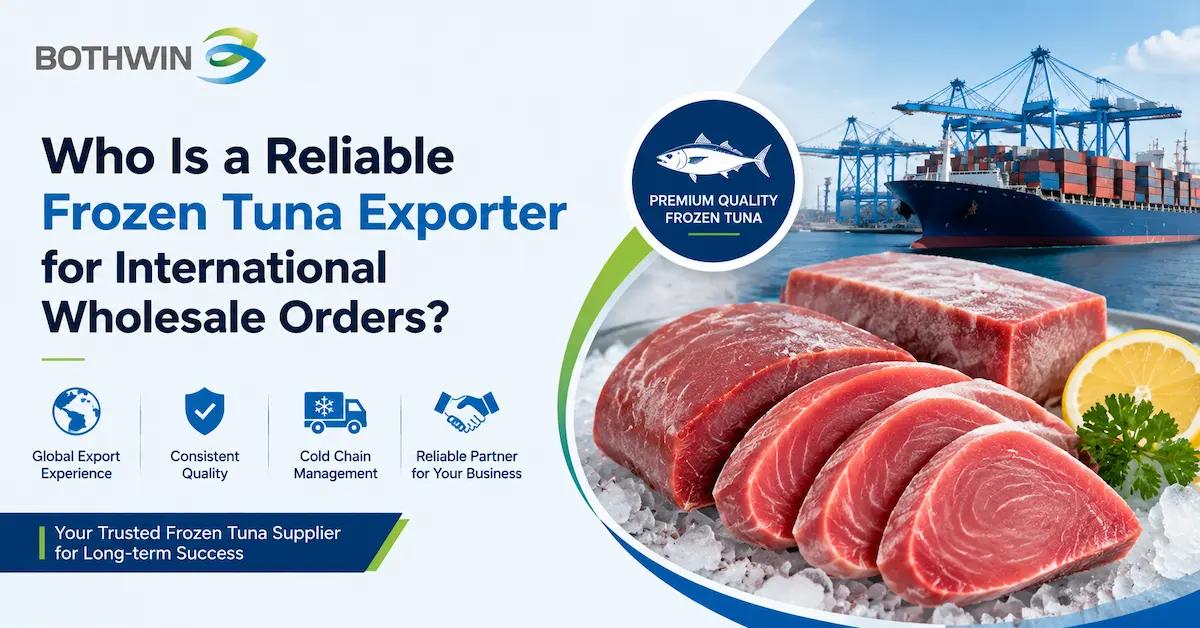
Reliable frozen tuna exporter

Why Choosing the Right Frozen Tuna Exporter Matters?

Frozen tuna is usually purchased in large quantities and transported through international supply chains.

A suitable exporter can help buyers reduce:

  • inconsistent product quality
  • shipment delays
  • specification problems
  • unexpected costs
  • customer complaints

For seafood wholesalers and distributors, supplier reliability directly affects their own market reputation.

Consistent Product Quality

Wholesale buyers need products that maintain consistent:

  • size
  • color
  • texture
  • processing standards
  • packaging

If product quality changes between shipments, buyers may face difficulties managing customer expectations.

Stable Supply Capability

Long-term seafood businesses require suppliers that can support:

  • repeat orders
  • stable production
  • predictable delivery schedules

A reliable exporter should understand buyer requirements and maintain consistent supply performance.

Professional Export Support

International tuna purchasing involves:

  • documentation
  • shipment arrangements
  • cold chain coordination
  • destination market requirements

Experienced exporters can help make the purchasing process smoother.

What Types of Frozen Tuna Products Can Exporters Provide?

A professional frozen tuna exporter should offer different product options according to market applications.

Common frozen tuna products include:

Frozen Tuna Steak

Frozen tuna steak is widely used in:

  • restaurants
  • hotels
  • foodservice operations
  • seafood retailers

Buyers usually focus on:

  • cut size
  • thickness
  • appearance
  • portion consistency

Frozen Tuna Loin

Frozen tuna loin is commonly purchased by:

  • seafood processors
  • distributors
  • food manufacturers

Important specifications include:

  • tuna species
  • size
  • trimming requirements
  • packaging method

Frozen Whole Tuna

Whole frozen tuna is often used by:

  • seafood wholesalers
  • processing companies

Buyers usually evaluate:

  • fish size
  • weight range
  • quality condition
  • freezing standard

Frozen Yellowfin Tuna

Yellowfin tuna is one of the commonly traded tuna products in international seafood markets.

Buyers may check:

  • origin
  • product specification
  • processing method
  • export capability

For buyers sourcing tuna products, Bothwin provides frozen tuna solutions with commercial specifications and export support. Learn more about Premium Frozen Tuna.

What Makes a Reliable Frozen Tuna Exporter?

A reliable exporter should provide more than products.

Buyers should evaluate the supplier based on several key factors.

Product Specification Management

Before ordering frozen tuna, buyers should confirm:

  • tuna species
  • product form
  • size grade
  • weight requirements
  • glazing percentage
  • packaging details

Clear specifications help prevent misunderstandings during production and shipment.

Processing Capability

A professional frozen tuna exporter should have experience in:

  • seafood handling
  • cutting processes
  • grading
  • freezing
  • packaging

Processing capability directly affects final product consistency.

Quality Control System

Quality control is essential for frozen tuna exports.

Important control points include:

  • raw material inspection
  • processing hygiene
  • weight checking
  • packaging inspection
  • temperature control

Buyers should evaluate whether suppliers have structured quality management procedures.
How Should Buyers Evaluate Frozen Tuna Quality Before Placing Wholesale Orders?

For international buyers, frozen tuna quality evaluation should happen before shipment, not after products arrive at the destination.

A professional frozen tuna exporter should have clear quality control procedures covering:

  • raw material inspection
  • product grading
  • processing control
  • freezing management
  • packaging inspection
  • shipment verification

Before placing a bulk order, buyers should confirm that the supplier can consistently deliver products according to the agreed specification.

Check 1: Verify Frozen Tuna Species and Product Specification

The first step when evaluating a frozen tuna exporter is confirming the exact product specification.

Different tuna species and product forms have different market values and applications.

Buyers should confirm:

Tuna Species

Examples:

  • Yellowfin tuna
  • Skipjack tuna
  • Bigeye tuna
  • Other commercial tuna species

Product Form

Confirm whether the product is:

  • whole tuna
  • tuna loin
  • tuna steak
  • tuna portion

Size Requirement

Specify:

  • weight range
  • piece size
  • thickness
  • acceptable tolerance

Processing Standard

Confirm:

  • trimming requirements
  • cutting method
  • packaging format

Clear specifications help suppliers produce products that match the buyer's market requirements.

Check 2: Evaluate Frozen Tuna Processing Capability

Processing capability directly affects the consistency of frozen tuna products.

A professional exporter should understand how to control:

  • raw material handling
  • cutting accuracy
  • product grading
  • freezing process
  • packaging procedures

For example, frozen tuna steak buyers usually require:

  • consistent thickness
  • clean cutting
  • stable portion size
  • attractive appearance

Meanwhile, tuna loin buyers may focus more on:

  • trimming standard
  • yield
  • processing efficiency

A reliable supplier should be able to recommend suitable product solutions based on the buyer's application.

Check 3: Confirm Frozen Tuna Quality Control Procedures

Quality control is one of the most important factors when choosing a frozen tuna exporter.

Buyers should evaluate whether suppliers control:

Raw Material Quality

Check:

  • seafood source
  • freshness condition
  • product selection process

Production Quality

Check:

  • processing hygiene
  • equipment management
  • employee handling procedures

Finished Product Inspection

Check:

  • size consistency
  • weight accuracy
  • appearance
  • packaging condition

Temperature Management

Check:

  • freezing process
  • cold storage
  • shipment preparation

A complete quality control system helps reduce risks during large-volume purchasing.

Check 4: Evaluate Frozen Tuna Cold Chain Management

Frozen tuna quality depends heavily on maintaining stable temperature conditions throughout export.

The cold chain usually includes:

Processing Facility

Frozen Storage

Refrigerated Transportation

Port Handling

Reefer Container

Importer Warehouse

A reliable frozen tuna exporter should understand how to protect products during each stage.

Buyers should ask:

  • How are frozen tuna products stored before shipment?
  • What temperature is maintained?
  • How is container loading managed?
  • How are products protected during transportation?

For more information about seafood transportation control, buyers can review Bothwin's guide:

How Does Cold Chain Management Affect Frozen Seafood Quality During Export?

Check 5: Compare Frozen Tuna Exporter Quotations Correctly

When comparing suppliers, buyers should avoid choosing based only on price.

Different quotations may represent different product conditions.

Important comparison factors include:

Comparison Factor Buyer Consideration
Tuna Species Different market value
Product Form Whole, loin,steak or portion
Size Grade Different specifications
Processing Different production costs
Glazing Different usable weight
Packaging Different requirements
Trade Terms FOB, CIF or other terms

A lower quotation may not always mean lower purchasing cost.

Buyers should compare:

Total value = Product quality + Specification accuracy + Supply reliability + Logistics support

For understanding how seafood quotations should be evaluated, buyers can review:

Frozen Seafood Quotation Guide

Check 6: Understand How Glazing Affects Frozen Tuna Cost

Glazing is an important factor when comparing frozen tuna products.

Ice glazing helps protect frozen seafood from:

  • dehydration
  • freezer burn
  • quality deterioration

However, buyers should clearly confirm:

  • glazing percentage
  • net weight basis
  • product weight calculation

This helps importers compare supplier quotations more accurately.

A supplier offering a lower price may not provide better value if the usable seafood weight is different.

Buyers can learn more about this topic through:

How Does Glazing Percentage Affect Frozen Seafood Cost for Importers?

Check 7: Evaluate Frozen Tuna Export Documentation and Experience

International tuna purchasing requires proper export coordination.

A reliable frozen tuna exporter should understand:

  • export documentation
  • shipping procedures
  • destination requirements
  • customer specifications

Buyers may need to review:

  • product specifications
  • commercial invoice
  • packing list
  • certificate documents where applicable
  • shipment information

Export experience helps suppliers handle international orders more efficiently.

For buyers sourcing from China, supplier export capability is especially important because international seafood shipments involve multiple logistics stages.

Frozen Tuna Exporter Evaluation Checklist

Before confirming cooperation,buyers can review:

Evaluation Item Buyer Check
Tuna species confirmed
Product form confirmed
Size specification confirmed
Processing requirements confirmed
Quality control reviewed
Freezing method confirmed
Packaging approved
Cold chain process reviewed
Export documents confirmed
Supplier communication evaluated

This checklist helps buyers reduce risks before placing wholesale frozen tuna orders.

What Questions Should Buyers Ask a Frozen Tuna Exporter?

Before selecting a supplier,importers can ask:

Product Questions

  • What tuna products do you supply?
  • What species are available?
  • What sizes and cuts can you provide?
  • Can you customize packaging?

Quality Questions

  • How do you control tuna quality?
  • What inspection procedures are used?
  • How do you maintain product consistency?

Export Questions

  • Which countries do you export to?
  • What documents can you provide?
  • How do you manage international shipments?

Cold Chain Questions

  • How are tuna products stored?
  • What temperature controls are used?
  • How are reefer shipments managed?

These questions help buyers identify suppliers with real export capability.

Why Choose Bothwin as Your Frozen Tuna Exporter?

For international wholesale buyers, selecting a frozen tuna exporter means choosing a long-term supply partner rather than only purchasing a single shipment.

Bothwin focuses on supporting global seafood buyers with reliable frozen tuna sourcing solutions through:

  • product specification management
  • quality coordination
  • export support
  • cold-chain preparation
  • customer requirement matching

The goal is to help buyers receive frozen tuna products that meet their market requirements and maintain consistent quality across repeat orders.

Frozen Tuna Product Solutions

Different markets require different tuna specifications.

Bothwin supports buyers with frozen tuna solutions for applications such as:

Foodservice Supply

Suitable for:

  • restaurants
  • hotels
  • catering companies

Important requirements:

  • stable portion size
  • consistent quality
  • reliable delivery

Seafood Distribution

Suitable for:

  • seafood wholesalers
  • regional distributors

Important requirements:

  • bulk supply capability
  • packaging flexibility
  • repeat order consistency

Processing Applications

Suitable for:

  • seafood processors
  • food manufacturers

Important requirements:

  • suitable product specifications
  • processing efficiency
  • stable raw material supply

Buyers can explore Premium Frozen Tuna for commercial tuna sourcing requirements.

Bothwin Frozen Tuna Supply Advantages

Clear Product Specification Management

Before production, buyers can confirm:

  • tuna species
  • product format
  • size requirements
  • packaging specifications
  • quality expectations

Clear communication helps reduce misunderstandings during international purchasing.

Quality-Focused Production Process

Frozen tuna quality depends on multiple factors:

  • raw material selection
  • processing control
  • freezing management
  • packaging protection

Bothwin supports buyers by coordinating product requirements throughout the sourcing process.

Cold Chain and Export Support

Maintaining frozen tuna quality requires proper handling from production to delivery.

Important control points include:

  • frozen storage
  • transportation preparation
  • reefer container coordination
  • shipment management

This helps buyers reduce risks during international transportation.

Flexible Wholesale Cooperation

Different buyers have different requirements.

Bothwin supports:

  • wholesale orders
  • customized specifications
  • long-term supply cooperation
  • international shipment coordination

How Can Buyers Start a Frozen Tuna Order With Bothwin?

A smooth purchasing process usually begins with clear product information.

Buyers should provide:

  • tuna product type
  • required quantity
  • target market
  • packaging requirements
  • size specifications
  • delivery destination

Bothwin can help evaluate suitable product solutions according to buyer requirements.

For company information and sourcing capability, buyers can visit the Bothwin About Us page.

For direct sourcing discussions, buyers can contact Bothwin with their frozen tuna requirements.

FAQ About Frozen Tuna Exporters

What is a frozen tuna exporter?

A frozen tuna exporter is a seafood supplier that provides frozen tuna products for international markets, including product processing, packaging, export preparation, and shipment coordination.

How do I choose a reliable frozen tuna exporter?

Buyers should evaluate:

  • product capability
  • quality control
  • export experience
  • cold chain management
  • specification accuracy
  • communication ability

A reliable exporter should support consistent supply rather than only provide competitive pricing.

What frozen tuna products can wholesalers buy?

Common frozen tuna products include:

  • frozen tuna steak
  • frozen tuna loin
  • whole frozen tuna
  • frozen yellowfin tuna

The suitable product depends on the buyer's application and market requirements.

What should I check before importing frozen tuna?

Importers should confirm:

  • tuna species
  • product form
  • size grade
  • freezing method
  • packaging
  • quality requirements
  • shipment conditions

Why is cold chain important for frozen tuna exports?

Cold chain management helps maintain frozen tuna quality during storage and international transportation by reducing temperature fluctuations.

How can buyers compare frozen tuna supplier quotations?

Buyers should compare more than price.

Important factors include:

  • product specification
  • net weight
  • glazing percentage
  • packaging
  • shipping terms
  • quality standards

What documents are needed for frozen tuna import?

Required documents depend on destination regulations but may include:

  • commercial invoice
  • packing list
  • product specification
  • certificates required by the destination market
  • shipment information

Can frozen tuna exporters provide customized specifications?

Many professional suppliers can support customized requirements depending on:

  • product type
  • processing method
  • packaging needs
  • order volume

Conclusion

Choosing a reliable frozen tuna exporter is essential for international wholesale buyers who need stable supply, consistent quality, and long-term cooperation.

A professional tuna supplier should provide more than competitive pricing.

Buyers should evaluate:

  • product capability
  • specification management
  • quality control
  • cold chain performance
  • export experience
  • communication support

The best supplier relationship is built on:

Reliable Products + Stable Supply + Quality Management + Export Capability

For your next frozen tuna sourcing project, explore Bothwin frozen seafood products and contact Bothwin to discuss your wholesale requirements, product specifications, and international supply needs.

Featured Blogs
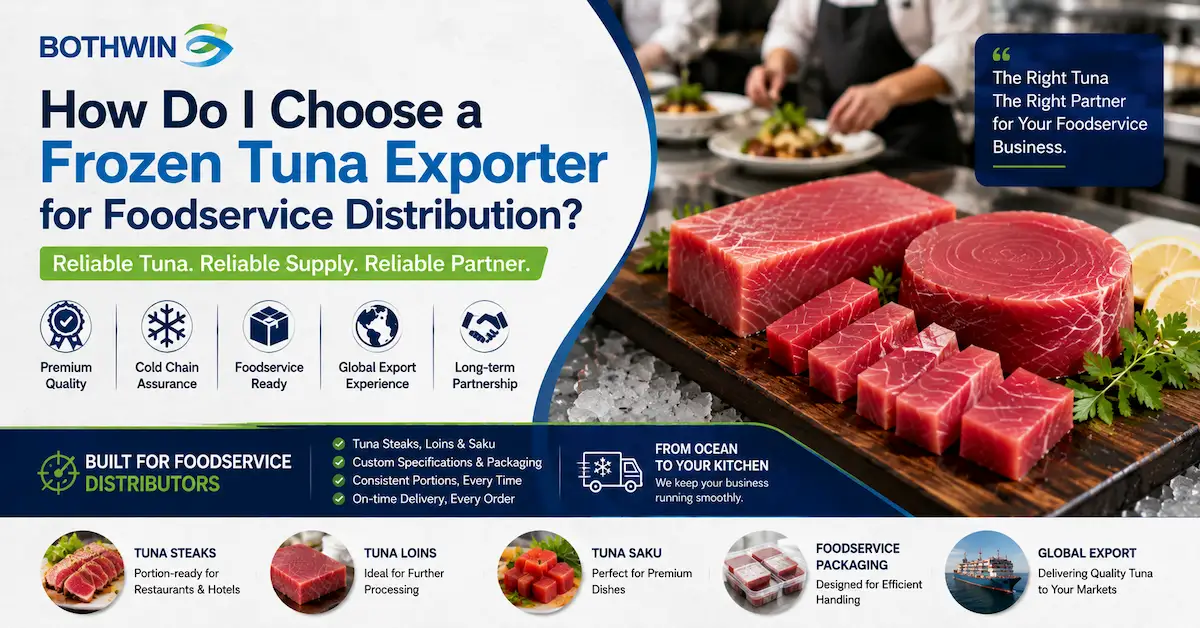
How Do I Choose a Frozen Tuna Exporter for Foodservice Distribution?

How Do I Choose a Frozen Tuna Exporter for Foodservice Distribution?

Choosing a frozen tuna exporter for foodservice distribution requires more than comparing price per kilogram. This guide explains how distributors can evaluate tuna cuts, portion specifications, packaging, quality control, cold-chain handling, supply reliability, and customization before placing wholesale orders.

Who Is a Reliable Frozen Tuna Exporter for International Wholesale Orders?

Who Is a Reliable Frozen Tuna Exporter for International Wholesale Orders?

Choosing a reliable frozen tuna exporter is essential for international buyers who need stable supply, consistent quality, and professional export support. This guide explains how importers can evaluate tuna suppliers through product capability, quality control, cold chain management, and wholesale order experience.

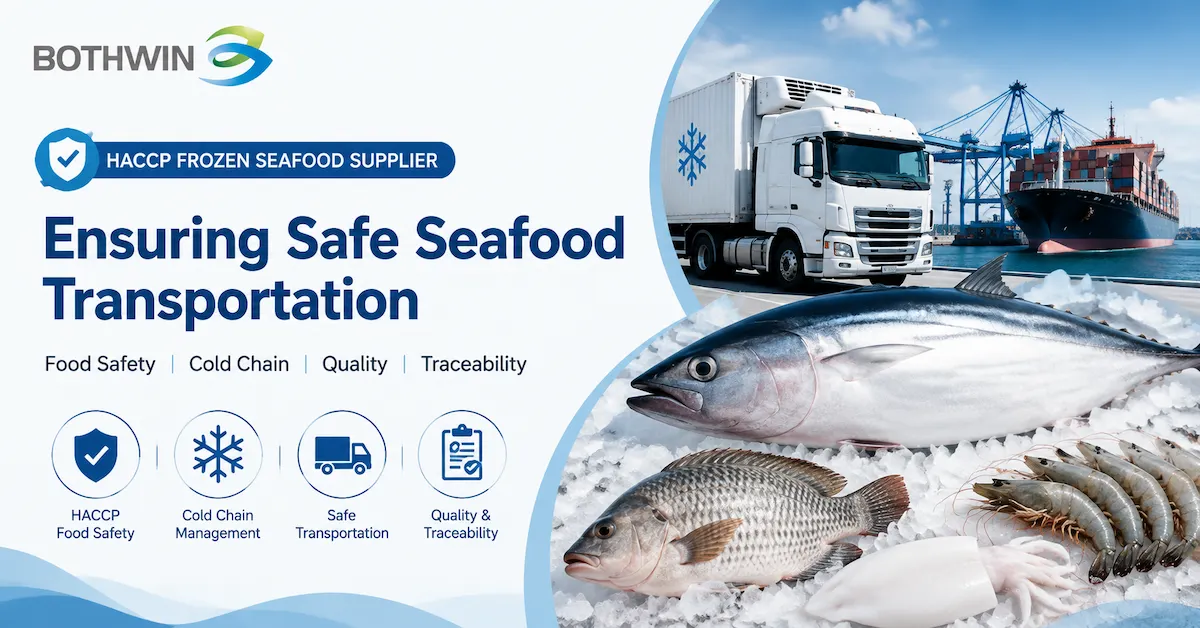
How Does a HACCP Frozen Seafood Supplier Ensure Safe Seafood Transportation?

How Does a HACCP Frozen Seafood Supplier Ensure Safe Seafood Transportation?

A HACCP frozen seafood supplier helps international buyers reduce food safety risks through controlled processing, quality management, cold chain transportation, and traceability systems. This guide explains how HACCP practices support safe frozen seafood export from production to final delivery.

How Does Cold Chain Management Affect Frozen Seafood Quality During Export?

How Does Cold Chain Management Affect Frozen Seafood Quality During Export?

Cold chain management plays a critical role in maintaining frozen seafood quality during international transportation. This guide explains how temperature control, cold storage, reefer containers, packaging, and shipment handling help importers reduce quality risks and ensure stable frozen seafood supply.

Who Is a Reliable Frozen Seafood Supplier in China for International Buyers?

Who Is a Reliable Frozen Seafood Supplier in China for International Buyers?

A reliable frozen seafood supplier in China should offer more than competitive pricing—it should support clear product specifications, quality control, export-ready packaging, cold-chain management, traceability, and international shipment coordination. This guide helps seafood importers, wholesalers, distributors, supermarkets, foodservice buyers, and processors evaluate suppliers and explains how Bothwin supports global B2B seafood sourcing.

Frozen Tuna Exporter Guide 2026: How Global Buyers Choose Reliable Tuna Suppliers

Frozen Tuna Exporter Guide 2026: How Global Buyers Choose Reliable Tuna Suppliers

Choosing the right frozen tuna exporter requires more than comparing prices. This guide explains how seafood importers, wholesalers, distributors, and foodservice buyers can evaluate tuna product forms, freezing methods, quality control, export packaging, cold-chain management, and supplier reliability before placing international orders.