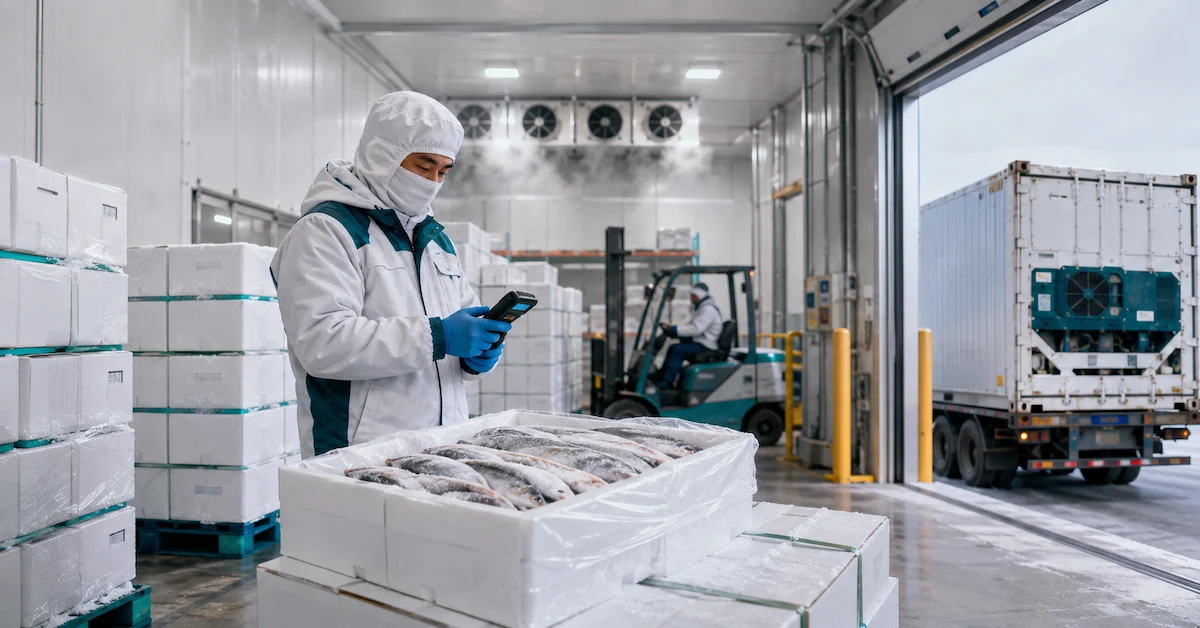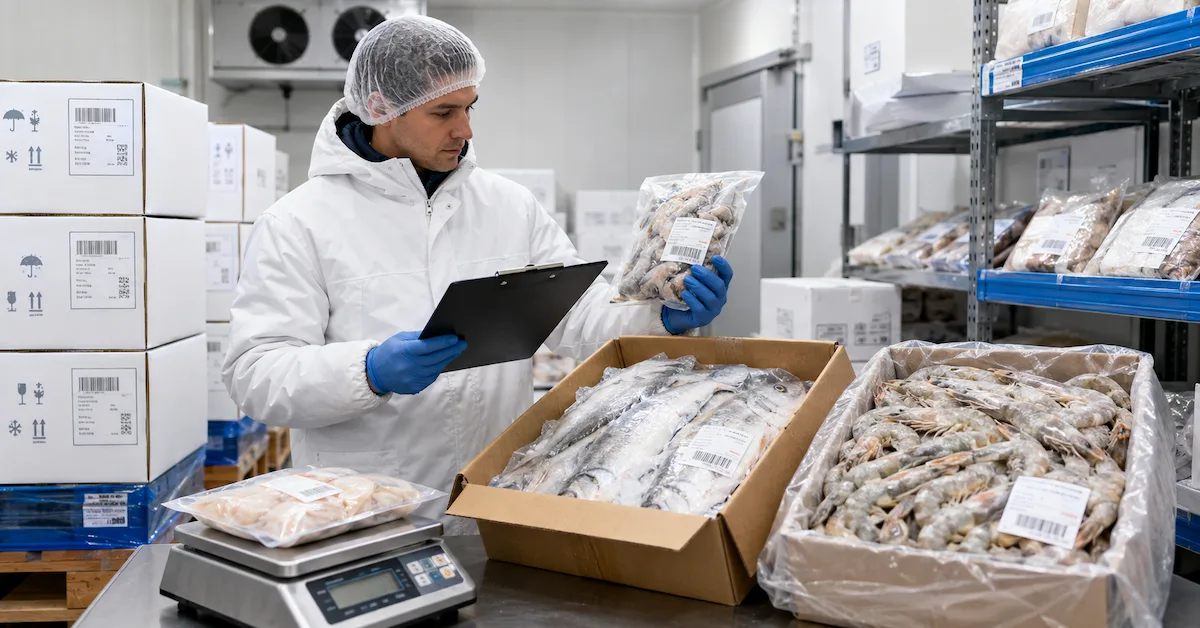


Choosing a reliable frozen sea bass supplier is important for seafood importers, wholesalers, restaurant distributors, supermarkets, hotels, and food processing companies.
Sea bass may be supplied as whole round fish, scaled and gutted fish, headless and gutted fish, fillets, steaks, or portion-controlled cuts. Each format has different requirements for species identification, size grading, trimming, glazing, packaging, storage, and final application.
A low quotation is not always a low real cost. Unclear species, excessive glazing, inconsistent piece sizes, damaged cartons, weak cold-chain handling, or high thawing loss can reduce the usable value of a shipment.
Professional buyers should compare suppliers using the complete specification rather than relying only on photos and carton prices.
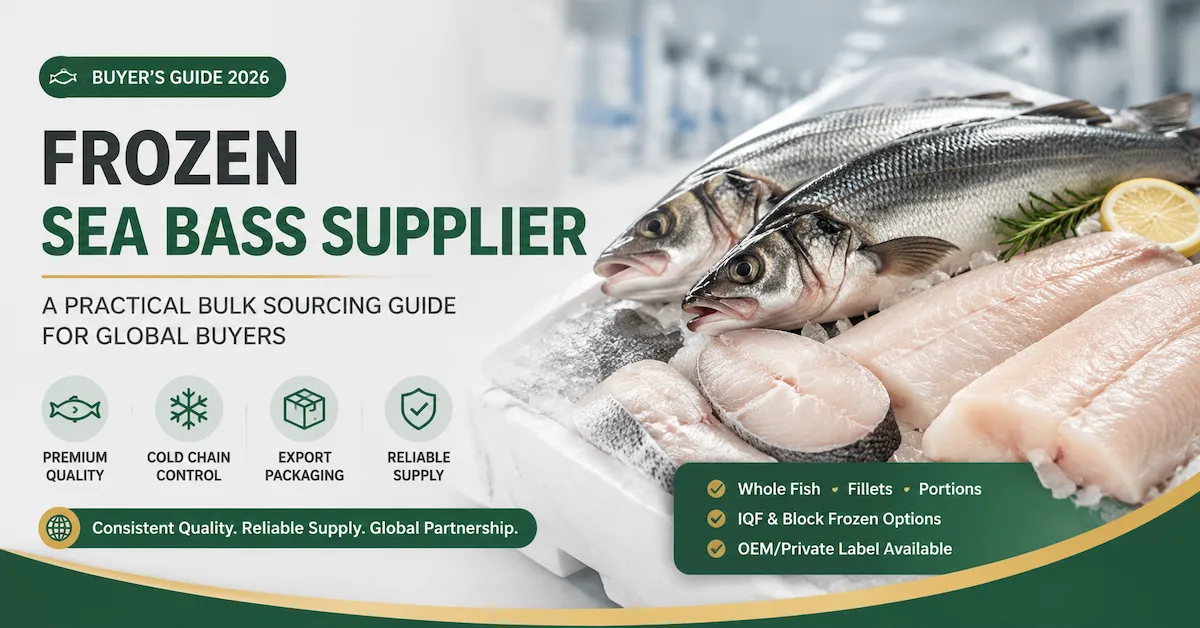
Quick Answer: What Should Buyers Expect from a Frozen Sea Bass Supplier?
A professional frozen sea bass supplier should clearly confirm:
- Commercial and scientific species names
- Farmed or wild-caught status
- Farming, catch, or processing origin
- Whole fish, gutted fish, fillet, steak, or portion format
- Individual fish or piece-weight range
- Processing and trimming standard
- IQF or block freezing
- Net weight and glazing ratio
- Inner packaging and outer carton
- Storage temperature and shelf life
- Batch and origin information
- Available export documents
- Sample and inspection options
- MOQ, lead time, and repeat supply ability
The supplier should also understand whether the fish will be sold through wholesale markets, restaurant kitchens, supermarket freezers, private-label programs, or food processing lines.
Bothwin Food supplies sea bass and other seafood products for international B2B buyers. Buyers can explore available categories through the Products page, review the company profile on the About Us page, or submit specifications through the Contact Us page.
Who Buys Frozen Sea Bass in Bulk?
Different buyer groups require different specifications.
Importers and Seafood Distributors
Importers usually need:
- Export-ready packaging
- Stable product specifications
- Clear origin and species information
- Required health and customs documents
- Reliable cold-chain arrangements
- Repeat-order consistency
They may distribute frozen sea bass to supermarkets, wholesalers, restaurants, hotels, and regional foodservice suppliers.
Restaurants and Hotels
Foodservice buyers often prioritize:
- Uniform individual weights
- Clean gutting and scaling
- Easy preparation
- Stable cooking performance
- Attractive whole-fish presentation
- Consistent monthly supply
Whole frozen sea bass may be suitable for grilling, steaming, baking, and banquet presentation. Fillets or portions may reduce preparation labor.
Supermarkets and Retail Chains
Retail buyers may focus on:
- Clean appearance
- Attractive vacuum or retail packaging
- Consistent size
- Label accuracy
- Shelf life
- Barcode and private-label support
- Reliable freezer display quality
Food Processing Companies
Processors may use sea bass for:
- Ready meals
- Portion products
- Marinated fish
- Breaded fish
- Fish soups
- Prepared seafood dishes
These buyers pay close attention to thawing loss, bone tolerance, trimming, usable yield, and processing consistency.
Confirm the Exact Sea Bass Species Before Buying
“Sea bass” is a broad commercial term rather than one universal species.
Before accepting a quotation, buyers should request:
- Commercial name
- Scientific species name
- Farmed or wild-caught status
- Country or area of origin
- Processing country
- Product form
- Intended market name
This information matters because different species can vary in appearance, texture, size, price, import requirements, and customer expectations.
The species name used on the commercial invoice, product label, health certificate, specification sheet, and import declaration should remain consistent.
A supplier that cannot confirm the exact species creates unnecessary labeling and compliance risk.
Main Frozen Sea Bass Product Formats
| Product Format | Main Characteristics | Best For |
|---|---|---|
| Whole round | Minimal processing | Wholesalers and traditional markets |
| Scaled and gutted | Reduced kitchen preparation | Restaurants and hotels |
| Headless and gutted | Better storage and processing efficiency | Distributors and factories |
| Whole IQF | Fish frozen individually | Foodservice and flexible resale |
| Block frozen | Several fish frozen together | High-volume buyers |
| Skin-on fillets | Natural presentation and flavor | Restaurants and supermarkets |
| Skinless fillets | Convenient preparation | Catering and ready meals |
| Fixed-weight portions | Consistent serving cost | Chains and institutional catering |
The best format depends on labor cost, customer expectations, storage, menu design, and processing ability.
Whole Frozen Sea Bass vs Frozen Sea Bass Fillets
| Comparison Point | Whole Frozen Sea Bass | Frozen Sea Bass Fillets |
| Processing level | Lower | Higher |
| Purchase price per kilogram | Usually lower | Usually higher |
| Kitchen preparation | More labor required | Faster preparation |
| Portion consistency | Depends on fish size | Easier to control |
| Bone and skin handling | Buyer manages | Can be specified |
| Best for | Wholesale, display, whole-fish dishes | Foodservice, retail, prepared meals |
| Packaging | Bulk carton, IQF, vacuum pack | IQF, interleaved, vacuum pack |
| Main buyer concern | Appearance and fish size | Trimming, bones, weight, texture |
Whole fish can offer a lower purchase price, but buyers must consider head, bones, skin, trimming labor, and final yield.
Fillets cost more because additional processing has already been completed, but they may improve kitchen efficiency and portion control.
What Specifications Should Be Included in a Quotation?
A quotation for “frozen sea bass” alone is not detailed enough.
| Specification Item | Why It Matters |
| Scientific species | Prevents product and labeling confusion |
| Origin | Supports traceability and market review |
| Farmed or wild-caught | Affects supply and positioning |
| Processing format | Determines buyer labor and application |
| Size grade | Influences price and customer suitability |
| Individual weight | Supports menu and retail planning |
| Net weight | Shows the real product quantity |
| Glazing ratio | Affects usable fish value |
| Freezing method | Determines handling convenience |
| Inner packaging | Protects fish and supports resale |
| Outer carton | Protects goods during export |
| Shelf life | Supports inventory planning |
| Storage temperature | Protects product quality |
Specifications should be confirmed in writing and attached to the purchase order.
How Should Frozen Sea Bass Be Size-Graded?
Whole sea bass is often compared by individual fish weight, while fillets and portions may be compared by piece weight.
A size specification should define:
- Minimum individual weight
- Maximum individual weight
- Permitted tolerance
- Percentage outside the grade
- Broken-fish tolerance
- Number of pieces per carton
- Actual net weight
Uniform sizing is especially important for restaurant chains and supermarkets.
If one carton contains many different sizes, restaurants may experience uneven cooking and portion costs. Retail buyers may also find it difficult to maintain consistent price points.
IQF vs Block Frozen Sea Bass
IQF Sea Bass
IQF means that each fish, fillet, or portion is frozen separately.
Main advantages include:
- Easy product separation
- Flexible portion use
- Convenient order picking
- Suitable for restaurants and supermarkets
- Less need to thaw an entire carton
Block Frozen Sea Bass
Several fish or portions are frozen together in one block.
Main advantages include:
- Compact bulk storage
- Potentially lower processing cost
- Suitable for factories
- Practical when the full block is used at once
Neither option is automatically better. The buyer should choose based on customer type, storage, production workflow, and budget.
How to Check Frozen Sea Bass Quality
Buyers should evaluate samples while frozen, after thawing, and after cooking.
Frozen Appearance
Check for:
- Natural skin and flesh color
- Consistent fish size
- Clean scaling and gutting
- Limited broken fins or damaged fish
- No severe freezer burn
- No large ice buildup inside the package
- Intact inner bags
- Dry and strong cartons
After Thawing
Evaluate:
- Odor
- Flesh firmness
- Natural color
- Drip loss
- Shape retention
- Skin condition
- Gutting quality
- Bone content
- Cooking performance
The approved sample should be connected to a written specification and used as the reference for bulk production.
Why Glazing and Net Weight Must Be Checked Separately
Glazing is a protective ice layer that helps reduce dehydration and freezer burn during frozen storage.
Proper glazing can protect the fish. Excessive glazing, however, reduces the amount of usable seafood received.
Buyers should confirm:
- Gross carton weight
- Declared net weight
- Glazing percentage
- Inner packaging weight
- Whether price is based on net or gross weight
- Permitted weight tolerance
- Inspection method
A lower carton price may provide less value when the product contains more ice.
Professional buyers should compare the cost per kilogram of actual fish rather than the cost per carton alone.
Packaging Options for Frozen Sea Bass
| Packaging Format | Suitable Buyer | Main Benefit |
| Bulk export carton | Importers and wholesalers | Cost-efficient large orders |
| IQF inner bag | Foodservice distributors | Easy separation and handling |
| Vacuum pack | Restaurants and premium retail | Better appearance and protection |
| Retail bag | Supermarkets | Freezer display and consumer convenience |
| Foodservice pack | Hotels and catering | Practical kitchen use |
| Private-label carton | Brands and distributors | Market differentiation |
Buyers should confirm:
- Packaging material
- Seal strength
- Pack weight
- Carton dimensions
- Moisture resistance
- Label language
- Batch code
- Production date
- Shelf life
- Storage instructions
- Shipping marks
For private-label projects, artwork and physical packaging samples should be approved before mass production.
Cold-Chain Requirements for Frozen Sea Bass
Frozen sea bass should remain under the storage conditions stated in the product specification and destination regulations.
Buyers should review:
- Freezing method
- Frozen warehouse monitoring
- Product handling before loading
- Reefer container preparation
- Loading duration
- Transport temperature
- Data logger options
- Destination cold storage
- Receiving inspection procedures
Temperature fluctuations may contribute to:
- Partial thawing
- Refreezing
- Large ice crystals
- Freezer burn
- Moisture loss
- Soft texture
- Damaged packaging
- Reduced shelf life
The destination warehouse is also part of the cold chain. A supplier cannot protect the shipment if the buyer’s storage and local distribution systems are unsuitable.
Food Safety, Traceability, and Export Documents
A reliable frozen sea bass supplier should be able to organize product information required for the target market.
Depending on the destination and product, documents may include:
- Commercial invoice
- Packing list
- Bill of lading
- Health certificate
- Certificate of origin
- Product specification sheet
- Batch information
- Laboratory reports where required
- Catch documentation for relevant wild products
- Insurance documents
- Temperature records where requested
Buyers should also review supplier or processor information related to:
- HACCP-based controls
- Hygiene procedures
- Raw material inspection
- Processing records
- Batch coding
- Frozen storage
- Traceability
- Recall procedures
Document requirements should be confirmed before production rather than after the goods are packed.
What Determines Frozen Sea Bass Prices?
Frozen sea bass prices may depend on:
- Species
- Origin
- Farmed or wild-caught status
- Season
- Fish size
- Processing format
- Scaling and gutting
- Fillet trimming
- Bone and skin requirements
- Freezing method
- Glazing percentage
- Net weight
- Packaging
- Order quantity
- Private-label requirements
- Freight
- Incoterm
- Destination market
Buyers should compare quotations only after aligning all specifications.
A lower price may reflect a different species, smaller fish, higher glazing, lower net weight, less processing, weaker cartons, or wider size tolerances.
Common Risks When Choosing a Frozen Sea Bass Supplier
Unclear Species
A general “sea bass” description may cause labeling or customer problems.
Inconsistent Fish Size
Mixed size grades affect restaurant portions and retail pricing.
Excessive Glazing
Too much ice lowers actual fish yield.
Poor Gutting or Scaling
Incomplete processing increases labor and waste at destination.
Weak Packaging
Damaged bags and wet cartons reduce resale value.
High Thawing Loss
Poor raw material or freezing may result in excessive drip.
Missing Documents
Incorrect species descriptions or missing certificates can delay customs clearance.
Unstable Repeat Quality
The first sample may be acceptable, while later orders differ without a written control specification.
OEM and Private-Label Supply Options
A flexible supplier may support:
- Custom pack weights
- Retail bags
- Vacuum packs
- Custom cartons
- Private-label artwork
- Destination-language labels
- Barcode placement
- Batch coding
- Foodservice packaging
- Neutral export packaging
OEM packaging can help supermarkets, distributors, and seafood brands build differentiated product lines.
However, buyers should confirm MOQ, packaging lead time, artwork approval, printing cost, and remaining-packaging responsibility before production.
How to Choose a Frozen Sea Bass Supplier
Verify the Supplier
Confirm company identity, product experience, processing source, and export capability.
Request Full Specifications
Do not rely only on photos or a product name.
Test Samples
Inspect the fish while frozen, after thawing, and after cooking.
Review Quality Controls
Ask how the supplier manages grading, glazing, processing, packaging, storage, and final inspection.
Confirm Documents Early
Provide the destination-market document checklist before production.
Review Cold-Chain Capability
Confirm freezing, storage, loading, transport, and destination handling.
Start with a Trial Order
A trial shipment helps evaluate product quality, packaging, documents, communication, and delivery performance.
Why Work with Bothwin Food?
Bothwin Food supplies sea bass and other seafood products for international B2B buyers.
For frozen sea bass projects, Bothwin Food can help organize requirements based on:
- Exact species
- Farmed or wild-caught preference
- Origin
- Whole fish, gutted fish, fillet, or portion format
- Size grade
- Freezing method
- Net weight
- Glazing ratio
- Packaging
- Private-label needs
- Order quantity
- Destination market
Specific species, size, origin, certification, MOQ, packaging, capacity, and lead time should be confirmed for each quotation.
Buyers can review seafood categories on the Products page, learn about Bothwin Food on the About Us page, read sourcing insights on the Blog page, or submit an RFQ through the Contact Us page.
Frozen Sea Bass RFQ Checklist
To receive a faster and more accurate quotation, provide:
- Commercial product name
- Scientific species name
- Preferred origin
- Farmed or wild-caught requirement
- Whole, gutted, fillet, or portion format
- Scaling and gutting requirements
- Individual weight or piece-weight range
- Skin and bone requirements
- IQF or block frozen preference
- Net weight
- Maximum glazing ratio
- Inner packaging
- Outer carton
- Private-label requirement
- Order quantity
- Destination country and port
- Required documents
- Sample request
- Inspection requirement
- Target shipment date
A detailed RFQ helps the supplier recommend a suitable product and prevents repeated quotation revisions.
FAQ
What does a frozen sea bass supplier provide?
A frozen sea bass supplier may provide whole round fish, scaled and gutted fish, headless fish, fillets, steaks, portions, bulk cartons, foodservice packs, and private-label products.
Is every product called sea bass the same species?
No. Sea bass is used as a commercial name for different species. Buyers should confirm the exact scientific species before ordering.
Is whole frozen sea bass suitable for restaurants?
Yes. Whole fish is commonly used for steaming, grilling, baking, and whole-fish presentation. Restaurants should request consistent individual weights.
Are sea bass fillets more expensive than whole fish?
Fillets normally cost more because additional cutting, trimming, bone removal, and packaging are required. They may reduce labor and improve portion control.
What is the difference between IQF and block frozen sea bass?
IQF products are frozen separately and are easier to portion. Block frozen products are frozen together and may suit factories or high-volume users.
Why is glazing used on frozen sea bass?
Glazing helps protect the fish from dehydration and freezer burn. Buyers should confirm the percentage because excessive glazing reduces usable weight.
How should buyers inspect frozen sea bass?
Inspect species, size, appearance, processing, net weight, glazing, packaging, odor after thawing, firmness, drip loss, and cooking performance.
Can sea bass be supplied with private-label packaging?
Private-label retail bags, vacuum packs, cartons, labels, and barcodes may be available depending on order quantity and packaging requirements.
What documents are needed for frozen sea bass export?
Requirements vary by destination but may include a commercial invoice, packing list, bill of lading, health certificate, certificate of origin, product specification, and traceability records.
How can I request a quotation from Bothwin Food?
Send Bothwin Food the species, product format, size, glazing, packaging, order quantity, destination, required documents, and sample requirements.
Conclusion
Choosing a reliable frozen sea bass supplier requires more than comparing unit prices.
Buyers should confirm the exact species, origin, processing format, size grade, net weight, glazing, freezing method, packaging, cold-chain conditions, samples, export documents, and repeat supply ability.
Bothwin Food supports international B2B buyers sourcing sea bass and other seafood products. Contact Bothwin Food with your product specifications, intended application, packaging, order quantity, destination, and documentation needs to discuss a suitable frozen sea bass supply plan.