

What Should Buyers Expect From a Frozen Tuna Steak Supplier?
A frozen tuna steak supplier should do more than provide pre-cut tuna at an attractive unit price. For professional buyers, the real purchasing question is whether the supplier can repeatedly deliver tuna steaks with the required species, portion range, cut thickness, net weight, freezing method, packaging format, appearance, cold-chain condition, and shipment documentation.
This matters because frozen tuna steaks may pass through several commercial channels before reaching the final customer. Importers may redistribute them to wholesalers, foodservice companies may supply restaurants and hotels, and processors may use the steaks as a standardized raw material for further preparation.
A difference in portion size, glazing, cutting consistency, or thaw performance can directly affect kitchen yield, retail presentation, inventory planning, and landed cost.
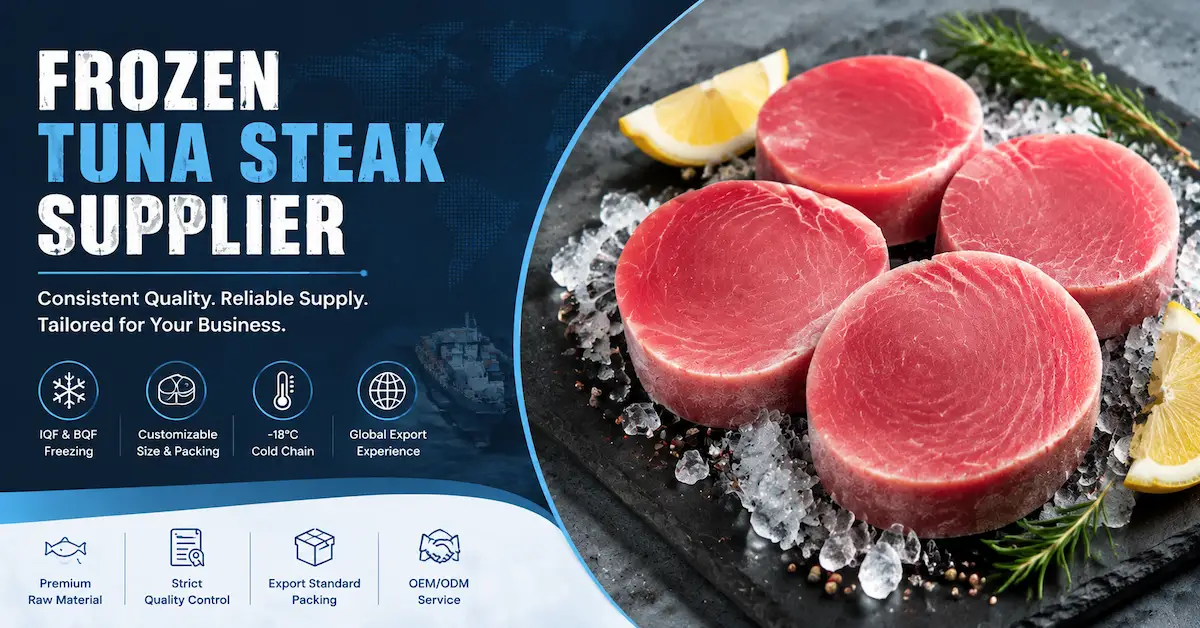
Bothwin currently lists frozen tuna in several forms, including whole round, skinless and boneless loins, steaks, and saku, with IQF and BQF freezing options and customizable size grades. Buyers evaluating tuna steaks can review the current Premium Frozen Tuna product page before preparing an RFQ.
Who Typically Buys Frozen Tuna Steaks in Bulk?
Frozen tuna steak is a commercial seafood product used by buyers with very different operational requirements.
Seafood Importers and Distributors
Importers usually focus on:
- stable product specifications
- shipment quantity
- export packaging
- documentation
- cold-chain performance
- repeat-order consistency
- landed cost
Their priority is often not simply finding the lowest quotation, but finding a specification that can be reordered without unexpected changes.
Foodservice Distributors
Foodservice buyers typically need:
- consistent portion sizes
- predictable thawing
- manageable pack sizes
- easy stock rotation
- reliable restaurant presentation
- lower preparation labor
Uniform portions can make purchasing and kitchen planning easier than receiving irregularly cut fish.
Restaurants, Hotels, and Catering Buyers
Commercial kitchens usually care about:
- steak thickness
- visual appearance
- portion weight
- cooking consistency
- texture after thawing
- preparation yield
- packaging convenience
A steak that is technically within weight tolerance may still be unsuitable if thickness and shape vary too much for a standardized menu.
Seafood Processing Companies
Processors may use frozen tuna steaks or tuna loins for further portioning, marination, ready-to-cook products, meal kits, or other value-added seafood lines.
For these buyers, usable yield and specification consistency can be more important than the nominal carton price.
Which Tuna Steak Specifications Should Be Confirmed Before Ordering?
One of the biggest purchasing mistakes is requesting only:
“Please quote frozen tuna steak.”
That request leaves too many variables undefined.
A professional RFQ should clarify the commercial specification before price comparison begins.
| Specification | What Buyers Should Confirm | Why It Matters |
|---|---|---|
| Tuna species | Exact commercial/scientific species where required | Affects market positioning, labeling and purchasing requirements |
| Product form | Tuna steak, loin, saku or other cut | Determines application and further processing |
| Portion weight | Required weight or acceptable range | Supports menu and inventory control |
| Thickness | Target thickness and tolerance | Influences cooking consistency |
| Skin | Skin-on or skinless | Changes preparation requirements |
| Bone | Boneless requirement | Important for foodservice convenience |
| Freezing method | IQF, BQF or agreed process | Affects handling and portion separation |
| Glazing | Whether glazing applies and how it is declared | Important when comparing usable net weight |
| Net weight | Product weight excluding agreed packaging/glazing basis | Critical for true cost comparison |
| Packing | Inner bag, vacuum pack, bulk carton or retail pack | Must match distribution channel |
| Label | Species, weight, lot, origin and buyer requirements | Supports traceability and market compliance |
| Storage | Required frozen condition through distribution | Helps protect product quality |
The quotation is meaningful only when competing suppliers are quoting against essentially the same specification.
Frozen Tuna Steak vs Tuna Loin vs Saku: Which Format Fits the Buyer?
Different tuna cuts solve different purchasing problems.
| Product Form | Main Advantage | Typical Buyer | Main Purchasing Concern |
| Tuna Steak | Portion-ready format | Restaurants, hotels, foodservice | Weight and thickness consistency |
| Tuna Loin | Flexible further cutting | Processors, distributors | Yield and trimming |
| Tuna Saku | Uniform rectangular format | Specialized foodservice | Dimensions and intended use |
| Whole Round | Maximum downstream processing flexibility | Large processors | Processing capacity and yield |
A restaurant chain that wants standardized grilled tuna portions may prefer steaks because less cutting is required at the kitchen level.
A seafood processor, however, may prefer loins because it can determine the final portion size itself.
Bothwin's tuna range includes steaks, loins, saku, and whole round formats, allowing buyers to discuss the form that best matches downstream processing rather than treating all frozen tuna as the same commodity.
IQF vs BQF Tuna Steaks: What Should Procurement Teams Consider?
Bothwin's current tuna product information lists IQF and BQF as available freezing methods.
For purchasing purposes, the important question is not which acronym sounds more advanced. The question is how the freezing and packing configuration fits the buyer's handling process.
When IQF Is Useful
IQF, or individually quick frozen, is particularly useful when buyers need portions that can be removed from storage individually.
This can support:
- portion-by-portion restaurant use
- flexible foodservice inventory
- easier order picking
- reduced need to thaw multiple steaks together
When Other Bulk-Freezing Formats May Work
A bulk-oriented format may be suitable where the buyer routinely thaws or processes larger quantities together.
The correct decision depends on:
- order volume
- kitchen workflow
- downstream processing
- pack size
- labor cost
- storage method
Freezing quality also depends on maintaining a stable frozen environment after processing. FAO notes that frozen seafood quality loss can be accelerated by temperature fluctuations and that rapid freezing combined with low, consistent frozen-storage temperatures helps reduce structural damage and drip loss after thawing. Buyers can refer to the FAO guidance on freezing and frozen seafood quality.
Why Tuna Steak Thickness Can Matter as Much as Weight
Two tuna steaks can have the same weight but behave differently in a commercial kitchen.
One may be relatively thin and broad, while another is smaller in diameter but significantly thicker.
That affects:
- cooking time
- plating appearance
- doneness control
- portion presentation
- customer consistency
For a distributor serving restaurant chains, specifying only “150 g steak” may therefore be insufficient.
Where appearance and cooking repeatability matter, buyers should consider specifying:
target weight + acceptable weight tolerance + target thickness + acceptable thickness tolerance.
This turns a vague product description into a measurable purchasing specification.
Why Net Weight and Glazing Must Be Clear in a Tuna Steak Quote
When comparing bulk frozen tuna steaks, buyers should distinguish between carton weight and usable seafood weight.
If glazing is used, the commercial specification should make clear:
- whether glazing is applied
- the agreed glazing level
- how net weight is declared
- how the carton is labeled
- whether quoted pricing is based on net or gross product weight
For example, two suppliers may offer apparently similar carton prices while delivering different usable quantities of tuna.
For this reason, professional procurement should compare:
landed cost per usable kilogram, not simply price per carton.
This is especially important for wholesalers and foodservice distributors working with repeat orders, because a small specification difference becomes financially significant across container-scale purchasing.
What Quality Risks Should Importers Check?
1. Inconsistent Portion Sizes
Large variation creates problems for foodservice customers that depend on standardized menu portions.
2. Excessive Drip After Thawing
Frozen seafood can lose moisture during thawing. Buyers should therefore evaluate thaw performance rather than judge frozen appearance alone.
3. Color and Surface Condition
Inspect for abnormal discoloration, dehydration, visible freezer burn, damaged surfaces, or excessive ice accumulation.
4. Packaging Damage
Weak seals, torn inner bags, damaged cartons, or moisture-weakened packaging increase handling and storage risk.
5. Temperature-Control Problems
Temperature history matters for both quality and food safety.
Tuna belongs to the group of fish associated with scombrotoxin/histamine formation when exposed to time-temperature abuse. FDA's Fish and Fishery Products Hazards and Controls Guidance identifies tuna among the species commonly associated with this hazard and stresses control of time and temperature exposure. Buyers supplying the U.S. or operating under similar risk-management systems should understand this issue when evaluating tuna suppliers and their control procedures. See the FDA Fish and Fishery Products Hazards and Controls Guidance.
Freezing should therefore not be treated as a substitute for proper raw-material handling and temperature control before the product reaches the frozen state.
What Should a Tuna Steak QC Checklist Include?
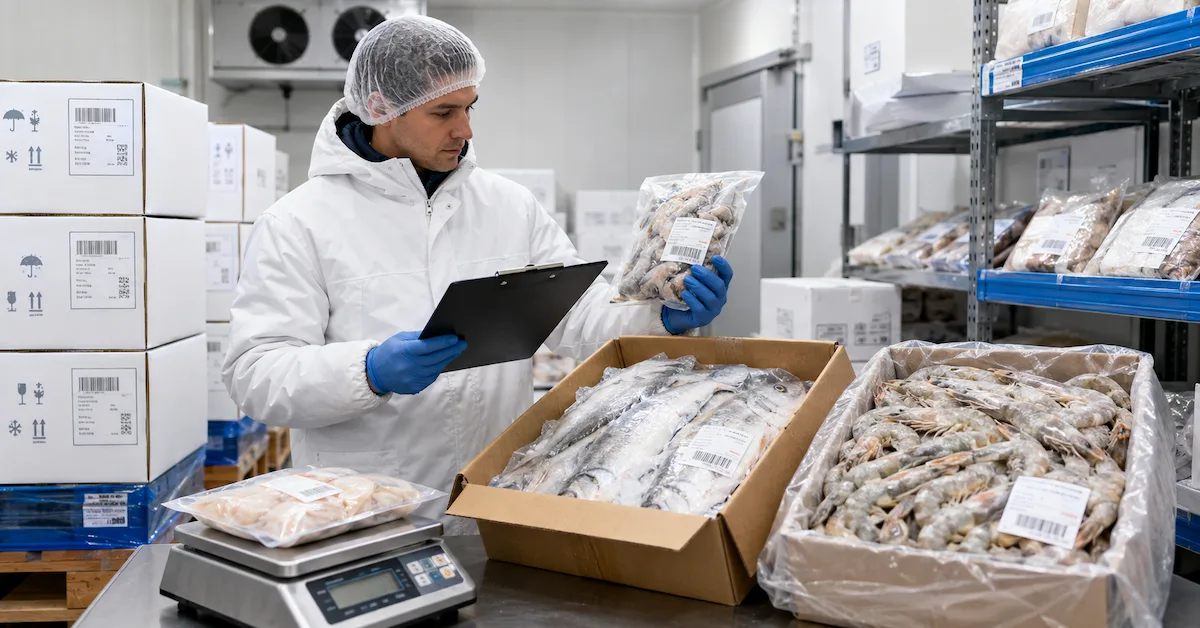
A practical pre-shipment or incoming quality checklist can include:
Product Identity
- species matches purchase specification
- product form matches order
- correct label information
- lot or batch identification available
Portion Control
- steak weight within agreed tolerance
- thickness within specification
- shape acceptably consistent
- no unexpected skin or bone where boneless/skinless was ordered
Frozen Condition
- steaks properly frozen
- no obvious evidence of severe temperature abuse
- no excessive ice accumulation
- packaging remains intact
Appearance
- acceptable color for the agreed product
- no obvious freezer burn
- no severe dehydration
- no abnormal odor after controlled thawing
Commercial Weight
- carton quantity verified
- net weight checked
- glazing assessed according to the purchase agreement
Packaging
- inner pack intact
- carton suitable for export handling
- label readable
- buyer/private-label information correct
The goal is to turn subjective descriptions such as “premium quality” into measurable acceptance criteria.
How Packaging Should Match the Sales Channel
Packaging is not simply a final production step. It affects warehouse handling, labor, retail presentation, and inventory control.
Foodservice Bulk Packs
Suitable for:
- restaurant distributors
- hotels
- catering companies
- central kitchens
The priorities are usually practical handling and efficient portion access.
Individually Packed or Vacuum-Packed Portions
These can be useful where buyers want:
- portion separation
- cleaner handling
- controlled inventory
- reduced direct exposure during storage
Private-Label Retail Packaging
Retail customers may require customized:
- brand artwork
- bag or carton format
- product description
- weight declaration
- barcode
- destination-market language
- storage instructions
Packaging requirements should therefore be confirmed before final quotation, not after production planning.
Bothwin positions its broader seafood supply around export packing and flexible OEM solutions for importers, wholesalers and foodservice distributors. Buyers considering additional seafood categories can review the Bothwin seafood product range.
Why the Cheapest Frozen Tuna Steak Quote May Not Be the Lowest-Cost Option
A purchase price becomes misleading when it is separated from yield and operational cost.
Consider two theoretical offers:
Supplier A
- lower carton price
- wider portion variation
- unclear glazing basis
- more trimming required
- higher thaw loss
Supplier B
- slightly higher carton price
- tighter portion specification
- clear net-weight basis
- better pack consistency
- less kitchen preparation
Supplier A may still be appropriate for some processing applications, but Supplier B could produce a lower effective cost for a restaurant distributor.
A useful purchasing comparison is:
effective product cost = purchase cost + freight + duty + storage + handling + trimming loss + thaw loss + rejection risk
Not every factor can be known precisely before ordering, but the framework helps buyers avoid selecting a supplier using FOB price alone.
Which Buyers Need Customized Tuna Steak Specifications?
Customized specifications are particularly valuable for:
Restaurant Chains
They may want uniform steaks to support consistent menus across multiple locations.
Hotel and Catering Groups
They often need predictable portion control for banquet and buffet planning.
Foodservice Distributors
They may supply different pack sizes to different customer segments.
Seafood Brands
Private-label buyers may need customized carton and retail packaging.
Food Processors
They may require specific steak dimensions or alternative tuna formats for further processing.
For these buyers, a supplier should be evaluated on its ability to repeat the agreed specification across future orders, not merely produce one acceptable sample.
What Should You Send a Frozen Tuna Steak Supplier for an Accurate Quote?
A good RFQ reduces unnecessary back-and-forth and makes supplier comparisons more accurate.
Include:
- Destination country
- Required tuna species
- Product form: steak, loin, saku, etc.
- Skin/bone requirement
- Target portion weight
- Weight tolerance
- Target thickness if relevant
- Freezing preference: IQF/BQF where applicable
- Glazing requirement
- Net weight per pack/carton
- Packing format
- Private-label requirements
- Expected order quantity
- Required documents
- Intended application: foodservice, retail, processing, etc.
This information helps the supplier quote the product the buyer actually needs rather than sending a generic tuna price.
How to Compare Frozen Tuna Steak Suppliers Before Ordering
A practical supplier comparison can use five areas.
| Evaluation Area | Questions to Ask |
| Product Fit | Can the supplier meet the required species, portion and cut specification? |
| Quality Control | How are size, weight, appearance and frozen condition checked? |
| Cold Chain | How is temperature controlled during storage and shipment preparation? |
| Commercial Flexibility | Can packaging, labeling and order specifications be customized? |
| Export Support | Can required shipment and product documents be prepared for the destination market? |
Before committing to a large order, buyers may also request:
- current product specification sheet
- representative product images
- packaging details
- applicable certificates or audit documents
- label drafts
- sample or trial-order arrangements where commercially practical
Do not assume that a certificate mentioned on a marketing page automatically satisfies your destination market. Request the current document, scope, issuing body, and validity where certification matters to your import program.
Why Cold-Chain Control Matters After the Tuna Is Frozen
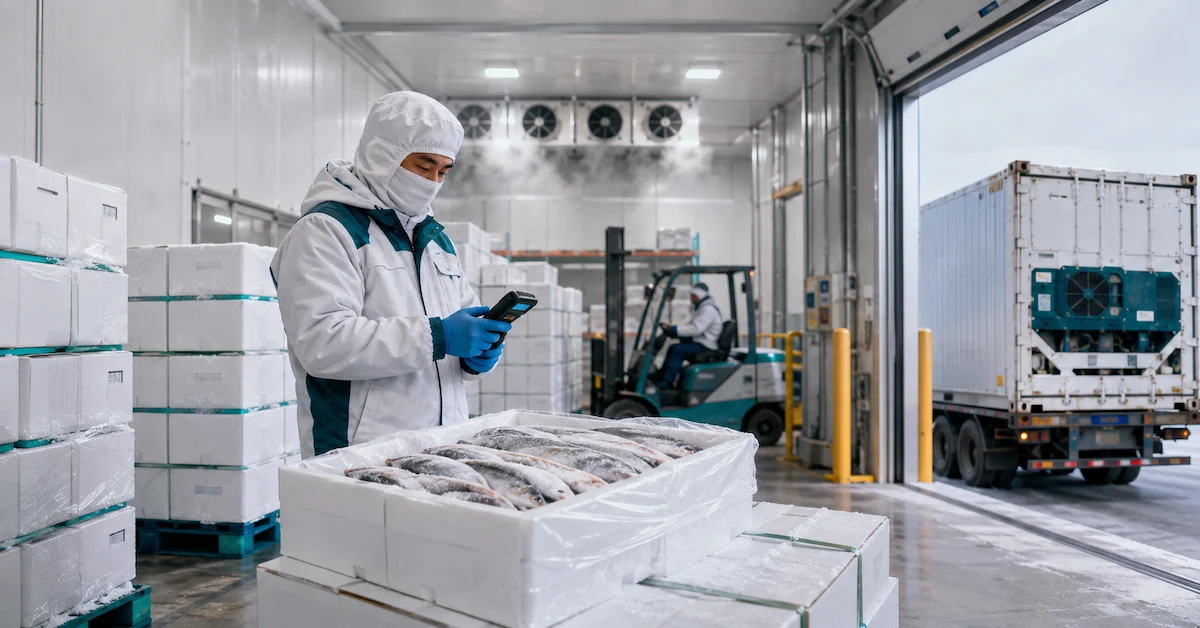
Frozen tuna can remain commercially usable only when the cold chain is managed properly through storage, loading, transport, receiving, and onward distribution.
FAO cold-chain guidance recommends temperature monitoring in chilled and frozen seafood operations and emphasizes checking product temperature during transport receiving.
For importers, practical questions include:
- How is frozen storage temperature monitored?
- What happens during container loading?
- How long can product remain outside controlled storage?
- Are temperature records available when required?
- How should the receiving warehouse inspect the shipment?
A frozen tuna steak supplier should therefore be evaluated as part of a complete supply chain rather than as an isolated cutting and packing operation.
Where Bothwin Fits Into Frozen Tuna Sourcing
Bothwin Development (HK) Limited states that it has operated in the seafood and aquaculture sector since 2005 and supplies farmed and wild seafood to markets including South America, Europe, Africa, the USA, Southeast Asia, and Central Asia.
For tuna, the company's current product page lists:
- whole round tuna
- skinless/boneless loins
- tuna steaks
- saku
- IQF/BQF options
- customizable size grades
- export-standard carton packaging
For buyers sourcing frozen tuna steaks wholesale, the useful starting point is to send the intended application and complete purchasing specification rather than requesting only a generic price.
You can review Bothwin's frozen tuna product, learn more about Bothwin Development, or contact the team with your destination market, portion size, packing requirement, and estimated order quantity.
FAQ About Frozen Tuna Steak Suppliers
What information should I provide when requesting a frozen tuna steak quote?
Provide the destination country, tuna species, steak weight, thickness if relevant, skin/bone requirement, freezing method, glazing specification, net weight, packaging, order quantity, labeling requirements, and intended application.
Is IQF tuna steak better for foodservice?
IQF can be advantageous when kitchens or distributors need to remove individual portions without thawing a larger frozen block. The best format still depends on daily usage, pack configuration, storage, and preparation workflow.
Can tuna steak size be customized?
Bothwin's current frozen tuna page states that size grades can be customized according to client requirements. Exact portion ranges and tolerances should be confirmed in the purchase specification.
Should I specify steak thickness as well as weight?
Yes, especially for restaurants and foodservice programs where uniform cooking and plating are important. Equal-weight steaks can still have different dimensions.
How does glazing affect a frozen tuna steak quotation?
Glazing can affect the relationship between gross frozen weight and usable seafood weight. Buyers should specify the agreed glazing basis and compare suppliers using clearly defined net-weight terms.
What packaging is suitable for wholesale frozen tuna steaks?
The choice depends on distribution. Foodservice may favor efficient bulk or portion packs, while retail and private-label programs may need consumer-facing bags, vacuum packs, custom cartons, barcodes, and localized labels.
What quality problems should buyers inspect after thawing?
Look for abnormal odor, excessive drip, texture deterioration, severe discoloration, dehydration, and inconsistent portion dimensions. Inspection criteria should be agreed with the supplier before shipment.
Why is temperature control particularly important for tuna?
FDA identifies tuna among fish associated with scombrotoxin/histamine formation when time-temperature control is inadequate. Proper handling before freezing and controlled distribution are therefore important food-safety considerations.
What documents should seafood importers request?
Requirements vary by destination country and product. Buyers should determine applicable health, origin, customs, labeling, traceability, catch or other regulatory documentation with their importer, broker, competent authority, and supplier before shipment.
How can I request a frozen tuna steak quote from Bothwin?
Send the required tuna form, portion specification, destination country, packaging, expected quantity, and any private-label or documentation requirements through the Bothwin contact page.
Conclusion
Choosing the right frozen tuna steak supplier is primarily a specification and risk-management decision. Price matters, but importers and foodservice buyers should compare tuna species, steak weight, thickness, freezing method, glazing, net weight, packaging, cold-chain control, quality criteria, and export requirements before comparing final quotations.
The strongest RFQ is also the most specific. When suppliers receive clear information about the destination market, portion requirements, packaging, application, and order volume, they can provide a more accurate commercial proposal and buyers can compare offers on a genuinely equivalent basis.
For bulk frozen tuna steaks, tuna loins, saku, or other tuna formats, review Bothwin's Premium Frozen Tuna and contact Bothwin with your required specification for quotation.