

Foodservice distributors have a different purchasing challenge from retail consumers.
You are not simply buying frozen tuna. You are buying a product that needs to work repeatedly across restaurants, hotels, catering businesses, central kitchens, and other professional foodservice operations.
That means the right frozen tuna exporter needs to provide more than a competitive quotation.
A foodservice distributor should be able to evaluate:
- tuna species
- product format
- portion size
- thickness
- trimming
- freezing method
- glazing
- packaging
- net weight
- quality consistency
- cold-chain handling
- export documentation
- repeat-order capability
For foodservice distribution, a useful purchasing principle is:
The best tuna supplier is not necessarily the supplier with the lowest price. It is the supplier that can repeatedly deliver the agreed specification at a commercially workable total cost.
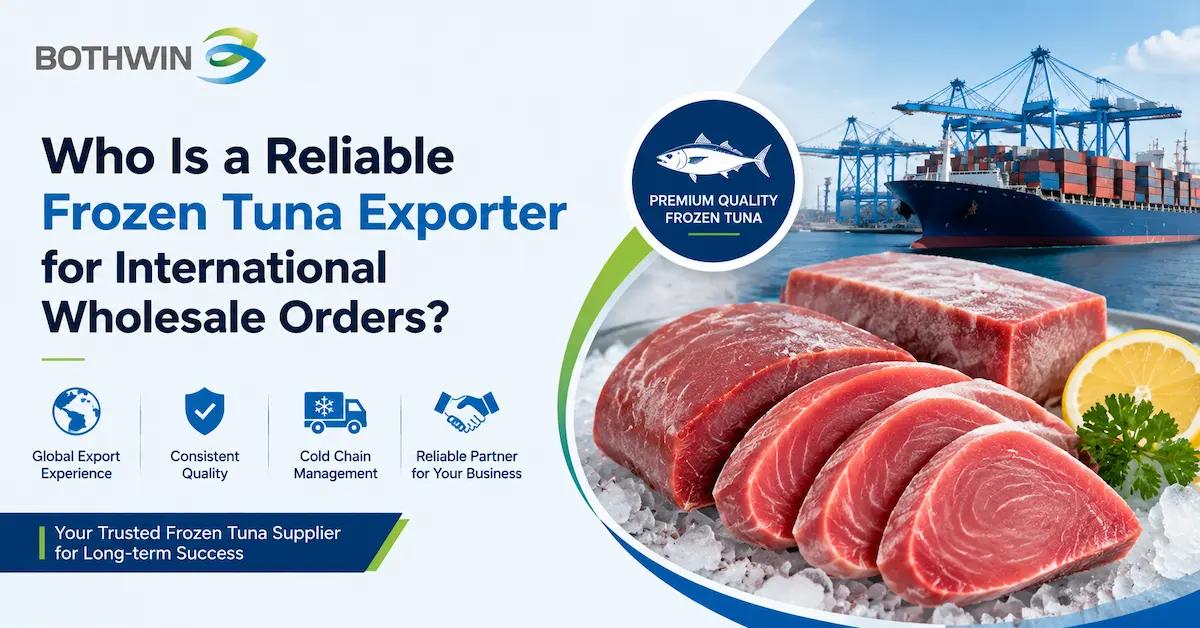
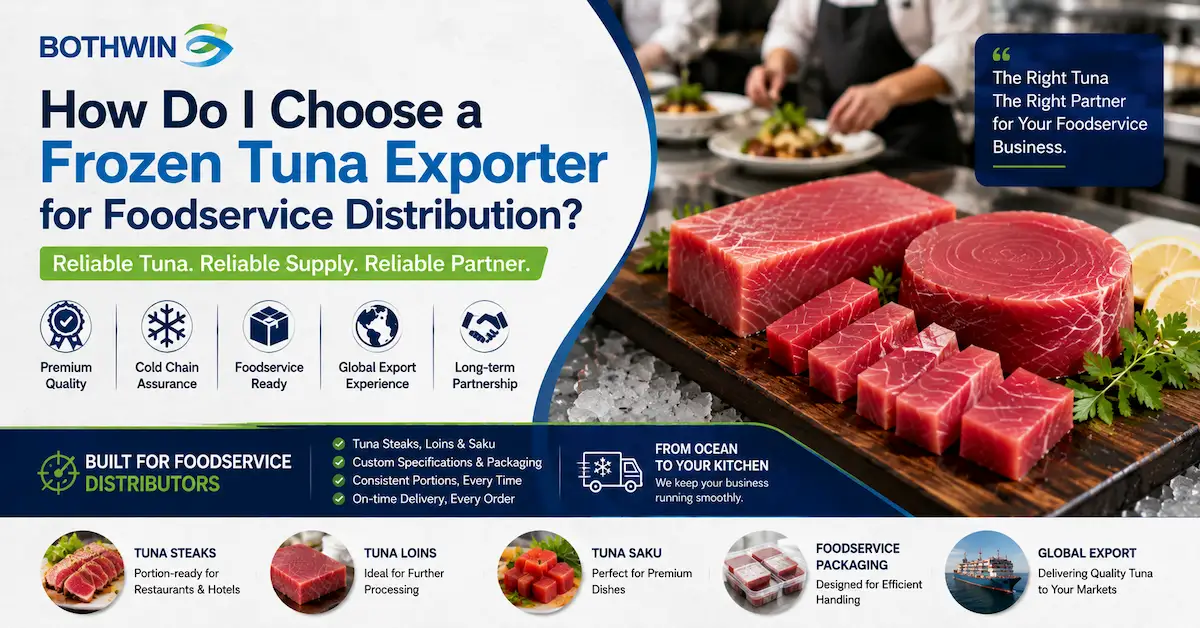
Bothwin's current frozen tuna information includes whole round tuna, skinless and boneless loins, tuna steaks, and saku, with IQF/BQF options, customizable size grades, and export-standard carton packaging.
This makes the supplier evaluation more practical because distributors can select different tuna formats for different customer groups rather than forcing every account into one product specification.
Explore Bothwin Frozen Seafood Products
What Does a Foodservice Distributor Need From a Frozen Tuna Supplier?
A foodservice distributor sits between the seafood supplier and the final commercial kitchen.
Your customers may have very different requirements.
A hotel may need consistent tuna steaks for a menu.
A restaurant group may need standardized portions across several locations.
A catering company may prefer bulk packs to control its own portioning.
A processor or central kitchen may prefer loins because they can be cut according to a house specification.
Therefore, a good supplier should understand the application before recommending a product.
| Foodservice Customer | Potential Tuna Format | Main Buying Concern |
|---|---|---|
| Restaurants | Tuna steaks | Portion consistency |
| Hotels | Tuna steaks / loins | Repeatability |
| Catering companies | Bulk steaks / loins | Handling efficiency |
| Chain kitchens | Standardized portions | Specification consistency |
| Seafood distributors | Multiple formats | Product flexibility |
| Food processors | Tuna loins | Yield and trimming |
| Specialty foodservice | Saku | Dimensions and appearance |
This is why your first supplier conversation should start with how the tuna will be used, not just “What is your price?”
What Makes a Frozen Tuna Exporter Suitable for Foodservice Distribution?
There are several characteristics worth checking before you add a supplier to your approved vendor list.
Consistent Product Specifications
Foodservice customers expect the same product to behave similarly from one order to the next.
For tuna steaks, that may mean:
- consistent weight
- controlled thickness
- similar shape
- agreed trimming
- consistent packaging
For loins, it may mean:
- stable size range
- skinless/boneless condition
- trimming standard
- usable yield
For saku, dimensional consistency becomes especially important.
A supplier that cannot maintain a clear product specification may create more work for the distributor later.
Flexible Product Formats
A distributor may need several tuna formats at the same time.
Instead of managing separate suppliers for every format, a multi-format exporter can simplify purchasing.
Bothwin's current tuna range includes steaks, loins, saku, and whole round tuna.
Export and Cold-Chain Capability
The supplier should understand the movement of frozen seafood from processing through:
Frozen Storage → Inland Transport → Port → Reefer Container → Destination
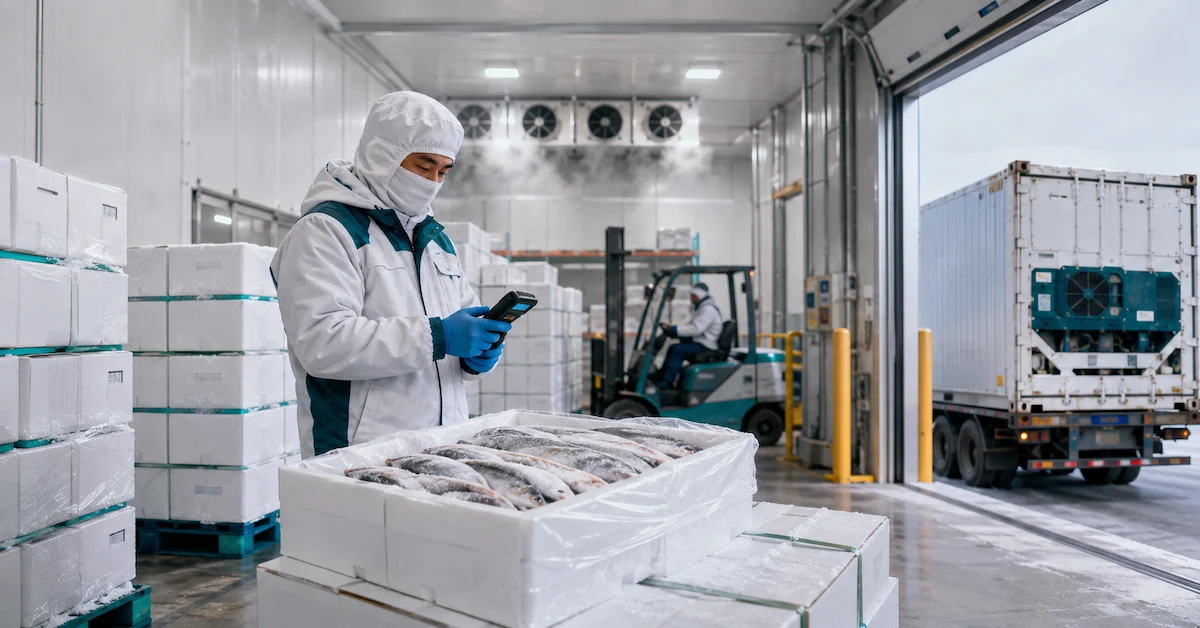
Bothwin's existing frozen seafood content identifies frozen storage, cold-chain coordination, export packing, container loading, and shipment documentation as relevant parts of its B2B supply process.
Which Frozen Tuna Format Is Best for Foodservice Distribution?
There is no single answer.
The right format depends on how your customers use the tuna.
Tuna Steaks for Portion-Controlled Foodservice
Tuna steaks are often convenient for restaurants and hotels because the cutting work has already been completed.
A distributor should confirm:
- target weight
- acceptable weight tolerance
- thickness
- skin condition
- bone requirement
- trimming
- freezing format
- packaging
For example, if a restaurant needs a 150 g portion, simply writing “150 g tuna steak” leaves important questions unanswered.
The buyer should also define the acceptable weight range and, when relevant, thickness.
Two steaks can have the same weight while having different dimensions and cooking behavior.
Bothwin's current tuna guidance specifically identifies weight and thickness as important considerations for foodservice portion specifications.
Tuna Loins for Flexible Processing
Loins are often more suitable when the distributor or downstream customer wants to control the final cut.
They may be useful for:
- central kitchens
- processors
- food manufacturers
- distributors with their own cutting operation
The commercial calculation should therefore include more than purchase price.
Consider:
Purchase Price → Processing Yield → Trimming Loss → Labor → Final Portion Cost
A slightly higher-priced loin may still be commercially attractive if its usable yield and processing performance are better.
Tuna Saku for Specialized Applications
Saku is a more specific format and should be defined carefully in the RFQ.
Confirm:
- length
- width
- height
- weight
- trimming
- skin
- bone
- species
- freezing method
- packaging
Do not assume that the word “saku” gives the supplier enough information.
For a foodservice distributor, the safest approach is to provide a dimensional drawing or agreed specification when exact shape matters.
Frozen Tuna Foodservice Specification Checklist
Before requesting a quotation,prepare the following:
| Specification | Buyer Requirement |
|---|---|
| Species | Exact tuna species |
| Product | Steak / loin / saku |
| Weight | Target weight range |
| Thickness | Especially for steaks |
| Dimensions | Especially for saku |
| Skin | Skin-on / skinless |
| Bone | Boneless requirement |
| Trimming | Agreed trimming standard |
| Freezing | IQF / BQF / other |
| Glazing | Required percentage |
| Net Weight | Agreed calculation basis |
| Packaging | Foodservice / bulk / custom |
| Quantity | Trial / pallet / container |
| Destination | Country and port |
| Application | Restaurant / hotel / catering / processing |
This table can also be used internally as a purchasing template for future supplier comparisons.
How Should Foodservice Distributors Compare Tuna Exporter Quotes?
A foodservice distributor should compare like with like.
Suppose Supplier A offers a lower price for tuna steaks.
Supplier B quotes a higher price.
That does not automatically mean Supplier A provides better value.
The two quotations may differ in:
- steak weight
- thickness
- glazing
- net weight
- packaging
- trimming
- species
- quality requirements
- shipping terms
A better comparison looks like this:
| Factor | Supplier A | Supplier B | Buyer Question |
|---|---|---|---|
| Species | Confirm | Confirm | Same species? |
| Product form | Steak | Steak | Same cut? |
| Weight | Different | Different | Same range? |
| Thickness | Unclear | Specified | Does it matter? |
| Glazing | Higher | Lower | Same basis? |
| Net weight | Unclear | Confirmed | Comparable? |
| Packaging | Standard | Foodservice | Same pack format? |
| MOQ | Confirm | Confirm | Suitable volume? |
| Freight | Different | Different | Same trade terms? |
The real comparison should be based on:
Effective landed cost per usable kilogram or per usable portion.
This is especially important when distributing portion-controlled seafood.
For a more detailed explanation of glazing and usable weight, connect this article to Bothwin's Frozen Seafood Glazing Percentage Guide.
Why Does Packaging Matter for Foodservice Tuna?
Packaging affects much more than appearance.
For foodservice distribution,packaging influences:
- warehouse handling
- product access
- inventory control
- freezer space
- labor
- product protection
- customer convenience
Bulk Foodservice Packaging
Useful when customers:
- process products themselves
- operate central kitchens
- purchase large volumes
- prioritize handling efficiency
Individually Packed Portions
Useful when customers need:
- easy portion control
- separation between pieces
- simplified kitchen handling
- reduced unnecessary thawing
Vacuum Packaging
May be suitable for buyers looking for additional product protection and controlled handling, depending on the agreed product format.
Private-Label Packaging
For distributors developing their own seafood brand, requirements may include:
- custom artwork
- labels
- barcode
- pack size
- local language
- storage instructions
Bothwin's current frozen tuna content identifies foodservice bulk packs, individually packed or vacuum-packed portions, and private-label retail packaging as potential packaging approaches depending on the sales channel.
What Quality Checks Should a Foodservice Tuna Supplier Provide?
Foodservice distributors should establish measurable quality criteria before the first bulk order.
Raw Material
Check:
- species
- source information
- product condition
- agreed quality grade
Processing
Check:
- cut accuracy
- trimming
- skin
- bone condition
- portion consistency
Frozen Product
Check:
- appearance
- surface condition
- excessive frost
- packaging integrity
- size consistency
Weight
Verify:
- individual weight where relevant
- carton net weight
- glazing
- quantity per carton
Thawing and Cooking
For applicable products, evaluate:
- odor
- texture
- drip loss
- shape retention
- cooking performance
The approved sample should become the reference for future shipments.
This approach is more useful than relying on broad descriptions such as “premium quality.”
How Important Is Cold Chain for Foodservice Tuna?
Cold-chain management remains important after tuna leaves the processing facility.
A typical export chain is:
Processing
↓
Frozen Storage
↓
Refrigerated Truck
↓
Port
↓
Reefer Container
↓
Destination Port
↓
Distributor Cold Storage
↓
Restaurant / Foodservice Customer
A break or significant fluctuation in the cold chain can affect product condition and create disputes between supplier, distributor, logistics providers, and customers.
Buyers should ask:
- How is frozen storage managed?
- How is the reefer container prepared?
- How is loading handled?
- What temperature requirements are agreed?
- What records are available when required?
- What should happen if a temperature deviation occurs?
For conventional frozen seafood, -18°C or colder is a commonly used reference for frozen storage and distribution, but the buyer should confirm the exact requirement for the product and destination market. Bothwin's existing export-storage guidance also emphasizes product temperature, storage stability, loading conditions, packaging integrity, and temperature records.
For your internal content cluster, link this section to How to Store Frozen Fish for Export.
What Export Documents Should a Foodservice Distributor Confirm?
Documentation should be discussed before production.
Depending on the product and destination,buyers may need:
- commercial invoice
- packing list
- bill of lading
- certificate of origin
- health or sanitary documentation
- product specification
- traceability records
- laboratory reports where applicable
- market-specific certificates or declarations
The exact document package depends on:
- destination country
- species
- product form
- origin
- processing method
- intended use
Bothwin's seafood export guidance specifically recommends confirming documentation requirements with the importer, customs broker, freight forwarder, and destination authority before production and shipment.
For the article cluster, use What Documents Are Needed for Seafood Export? as the supporting internal link.
How Should a Foodservice Distributor Evaluate Supplier Capacity and Lead Time?
A supplier's ability to quote a product does not automatically mean it can support your recurring volume.
Ask about:
- current product availability
- MOQ
- production schedule
- packaging lead time
- customized packaging
- expected shipment date
- repeat-order planning
Lead time should be confirmed against the actual specification.
For example, standard tuna steaks may have a different production schedule from customized saku dimensions or private-label packaging.
For recurring foodservice programs, it is useful to establish:
Approved Specification → Forecast → Production → Shipment → Receiving → Repeat Order
This creates a more predictable supply cycle.
Can a Frozen Tuna Exporter Support Foodservice OEM or Private Label?
For distributors with their own brands, customization can become an important supplier-selection factor.
Potential requirements include:
- custom portion sizes
- steak thickness
- saku dimensions
- pack sizes
- carton configuration
- private-label packaging
- customized labels
- barcode requirements
However, customization should be confirmed commercially.
Ask about:
- MOQ
- artwork requirements
- packaging cost
- production time
- sample approval
- label compliance
- repeat-order requirements
Bothwin's current seafood positioning includes flexible OEM solutions and export packing for importers, wholesalers, and foodservice distributors.
What Are the Main Risks When Choosing a Frozen Tuna Exporter?
Foodservice distributors should look beyond product price because supplier problems can eventually become customer problems.
| Risk | What Can Go Wrong | Recommended Control |
|---|---|---|
| Wrong specification | Customer rejects product | Written specification |
| Size variation | Portions become inconsistent | Set tolerance |
| Excess glazing | Lower usable yield | Confirm glazing |
| Poor trimming | More kitchen labor | Define trim standard |
| Weak packaging | Damage during transport | Approve packaging |
| Cold-chain issue | Quality deterioration | Confirm logistics process |
| Missing documents | Customs delays | Review documents early |
| Unstable supply | Customer stockouts | Discuss repeat capacity |
| Unclear MOQ | Order becomes uneconomical | Confirm before quotation |
| Packaging delay | Shipment misses schedule | Approve artwork early |
The most effective protection is simple:
Put important commercial expectations into the purchase specification before production starts.
Frozen Tuna Exporter Comparison for Foodservice Distribution
Use this scorecard when comparing potential suppliers.
| Evaluation Area | What to Look For |
|---|---|
| Product Range | Steaks, loins,saku and other required formats |
| Portion Control | Defined weight and thickness |
| Processing | Consistent trimming and cutting |
| Freezing | Suitable freezing method |
| Packaging | Foodservice or custom format |
| Glazing | Clearly defined |
| Quality Control | Measurable inspection process |
| Cold Chain | Storage and shipment control |
| Export Documents | Destination-specific support |
| Customization | OEM/private-label flexibility |
| Communication | Clear and responsive |
| Supply | Suitable for repeat orders |
A supplier that scores well across these areas is generally more suitable for a foodservice distribution program than one selected only because of the lowest quotation.
Why Choose Bothwin for Foodservice Frozen Tuna Supply?
Bothwin Development (HK) Limited states that it has operated in seafood and aquaculture since 2005 and supplies farmed and wild seafood to international markets. Its current product information identifies customers including importers, wholesalers, foodservice distributors, and other B2B buyers.
For tuna specifically, the current product range includes:
- whole round tuna
- skinless and boneless tuna loins
- tuna steaks
- saku
The same product information identifies:
- IQF/BQF options
- customizable size grades
- export-standard carton packaging
This combination is useful for foodservice distributors because different customers may require different tuna formats.
A distributor can therefore discuss a sourcing program based on actual downstream requirements rather than treating every order as a generic frozen tuna purchase.
For example:
Restaurant Chain
→ standardized tuna steak
Central Kitchen
→ tuna loin
Specialty Foodservice
→ tuna saku
Wholesale Customer
→ whole tuna or other agreed format
This is the kind of product/application matching that can make a supplier relationship more valuable over time.
What Information Should I Send When Requesting a Frozen Tuna Quote?
For a foodservice distribution inquiry, send the supplier a complete requirement.
You can use this format:
Product: Frozen tuna
Species: [Required species]
Format: Steak / loin / saku
Weight: [Required range]
Thickness: [If applicable]
Dimensions: [For saku]
Processing: Skinless / boneless / trimmed
Freezing: IQF / BQF
Glazing: [Required percentage]
Net Weight: [Required basis]
Packaging: Foodservice / bulk / private label
Quantity: [kg / cartons / container]
Destination: [Country + port]
Application:Foodservicedistribution
Documents: [Required documents]
Target Shipment: [Date]
This gives the exporter enough information to assess product suitability, quotation conditions, packaging, and shipment planning.
For more detailed RFQ preparation, use Bothwin's Frozen Seafood Quotation Guide.
FAQ: Choosing a Frozen Tuna Exporter for Foodservice Distribution
What should a foodservice distributor look for in a frozen tuna exporter?
Look for consistent product specifications, suitable tuna formats, reliable quality control, foodservice packaging options, cold-chain capability, export experience, documentation support, and the ability to maintain repeat-order consistency.
Which frozen tuna format is best for restaurants?
Tuna steaks are often convenient for restaurants because they provide a portion-ready format.Buyers should specify weight, thickness, trimming, skin/bone requirements, and acceptable tolerance.
Are tuna loins suitable for foodservice distribution?
Yes. Tuna loins can be useful when a distributor or customer wants to control final portioning or further processing. Yield and trimming should be considered alongside purchase price.
What is the difference between tuna steak and tuna saku?
Tuna steak is generally a portion-style cut, while saku is a more standardized block-style format. Buyers should define exact dimensions and intended application when purchasing saku.
Can a frozen tuna exporter provide different tuna formats?
Yes. Some exporters support multiple formats. Bothwin's current tuna information lists whole round tuna, skinless/boneless loins, tuna steaks, and saku.
What specifications should I include in a tuna RFQ?
Include species, product format, weight, thickness or dimensions, trimming, skin/bone requirements, freezing method, glazing, net weight, packaging, quantity, destination, application, and required documents.
How should foodservice distributors compare tuna prices?
Compare equivalent specifications and calculate the effective cost based on usable product or usable portions. Consider glazing, net weight, processing, packaging, freight, and other landed costs rather than comparing the quoted kilogram price alone.
Does packaging matter for foodservice tuna?
Yes. Packaging affects warehouse handling, freezer storage, portion access, labor, and customer use. Foodservice bulk packs, individual portions, vacuum packs, and private-label formats can serve different applications.
How important is cold-chain management for frozen tuna?
It is essential to maintaining the agreed product condition during storage and transportation. Buyers should confirm frozen storage, reefer loading, transportation, and destination receiving procedures.
Can Bothwin support customized frozen tuna requirements?
Bothwin's current tuna information states that size grades can be customized, while its broader seafood supply positioning includes flexible OEM solutions and export packing. Exact MOQ, specifications, packaging, and production schedules should be confirmed for each project.
Conclusion
For a foodservice distributor, choosing a frozen tuna exporter is ultimately a supply-chain decision.
The supplier needs to fit the way your customers actually use tuna.
Before placing a wholesale order, evaluate:
Tuna Format
→ Portion Specification
→ Processing
→ Freezing
→ Packaging
→ Quality Control
→ Cold Chain
→ Export Documentation
→ Repeat Supply
Tuna steaks can work well for portion-controlled restaurant applications.Loins provide more flexibility for further processing, while saku can serve specialized foodservice requirements where dimensions and presentation matter.
Bothwin currently lists tuna steaks, skinless and boneless loins, saku, and whole round tuna, with IQF/BQF options and customizable size grades.
If you are evaluating suppliers for a foodservice distribution program, do not send only:
“Please quote frozen tuna.”
Instead, provide the species, format, size, weight, processing, freezing, glazing, packaging, quantity, destination, and intended application.
That gives the exporter a much clearer picture of what your business actually needs.